Walking with head nods
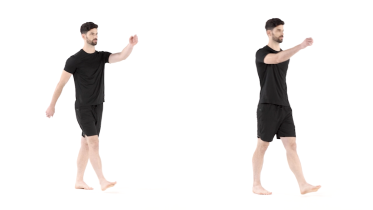
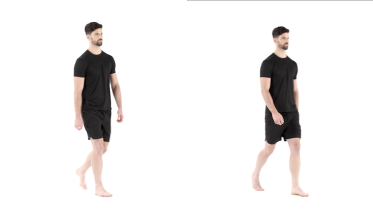
Walking with head nods means walking at a steady, comfortable pace while you keep tipping your head to look up and then down, without stopping. Each nod changes what your eyes and inner ear tell your brain, so you have to stay on course without a steady view of the way ahead. It is a common step in balance training, often added once side to side head turns feel easy.
How to do the walking with head nods
- Find a straight, well-lit stretch of floor next to a wall or counter, as the voice guide asks, so you can put a hand on it at any moment.
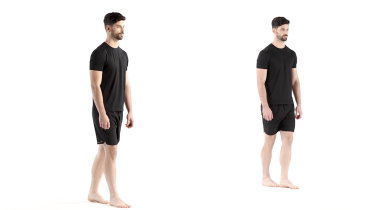
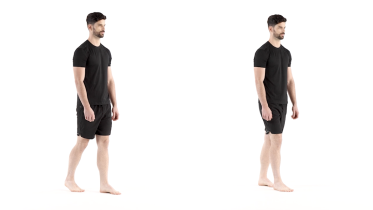
- Set off at a speed that feels comfortable, eyes forward.
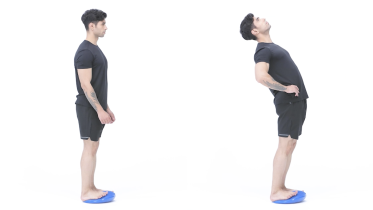
- Keep walking as you tip your chin up to look a little above eye level, then lower it to look toward the floor a little way ahead of you. Keep the movement small enough to stay comfortable.
- Keep your steps even and your body upright while your head moves. Aim to keep the same pace whether you are looking up or down.
- When you reach the end, stand still for a moment, turn with several small steps, then head back nodding as before.
What you should feel
Your balance working harder than in ordinary walking, especially as you look up. You may drift slightly off line or lose some speed in the first few sessions.
Common mistakes
- Tipping your head back hard or fast to stare straight up.
- Stopping every time your head moves.
- Letting your trunk lean back as you look up.
- Drifting away from the wall until it is out of reach.
How often
Many programs start with 2 or 3 lengths of a hallway with slow, even nods, once or twice a day. Your physio will adjust this.
Stop and check with your physio if
- You feel dizzy, lightheaded, faint or sick, or the room seems to spin. Hold your support, sit down and get medical advice the same day before you practice again. If you faint, it does not settle within a few minutes of sitting still, your vision suddenly blurs or goes double, or you cannot stand or walk steadily, call emergency services.
- Things look double, your vision suddenly blurs or goes, your speech slurs or becomes muddled, swallowing becomes hard, your face or lips go numb, one side of your face droops or one side of your body goes weak or numb, you suddenly become so dizzy or unsteady that you fall or cannot stand or walk, your legs suddenly give way but you do not black out (a drop attack), or you get a sudden severe headache. Stop and call emergency services, even if it goes away.
- You veer off line, trip or need to hold on to keep walking.
- Neck pain as you look up or down, or an arm that starts to ache, tingle or go numb.
From the clinic
Walk with the wall or counter at your side, near enough to touch without taking a step. Clear the route of anything you could trip on, from rugs to loose cables and clutter. Wear flat shoes that fit well and grip the floor, not socks, tights or bare feet. If you have had a fall this past year, often feel unsteady, or walk with a stick or frame, keep using your walking aid, practice only with someone beside you, and have your physio check your falls risk first.
Looking up and down can set off dizziness, and tipping your head back is the most likely to do it. If a neck movement makes you dizzy, stop, sit still until it settles, and get medical advice the same day before you try again. Ask your doctor or physio first if you have been told you have an inner ear problem, or if the room briefly spins when you look up, lie down or turn over in bed. That pattern can come from benign paroxysmal positional vertigo (BPPV), which the dizziness and BPPV page explains. If a physio has given you this drill to treat a balance organ or inner ear condition, do it the way they set it and ask what level of dizziness is normal.
A sudden loss of balance is different. Call emergency services straight away for any sign of a stroke, even if it goes away: sudden dizziness with unsteadiness or falling over, a face that droops on one side, an arm you cannot lift or keep up, slurred or muddled speech, weakness or numbness on one side of your body or face, sudden blurred vision, double vision or loss of sight, or a sudden severe headache.
After neck surgery or a broken bone in the neck, check with your surgeon or physio before you start. This drill often follows walking with head turns, which moves the head from side to side. Keep the nods slow until you can walk a straight line without reaching for the wall, and speed them up only on your physio's advice.
Written and checked by the PocketPhysio editorial team. Last updated 2026-09-26.
This page is general education, not a diagnosis or a personal treatment plan. If you have pain, an injury or a health condition, see a physiotherapist or doctor before starting new exercises.