Wall squat with a ball squeeze
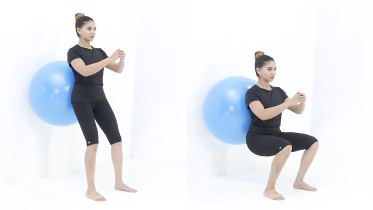
The wall squat with a ball squeeze is a wall squat with a small soft ball held between your knees. You slide down the wall into a squat and back up, squeezing the ball the whole time, so the muscles on the inside of your thighs (adductors) work along with the front of the thighs. With the wall holding your back, the effort goes into your legs. You will often find it in knee and hip strengthening programs.
How to do the wall squat with a ball squeeze
- Stand with your back and buttocks against a wall and place a small soft ball between your knees.
- Walk your feet forward a short step from the wall, about hip width apart, keeping your back and buttocks on the wall.
- Squeeze the ball firmly with your knees, then bend your knees and slide your back slowly down the wall. In the video she lowers until her thighs are close to level with the floor. Stop higher if that is as far as you can go without knee pain.
- Keep the squeeze on and push through your feet to slide back up to the start.
- Let your arms hang by your sides and breathe out as you slide up. Keep the pressure on the ball between reps.
What you should feel
Work in the front of the thighs and along the inside of both thighs toward the groin. Your back should feel supported by the wall, not strained.
Common mistakes
- Letting the squeeze fade halfway down, so the ball slips.
- Setting the feet too close to the wall, so the knees travel well past the toes.
- Holding your breath on the way down.
- Squeezing as hard as you possibly can from the first rep, so the groin aches. Build the effort up gradually.
How often
Many programs use 2 to 3 sets of 8 to 12 slow slides, a few times a week, at a depth you can control. Your physio will adjust this.
From the clinic
Squeezing a ball while you slide means the inner thighs have to hold on through a movement rather than in one spot, which is what separates this from the held versions. It also gives you something to think about at the bottom of the squat, which is where a wall squat tends to get sloppy.
This combines the plain wall squat with the lying adductor ball squeeze, which works the inner thighs with no knee bend at all. A soft play ball, a small Pilates ball or a firm cushion folded in half will do. The voice guide says to squeeze as hard as you can, but a firm squeeze you can keep up through the whole set is a better place to start, especially if your groin is sore. Stand on a floor that grips, since your feet are out in front of you.
The squeeze usually goes on the way back up, because that is where your attention moves to the thighs. If the ball is loose by the time you are standing, the inner thighs have had half the set off.
Squeezing the knees together puts effort through the joint at the front of the pelvis, so if that area already hurts, ask your physio first.
If chest pain, pressure or tightness does not ease quickly when you rest, spreads to your arm, neck, jaw, stomach or back, or comes with sweating, feeling sick, feeling light-headed or being short of breath, call emergency services straight away, as this can be a heart attack. If it eases quickly and none of these happen, get medical advice the same day, and do not exercise again until you have been checked.
Before you start
- If you have had a hip replacement, get the go-ahead from your surgeon or physio before you try wall squats with a ball squeeze. Sliding down toward thighs level with the floor bends the hip to about a right angle, and many surgeons ask you to avoid that for the first months after some operations. After a knee fracture or knee surgery, including a knee replacement, follow your surgeon's or physio's plan, and start this exercise only when they have cleared you.
- If you are pregnant, check with your midwife or physio before you start.
- If you have high blood pressure, breathe steadily through every repetition and never hold your breath.
When to stop and get help
- Sharp pain in or around the kneecap, or knee pain that keeps building through the set.
- Sharp groin pain, or pain over the bone at the front of your pelvis where the two sides meet.
- Your knee buckles, or you cannot push yourself back up the wall under control.
- You feel dizzy, lightheaded, faint or sick, or the room seems to spin. Stop, sit down and get medical advice the same day before you exercise again. If you faint, it does not settle within a few minutes of sitting still, your vision suddenly blurs or goes double, or you cannot stand or walk steadily, call emergency services.
- Chest pain or pressure, dizziness or feeling faint, a racing or irregular heartbeat, or being far more out of breath than the effort should cause.
Written and checked by the PocketPhysio editorial team. Last updated 2026-10-11.
This page is general education, not a diagnosis or a personal treatment plan. If you have pain, an injury or a health condition, see a physiotherapist or doctor before starting new exercises.