
Wall squat
A wall squat is a squat done with your back sliding against a wall. You lower yourself until your thighs are about level with the floor, then slide back up and repeat. The wall supports your back and keeps you upright, so it is a common way to practice the squat movement before doing it free standing. The wall sit is one long hold. Here you slide down and up several times, with a short pause at the bottom.
How to do the wall squat
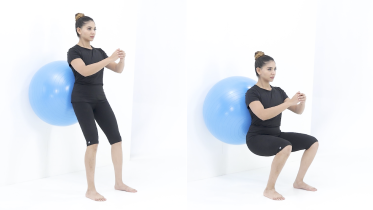
- Stand with your back against a wall and your feet about hip width apart. Let your arms hang by your sides.
- Walk your feet a short distance out from the wall. The right spot is where your knees sit above your ankles, bent to about a right angle, when your thighs are level with the floor.
- Bend your knees and slide your back slowly down the wall. Your upper back and buttocks stay touching the wall the whole way.
- Go down until your thighs are about level with the floor, or stop higher if that is as far as you can control without pain. Keep your knees in line with your second toe.
- Hold the bottom position for a few seconds and keep breathing, then push through your feet to slide back up to standing.
What you should feel
Work in the front of your thighs and in your buttocks. The wall takes care of your balance, so your legs should be doing most of the job.
Common mistakes
- Feet too close to the wall, so the knees push well past the toes at the bottom.
- Knees falling in toward each other on the way down or on the way up.
- Pushing your hands into your thighs to help yourself back up.
- Letting your back peel away from the wall.
- Holding your breath at the bottom.
How often
Many programs start with 2 to 3 sets of 8 to 12 slow slides, holding each one at the bottom for a few seconds, a few days a week, at a depth you can control. Your physio will adjust the depth and the numbers to suit you.
Stop and check with your physio if
- Sharp pain in or around the kneecap, or pain that keeps building through the set.
- The knee gives way, locks, or swells after the session.
- Lower back or hip pain that gets worse as you slide down.
- You are pregnant and notice bleeding or fluid leaking from your vagina, regular painful tightenings, tummy pain that does not settle when you rest or comes with lower back pain, or a change in your baby's usual movements, such as moving less than usual. Stop and contact your midwife or maternity unit straight away. Do the same for a severe headache, problems with your vision such as blurring or flashing lights, pain just below your ribs, or sudden swelling of your face, hands or feet, which can be signs of pre-eclampsia. Call emergency services if the bleeding is heavy, the tummy pain is severe, bleeding or tummy pain comes with pain in your shoulder or feeling sick, faint or dizzy, or a headache comes on suddenly and is very severe.
From the clinic
The wall squat sits between the wall sit and the free standing squat. Because you keep sliding down and back up, your thighs work through the whole bend and straighten, not just one position. The video shows one slow slide with a hold of several seconds at the bottom.
You do not have to reach thighs level with the floor on day one. Start higher up the wall if your knee complains, and go lower as it settles.
Stand on a floor that grips and wear shoes or socks that do not slip, since the feet are out in front of you. If you have had a hip or knee replacement, get the go-ahead from your surgeon or physio before you try wall squats. Sliding down until your thighs are level bends the hip to a right angle or more, and many surgeons ask you to avoid that for the first months after some operations. Ask them how deep you may go.
If you are pregnant, check with your midwife or physio before you start. If you have high blood pressure, keep the holds short and breathe out as you push back up.
Written and checked by the PocketPhysio editorial team. Last updated 2026-09-28.
This page is general education, not a diagnosis or a personal treatment plan. If you have pain, an injury or a health condition, see a physiotherapist or doctor before starting new exercises.
.png)