Wall sit
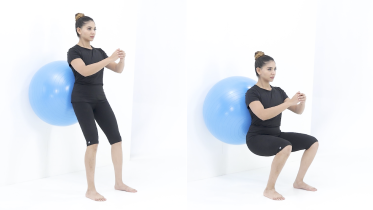
A wall sit is a held position: back against a wall, knees bent, like sitting on an invisible chair. The front of the thighs works hard while the knee stays still. It is used in knee rehab and in general leg strengthening.
How to do the wall sit
- Stand with your back flat against a wall and your feet about hip width apart, a step or so out in front of you.
- Slide your back down the wall by bending your knees.
- The position in the video has the knees bent to a right angle, with the thighs about level with the floor. If that hurts your knee or you cannot hold it, stop higher up the wall, at a depth you can hold without knee pain.
- Let your arms hang relaxed by your sides.
- Check that your knees sit roughly above your ankles and point the same way as your toes. If they are out past your toes, walk your feet a little further from the wall.
- Keep your back and head against the wall and breathe normally while you hold.
- To finish, push through your feet and slide back up the wall.
What you should feel
A burning, working feeling in the front of the thighs that builds the longer you hold. Not pain in the kneecap, and not in the lower back.
Common mistakes
- Holding your breath.
- Feet too close to the wall, so the knees push forward past the toes.
- Resting your hands on your thighs to take some of the weight.
- Going lower than you can hold without pain.
How often
Programs often start with holds of 10 to 30 seconds, repeated 3 to 5 times with a rest between. Start higher up the wall and hold for less time, then build. Your physio will adjust the depth and hold time to suit you.
Stop and check with your physio if
- Sharp pain in or around the kneecap.
- The knee gives way or you cannot control the slide back up.
- Chest pain or pressure, dizziness or feeling faint, a racing or irregular heartbeat, or being far more out of breath than the effort should cause.
From the clinic
Some physios choose the wall sit when bending and straightening the knee under load hurts but holding still is comfortable. Height is the easiest thing to change. A shallow wall sit and a deep one are very different exercises, and you only need to slide lower once the hold feels steady where you are.
Keep breathing. Holding your breath through a long hold can push your blood pressure up, so if you have high blood pressure or a heart condition, talk to your doctor or physio about long holds first. If chest pain, pressure or tightness does not ease quickly when you rest, spreads to your arm, neck, jaw, stomach or back, or comes with sweating, feeling sick, feeling light-headed or being short of breath, call emergency services straight away, as this can be a heart attack. If it eases quickly and none of these happen, get medical advice the same day, and do not exercise again until you have been checked. If you faint while exercising, call emergency services, even if you feel fine again quickly.
Reviewed by the PocketPhysio by VirtueLife expert physiotherapy team. Last reviewed 2026-09-25.
This page is general education, not a diagnosis or a personal treatment plan. If you have pain, an injury or a health condition, see a physiotherapist or doctor before starting new exercises.