
Squat hold
A squat hold is a squat you pause in. You lower yourself as if sitting onto a chair, stay still at the bottom for a few seconds, then stand up slowly. The thighs and buttocks keep working the whole time you hold. You choose the depth, so the same exercise can be a gentle half squat or a hard, deep hold.
How to do the squat hold
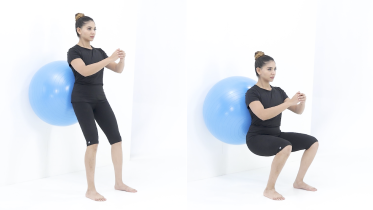
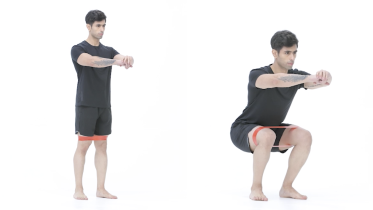
- Stand with your feet about shoulder width apart, toes pointing forward or turned out a little. Clasp your hands together in front of your chest.
- Keep your chest lifted as you push your hips back and bend your knees to lower yourself.
- Stop at a depth you can hold comfortably. In the video she sinks until her thighs are close to level with the floor. The voice guide aims lower, with the crease of the hip below the knee, but that depth is optional.
- Hold still with your heels down and your weight toward them, knees pointing the same way as your toes. Breathe normally.
- Push through your feet and come up slowly to standing. Rest briefly, then repeat.
What you should feel
A steady, building effort in the front of your thighs and your buttocks. Your lower back should not be doing the work, and the fronts of your knees should not hurt.
Common mistakes
- Holding your breath while you stay low.
- Heels lifting, so the weight tips onto the toes and the front of the knees.
- Knees drifting in toward each other during the hold.
- Going deeper than you can hold without pain, or dropping down fast to get there.
How often
Programs often begin with 3 to 5 holds of 10 to 30 seconds with a rest between each, a few days a week. The video uses shorter holds of about 5 seconds, which is fine at first. Your physio will adjust this.
Stop and check with your physio if
- Sharp pain in your knee, hip or lower back.
- Pain in or around the kneecap that builds as you hold.
- Chest pain or pressure, dizziness or feeling faint, a racing or irregular heartbeat, or being far more out of breath than the effort should cause.
From the clinic
Depth is the part to adjust first. There is no prize for going low, so start higher and sink further only once the hold feels steady and pain free. If a free-standing hold is too much, try the wall sit, where the wall supports your back, or practice the movement first with the ordinary squat. Stand near a kitchen counter you can grab if your balance is not reliable.
If you have had a hip replacement, get the go-ahead from your surgeon or physio before you try squat holds. Holding a squat keeps both hips bent to around a right angle or more, and many surgeons ask you to avoid that for the first months after some operations. After a knee replacement or other knee surgery, ask your physio how far you may bend.
Keep breathing through every hold, since straining with a held breath can raise your blood pressure. With high blood pressure or a heart condition, ask your doctor or physio whether held squats suit you before you start. If chest pain, pressure or tightness does not ease quickly when you rest, spreads to your arm, neck, jaw, stomach or back, or comes with sweating, feeling sick, feeling light-headed or being short of breath, call emergency services straight away, as this can be a heart attack. If it eases quickly and none of these happen, get medical advice the same day, and do not exercise again until you have been checked. If you faint while exercising, call emergency services, even if you feel fine again quickly.
Written and checked by the PocketPhysio editorial team. Last updated 2026-09-26.
This page is general education, not a diagnosis or a personal treatment plan. If you have pain, an injury or a health condition, see a physiotherapist or doctor before starting new exercises.
.png)