Seated heel prop
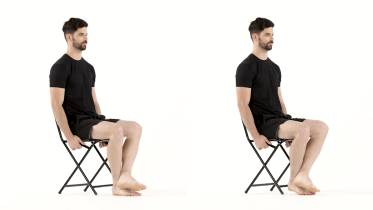
The seated heel prop is a gentle stretch for a knee that will not straighten fully. You sit on one chair with your heel resting on a second chair in front, so the knee hangs unsupported and its own weight eases it straighter. It is a common home exercise after a knee replacement or other knee surgery, and for knees that have stiffened for other reasons.
How to do the seated heel prop
- Sit on a firm chair and set a sturdy second chair or stool in front of you, with a seat at about the same height as yours.
- Lift your stiff leg and rest the heel on the front seat, so the leg is out straight and nothing is under your knee or calf.
- Sit upright with your other foot flat on the floor and your hands resting on your thigh.
- Let the thigh muscles go soft and allow the knee to sag slowly toward straight. Stay still and breathe normally through the hold.
- To finish, bend the knee gently and lower the foot to the floor, using your hands to help lift the leg if you need to.
What you should feel
A stretch or pressure behind the knee, which may reach into the calf or the back of the thigh. A stiff knee can ache during the hold, but the ache should stay steady or ease, not grow, and it should settle soon after you finish.
Common mistakes
- Letting a cushion or the edge of the seat sit under the calf or knee, which keeps the knee bent.
- Tightening the thigh the whole time, so the knee cannot sink.
- Slouching far back in the chair until your lower back aches.
How often
Programs often start with holds of a few minutes and build toward about 10 minutes, 3 or 4 times a day. Your physio will adjust this.
Stop and check with your physio if
- Sharp knee pain, or an ache that grows stronger through the hold instead of settling.
- Numbness, tingling or pins and needles in your foot or lower leg.
- Your calf or thigh becomes swollen, warm, tender, red or darker than usual, or has a throbbing or cramping pain that feels different from normal muscle ache. Stop and get medical advice the same day, as this can be a blood clot. If you are also short of breath or have chest pain, call emergency services.
- Your wound becomes more red, hot, swollen or painful, or starts to leak. Contact your medical team the same day.
From the clinic
The voice guide suggests resting a book or a light weight on top of the knee to add to the stretch. Treat that as a later step, and only if your physio adds it. Keep it light. It goes on the lower thigh just above the kneecap, never on the kneecap itself or on a wound that is still healing.
Two chairs awkward to set up? The knee extension stretch does the same job sitting on the floor.
After a knee fracture or knee surgery, including a knee replacement, follow your surgeon's or physio's plan, and start this exercise only when they have cleared you. Between sessions, try not to rest with a pillow under the knee for long. A knee that spends hours bent tends to stay that way. If your program includes bending work too, such as heel slides, do both.
Written and checked by the PocketPhysio editorial team. Last updated 2026-09-26.
This page is general education, not a diagnosis or a personal treatment plan. If you have pain, an injury or a health condition, see a physiotherapist or doctor before starting new exercises.