Wrist stability with a weight
Wrist stability with a weight trains the forearm muscles to hold the wrist steady under load. Sitting on a chair, you rest your forearm along your thigh, hold a light dumbbell with the thumb on top, and keep the wrist level without letting it tip for a set time. Nothing moves. That makes it a gentle first step in loading the wrist, before you try exercises that lift the weight up and down. Physios often use it after a wrist injury or a spell in a cast, once the wrist is ready to take some weight.
How to do the wrist stability with a weight
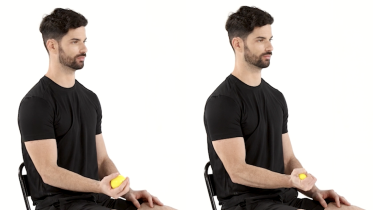
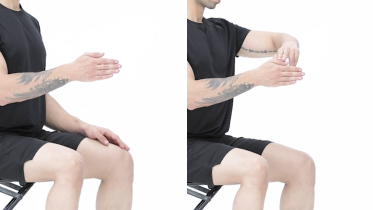
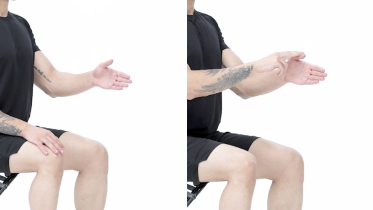
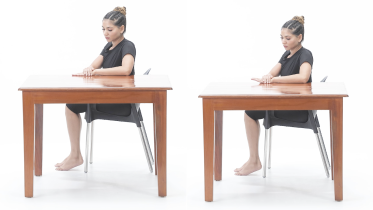
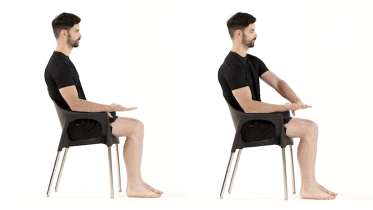
- Sit on a chair with your feet on the floor. Lean forward a little and lay the forearm of the arm you are working along the top of your thigh, so your wrist and hand reach just past the knee.
- Hold a light dumbbell in that hand with your thumb on top and your palm facing in toward the other leg. Physios call this thumb-up position forearm neutral. Rest your other hand on the forearm, near the elbow, to keep it steady on your thigh, as in the video.
- Line your wrist up with your forearm, so the hand is not tipped up, down, or toward the thumb or little finger side.
- Hold the weight still in that position for the set time, breathing normally. Your forearm stays resting on your thigh throughout.
- Rest the hand on your knee or put the weight down for a few seconds before the next hold. At the end of the set, take the weight with your other hand rather than letting the wrist drop.
What you should feel
A steady, low-level effort around the forearm, mostly on the thumb side, plus some work in the hand from gripping. The wrist itself should feel supported rather than strained.
Common mistakes
- Letting the front of the dumbbell drift down toward the floor as the muscles tire.
- Lifting the forearm off your thigh or bending the elbow to help.
- Squeezing the handle as hard as you can, which tires the hand before the wrist has worked.
- Holding your breath while you keep the weight still.
How often
A common starting point is 5 to 10 holds of 10 to 20 seconds with a light weight, often 0.5 to 1 kg (1 to 2 lb), once a day, resting between holds. Your physio will adjust this.
Stop and check with your physio if
- Sharp pain in the wrist, or pain that builds during each hold.
- Pins and needles or numbness spreading into your fingers. If one side of your face or body suddenly goes numb or weak, or your speech becomes slurred or muddled, call emergency services, even if it goes away.
- A wrist that is more swollen or sore the next morning.
- Since the fracture or cast, the hand is getting more painful rather than less, the skin becomes very sensitive to light touch, or the hand changes color, temperature, swelling or sweating compared with the other one, or looks shiny. See your doctor or physio as soon as you can, within a few days at most, as this can be complex regional pain syndrome (CRPS) and early treatment may help.
From the clinic
No dumbbell? A small water bottle or a can of food, held the same thumb-up way, is enough to start. Sliding your hand toward one end of the handle, so more of the weight sits in front of your thumb, makes the wrist harder to keep level. Once the hold feels steady, many programs move on to lifting the weight, as in wrist radial deviation with a dumbbell, which uses the same thumb-up grip in standing.
After a broken wrist, hand or forearm, or surgery on any of them such as a tendon repair, start only when your doctor, surgeon, physio or hand therapist says the bone or repair is ready for this, and follow their plan for how much to do. If you have high blood pressure, breathe steadily through every hold and never hold your breath. For holds that work the wrist with no weight at all, see isometric wrist extension and isometric wrist flexion.
Written and checked by the PocketPhysio editorial team. Last updated 2026-09-28.
This page is general education, not a diagnosis or a personal treatment plan. If you have pain, an injury or a health condition, see a physiotherapist or doctor before starting new exercises.