
Pistol squats
A pistol squat is a full squat on one leg. You stand on one foot, hold the other leg straight out in front and lower yourself as far as you can control, then stand back up. The thigh and buttock of the standing leg do the lifting, while the side of that hip keeps the pelvis level and the knee lined up. It asks for strength, balance and mobility all at once. That makes it an advanced exercise, and it usually comes near the end of a leg program.
How to do the pistol squats
- Stand with your feet together and a kitchen counter or sturdy rail within reach. Hold both arms out straight in front of you at shoulder height.
- Shift your weight onto one leg and lift the other foot just off the floor in front of you, keeping that leg straight.
- Push your hips back and slowly bend the standing knee to lower yourself, letting the straight leg rise in front as you go. Keep the standing heel down and the knee pointing over your second toe.
- Lower only as far as you can control. In the video she sinks all the way down until her hips are close to her heel, which takes a lot of strength and practice.
- Push through your whole standing foot to rise back up, then set the other foot down. Finish your set on one leg before switching sides.
What you should feel
Hard work in the front of the thigh and the buttock of the standing leg, and at the side of that hip. The front of the other hip works too, to hold the straight leg up.
Common mistakes
- The standing knee caving in toward the middle as you lower or push up.
- The standing heel lifting, so your weight rolls onto the toes.
- Dropping into the bottom and bouncing out of it instead of lowering under control.
- Going deeper than your balance allows and falling backward.
How often
Because this is so demanding, many programs use low numbers, such as 2 to 3 sets of 3 to 6 on each leg, often to a box or with a hand on a support at first. Your physio will adjust this.
Stop and check with your physio if
- Sharp pain in the knee, or pain around the kneecap that builds with each rep.
- The knee gives way, or you lose your balance and cannot steady yourself.
- A pinching pain at the front of the hip or in the groin at the bottom of the squat.
- Chest pain or pressure, dizziness or feeling faint, a racing or irregular heartbeat, or being far more out of breath than the effort should cause.
From the clinic
For most people, and for almost everyone in rehab, the easier versions below are the right place to start, and many never need the full pistol. The video shows no support, but do your first attempts right beside a counter, rail or door frame you can grab, on a non-slip floor. After a fall in the last year, or if you feel unsteady walking or your medicines can leave you light-headed, choose an easier single leg exercise and ask your physio when this one is right for you.
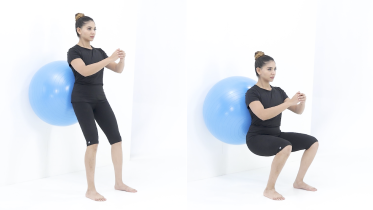
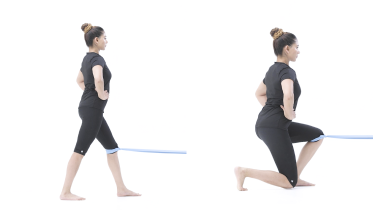
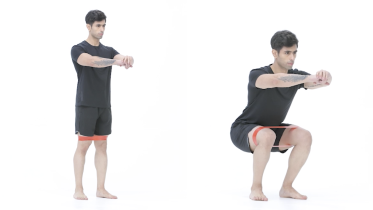
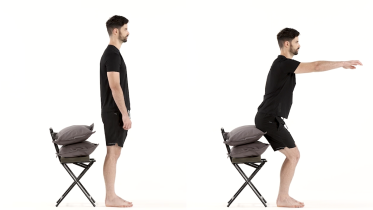
A simple way in is to sit down onto a bench or firm chair behind you on one leg, then stand up again, lowering the seat bit by bit. Get the two leg squat and the split squat strong first. To practice knee control on one leg without going deep, the single leg mini squat with band is gentler.
A full depth pistol squat bends the standing knee as far as it goes with all your weight on it. If you have pain at the front of the knee, knee arthritis, or have had knee surgery such as a ligament repair, meniscus surgery or a knee replacement, ask your physio before you try it and how deep you may go. If you have had a hip replacement, get the go-ahead from your surgeon or physio before you try pistol squats. Sinking down on one leg bends the standing hip well past a right angle, and many surgeons ask you to avoid that for the first months after some operations.
Breathe out as you push back up rather than holding your breath. With high blood pressure or a heart condition, check with your doctor before hard single leg work like this. If chest pain, pressure or tightness does not ease quickly when you rest, spreads to your arm, neck, jaw, stomach or back, or comes with sweating, feeling sick, feeling light-headed or being short of breath, call emergency services straight away, as this can be a heart attack. If it eases quickly and none of these happen, get medical advice the same day, and do not exercise again until you have been checked. If you faint while exercising, call emergency services, even if you feel fine again quickly.
Written and checked by the PocketPhysio editorial team. Last updated 2026-09-26.
This page is general education, not a diagnosis or a personal treatment plan. If you have pain, an injury or a health condition, see a physiotherapist or doctor before starting new exercises.
.png)