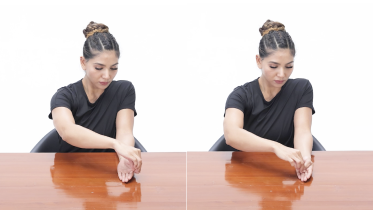
Seated wrist flexion
Seated wrist flexion is a simple movement exercise for bending the wrist forward and down. You sit with your forearm resting along the armrest of a chair, palm facing down and the hand free past the end, then let the hand bend down from the wrist and bring it back up to level. No weight is used, so it suits the early weeks of loosening a stiff wrist, for example once a cast or splint comes off. Seated wrist extension is its partner and moves the wrist the other way.
How to do the seated wrist flexion
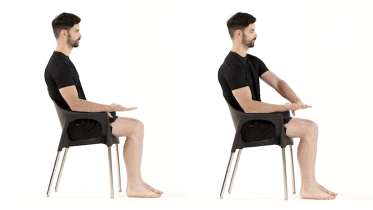
- Sit in a chair with armrests and your feet flat on the floor. Rest your working forearm along the armrest, palm down, with the wrist at the front end of the armrest and the hand free beyond it.
- Begin with the hand in line with the forearm and the fingers relaxed and straight.
- Keeping the forearm still on the armrest, bend at the wrist so the hand drops down past the end of the armrest and the fingers point toward the floor. Stop where it still feels comfortable.
- Hold the bottom position for a second.
- Lift the hand slowly back up until it is in line with the forearm again, then repeat.
What you should feel
An easy stretch across the back of the wrist and hand as it bends down, and light work along the top of the forearm as you lift it back up. Stiffness in the first few repetitions is common after a cast, and it usually eases as you go.
Common mistakes
- Lifting or rolling the forearm, so the arm moves instead of the wrist.
- Dropping the hand quickly rather than lowering it under control.
- Squeezing the fingers into a fist as the wrist bends.
- Pushing into a painful end position to gain a little more range.
How often
A common starting point is 10 to 15 slow bends, repeated for 2 or 3 sets, between once and three times a day. Your physio will adjust this.
Stop and check with your physio if
- Sharp or catching pain in the wrist, or a wrist that is more swollen or sore after the session and still that way the next day.
- Tingling or numbness in your thumb and first fingers as the wrist bends down. If it stays after you stop, or keeps getting worse, get medical advice the same day. If one side of your face or body suddenly goes numb or weak, or your speech becomes slurred or muddled, call emergency services, even if it goes away.
- Since the fracture or cast, the hand is getting more painful rather than less, the skin becomes very sensitive to light touch, or the hand changes color, temperature, swelling or sweating compared with the other one, or looks shiny. See your doctor or physio as soon as you can, within a few days at most, as this can be complex regional pain syndrome (CRPS) and early treatment may help.
From the clinic
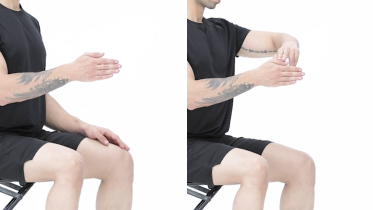
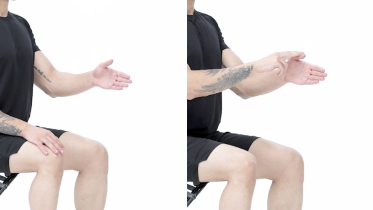
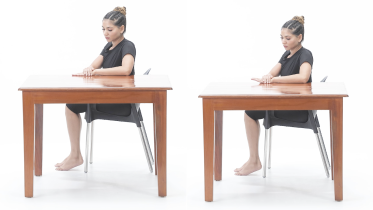
The voice guide describes a different setup, with the arm held straight out in front and a weight lifted by bending the wrist upward. The video shows no weight. The forearm rests on the armrest of a chair with the palm down, and the hand bends down past the end of the armrest and comes back up, so the steps follow the video. No armrests? Rest the forearm along your thigh with the hand just past the knee, or on a table with the hand over the edge.
With the palm facing down, gravity helps the hand drop, and the muscles on top of the forearm control the way down and lift the hand back up. If you curl the hand that last bit further with your own effort, the muscles on the palm side take over.
After a broken wrist, hand or forearm, or surgery on any of them such as a tendon repair, start only when your doctor, surgeon, physio or hand therapist says the bone or repair is ready for this, and follow their plan for how much to do. If the wrist will hardly bend on its own yet, passive wrist flexion lets your other hand do the work. For the opposite direction, see seated wrist extension. Once both feel easy, wrist flexion and extension and isometric wrist flexion are common next steps, and the wrist fracture rehab program shows where they fit after a break.
Written and checked by the PocketPhysio editorial team. Last updated 2026-09-28.
This page is general education, not a diagnosis or a personal treatment plan. If you have pain, an injury or a health condition, see a physiotherapist or doctor before starting new exercises.