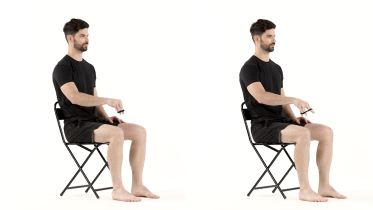
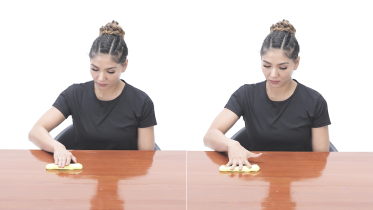
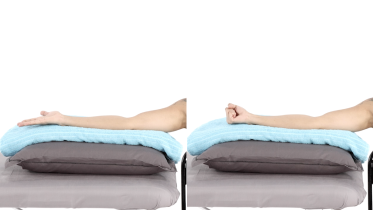
Thumb extension with putty
Thumb extension with putty strengthens the muscles that move your thumb out and away from your hand. With your hand flat on a table, you loop therapy putty over the thumb and move the thumb away from your fingers, stretching the putty as it goes. It usually follows plain thumb movements without resistance, once the thumb moves freely.
How to do the thumb extension with putty
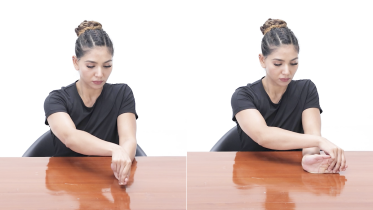
- Sit upright with a table in front of you. Roll a piece of therapy putty into a long, thin sausage and lay it on the table.
- Rest the forearm of the arm you are working on the table, palm down and hand flat, with the thumb close to your index finger.
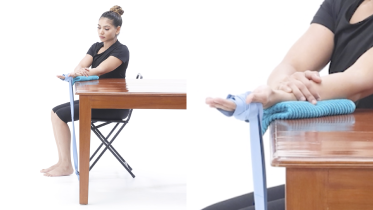
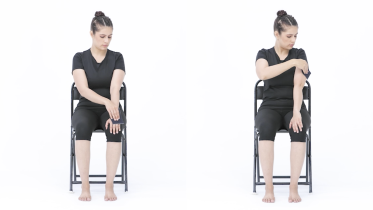
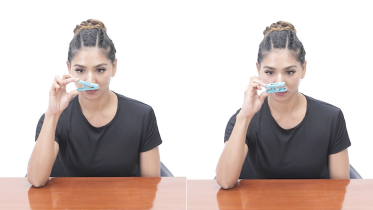
- Use your other hand to loop the middle of the putty around your thumb, so it sits snugly and pulls the thumb in toward your fingers. Lay the two ends across the back of your hand and hold them there with your other hand, as in the video.
- Move the thumb out along the table, away from your fingers, stretching the putty as far as is comfortable.
- Hold briefly, then let the thumb come back slowly under control. Roll the putty back into shape when it gets thin.
What you should feel
Work at the base of the thumb and along the thumb side of the wrist and forearm. The muscles may tire toward the end of a set.
Common mistakes
- Lifting the palm or tipping the hand onto its side to help the thumb.
- Letting the putty pull the thumb back quickly instead of controlling the return.
- Using putty so firm that the thumb barely moves.
- Bending the wrist toward the thumb side instead of moving the thumb alone.
How often
Many programs start with the softest putty and 2 to 3 sets of 10 to 15, once or twice a day. Your physio will adjust this for you, including the putty strength.
Stop and check with your physio if
- Sharp pain where the thumb meets the wrist, or along the thumb side of the wrist.
- Numbness, tingling or a color change in the thumb because the putty is wrapped too tight. If one side of your face or body suddenly goes numb or weak, or your speech becomes slurred or muddled, call emergency services, even if it goes away.
- Thumb or wrist joints that are more swollen or sore after the session.
From the clinic
Therapy putty comes in several grades, from very soft to firm. Begin with a soft one and move up only when every repetition feels controlled. The loop should grip the thumb without squeezing it. If the putty sticks to the table, a little flour or a sheet of paper underneath helps it slide.
The putty loads the tendons on the thumb side of the wrist. Ask your physio before using it if those tendons are painful, as in de Quervain's tenosynovitis, or if you have arthritis at the base of the thumb. After a broken wrist, hand or forearm, or surgery on any of them such as a tendon repair, start only when your doctor, surgeon, physio or hand therapist says the bone or repair is ready for this, and follow their plan for how much to do. For another putty exercise, see finger spread with putty, and for thumb movement without resistance, see thumb opposition.
Written and checked by the PocketPhysio editorial team. Last updated 2026-09-28.
This page is general education, not a diagnosis or a personal treatment plan. If you have pain, an injury or a health condition, see a physiotherapist or doctor before starting new exercises.