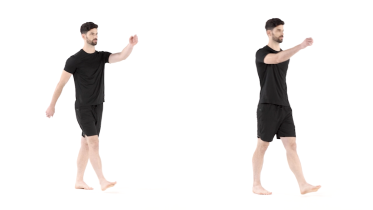
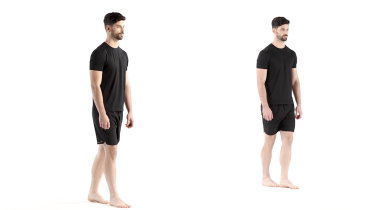
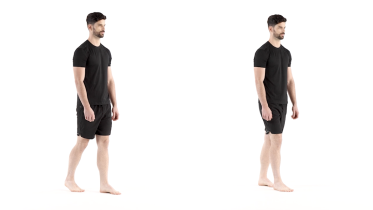
Walking while counting backward
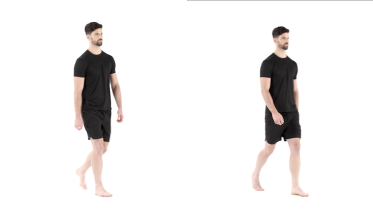
Walking while counting backward means walking at a comfortable pace while you count down out loud, for example from 20 to 1, and then start again. Thinking and walking at the same time splits your attention, much as chatting to a friend or reading a sign does when you are out. Physios call this dual task practice and often add it to a balance program once ordinary walking feels steady.
How to do the walking while counting backward
- Pick a clear path next to a wall or kitchen counter, so you can reach out and touch it if you need to.
- Start walking at a comfortable, everyday pace, with your eyes looking ahead.
- Once you are moving, count down out loud from 20 to 1, keeping your walking as even as you can.
- When you reach 1, start again from 20 and keep walking.
- At the end of the path, stop, turn around with small steps and keep counting on the way back.
What you should feel
Your attention being pulled two ways at once. It is normal for your steps to slow a little or your counting to trip up in the first few sessions.
Common mistakes
- Stopping or slowing right down each time you need to think of the next number.
- Counting silently in your head instead of out loud.
- Looking at the floor while you think.
- Rushing the count so your steps become hurried or uneven.
How often
Many programs use 2 to 3 minutes of walking and counting, repeated 2 or 3 times with rests, once a day. Your physio will adjust this.
Stop and check with your physio if
- You feel dizzy, lightheaded, faint or sick, or the room seems to spin. Hold your support, sit down and get medical advice the same day before you practice again. If you faint, it does not settle within a few minutes of sitting still, your vision suddenly blurs or goes double, or you cannot stand or walk steadily, call emergency services.
- You trip, stagger or feel close to falling.
- Pain in a hip, knee, ankle or foot starts to change how you walk.
From the clinic
Doing this near a wall or countertop, as the voice guide suggests, matters more than usual, because part of your attention is on the numbers. If you normally walk with a stick or walker, use it while you count. If you have had a fall in the last year, often feel unsteady, or have trouble with memory or concentration, practice with another adult beside you and ask your physio whether this drill suits you yet. Keep the route free of rugs, cables and clutter, and wear well-fitting shoes that grip.
A sudden loss of balance is different. Call emergency services straight away for any sign of a stroke, even if it goes away: sudden dizziness with unsteadiness or falling over, a face that droops on one side, an arm you cannot lift or keep up, slurred or muddled speech, weakness or numbness on one side of your body or face, sudden blurred vision, double vision or loss of sight, or a sudden severe headache.
To make it harder, count backward from 100 in steps of 3, or name things in a category, such as fruits or cities, as you walk. If the thinking task makes you slow down a lot or wobble, go back to the easier version. Walking with head turns is another walking drill. There the extra load falls on your eyes and balance, not on your thinking.
Written and checked by the PocketPhysio editorial team. Last updated 2026-09-26.
This page is general education, not a diagnosis or a personal treatment plan. If you have pain, an injury or a health condition, see a physiotherapist or doctor before starting new exercises.