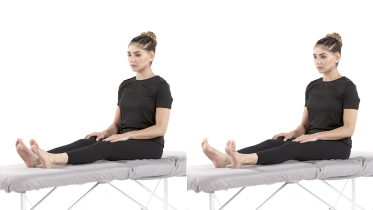
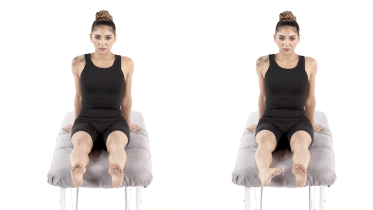
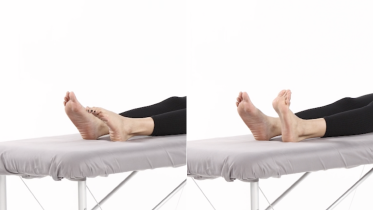
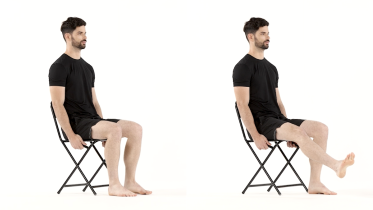
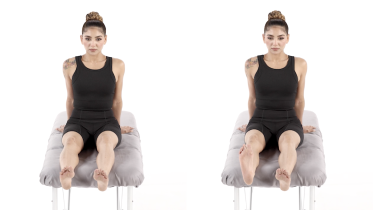
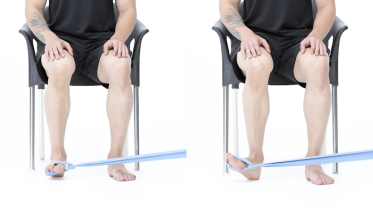
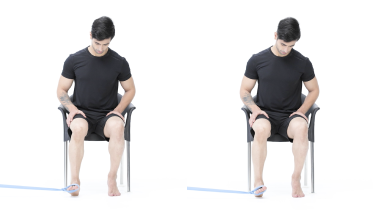
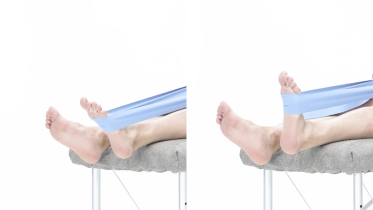
Water bottle foot roll
The water bottle foot roll is a simple way to massage the sole of your foot yourself. Sitting on a chair, you put a hard plastic bottle on the floor under one foot, press down gently and roll the foot forward and back over it. People often use it for a sole that feels tight or sore, for example with heel pain (plantar fasciitis).
How to do the water bottle foot roll
- Sit on a chair low enough for your feet to rest flat on the floor, knees bent to about a right angle.
- Lay a hard plastic water bottle on its side on the floor and rest the sole of one foot across it. Pick a bottle with firm sides that will not crush under your foot.
- Press down gently, using the weight of your leg rather than leaning your body over it.
- Roll the foot forward and back so the bottle travels along the length of your sole, from the heel end to the ball of the foot.
- Keep a slow, steady pace, then change feet if your physio has asked you to do both.
What you should feel
Firm pressure along the sole, with some tender spots, often toward the heel. It should feel like a firm massage, never sharp, and any tenderness should ease as you go.
Common mistakes
- Standing up and leaning your full weight onto the bottle. Sitting keeps the pressure gentle.
- Pressing harder on a spot that hurts, hoping it will settle sooner.
- Rolling quickly back and forth instead of slowly.
- Using a thin bottle that crumples or shoots out from under the foot.
How often
People usually roll each foot for 1 to 2 minutes, up to twice daily. Your physio will adjust this.
Stop and check with your physio if
- The pressure turns sharp, or your sole or toes start to burn, tingle or go numb.
- Bruising or broken skin on the sole, or a foot that aches more the next day.
- Your calf or thigh becomes swollen, warm, tender, red or darker than usual, or has a throbbing or cramping pain that feels different from normal muscle ache. Do not massage or roll it. Stop and get medical advice the same day, as this can be a blood clot. If you are also short of breath or have chest pain, call emergency services.
From the clinic
With diabetes or numb feet, you may not notice if you press too hard or mark the skin. Get advice from your doctor, podiatrist or physio before rolling or pressing on the sole, and check the skin afterward. Check with your doctor or physio first as well if you bruise easily or take medicine that thins your blood, or if you have a recent foot injury, a wound on the sole or a heel that is very sore when squeezed from both sides. Do not roll a leg that shows any of the blood clot signs in the stop list on this page. Get medical advice the same day, and call emergency services if you are also short of breath or have chest pain.
The plantar fascia stretch and a calf stretch are often done in the same session, and the plantar fasciitis program shows how they fit together.
Written and checked by the PocketPhysio editorial team. Last updated 2026-09-26.
This page is general education, not a diagnosis or a personal treatment plan. If you have pain, an injury or a health condition, see a physiotherapist or doctor before starting new exercises.