
Jaw clicking: when it matters and when it does not
Warning signs, and when to get help
Why does your jaw click?
There is a disc of cartilage inside each jaw joint, sitting between the rounded top of the lower jaw and the socket just in front of your ear. Its job is to travel with the jaw through the whole movement. When it does not quite keep up, the bone passes over its edge and you get a click as it snaps back into position. A quieter second click on the way closed is the disc moving again.
You can usually feel this happening. Put a fingertip just in front of each ear and open slowly, and most people with a click can tell you how far into the opening it arrives and which side it is on. That is worth doing before an appointment, because the detail is useful and nobody can get it from a description.
Two other noises come out of a jaw and mean different things. Grinding or a gravelly sound through the whole movement is a different sign from a single snap. And a dull thud or crunch that comes with pain, swelling or a jaw that has stopped moving properly after a knock to the face belongs on this page's warning list rather than in this section.
Does jaw clicking need treatment?
Mostly no, and the clearest statement of that comes from the NIDCR, the US dental research institute. Its position is that noises from the jaw joints without pain are a common, normal finding that needs no treatment at all. That is the most useful sentence available on this subject, and it is almost absent from the search results.
Then there is a genuine disagreement worth putting in front of you rather than hiding. The NHS lists clicking, popping or grinding noises when you move your jaw among the symptoms of temporomandibular disorder, and it also lists the same noises in its urgent advice box, alongside being unable to eat or drink, difficulty opening the mouth fully, a locking jaw, pain around the jaw, ear or side of the head, frequent severe headaches, pain or tenderness at the side of the head or on the scalp, and vision problems. Two of those items, the noises and the jaw and ear pain, are also listed as ordinary symptoms of the condition on the same NHS page. So a UK reader following their own health service will be told to seek advice promptly for symptoms the American institute calls normal or usual.
Here is how we read it, and it is the same reading our TMJ pages use. Painless clicking by itself is not urgent, and the NIDCR is direct about that. Jaw and ear pain that behaves like your usual jaw problem is what the self-care is for. New tenderness at the temple or on the scalp is the exception and keeps the urgent route, because that is the pattern of inflamed arteries in the head rather than of a jaw joint, and it has its own line on the warning list below.
What those two items do mean is that a jaw nobody has assessed should be assessed, and that is an appointment with a dentist, doctor, physio or physical therapist rather than a call to 111. The rest of that box, being unable to eat or drink, trouble opening your mouth fully, a jaw that is locking, frequent severe headaches and vision problems, is urgent on its own account, and each of those carries its own line below. What matters clinically is what travels with the noise: pain, catching, locking, a jaw that will not open as far as it used to, or a noise that is new and changing. Painless clicking that has been the same for years, lets you eat normally and does not hurt is in a different category from any of those.
Our TMJ disorder program is where the treatment lives if you do have pain or restriction, and it also covers the self-care that comes first.
Jaw clicking on one side
One side is the usual story. The two joints move independently, and the disc only has to be out of step in one of them for you to notice.
The click alone is not the issue; what comes with it is. Pain in front of that ear, pain when chewing on that side, tenderness over the cheek or temple, or a jaw that drifts toward one side as it opens all point at the joint or the chewing muscles doing something more than making a noise. Our page on jaw pain on one side separates those out, and our page on TMJ or tooth pain handles the question people most often get wrong, which is whether a tooth is involved at all.
Clicking that has swapped sides, or that has started on the other side as well, is not an emergency. It is worth mentioning at an appointment, because it usually comes with a change in how you have been using the jaw.
Jaw clicking when chewing or eating
Chewing is the loaded version of opening, so a joint that clicks quietly at rest often clicks louder and more reliably with food in the mouth. Harder and chewier food does it more than soft food. People notice it most with bread crusts, steak, apples and gum.
If chewing only makes the noise, that is the ordinary pattern. If chewing makes it hurt, the picture changes, and the useful details are which side, which foods, and whether it eases when you switch sides. The NHS self-care advice for a sore jaw is to eat soft food, avoid chewing gum and pen tops, and not to bite food with your front teeth, and that is a reasonable fortnight's trial for a jaw that complains when it eats.
If pain rather than the noise is your main problem, the TMJ disorder program is the right page, and TMJ flare ups and what to do covers the bad weeks.
Jaw clicking with no pain
This is the group most of the people reading this page belong to, and the answer for them is short. Painless clicking that has been stable, lets you open fully and lets you eat what you like is the finding the NIDCR describes as normal and not needing treatment.
What to do about it, once somebody has had a look at the jaw: nothing in particular. Do not go looking for a treatment that makes the noise stop, do not have anything irreversible done to your bite or your teeth on the strength of a click, and do not start stretching the jaw wider to try to free it, which is how a quiet joint becomes a sore one. Keep your teeth apart when you are not eating, which is the NHS advice and costs nothing.
What would change it: pain arriving, the jaw starting to catch, or opening becoming more limited. Any of those is a reason to be looked at.
Jaw clicking and pain together
This is the combination that needs an appointment, and the combination most of the published treatment is for.
The pain can sit in the joint itself, just in front of the ear, or in the chewing muscles over the cheek and temple, and the two feel different: a tender point in front of the ear with clicking and restriction points at the joint, while a duller spreading ache that feels like a tired muscle more often belongs to the muscles. Both can run at the same time in the same jaw.
The guideline is specific about what it supports. For jaw pain lasting three months or more, Busse and colleagues (2023) made strong recommendations for supervised jaw exercise and stretching, supervised posture exercise, hands-on therapy in the form of therapist-assisted mobilization and manual trigger point therapy, and cognitive behavioral therapy, in a BMJ clinical practice guideline. The same panel also made a strong recommendation for usual care, which it describes as home exercises, stretching, reassurance and education, so self-directed work is not written off.
The broader research is more modest than that reads. A review of 48 trials of exercise and hands-on therapy for these disorders found low to moderate effects, no clear sign that exercise beat other conservative treatments, more promising results for hands-on therapy alone or combined with jaw or neck exercise, and no high-quality evidence overall, which led its authors to conclude that there is great uncertainty about how well either works (Armijo-Olivo and colleagues, 2016). Put the two together and the position is that this is treated rather than endured, while the size of the benefit is not settled.
Jaw pain often travels with neck pain, and treating one and ignoring the other is a common way to get a disappointing result. Our page on TMJ and neck pain covers that, and the neck pain program is the one to run alongside if your neck is the bigger half.
Jaw clicking when you open your mouth or yawn
A wide yawn is the movement that catches a sore jaw out most often in clinic, which is why the NHS puts not yawning too wide on its list of things to avoid. If your click is loudest at full opening, the practical change is to stop going to full opening for a while: support the chin with a hand when you yawn, and cut the big bites.
Catching is the symptom to separate from clicking here. A jaw that momentarily hesitates and then frees itself is not the same as one that sticks. A jaw that locks so you cannot open fully, or a mouth that gets stuck open and will not close, has its own urgency on this page's warning list, and our page on when your jaw locks or catches is where that is handled properly. Do not try to work a stuck jaw loose with exercises from a web page.
Jaw clicking exercises and treatment: where to go next
There is no exercise that reliably stops a click, and that is the answer to the most popular search on this phrase, however unsatisfying it is. Exercise helps the pain, the movement and the muscles around the joint. The 2023 guideline's strong recommendations are for the supervised versions of jaw exercise, stretching and posture work, with home exercises and education supported under usual care, so the sensible reading is that self-directed work is worth doing and is better still once somebody has set it for your jaw.
So the order runs like this: self-care first, which is soft food, teeth apart, heat or cold, and leaving the wide opening alone; then an assessment if there is pain, catching or restriction; then a staged program with someone watching the movement. Our TMJ disorder program is that program, and it starts with relaxation and breathing rather than with jaw stretches, which is deliberate. One caveat: the 2023 guideline conditionally recommended against relaxation therapy on its own for long-lasting jaw pain, so the breathing and relaxation work is there to get the jaw to stop clenching rather than as the treatment itself.
The exercises below are the opening steps of it, listed so you can see what the early work looks like. Read the precautions above them before you try the jaw opening one.
Exercises that can help
These are the first exercises in our TMJ disorder program rather than a treatment for clicking, and the staging belongs on that page, not this one. Relaxation and breathing work are usually done at set times through the day rather than only when the jaw is sore. As a starting guide, many programs use 3 to 5 facial relaxation squeezes once or twice a day or whenever you notice tension, 5 to 10 slow breaths or a few minutes of diaphragmatic breathing 1 to 3 times a day, 8 to 10 chin tucks held 3 to 5 seconds a few times a day, and 5 to 10 slow jaw openings held for a few seconds a few times a day. Your physio will adjust this, and each exercise page carries its own dose and cautions. Do the facial relaxation with your teeth slightly apart, squeezing only around your eyes and cheeks and never the jaw. Keep the opening small: open only as far as your tongue allows and only while it stays pain free, and stop if your jaw catches, locks or clicks painfully. If your jaw clicks painfully, catches, will not open fully or has ever locked, have it checked in person before you start any of this. If your jaw has ever got stuck open, check with your dentist or physio before you start. If your jaw was dislocated or stuck open in the last 6 weeks, do not start this on your own. MedlinePlus says that after dislocating your jaw you should not open your mouth widely for at least 6 weeks. Those 6 weeks are a minimum rather than a finish line, and nothing changes by itself on the day they end, so ask the team who treated your jaw first and follow what they say. After jaw surgery or a broken jaw, check with your surgeon before you start, and follow their plan. Keep your teeth apart and your jaw loose through the neck work. If a neck movement makes you dizzy, stop, sit still until it settles, and get medical advice the same day before you try again. Breathe steadily through every hold and never hold your breath, which matters most if you have high blood pressure. If you have a lung condition such as COPD, or a heart condition, ask your physio or doctor how breathing exercises fit your own plan, as the approach can be quite different. The breathing exercise is done lying on your back. If you are pregnant and past the first three months, check with your physio before exercising flat on your back. After eye surgery, such as a cataract operation, ask your eye team before you squeeze your eyes shut in the facial relaxation, and if your face is weak after a stroke, ask your stroke team before you start.
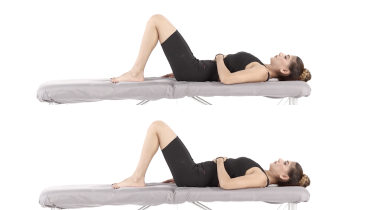 Diaphragmatic breathing
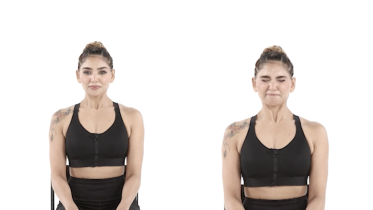 Facial muscle relaxation
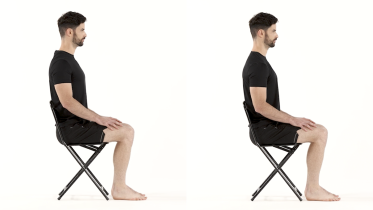 Chin tuck
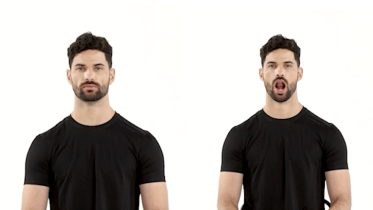 Jaw opening with the tongue on the roof of the mouth
When to get a clicking jaw checked
A painless, stable click that somebody has already had a look at needs no further appointment. Get seen if the clicking comes with pain, if the jaw catches or locks, if you cannot open your mouth as far as you used to, if eating or drinking is affected, or if the noise is new and getting worse. A dentist and a physiotherapist are both reasonable first stops, and in many places a dentist is the easier one to get.
The NHS urgent advice box for jaw problems names jaw noises, and jaw, ear or side of head pain, alongside being unable to eat or drink, trouble opening your mouth fully, a locking jaw, frequent severe headaches and vision problems. Those last five are urgent on their own account and each has its own line below. For the first two, which the same NHS page also lists as ordinary symptoms of the condition, a jaw nobody has assessed should be assessed, and that is an appointment with a dentist, doctor, physio or physical therapist rather than a call to 111. New tenderness at the temple or on the scalp is the exception and keeps the urgent route, and it has its own line below too.
Some signs should not wait for an appointment, and a few of them are not about the jaw joint at all: a jaw that is stuck open, jaw pain that arrives with chest pain or with exertion, a numb lip or chin, and a jaw changed by a blow to the face each have their own route and their own timing. Read the warning signs below, and act on the timing given for each line.
Related exercise programs
Warning signs
Get emergency help now
- Emergency: any sign of a stroke, even if it goes away. That means a face that droops on one side, an arm you cannot lift or keep up, slurred or muddled speech, weakness or numbness on one side of your body or face, sudden blurred vision, double vision or loss of sight, trouble swallowing, sudden dizziness with unsteadiness or falling over, a sudden severe headache, or a sudden fall where your legs give way but you do not black out (a drop attack). Call emergency services straight away. With neck pain, these can rarely come from a tear in an artery in the neck.
- Emergency: jaw, neck, shoulder or arm pain that comes with chest pain or tightness, sweating, feeling sick, feeling light-headed or being short of breath, or that comes on when you exert yourself, feel stressed or go out in the cold and does not ease within a few minutes of rest. Call emergency services straight away, as this can be a heart attack. If it eases quickly with rest and none of these happen, get medical advice the same day, and do not exercise again until you have been checked. Jaw pain that comes with effort and goes with rest can be a sign of angina, a heart problem, rather than TMD.
- Emergency: chest pain or tightness, which may spread to your arm, neck or jaw, or shoulder or arm pain that comes with shortness of breath, sweating or feeling sick. This can be a heart attack. Call emergency services straight away.
- Emergency: your mouth is stuck open and you cannot close it, for example after a big yawn, or after a blow to your face your jaw looks out of place, your teeth no longer meet as they did or you cannot bite together. Go to an emergency department straight away, supporting your jaw gently with your hand, and do not drive yourself. Call emergency services if you also find it hard to breathe or are bleeding heavily.
- Emergency: your jaw locked, you cannot open or close your mouth properly, part of your lower lip, chin or jaw feels numb, a tooth is loose or broken or your gum or mouth is bleeding, your jaw swings to one side as it opens, or your cheek or jaw has a lump or a changed shape, after a blow to the face, a fall, a sports injury or any other accident, even if your teeth still meet as they did. Go to an emergency department straight away, supporting your jaw gently with your hand, and do not drive yourself. Call emergency services if you also find it hard to breathe, are bleeding heavily or your face is swelling quickly. A jaw can be broken without looking out of place, and jaw stiffness, trouble opening your mouth widely, pain in front of your ear that is worse when you bite or chew, or a numb lower lip can be the main sign.
- Emergency: you think you have a tooth infection, or your face or jaw is swollen, and you find it hard to breathe, speak, swallow or open your mouth, have a lot of swelling in your mouth, have swelling of your neck or around your eye, or have a swollen or painful eye or sudden problems with your eyesight. Call emergency services or go to an emergency department straight away, and do not drive yourself. This can be a spreading infection, for example from a tooth abscess.
- Emergency: a new headache, or new pain on one side of your face, jaw or neck, with a drooping eyelid or a smaller pupil on the same side, or with a new pulsing or whooshing sound in one ear that keeps time with your heartbeat. Call emergency services or go to an emergency department straight away, and do not drive yourself. This can be a tear in an artery in the neck (cervical artery dissection), which can lead to a stroke.
- Emergency: a headache or face pain with sudden, intense eye pain, a red eye, blurred vision or rainbow-colored rings around lights, often with feeling or being sick. Call emergency services or go to an emergency department straight away, and do not drive yourself. This can be a sudden rise in pressure inside the eye (acute glaucoma).
- Emergency: new problems walking, for example your legs feel stiff, heavy or weak or you have become unsteady on your feet, new trouble controlling your bladder or bowels, or hands that suddenly become clumsy, for example you can no longer do up buttons. Call emergency services straight away. These can be signs of pressure on the spinal cord in the neck.
Get help today
- New, frequent headaches with pain or tenderness at your temples or on your scalp, or, if you are 50 or over, new jaw pain or aching that comes on as you chew or talk and eases when you stop, or a temple or scalp that has become tender to touch, for example when you brush your hair or rest your head on a pillow. Get medical advice the same day. These can be signs of inflamed arteries in the head (temporal arteritis, also called giant cell arteritis). If your vision changes, call emergency services.
- Your jaw suddenly locks so you cannot open your mouth fully, or the pain or stiffness stops you eating or drinking, without any of the emergency signs above. Get medical advice the same day from your doctor or dentist.
- Frequent, severe headaches alongside your jaw problem, without any of the emergency signs above. Get medical advice the same day.
- Numbness, tingling or a dead feeling in part of your face, lips, tongue or chin, or weakness in the muscles of your face, that has come on gradually, without any of the emergency signs above. Get medical advice the same day. Changes like these point to a nerve problem rather than TMD and need checking.
- Hands that have slowly become clumsy, for example trouble doing up buttons or dropping things, or numbness in both hands. Get medical advice the same day. These can be signs of pressure on the spinal cord in the neck (cervical myelopathy). If the clumsiness or numbness gets worse quickly, call emergency services straight away.
- Pain or tingling in both arms at the same time, rather than in one. Get medical advice the same day. This can also be a sign of pressure on the spinal cord in the neck.
- Jaw or face pain with a high temperature, a swollen face or gum, or you feel hot, cold, shivery or generally unwell, without any of the emergency signs above. Get medical advice the same day. If you think a tooth is the cause, contact a dentist for an urgent appointment.
- New jaw or face pain and you have had cancer, now or in the past, or you have lost weight without trying. Get medical advice the same day and mention it. If you are being treated for cancer now, contact your cancer team the same day.
- Jaw or face pain that is there all the time and does not ease with rest, or pain at night that keeps getting worse. If you have had cancer, now or in the past, or you have lost weight without trying, get medical advice the same day.
- Dizziness, a spinning feeling or feeling sick that comes on when you turn or tip your head, without any of the emergency signs above. Stop the exercises and get medical advice the same day. If you faint, it does not settle within a few minutes of sitting still, or you cannot stand or walk steadily, call emergency services.
Book an appointment
- Jaw or face pain that is there all the time and does not ease with rest, or pain at night that keeps getting worse. See your doctor within a few days.
- A mouth ulcer that has lasted more than 3 weeks, a lump in your mouth, on your lip, in your neck or in your throat, a red or white patch in your mouth, pain in your mouth that is not going away, difficulty swallowing or speaking, or a hoarse voice that does not go away. See your doctor or dentist within a few days. These are usually caused by something else, but they need checking for mouth cancer.
Common questions
Why does my jaw click?
Because of a small disc of cartilage that sits between the ball at the top of your lower jaw and the socket it moves in. The disc is meant to travel with the jaw as you open. When it lags behind or sits slightly forward, the bone has to pass over its edge, and that is the click you hear and feel. Closing can produce a second, quieter one as the disc slips back. That is the mechanical explanation, and it is why the noise is often loudest in the first centimetre or two of opening. What the noise does not tell you is whether anything is wrong, which is the next question and the more useful one.
Does jaw clicking need treatment?
On its own, with no pain, no catching and no loss of opening, the NIDCR's position is that it does not: it treats noises from the joint without pain as a common and normal finding that calls for no treatment. That is worth saying plainly, because almost nothing on the first page of search results says it. The complication is that the NHS takes a more cautious line on the same symptom and lists clicking, popping or grinding noises on jaw movement, and pain around the jaw, ear or side of the head, among the reasons to ask for an urgent GP appointment or get help from 111. Both of those items also sit on the same NHS page as ordinary symptoms of a condition it opens by calling not usually serious, so between them they cover nearly everyone who has it. How we read that: a jaw nobody has assessed should be assessed, and that is an appointment with a dentist, doctor, physio or physical therapist rather than a call to 111. New tenderness at the temple or on the scalp is the exception and keeps the urgent route. And clicking with pain, with catching or locking, or with a jaw that will not open fully is a reason to be seen wherever you live.
Why does my jaw click on one side only?
Because the two joints work independently and only one of them has to be out of step for you to hear it. One-sided clicking is the most searched version of this question in every market we measured, and it is the usual presentation rather than the unusual one. What matters is what comes with it. A click on one side, with no pain, that has been there for years and does not stop you eating, is the ordinary version. A click on one side with pain in front of that ear, pain when you chew on that side, or a jaw that swings toward one side as it opens is worth an examination. Our page on jaw pain on one side works through what is behind that pattern.
How do I stop my jaw from clicking?
Honestly, often you do not, and that is a reasonable outcome rather than a failure. There is no exercise that reliably switches the noise off, and a treatment aimed only at the sound is treating the wrong thing. What does respond to treatment is pain, limited opening and catching. The NHS self-care list for jaw problems is soft food, paracetamol or ibuprofen, an ice pack or heat pack wrapped in a tea towel, massaging the sore jaw muscles and finding ways to relax. Its list of things not to do includes chewing gum or pen tops, biting food with your front teeth, yawning too wide, biting your nails, and clenching your teeth, which should be apart except when you are eating. For jaw pain that has lasted three months or more, a 2023 clinical practice guideline strongly recommends supervised jaw exercise and stretching, supervised posture exercise, hands-on therapy and cognitive behavioral therapy, and it also strongly recommends usual care, which it lists as home exercises, stretching, reassurance and education (Busse and colleagues, 2023). So home work is supported; what the guideline puts its weight behind is having somebody set it and watch it, which is why our TMJ disorder program stages the exercises and why this page does not.
Can a clicking jaw be a sign of cancer?
A click is not on the NHS list of mouth cancer symptoms, and it is not among the signs the NIDCR attributes to a jaw joint problem that needs treatment either. That is a fair question to ask, though, and the answer is more useful if it names the signs that are checked. They are a mouth ulcer that has lasted more than three weeks, a lump in the mouth, on the lip, in the neck or in the throat, a red or white patch in the mouth, mouth pain that is not going away, difficulty swallowing or speaking, and a hoarse voice that does not clear. Those appear on this page's warning list with a timeframe, and they are usually caused by something else entirely. A numb lower lip or chin, a jaw that has changed shape, or a lump over the jaw or cheek are separate signs with their own urgency on that list. If any of them fits you, get it looked at rather than reading further.
References
- National Institute of Dental and Craniofacial Research. TMD (temporomandibular disorders). Read 28 October 2026. https://www.nidcr.nih.gov/health-info/tmd
- NHS. Temporomandibular disorder (TMD). Page last reviewed 20 June 2023. https://www.nhs.uk/conditions/temporomandibular-disorder-tmd/
- healthdirect. Temporomandibular joint (TMJ) dysfunction, symptoms, treatment and causes. Australian Government. https://www.healthdirect.gov.au/temporomandibular-joint-dysfunction
- Busse JW, Casassus R, Carrasco-Labra A, Durham J, Mock D, Zakrzewska JM, et al. Management of chronic pain associated with temporomandibular disorders: a clinical practice guideline. BMJ. 2023;383:e076227. https://doi.org/10.1136/bmj-2023-076227
- Schiffman E, Ohrbach R, Truelove E, Look J, Anderson G, Goulet JP, et al. Diagnostic Criteria for Temporomandibular Disorders (DC/TMD) for clinical and research applications. Journal of Oral and Facial Pain and Headache. 2014;28(1):6-27. https://doi.org/10.11607/jop.1151
- Armijo-Olivo S, Pitance L, Singh V, Neto F, Thie N, Michelotti A. Effectiveness of manual therapy and therapeutic exercise for temporomandibular disorders: systematic review and meta-analysis. Physical Therapy. 2016;96(1):9-25. https://doi.org/10.2522/ptj.20140548
- NHS. Temporal arteritis. https://www.nhs.uk/conditions/temporal-arteritis/
- NHS. Mouth cancer: symptoms. https://www.nhs.uk/conditions/mouth-cancer/symptoms/
- NHS. Heart attack: symptoms. https://www.nhs.uk/conditions/heart-attack/symptoms/
- NHS. Dental abscess. https://www.nhs.uk/conditions/dental-abscess/
- MedlinePlus. Broken or dislocated jaw. US National Library of Medicine. https://medlineplus.gov/ency/article/000019.htm
Written and checked by the PocketPhysio editorial team. Last updated 2026-10-28.
This page is general education, not a diagnosis or a personal treatment plan. See a physiotherapist or doctor for advice about your own situation.