
Pins and needles in hands: which nerve, and when it matters
Warning signs, and when to get help
What do pins and needles in hands mean?
They mean a nerve is being asked to work in a position or an environment it does not like. The sensation itself, which clinicians call paresthesia, is what a nerve produces when its signaling is disturbed rather than when it is damaged, which is why most of it is reversible and why position changes it.
That is as far as the symptom alone takes you. Where it gets useful is the pattern, and there are four questions that do nearly all the sorting: which fingers, one hand or both, what position brings it on, and is anything weak. Nobody on the first page of search results for this phrase asks you those four, which is odd, because they are what an examination opens with.
Two causes on the NHS list are worth naming early, because they do not involve a squeezed nerve at all. Raynaud's gives pins and needles in fingers or toes that change color, brought on by cold and sometimes by anxiety or stress, and settling as the hand warms up, which the NHS puts at anything from a few minutes to a few hours. Breathing too quickly gives pins and needles with trembling hands, and the NHS Raynaud's page separates that one by the fingers not changing color. Neither is something to diagnose yourself, and color change in a hand is on this page's warning list rather than in this paragraph: a hand, arm or fingers that turn cold, pale, blue or gray compared with the other side is an emergency, because a blocked blood supply to an arm looks like that too and will not wait while you work out which it is.
Some features push it further toward that emergency rather than back toward Raynaud's: the whole hand or the whole arm going cold and pale rather than one or two fingers, pain in it, numbness that is turning into weakness, one arm and not the other, and an irregular heartbeat, which is where the clot that blocks an arm artery usually comes from. Waiting to see whether the hand warms up again is not the test, because an arm that has lost its blood supply is counted in hours and the muscle and the nerves are what run out of time first.
If a doctor has already told you that you have Raynaud's, that does not cancel the emergency line, and the features listed just above are still the ones to act on. What it does give you is somewhere else to take the ordinary attacks. The NHS manages Raynaud's mostly by keeping warm: a warm home, warm clothes on the hands and feet in cold weather, no sudden changes of temperature, regular exercise, not smoking, and less caffeine. It asks you to see a doctor if the attacks are very bad or getting worse, if they are affecting your daily life, if they come with joint pain, a skin rash or muscle weakness, if they started for the first time after the age of 30, or if the person having them is a child under 12, because Raynaud's is sometimes a sign of another condition. Color change on one side of the body only is on that NHS list as a reason for an appointment, and on this page it sits higher than that, for the reason in the paragraph above.
Numbness in hands or tingling in hands: does the word matter?
Yes, more than people expect. Pins and needles, tingling in hands and numbness in hands get used for the same experience and also for quite different ones.
Pins and needles and tingling usually describe something added: a prickling, fizzing or buzzing that was not there before. Numbness describes something taken away, which is feeling that has gone or dulled. The second is a step further along the same process, and it is treated with more urgency for that reason. A hand that prickles at night and is fine by breakfast is a different report from a hand with a patch you cannot feel.
So say both, separately, at an appointment. Which fingers prickle, which have lost feeling, and whether anything is weak. Those three answers shape the examination more than a pain score does.
Which fingers are affected, and which nerve that points to
Draw a line down the middle of your ring finger. That line does more sorting than anything else you will be told about this symptom, and it comes straight from the anatomy.
OrthoInfo gives the median nerve feeling in the thumb, the index finger, the middle finger and half of the ring finger on the thumb side. So tingling across those, with the little finger spared, points at the median nerve, and the usual place it gets squeezed is the carpal tunnel at the wrist. The same source gives the ulnar nerve the little finger and the other half of the ring finger, so tingling in those two points at the ulnar nerve, most often behind the inner elbow.
Our page on which nerve is which goes through this properly, including what gets weak with each nerve, where the muscle wasting shows and what happens when both are involved at once. It is the page to read next if the finger pattern is clear.
Two patterns stop the rule being useful, and they matter more than the rule does. One is tingling that covers the whole hand, including the little finger. The other is tingling in both hands. Neither tells you the wrist is innocent, and this is where the textbook map and the clinic part company: people with a squeezed median nerve at the wrist very often describe the whole hand, little finger included, rather than the three and a half fingers the anatomy predicts.
Once the symptom stops localizing, the neck has to come into it, because a nerve root or the spinal cord itself can produce hand symptoms. That is the territory of our cervical radiculopathy program. The crowded space between the neck and the collarbone can do it too, covered on our thoracic outlet syndrome page. An examination is what separates them, so if you cannot pin your own symptoms down to a few fingers, you have not done anything wrong.
Pins and needles in hands and feet: is this a hand problem at all?
If your feet are involved, probably not. This is the question that decides whether anything else on this page applies to you, and it is the leading search in four of the five markets we checked, so plenty of people are already asking it.
A nerve squeezed at the wrist cannot produce symptoms in a foot. Hands and feet together, usually starting at the toes and fingertips and creeping inward, is the pattern of a condition affecting many nerves at once. The NHS pins and needles page lists diabetes as a cause of pins and needles, pain or numbness in the hands and feet, and pins and needles in different parts of the body as a pattern that can come from multiple sclerosis. Among the causes of longer lasting pins and needles it names treatments such as chemotherapy, some medicines, toxic substances such as lead, poor diet, a trapped nerve in the back or neck, nerve damage after an injury or illness, and drinking too much alcohol. Our peripheral neuropathy page covers what that means and what exercise can and cannot do about it.
This version is a reason to see a doctor before a physio, because the useful first steps are blood tests and a look at your medicines rather than a wrist splint.
Pins and needles in hands at night and while sleeping
Night symptoms are so typical of the wrist version that they count as a clue on their own. OrthoInfo says nighttime symptoms are very common in carpal tunnel syndrome, because many people sleep with their wrists bent, and that they often wake people up.
The useful details are small: whether shaking the hand helps, whether it is the same hand every night, and whether the hand is clumsy for the first hour of the morning. All three are worth saying out loud at an appointment. We have a page devoted to this, why carpal tunnel is worse at night and how to sleep, and it is the right place to go rather than reading a shorter version here.
Pins and needles in hands in pregnancy
Common, and usually not a cause for alarm on its own. Fluid retention narrows the space the median nerve passes through at the wrist, the symptoms are often in both hands, they are usually worst at night, and they typically ease after the birth. That is the ordinary story, and it has its own page: carpal tunnel in pregnancy and after the birth.
The picture changes when other signs turn up alongside it. Sudden swelling of the face, hands or feet, a severe headache, vision problems, pain just below the ribs or vomiting are not part of pregnancy carpal tunnel, and the warning list on this page sends that combination straight to your midwife or maternity unit. Your own midwife or maternity physio team leads here, not this page.
What helps, and when exercise is the wrong first step
For a nerve compressed at the wrist or elbow, the early work is mostly about load and position: how long the joint spends in the provoking position, how much pressure goes through it, and what happens overnight. Splints, grip and tool changes, and specific exercises all have their place, and each condition page sets out its own. For a nerve root in the neck, the work is at the neck. For a systemic cause, the medical treatment leads and exercise supports it.
Which is why exercise is not the first step on this page. If you do not know which nerve, or whether this is a nerve at all, exercises chosen from the wrong program at best do nothing. The ones below are the gentle starting movements from our hand and wrist programs, offered so you can see what the early work looks like, not as a treatment for an unidentified cause.
Get the hand examined first if you have had this for more than a few weeks, if feeling has gone rather than prickled, if anything is weak, or if both hands are involved.
There is a point where a squeezed nerve stops being something to keep an eye on and becomes something to take the pressure off, and it is worth knowing where that point sits, because the nerve sets it rather than the pain does. For the ulnar nerve at the elbow, OrthoInfo puts it at symptoms that are severe, or milder symptoms that have been there more than 6 weeks, and the reason it gives is the one above: once a hand muscle has wasted from that nerve, the wasting cannot be reversed. For the median nerve at the wrist, the same source says carpal tunnel syndrome gets worse over time in most people, that left untreated too long it can cause lasting loss of feeling and weakness, and that in long-standing cases, where the numbness is constant and the thumb muscles have already thinned, an operation may be offered specifically to prevent damage that will not recover. It also says recovery is slower in those cases and that a complete recovery may not be possible. Both statements are about adults with an ordinary squeezed nerve, not about nerve damage from diabetes, chemotherapy or an injury, which follow their own rules.
None of that is a reason to be alarmed by a hand that prickles at night and is fine by breakfast, which is the commonest version of this and usually goes the other way. It is the reason not to spend six months working through exercises while feeling quietly drains out of a finger. Whether an operation is the answer, and when, is a decision for a surgeon who has examined you and has your nerve tests in front of them, and plenty of people never need one.
Three more checks before you try them. If you have had surgery on the wrist, hand or elbow, including a carpal tunnel release or a nerve moved at the elbow, follow the program your surgeon or hand therapist gives you rather than this one, because the timing of nerve and tendon work after an operation is set by the repair. After neck surgery or a broken bone in the neck, check with your surgeon or physio before you start, and that applies to the nerve glide in particular: a nerve glide pulls on the nerve along its whole length, including the part that runs through the neck. And if you are pregnant, check with your midwife or physio before you start, since the cause in pregnancy is usually fluid rather than anything the glides are aimed at.
Exercises that can help
These are the gentle starting exercises used in hand and wrist nerve programs, not a treatment for a cause nobody has identified yet. Nerve glides are usually done slowly, 5 to 10 repetitions 1 to 3 times a day, and they are meant to feel like a stretch coming and going rather than a pull. Tendon glides commonly start at 5 to 10 repetitions 2 to 4 times a day, and the thumb work at 5 to 10, 2 to 3 times a day. The wrist bends usually start at 2 to 3 sets of 10 to 15 slow movements, 1 to 3 times a day. Your physio will adjust this. Stop and tell them if the tingling increases while you do them or lasts longer afterward, which usually means the dose is too high for now.
 Tendon glides
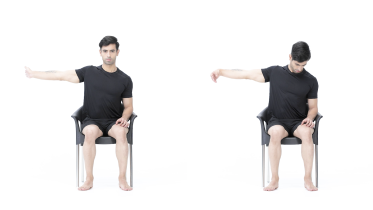 Median nerve glide
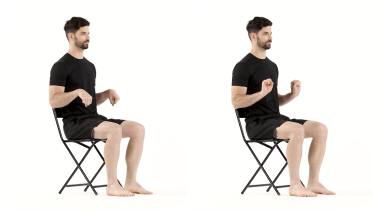 Wrist flexion and extension
 Thumb opposition
When should pins and needles in hands be checked?
Soon, in most cases, and today or faster in some. The NHS pins and needles page is non urgent in tone and says to see a GP for pins and needles you keep getting, or that has lasted a long time, and it carries no urgent or 999 list at all, which is worth knowing if that page is the one you landed on first. The urgency on this page comes from elsewhere: the stroke advice, the NHS cervical spondylosis page, and the guidelines our condition pages already cite.
The short version of the timings, with the full wording in the warning signs section below. Any sign of a stroke, a hand or arm that turns cold, pale or blue, new trouble walking, new bladder or bowel trouble, or hands that have suddenly become clumsy mean calling emergency services, even if the symptom goes away. Numbness in both hands, hands that have slowly become clumsy with buttons, feeling that has gone from part of the arm, a hand muscle that looks thinner than the one on the other side, or tingling with weakness that is getting worse mean medical advice the same day. Tingling that has been there a few weeks with nothing else alongside it is an ordinary appointment.
Do not use that paragraph as your guide. Read the lines below and act on the timing each one gives, because they are not all at the same level.
Related exercise programs
Warning signs
Get emergency help now
- Emergency: any sign of a stroke, even if it goes away. That means a face that droops on one side, an arm you cannot lift or keep up, slurred or muddled speech, weakness or numbness on one side of your body or face, sudden blurred vision, double vision or loss of sight, trouble swallowing, sudden dizziness with unsteadiness or falling over, a sudden severe headache, or a sudden fall where your legs give way but you do not black out (a drop attack). Call emergency services straight away. With neck pain, these can rarely come from a tear in an artery in the neck.
- Emergency: new problems walking, for example your legs feel stiff, heavy or weak or you have become unsteady on your feet, new trouble controlling your bladder or bowels, or hands that suddenly become clumsy, for example you can no longer do up buttons. Call emergency services straight away. These can be signs of pressure on the spinal cord in the neck.
- Your arm, hand or fingers turn cold, pale, blue or gray compared with the other side. Call emergency services or go to an emergency department straight away, and do not drive yourself. The blood supply to the arm may be blocked.
- Emergency: chest pain or tightness, which may spread to your arm, neck or jaw, or shoulder or arm pain that comes with shortness of breath, sweating or feeling sick. This can be a heart attack. Call emergency services straight away.
- Emergency: a new headache, or new pain on one side of your face, jaw or neck, with a drooping eyelid or a smaller pupil on the same side, or with a new pulsing or whooshing sound in one ear that keeps time with your heartbeat. Call emergency services or go to an emergency department straight away, and do not drive yourself. This can be a tear in an artery in the neck (cervical artery dissection), which can lead to a stroke.
- Emergency: you have had cancer, now or in the past, and your back or neck pain feels like a tight band around your body, or comes with pain spreading down an arm or leg, weakness, numbness or pins and needles in your arms or legs, trouble walking, or trouble controlling your bladder or bowels. Call your cancer team's emergency number straight away, or go to an emergency department if you do not have one or cannot get through. This can be cancer pressing on the spinal cord (metastatic spinal cord compression), which needs treatment straight away.
- Emergency: neck pain with a fever, or you feel hot, shivery or very unwell, and you also have new weakness, numbness or tingling in one or both arms or legs, new trouble walking, or new trouble with your bladder or bowels. Call emergency services or go to an emergency department straight away. This can be an infection pressing on the spinal cord or nerves in the neck (spinal epidural abscess), which needs emergency treatment.
- Emergency: in the first days after the accident, numbness, tingling, pins and needles or weakness in your arms or legs, or a sudden electric shock feeling in your neck and back that runs into your arms or legs. If it starts straight after the accident, keep still and call emergency services. If it starts later, call emergency services or go to an emergency department straight away, and do not drive yourself.
- Emergency: in the days or the weeks after an operation on the front of your neck, new swelling in your neck, trouble breathing, or trouble swallowing that is getting worse, with or without a fever. Call emergency services straight away. Bleeding or swelling in front of the spine can narrow the airway in the first hours and the first day after this operation, swelling of the throat tissues can do it in the first three days, and an infection behind the throat can do it after that, which is why this line does not stop at the end of the first week (Debkowska and colleagues, 2019).
- Your arm or hand swells, turns blue, dusky, red or darker than usual, or feels heavy, tight, warm or tender, or has a throbbing or cramping pain that feels different from normal muscle ache. The veins over your shoulder, chest or arm may stand out or be sore to touch, and it often starts after hard or repeated use of the arm. Go to an emergency department the same day, and do not wait to see if it settles. This can be a blood clot in the main vein under the collarbone (venous thoracic outlet syndrome) or elsewhere in the arm, which needs treatment quickly. If you are also short of breath or have chest pain, call emergency services.
Get help now, day or night
- You are pregnant or had a baby in the last few weeks and have a severe headache that does not go away with simple painkillers, problems with your vision such as blurring or flashing lights, pain just below your ribs, vomiting, heartburn that does not go away with heartburn medicines, sudden swelling of your face, hands or feet, or you feel very unwell. Contact your maternity unit straight away, or get urgent medical help if you cannot reach them. These can be signs of pre-eclampsia, which can develop in the days or weeks after the birth and needs checking immediately. The same applies to a headache after an epidural or spinal anesthetic that gets worse when you sit or stand up and eases when you lie down. Call emergency services if you have a fit (seizure) or a headache that came on suddenly and is very severe. Call emergency services too if you have a headache with a stiff neck and either a high temperature or bright light hurting your eyes, as this can be meningitis.
Get help today
- Hands that have slowly become clumsy, for example trouble doing up buttons or dropping things, or numbness in both hands. Get medical advice the same day. These can be signs of pressure on the spinal cord in the neck (cervical myelopathy). If the clumsiness or numbness gets worse quickly, call emergency services straight away.
- Pain or tingling in both arms at the same time, rather than in one. Get medical advice the same day. This can also be a sign of pressure on the spinal cord in the neck.
- Pins and needles or numbness in the arm that does not go away, no feeling in part of the arm, or weakness that is getting worse. Get medical advice the same day. For pain spreading down the arm from your neck, ask for an urgent appointment with your doctor. If one side of your face or body suddenly goes numb or weak, or your speech becomes slurred or muddled, call emergency services, even if it goes away.
- Pins and needles in an arm together with neck or arm pain, or an arm that feels heavy or weak, and nobody has checked it yet. Get medical advice the same day.
- An electric shock feeling runs down your back or into your arms or legs as your head bends forward. Stop and get medical advice the same day.
- An arm or hand that is getting weaker, or muscles in your hand that look thinner or flatter than on the other side, for example the fleshy pad at the base of the thumb or the web between the thumb and the index finger. Get medical advice the same day, and say out loud that a muscle looks smaller, because that is the finding that changes what happens next. A muscle that has visibly shrunk means the nerve has been squeezed long enough to stop supplying it properly, and that is the stage at which an operation to take the pressure off the nerve is considered, to prevent damage that will not recover.
- You have had surgery for a squeezed nerve in the hand or arm, such as a carpal tunnel release or ulnar nerve surgery at the elbow, and the tingling or numbness has come back after settling, has not improved at all, or new weakness has appeared. The same applies if the wound becomes red, hot, swollen, more painful or starts leaking, or you get a fever. Get advice from your surgeon or hand therapist the same day, and go to an emergency department if you feel very unwell. Symptoms that return or never settle after an operation are a question for the team that operated, because they know what was released and what the nerve looked like, and an infection in an operated hand needs treating quickly. One yardstick worth having while you wait: OrthoInfo says night symptoms improve dramatically for most people in the first week or so after a carpal tunnel release, so nights that never improved, or settled and have since come back, are a reason to go back to that team rather than something to solve with exercises.
- You have had an operation on your neck for a squeezed nerve or for pressure on the spinal cord, and the tingling, numbness or arm pain has come back after settling, or new weakness has appeared in a hand or arm. Get advice from the team that operated the same day. What a returning symptom means after that operation depends on what was done and on what your scan showed, so it is their question rather than a physio's. If you also have new trouble walking, new trouble controlling your bladder or bowels, or hands that have suddenly become clumsy, use the emergency line above instead and call emergency services straight away.
- Neck or arm pain with a fever or chills, or you feel generally unwell. Get medical advice the same day, and go to an emergency department if you feel very unwell.
- Shoulder or arm pain with numbness, tingling or weakness that reaches your armpit, your inner arm or the ring and little finger side of your hand, a grip that is getting weaker, or hand muscles that look thinner, even if you have no cough and no breathlessness at all. Get medical advice the same day and say that the pain and the hand symptoms started together. A growth at the top of the lung can press on the nerves to the arm and do all of that before it causes anything in the chest, which is why it is mistaken for a shoulder problem first.
- New neck, shoulder or arm pain and you have had cancer, now or in the past, or you have lost weight without trying. Get medical advice the same day and mention it. If you are being treated for cancer now, contact your cancer team the same day.
Book an appointment
- Tingling or numbness in your ring and little fingers that has lasted more than 6 weeks, even if it is mild. See a doctor in the next week or two, or within a few days if the symptoms are severe. OrthoInfo advises seeing a doctor for these symptoms if they are severe, or if milder symptoms have lasted more than 6 weeks, because muscle wasting from a squeezed nerve cannot be reversed. This is the line for a hand that still only tingles. If the hand is already weak, if a muscle looks thinner, or if the numbness is there all the time, use the same day lines above instead, because those are the signs that the nerve has gone past tingling.
- Routine: pins and needles in a hand that you keep getting, or that has been there a long time, and nobody has examined it. Book an appointment with your doctor. That is the NHS threshold for pins and needles, which is to see a GP if you constantly have it or it keeps coming back, and OrthoInfo says carpal tunnel syndrome gets worse over time in most people, so mild tingling that keeps returning is worth an appointment rather than a waiting period. No source sets a number of weeks for the median nerve at the wrist the way OrthoInfo does for the ulnar nerve at the elbow, so this is the line to use for tingling in the thumb, index, middle and ring fingers that is still only tingling. Use the same day lines above instead if feeling has gone, if anything is weak, or if a hand muscle looks thinner.
- Routine: fingers or toes that change color when you are cold, anxious or stressed, with pain, numbness or pins and needles, and the attacks are very bad or getting worse, are affecting your daily life, come with joint pain, a skin rash or muscle weakness, started for the first time after you were 30, or are happening to a child under 12. Book an appointment with your doctor and say what sets an attack off. This can be Raynaud's, which is common and is often managed by keeping warm, and which is sometimes a sign of another condition. Color change in one hand or one arm and not the other is on the emergency list above instead of here, because a blocked blood supply to an arm looks the same from the outside and is counted in hours.
Common questions
What does pins and needles in hands mean?
Most often that a nerve is being compressed or irritated somewhere between your neck and your fingers, and the pattern tells you roughly where. A nerve squeezed at the wrist or elbow gives tingling in that nerve's own patch of the hand, comes and goes with position, and is often worst at night. Tingling in the whole hand, in both hands, or in hands and feet together is a different shape of problem and points at the neck or at a condition affecting nerves more widely, which the NHS pins and needles page lists as including diabetes, multiple sclerosis, some medicines and cancer treatments, poor diet and drinking too much alcohol. Short episodes after leaning on an elbow or sleeping on an arm are ordinary and clear in minutes. None of that is a diagnosis, and an examination is what settles it.
How do I get rid of pins and needles in my hands?
By finding the cause, because the treatments differ and they do not overlap much. If it is the median nerve at the wrist, a night splint and changes to the positions that provoke it do most of the early work, and our carpal tunnel syndrome program sets out the staged version. If it is the ulnar nerve at the elbow, the answer is about how long the elbow spends bent and how much pressure goes through it, which the cubital tunnel syndrome program covers. If it comes from a nerve root in the neck, the work is at the neck. If the cause is diabetes, a medicine or something systemic, the exercise is a small part and the medical treatment is the main part. Guessing wrong wastes weeks, which is the argument for being examined rather than starting with exercises you found online.
Why do I get pins and needles in my hands at night?
Because sleep removes the one thing that was keeping your wrists and elbows in a neutral position, which is you paying attention. Most people sleep with the wrists bent, the elbows bent, or both, and both positions crowd a nerve. OrthoInfo says night symptoms are very common in carpal tunnel syndrome for that reason and that they often wake people up. Fluid shifting while you lie flat plays a part too. What people notice is the pattern: tingling or a dead hand at 3am, relief from hanging the arm out of bed or shaking it, then a hand that feels clumsy for the first hour of the day. Our page on why carpal tunnel is worse at night and how to sleep is the detailed answer, including what to do about the splint.
Should I worry about pins and needles in both hands?
It needs looking at rather than worrying about, and it needs looking at sooner than tingling in one hand does. Numbness in both hands is on this page's same day list, because it is the presentation that gets labelled carpal tunnel in both wrists when the cause sits higher up, at the spinal cord in the neck. The NHS cervical spondylosis page puts new problems walking, loss of bladder or bowel control and a sudden lack of co-ordination, naming buttoning a shirt, in its call 999 box, and puts heaviness or weakness in the arms or legs and pins and needles in an arm alongside neck or arm pain in its urgent box. Both hands can also be plain carpal tunnel syndrome in both wrists, which is common, and our page on carpal tunnel in both hands covers that version. The point is that the two look alike from the outside.
Can pins and needles in hands be a sign of something serious?
Yes, in a minority of cases, which is why this page leads with the sorting rather than the exercises. The ones measured in hours are a stroke, a blocked blood supply to the arm, and pressure on the spinal cord in the neck, and each has its own line in the warning signs section with its own timing. Set against that, the common causes are not dangerous and most of them respond to treatment. Read the warning list line by line instead of taking a general impression from this answer, because the lines are not all at the same level of urgency and a few of them do not wait.
References
- NHS. Pins and needles. Read 28 October 2026. https://www.nhs.uk/conditions/pins-and-needles/
- NHS. Raynaud's. Page last reviewed 20 July 2023. https://www.nhs.uk/conditions/raynauds/
- NHS. Carpal tunnel syndrome. https://www.nhs.uk/conditions/carpal-tunnel-syndrome/
- American Academy of Orthopaedic Surgeons. Carpal tunnel syndrome. OrthoInfo. https://www.orthoinfo.org/en/diseases--conditions/carpal-tunnel-syndrome/
- American Academy of Orthopaedic Surgeons. Cubital tunnel syndrome (ulnar nerve entrapment at the elbow). OrthoInfo. https://www.orthoinfo.org/en/diseases--conditions/ulnar-nerve-entrapment-at-the-elbow/
- NHS. Cervical spondylosis. Page last reviewed 2 August 2023. https://www.nhs.uk/conditions/cervical-spondylosis/
- Davies BM, Mowforth OD, Smith EK, Kotter MR. Degenerative cervical myelopathy. BMJ. 2018;360:k186. https://doi.org/10.1136/bmj.k186
- NHS. Symptoms of a stroke. Page last reviewed 12 September 2024. https://www.nhs.uk/conditions/stroke/symptoms/
- healthdirect. Limb numbness. Australian Government. https://www.healthdirect.gov.au/symptoms/limb-numbness
- NHS. Pre-eclampsia. https://www.nhs.uk/conditions/pre-eclampsia/
- Darouiche RO. Spinal epidural abscess. New England Journal of Medicine. 2006;355(19):2012-2020. https://doi.org/10.1056/NEJMra055111
- Debkowska MP, Butterworth JF, Moore JE, Kang S, Appelbaum EN, Zuelzer WA. Acute post-operative airway complications following anterior cervical spine surgery and the role for cricothyrotomy. Journal of Spine Surgery. 2019;5(1):142-154. https://doi.org/10.21037/jss.2019.03.01
- National Institute for Health and Care Excellence. Spinal metastases and metastatic spinal cord compression (NG234). Published September 2023. https://www.nice.org.uk/guidance/ng234
Written and checked by the PocketPhysio editorial team. Last updated 2026-10-28.
This page is general education, not a diagnosis or a personal treatment plan. See a physiotherapist or doctor for advice about your own situation.