
Part of Strength training on GLP-1 medicines
Strength training on a GLP-1 medicine when you are older
Why age changes the sums
Muscle strength falls with age on its own. The European working group on sarcopenia describes sarcopenia as a muscle disease built up from changes across a lifetime, and it puts low muscle strength first among the signs, ahead of muscle size (Cruz-Jentoft 2019). So someone of 72 starting a weight loss medicine begins from a lower base than someone of 32, with less to spare.
How much of a weight loss is not fat? In the body composition substudy of SURMOUNT-1, 160 people had DXA scans at the start and again at week 72. On tirzepatide, body weight fell by 21.3%, fat mass by 33.9% and lean mass by 10.9%. On placebo the same three figures were 5.3%, 8.2% and 2.6% (Look 2025). Roughly three quarters of the weight lost was fat and a quarter was lean tissue, in the placebo group as much as the treated group, and the authors found a similar split across age groups.
A quarter is a manageable share when the total is small. It is a different proposition when someone loses a fifth of their body weight in a year and started with the muscle of a 75 year old.
Bone comes off with the weight
Bone is the second reason age changes things. In a Copenhagen trial of 195 adults with obesity aged 18 to 65, a year of liraglutide on its own left hip and spine density lower than placebo and lower than exercise alone. Every group lost some hip density after the diet, but the combination of exercise and the medicine finished no different from placebo at the hip, the spine or the forearm, and did so after a much bigger weight loss, 16.9 kg (37 lb) against 7.0 kg (15 lb) with placebo (Jensen 2024, JAMA Network Open). The exercise group gained lean mass over that year, and the combined group kept theirs while losing the most fat.
Older adults were not in that trial. The closest study that only recruited them is older and used food rather than medicine: Villareal and colleagues randomized 107 adults aged 65 and over to control, diet, exercise, or diet plus exercise for a year. Lean body mass and hip bone density fell by 3% and 1% in the diet plus exercise group, against 5% and 3% with diet alone (Villareal 2011). Physical function improved most when exercise was part of the plan. Read it as the nearest guide there is, not as a study of GLP-1 treatment.
Falls are the outcome that matters
Strength on its own is not the goal. Staying on your feet is. A Cochrane review pooled 108 trials in 23,407 older people living in the community, average age 76, and found that exercise cut the rate of falls by about 23%, with high certainty evidence (Sherrington 2019). Balance and functional exercise reached that on its own.
Programs built from several types, most often balance and functional exercise alongside resistance work, probably cut the rate by about a third, although the certainty there is moderate rather than high. What the review could not settle was resistance training used by itself, which is the clearest argument there is for doing both.
Practice where you can reach a kitchen counter or a sturdy chair. Wear flat shoes that fit well and grip the floor, not socks, tights or bare feet. If you have fallen in the past year, arrange for someone to be at home the first few times.
What helps
Two habits do most of the work: resistance training you can repeat, and balance practice you actually do. The NHS asks adults of 65 and over for activities that improve strength and balance on at least 2 days a week, on top of 150 minutes of moderate activity, and across this topic the strength target is 2 to 3 days. How those sessions sit across a week is on the strength plan page, and the home version with the kit list is on exercises at home.
On this site the staged program is strength training for older adults, which starts seated and works up to stairs and floor practice. The progressions for steadiness sit in balance and falls prevention. If a scan has already shown thin bones, the osteoporosis program covers loading, impact and safer ways to bend and lift.
Exercises that can help
Each of these has a video, its own starting dose and its own stop signs. Most of these begin at 2 to 3 sets of 10 to 15 repetitions a few days a week, sit to stand starts at 2 to 3 sets of 5 to 10, and tandem stance is a hold of 10 to 30 seconds, 2 to 3 times with each foot in front. Your physio will adjust this.
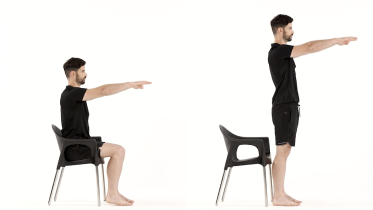 Sit to stand
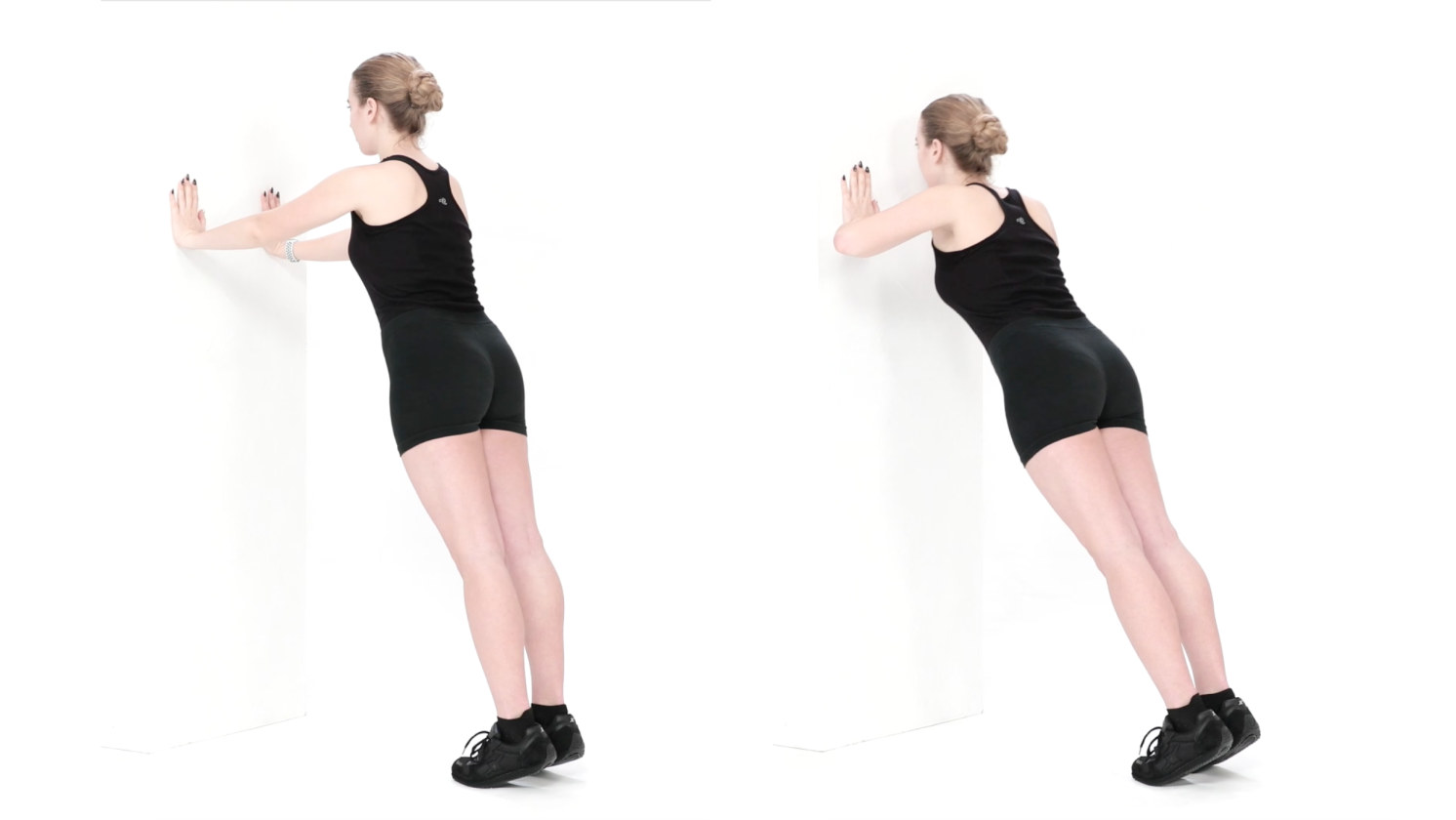 Wall push-ups
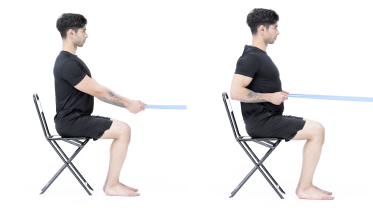 Seated row with band
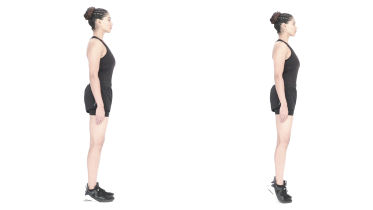 Calf raises
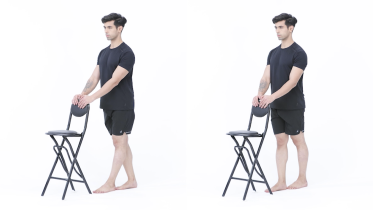 Tandem stance
Get a check first
Speak to a GP first if you have not exercised for some time, or if you have medical conditions or concerns (NHS). With a heart condition or high blood pressure, check with your doctor before you start. If you have high blood pressure, breathe steadily through every repetition and never hold your breath. If you have had a hip replacement, get the go-ahead from your surgeon or physio before you try sit to stand. Some operations limit this kind of work for the first months, so the timing depends on your surgery.
Stop at once, whatever you are in the middle of, if you get any of these: chest pain or pressure, dizziness or feeling faint, a racing or irregular heartbeat, or being far more out of breath than the effort should cause. What to do about each of those is in the warning signs below.
How strong is the evidence for older adults
Thinner than you might expect, and worth saying plainly. The body composition figures above come from DXA scans, which measure lean mass rather than strength, so SURMOUNT-1 cannot tell you whether anyone became weaker (Look 2025). A 2025 review in the Journal of Nutrition, Health and Aging raises sarcopenic obesity, which it estimates affects 10 to 20% of older adults, and its authors warn that repeated use and stopping of these medicines may shift body composition toward fat relative to lean mass. They also write that resistance exercise with enough protein has shown promise for holding onto muscle during weight loss, but that how well it works alongside GLP-1 treatment in older adults, during or after it, is still unclear (Prokopidis 2025).
The trial that combined exercise with a GLP-1 medicine recruited adults aged 18 to 65 (Lundgren 2021). So the training evidence for people over 70 on these medicines is borrowed from weight loss without medicine, and from what strength and balance work does for older adults generally. That is enough to act on, and not enough to promise anyone a number.
The medicine side is not ours
This page gives no advice about the medicine itself. Doses, when to start, whether to stop, switching between products, timing around meals and what to do about side effects are decisions for the prescriber and the pharmacist. Take every one of those questions to them.
What a physio can help with is the training: what to do, how much, and how to keep it going in a week when you are below par. Tell the prescriber what you are doing, and tell the physio what you are taking, because each of them is working with half the picture otherwise.
When to see a physio
Book with a physio, or a physical therapist if you are in the USA, when getting out of a chair or climbing stairs has become harder, when you feel unsteady, when you have fallen in the past year, or when you have osteoporosis or a past fracture and are not sure what is safe to load. Ask for the exercises to be set at a level you can manage on a poor day as well as a good one.
Clinicians measure this rather than guess. Grip strength and the time taken to stand up from a chair 5 times are the two the European sarcopenia group uses to flag probable sarcopenia (Cruz-Jentoft 2019). The 30-second chair stand test is a simple way to record where you are now and check again in 3 months. Take the number with you to the appointment.
Related exercise programs
See a doctor promptly if
- Emergency: if chest pain, pressure or tightness does not ease quickly when you rest, spreads to your arm, neck, jaw, stomach or back, or comes with sweating, feeling sick, feeling light-headed or being short of breath, call emergency services straight away, as this can be a heart attack. If it eases quickly and none of these happen, get medical advice the same day, and do not exercise again until you have been checked.
- Emergency: any sign of a stroke, even if it goes away. That means a face that droops on one side, an arm you cannot lift or keep up, slurred or muddled speech, weakness or numbness on one side of your body or face, sudden blurred vision, double vision or loss of sight, trouble swallowing, sudden dizziness with unsteadiness or falling over, a sudden severe headache, or a sudden fall where your legs give way but you do not black out (a drop attack). Call emergency services straight away.
- Emergency: you have just fallen and cannot get up, or you think you may have hurt your head, neck, back or hip. Stay where you are, keep warm and call emergency services, or get someone to call for you. If you got up and walked without trouble and only notice pain later, use the lines below.
- Emergency: you fell and cannot remember the fall or how it happened. Go to an emergency department straight away, and do not drive yourself. You may have blacked out or hit your head without knowing it.
- Emergency: you have had a fall or an injury and now have severe hip pain, or you cannot walk or put weight on the leg. Call emergency services or go to an emergency department. This can be a sign of a broken hip (hip fracture).
- Emergency: sudden severe stomach pain together with pain spreading to your back, bloating that will not settle, a fast heartbeat, trouble breathing, or skin around your belly button, waist or upper outer thigh that looks blue or bruised (this can be harder to see on brown or black skin). Call emergency services or go to an emergency department, and do not drive yourself. If that sudden severe pain does not go away or keeps coming back, or comes with a high temperature or chills, without any of the signs above, get an urgent medical appointment or call your health service's urgent advice line the same day.
- Same day: dizziness or feeling faint during or after exercise, without any of the emergency signs above. Stop the exercises and get medical advice the same day. If you faint, it does not settle within a few minutes of sitting still, or you cannot stand or walk steadily, call emergency services.
- Same day: you blacked out or fainted, even for a moment. Get medical advice the same day. Call emergency services instead if the person cannot be woken within 1 minute, has not fully recovered or has trouble speaking or moving, has chest pain or a pounding, fluttering or irregular heartbeat, fainted while exercising or lying down, is shaking or jerking, or was badly hurt.
- Same day: shakiness, sweating, tingling lips, hunger, a pounding heartbeat, blurred vision, feeling weak or confusion during or after a session, if you take insulin or other diabetes medicines. These can be signs of low blood sugar, and the risk of it is higher when insulin or a sulfonylurea is taken alongside one of these medicines. Treat it the way your diabetes team has told you, then contact them or your prescriber the same day. If someone cannot be woken, cannot swallow safely or has a seizure, call emergency services.
- Same day: you cannot keep fluids down, you are being sick or have diarrhea that will not settle, you are peeing less than usual or your pee is dark yellow and strong smelling, you feel unusually tired, you feel dizzy when you stand up, or you are breathing quickly or your heart is racing. Contact your prescriber or get medical advice the same day, as these can be signs of dehydration. Call emergency services or go to an emergency department if your skin, lips or tongue look blue, gray, pale or blotchy (on brown or black skin this can be easier to see on the palms of the hands or soles of the feet), your skin feels cold, you are breathing fast or finding it hard to breathe, you are confused, or you are unusually sleepy or hard to wake.
- Same day: a calf or thigh that is newly swollen, warm, tender, red or darker than usual, has swollen veins that are sore to touch, or has a throbbing or cramping pain that does not fit your injury or condition, or that feels different from normal muscle soreness after exercise. This can be a sign of a blood clot (deep vein thrombosis), especially after surgery, an injury, time in a cast or boot, a long trip or a spell of being much less mobile than usual. Get medical advice the same day. If you are also short of breath or have chest pain, call emergency services.
- Same day: after a fall, you are in pain, have hurt yourself or feel unwell, or you were on the floor for an hour or more, without any of the emergency signs above. Get medical advice the same day, even if you managed to get up.
- Same day: new hip or groin pain after a fall, even a small one, if you are older, have low bone density (osteoporosis) or have taken steroid tablets for a long time, even if you can still walk. Get medical advice the same day. A broken hip is not always obvious at first.
- Same day: back pain after a minor fall or strain if you are older, have low bone density (osteoporosis) or have taken steroid tablets for a long time. Get medical advice the same day.
- Within a few days: you have fallen two or more times in the past year, or you keep tripping, stumbling or feeling that your legs might give way. Book an appointment with your GP within a few days and ask about a falls assessment. Tell them about every fall, even the ones where you were not hurt.
- Within a few days: jobs such as getting out of a chair, climbing stairs or carrying shopping are getting harder while your weight is falling. Book an appointment with your GP or a physio within a few days, and say which medicine you are on so the two can be looked at together.
Common questions
Do GLP-1 medicines cause muscle loss in older adults?
Some of any large weight loss is lean tissue, whether the weight comes off with a medicine or without one. In the SURMOUNT-1 scan substudy, about 75% of the weight lost was fat and about 25% was lean mass, and that split was much the same in the placebo group and across the age groups the authors looked at (Look 2025). What those scans cannot tell you is whether people became weaker, because strength was not measured. That is the gap a 2025 review flags for older adults in particular (Prokopidis 2025).
Is it safe to start strength training at 70 while I am losing weight?
For most healthy older adults it is, once you have had a check. The NHS advice is to speak to a GP first if you have not exercised for some time, or if you have medical conditions or concerns. In a trial of 107 adults aged 65 and over, the group that dieted and exercised kept more lean mass and more hip bone density than the group that dieted alone, and improved their physical function most (Villareal 2011). Start at a level you could repeat tomorrow and build from there.
Does losing weight on one of these medicines weaken bones?
Weight loss of any kind tends to take some bone with it, and one trial suggests the medicine alone is not neutral. In 195 adults with obesity aged 18 to 65, hip density fell in every group over a year, and hip and spine density fell furthest on liraglutide alone, below both placebo and exercise alone. The group that combined exercise with the medicine ended level with placebo at the hip, spine and forearm despite a much larger weight loss (Jensen 2024, JAMA Network Open). That trial did not include older adults and used liraglutide rather than the newer medicines, so read it as a signal to train, not as a measurement of your own bones. If you already have osteoporosis, ask your physio which movements to load and which to build up slowly.
Do I need balance exercises as well as strength work?
The falls evidence says yes. A Cochrane review of 108 trials in 23,407 older people living in the community found that exercise reduced the rate of falls by about 23%, and that balance and functional exercise did this on its own with high certainty evidence (Sherrington 2019). Programs mixing several types, usually balance and functional work plus resistance training, probably reduce the rate by about a third, on moderate certainty evidence. The review was uncertain about resistance training used on its own. Balance work takes a few minutes and goes next to the strength work, not instead of it.
How do I know whether I am losing muscle or just fat?
You cannot tell from the bathroom scale, and home scales that claim to measure body fat are not accurate enough to settle it. Clinicians use function instead. The European sarcopenia group flags probable sarcopenia from low grip strength or a slow time to stand up from a chair 5 times (Cruz-Jentoft 2019), and the 30-second chair stand test is an easy one to repeat at home every few months. Write the number down and take it to your next appointment.
Can my physio tell me whether to keep taking the medicine?
No, and neither can this page. Prescribing, dosing, stopping, switching and side effects belong to the prescriber and the pharmacist. A physio can tell you what to train, how much of it, and how to keep it going on weeks when you feel below par.
References
- Cruz-Jentoft AJ, Bahat G, Bauer J, et al. Sarcopenia: revised European consensus on definition and diagnosis. Age and Ageing. 2019;48(1):16-31. doi:10.1093/ageing/afy169
- Look M, Dunn JP, Kushner RF, et al. Body composition changes during weight reduction with tirzepatide in the SURMOUNT-1 study of adults with obesity or overweight. Diabetes, Obesity and Metabolism. 2025;27(5):2720-2729. doi:10.1111/dom.16275
- Jensen SBK, et al. Bone health after exercise alone, GLP-1 receptor agonist treatment, or combination treatment: a secondary analysis of a randomized clinical trial. JAMA Network Open. 2024;7(6):e2416775. doi:10.1001/jamanetworkopen.2024.16775
- Villareal DT, Chode S, Parimi N, et al. Weight loss, exercise, or both and physical function in obese older adults. New England Journal of Medicine. 2011;364:1218-1229. doi:10.1056/NEJMoa1008234
- Lundgren JR, Janus C, Jensen SBK, et al. Healthy weight loss maintenance with exercise, liraglutide, or both combined. New England Journal of Medicine. 2021;384(18):1719-1730. doi:10.1056/NEJMoa2028198
- Prokopidis K, Daly RM, Suetta C. Weighing the risk of GLP-1 treatment in older adults: should we be concerned about sarcopenic obesity? Journal of Nutrition, Health and Aging. 2025;29(10):100652. doi:10.1016/j.jnha.2025.100652
- Sherrington C, Fairhall NJ, Wallbank GK, et al. Exercise for preventing falls in older people living in the community. Cochrane Database of Systematic Reviews. 2019;(1):CD012424. doi:10.1002/14651858.CD012424.pub2
- NHS. Physical activity guidelines for older adults. https://www.nhs.uk/live-well/exercise/physical-activity-guidelines-older-adults/
- NHS. Symptoms of a stroke. https://www.nhs.uk/conditions/stroke/symptoms/
- NHS. Acute pancreatitis. Page last reviewed 11 March 2026. https://www.nhs.uk/conditions/acute-pancreatitis/
- NHS. Low blood sugar (hypoglycaemia). Page last reviewed 3 August 2023. https://www.nhs.uk/conditions/low-blood-sugar-hypoglycaemia/
- NHS. Dehydration. Page last reviewed 1 May 2026. https://www.nhs.uk/conditions/dehydration/
- NHS. Deep vein thrombosis (DVT). Page last reviewed 30 April 2026. https://www.nhs.uk/conditions/deep-vein-thrombosis-dvt/
- NHS. Osteoporosis. https://www.nhs.uk/conditions/osteoporosis/
- NHS. Fainting. Page last reviewed 17 August 2026. https://www.nhs.uk/symptoms/fainting/
Written and checked by the PocketPhysio editorial team. Last updated 2026-10-01.
This page is general education, not a diagnosis or a personal treatment plan. See a physiotherapist or doctor for advice about your own situation.