
Part of Sciatica
Driving with sciatica: when it is safe, long trips and travel
Warning signs, and when to get help
Is it safe to drive with sciatica?
For many people, yes, as long as the leg can do its job on the pedals. That matters most when the sciatica is in your right leg, because the right foot works the accelerator and the brake whichever side of the road you drive on.
Two small studies have measured braking in people with sciatica. In 46 people waiting for surgery on a slipped disc that was causing leg pain, braking was slower than in people without back trouble; it got quicker after the operation but stayed behind the comparison group at follow-up (Thaler and colleagues, 2012). A second study, of people about to have an injection around the irritated nerve root, also found slower braking than in healthy drivers (Al-khayer and colleagues, 2008). Both groups had sciatica bad enough to need hospital treatment, so the numbers do not apply to every case. What they do show is that the leg can be slower on the brake than the driver realizes.
A simple check before you drive again, which is practice advice rather than a tested rule: sit in the parked car with the engine off. Press the brake hard and fast several times, as you would in an emergency stop.
In a manual car, push the clutch to the floor and hold it there. Turn to look over each shoulder. If any of that brings on sharp leg pain, makes you hesitate, or you cannot feel clearly where your foot is on the pedal, you are not ready yet. An automatic takes the clutch out of the picture, which helps when the sciatica is in the left leg.
When should you not drive with sciatica?
Not while the leg is weak or numb enough to affect the pedals, not while the pain is pulling your attention off the road, and not while a medicine is making you drowsy, dizzy or slow. A leg or foot that is getting weaker also means getting medical advice the same day; the warning list below has the details.
Medicines catch people out more than the pain does. The Faculty of Pain Medicine in the UK warns that pain medicines can make you sleepy or dizzy, and says not to drive if you feel sleepy, dizzy, slow in your thinking, poorly coordinated or have trouble seeing. It puts the risk highest when you start a medicine, raise or lower the dose, or add another one, and alcohol on top makes it much worse. If your doctor has told you not to drive, do not drive, even if you feel fine. The law makes the same point in every market this page covers:
- UK: in England, Scotland and Wales it is illegal to drive if a legal drug impairs your driving, and GOV.UK names medicines to talk to your doctor about before you drive, including codeine, tramadol, morphine and diazepam (GOV.UK, Drugs and driving).
- USA: impaired driving is illegal in all 50 states, and that covers prescription and over-the-counter medicines that impair you, as well as alcohol and illegal drugs (NHTSA).
- Canada: the Criminal Code makes it an offence to drive while your ability is impaired to any degree by alcohol or a drug (Department of Justice Canada).
- Australia: in New South Wales, for example, driving under the influence of alcohol or any other drug is an offence, and that can include a prescribed medicine that impairs you (Road Transport Act 2013, section 112). Transport for NSW adds that a medicine may affect your driving most when you first start it. The national fitness to drive standards note that strong pain medicines slow thinking mostly early in treatment (Austroads, 2022).
- New Zealand: driving while impaired by a medicine is illegal even when it is prescribed for you, and the medicines named in the law include codeine and the sleeping tablet zopiclone (NZ Transport Agency; Land Transport (Drug Driving) Amendment Act 2022).
Never stop or change a prescribed medicine on your own. Ask your doctor or pharmacist whether yours affects driving, and whether the timing of doses can work around a long drive.
In England, Scotland and Wales, you must tell the DVLA about a medical condition that affects your driving, and you can be fined up to £1,000 if you do not (GOV.UK). Other countries have their own licensing rules. If leg weakness or numbness has not recovered, ask your doctor whether you need to report it.
How do you manage a long drive with sciatica?
Plan the stops before you plan the route. Getting out every 30 to 45 minutes and walking for a few minutes matches the advice on sciatica pain when sitting, which also covers how to set up the seat, so it is not repeated here. Set a timer on your phone, because the leg is a poor judge of time once you are on the highway.
Use the stop well. Walk for a few minutes first. If the standing back extension eases your leg, do a few at the side of the car before you get back in. If you have been told you have spinal stenosis or spondylolisthesis, ask your physio before you use it, because bending backward can make both worse.
Share the driving if you can. In practice, small shifts in how you sit every few minutes also help on the stretch between stops. As a passenger you can recline a little further and move more, but the same stops apply.
Getting in and out of the car
Get in bottom first. Stand with your back to the open door, sit down on the edge of the seat with both feet still outside, then swing both legs in together while your hips and shoulders turn as one. Getting out is the same in reverse: turn both legs out, put both feet on the ground, then push up. Some people put a plastic bag on cloth seats to make the turn easier, and take it off the seat before driving. Turning as one piece is the same idea as the log roll, which keeps the trunk from twisting as you get out of bed.
Low cars are hardest. Raise the seat before you get in rather than after, and slide it back to give your legs room to swing. When you stand up after a long drive, give yourself a few steps before you judge the leg, as the first steps after sitting are often the worst.
What helps on flights, trains and coaches?
An aisle seat, and permission to use it. Book the aisle so you can stand and walk without asking anyone to move, and get up whenever the seatbelt sign is off, aiming for the same 30 to 45 minute rhythm as in the car where you can. On trains you can usually stand in the space by the doors for a while. Coaches are the hardest, so choose ones that stop regularly, or a seat at the front with a little more room.
Long trips add a second reason to move. The CDC says any trip of more than 4 hours, by air, car, bus or train, can raise the risk of a blood clot, and advises walking around every 1 to 2 hours and working your calf muscles. Ankle pumps do that in your seat. A calf or thigh that becomes swollen, warm, tender or painful after a trip means getting medical advice the same day, and calling emergency services if you are also short of breath or have chest pain; the warning list below gives the full set of signs.
Luggage is where many people undo a good trip. Check in heavy bags, use a case with wheels, and ask for help with the overhead locker rather than lifting with a twist. A small cushion or rolled sweater behind your lower back helps on seats that have no support.
Driving when you need urgent help
Do not drive yourself to get help for the emergency signs. Numbness around your genitals or bottom, new trouble with your bladder or bowels, pain, tingling, numbness or weakness in both legs, or loss of feeling in one leg mean calling emergency services or going to an emergency department straight away, with someone else driving or an ambulance. When sciatica is an emergency explains each sign and what it can mean.
For the rest of daily life with sciatica, the sciatica program has the staged exercises, exercises to avoid with sciatica covers what to pause, and how to sleep with sciatica helps with the nights before and after a long trip.
Exercises that can help
Use these at stops and in your seat rather than as a workout. Typical doses from each exercise page: standing back extension, a hold of about 10 seconds, 3 to 5 repetitions at a time, several times a day and especially after a long spell of sitting; ankle pumps, building up to 10 to 20 at a time, several times a day while you are sitting a lot; brisk walking, 10 to 20 minutes on most days, with a few minutes of it at each stop on a long trip. Your physio will adjust this.
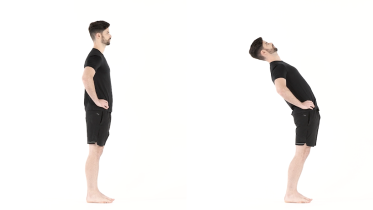 Standing back extension
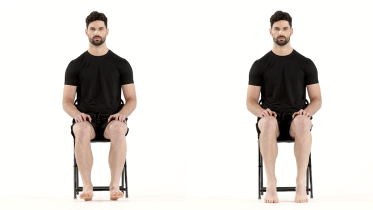 Ankle pumps
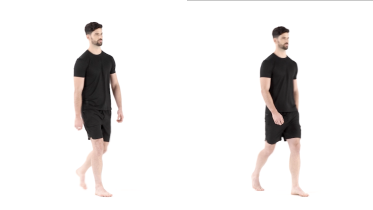 Brisk walking
Related exercise programs
Warning signs
Get emergency help now
- Emergency: numbness, tingling or altered feeling around or under your genitals, between your inner thighs, or around your bottom (anus), for example it feels different when you wipe after using the toilet. Call emergency services or go to an emergency department straight away. This can be a sign of pressure on the bundle of nerves at the base of the spine (cauda equina syndrome), which needs emergency treatment.
- Emergency: you find it hard to start peeing, cannot pee, cannot feel yourself peeing or cannot control when you pee, or you do not notice when you need to poo or cannot control when you poo, and this is not normal for you. The same applies to a new change in how your genitals feel during sex, or new trouble getting an erection or ejaculating. Call emergency services or go to an emergency department straight away. These can also be signs of cauda equina syndrome.
- Emergency: sciatica in both legs, or pain, tingling, numbness or weakness in both legs. The same applies if you lose feeling in one leg. Call emergency services or go to an emergency department straight away.
- Emergency: back or leg pain that started after a serious accident, such as a car crash or a fall from a height, or back pain with chest pain. Call emergency services. If the pain started straight after the accident, keep still while you wait.
- Emergency: sudden, severe pain in your lower back or tummy that is not like your usual back pain, if you have been told you have a swelling of the main blood vessel in your tummy (abdominal aortic aneurysm), you are over 60, you smoke or used to smoke, or you have high blood pressure. The same applies if sudden, severe back or tummy pain comes with feeling faint or passing out, pale, sweaty or clammy skin, a racing heartbeat or being short of breath. Call emergency services straight away. This can be a sign of an aneurysm bursting, which needs treatment in hospital at once.
- Emergency: new neck or back pain after a fall, a knock or a jolt, even a minor one such as a trip or a sudden stop in a car, if you have a condition that stiffens the spine, such as ankylosing spondylitis. Call emergency services or go to an emergency department straight away, do not drive yourself, and tell the staff about your spine condition, so they keep your neck and back in their usual position. A stiff spine can break after a small injury, and the break is easy to miss at first. If the pain started straight after the injury, or you also have numbness, tingling or weakness in your arms or legs, keep still and call emergency services.
- Emergency: you have had cancer, now or in the past, and your back or neck pain feels like a tight band around your body, or comes with pain spreading down an arm or leg, weakness, numbness or pins and needles in your arms or legs, trouble walking, or trouble controlling your bladder or bowels. Call your cancer team's emergency number straight away, or go to an emergency department if you do not have one or cannot get through. This can be cancer pressing on the spinal cord (metastatic spinal cord compression), which needs treatment straight away.
- Emergency: back pain with a fever, or you feel hot, shivery or very unwell, and you also have new weakness, numbness or tingling in one or both legs, or new trouble with your bladder or bowels. Call emergency services or go to an emergency department straight away. This can be an infection pressing on the nerves in the spine (spinal epidural abscess), which needs emergency treatment.
Get help today
- Same day: a leg or foot that is getting weaker, for example your foot drags, catches on the ground or slaps down when you walk (foot drop). Get medical advice the same day. If the weakness is getting worse by the hour, go to an emergency department.
- Same day: a calf or thigh that is newly swollen or getting more swollen, warm, tender, red or darker than usual, has swollen veins that are sore to touch, or has a throbbing or cramping pain that does not fit your injury or condition, or that feels different from normal muscle soreness after exercise. This can be a sign of a blood clot (deep vein thrombosis), especially after surgery, an injury, time in a cast or boot, a long trip or a spell of being much less mobile than usual. Get medical advice the same day. If you are also short of breath or have chest pain, call emergency services.
- Same day: back or leg pain with a fever, or you feel hot, cold, shivery or generally unwell. Get medical advice the same day, and go to an emergency department if you feel very unwell.
- Same day: new back or leg pain and you have had cancer, now or in the past, or you have lost weight without trying. Get medical advice the same day and mention it. If you are being treated for cancer now, contact your cancer team the same day.
- Same day: back pain after a minor fall or strain if you are older, have low bone density (osteoporosis) or have taken steroid tablets for a long time. Get medical advice the same day.
- Same day: severe pain that comes on suddenly or is getting worse quickly. Get medical advice the same day.
- Same day: pain that does not ease at all with rest or changing position, or is worse at night. Get medical advice the same day if you also feel unwell, have lost weight without trying, or have had cancer, now or in the past.
Book an appointment
- Within a few days: pain that does not ease at all with rest or changing position, or is worse at night. See your doctor within a few days.
Common questions
How often should I stop on a long drive with sciatica?
Every 30 to 45 minutes, for a few minutes of walking each time. Plan the stops before you set off rather than waiting for the leg to demand one, because by then the drive home from the stop is uncomfortable too. No trial has tested the best interval for sciatica, so treat this as a starting point and stop sooner if your leg says so. If you are the passenger, the same stops help you as well.
Can I drive after a sciatica injection?
Plan for someone else to drive you home. In a small study of 20 people having an injection around a nerve root for sciatica, those with right leg sciatica braked more slowly straight after the injection than before it, and were still slower two weeks later (Al-khayer and colleagues, 2008). Ask the team who gave the injection when you can drive again, and do not drive until the leg feels normal on the pedals.
Is it OK to fly with sciatica?
For most people with sciatica, yes, with some planning. Book an aisle seat so you can stand and walk without climbing over anyone, put a small cushion or rolled sweater behind your lower back, and check in heavy bags rather than lifting them into the overhead locker. Get up whenever the seatbelt sign allows. Any trip of more than 4 hours, by plane, car, bus or train, can put you at risk of a blood clot in the leg, and the CDC advises moving your legs and walking around every 1 to 2 hours. Ankle pumps in your seat keep the calf muscles working between walks.
Which sciatica medicines can affect driving?
Several of the medicines used for pain can. The US Food and Drug Administration lists opioid pain relievers, products containing codeine, muscle relaxants, antiseizure medicines and some antidepressants among the medicines that can make driving unsafe, through drowsiness, dizziness, blurred vision or slow reactions. The UK Faculty of Pain Medicine puts the risk highest when you start a medicine, change the dose or add another one, and alcohol on top makes it worse. Ask your doctor or pharmacist whether yours affects driving. Never stop or change a prescribed medicine on your own.
References
- Thaler M, Lechner R, Foedinger B, et al. Driving reaction time before and after surgery for lumbar disc herniation in patients with radiculopathy. European Spine Journal. 2012;21:2259-2264. https://doi.org/10.1007/s00586-012-2378-9
- Al-khayer A, Schueler A, Kruszewski G, Armstrong G, Grevitt MP. Driver reaction time before and after treatment for lumbar radiculopathy. Spine. 2008;33(15):1696-1700. https://doi.org/10.1097/BRS.0b013e31817b5bb7
- Faculty of Pain Medicine of the Royal College of Anaesthetists. Driving and pain: information for patients. 2019. https://fpm.ac.uk/sites/fpm/files/documents/2019-08/FPM-Driving-and-Pain-patient-information.pdf
- GOV.UK. Drugs and driving: the law. https://www.gov.uk/drug-driving-law
- GOV.UK. Medical conditions, disabilities and driving. https://www.gov.uk/driving-medical-conditions
- National Highway Traffic Safety Administration. Drug-impaired driving. https://www.nhtsa.gov/risky-driving/drug-impaired-driving
- US Food and Drug Administration. Some medicines and driving don't mix. Consumer update. https://www.fda.gov/consumers/consumer-updates/some-medicines-and-driving-dont-mix
- Department of Justice Canada. Frequently asked questions: drug-impaired driving laws. https://www.justice.gc.ca/eng/cj-jp/sidl-rlcfa/qa2-qr2.html
- New South Wales Government. Road Transport Act 2013 No 18, section 112. https://legislation.nsw.gov.au/view/html/inforce/current/act-2013-018
- Transport for NSW. Drugs and driving. https://www.transport.nsw.gov.au/roadsafety/topics-tips/drugs
- Austroads. Assessing fitness to drive for commercial and private vehicle drivers. 2022. https://austroads.gov.au/drivers-and-vehicles/assessing-fitness-to-drive
- NZ Transport Agency Waka Kotahi. How medication affects driving. https://www.nzta.govt.nz/safety/driving-safely/medication
- New Zealand Government. Land Transport (Drug Driving) Amendment Act 2022, Schedule 2 (new Schedule 5). https://www.legislation.govt.nz/act/public/2022/0005/latest/LMS378964.html
- Centers for Disease Control and Prevention. Understanding your risk for blood clots with travel. https://www.cdc.gov/blood-clots/risk-factors/travel.html
- NHS. Sciatica. https://www.nhs.uk/conditions/sciatica/
- NHS. Deep vein thrombosis (DVT). https://www.nhs.uk/conditions/deep-vein-thrombosis-dvt/
- NHS. Abdominal aortic aneurysm. https://www.nhs.uk/conditions/abdominal-aortic-aneurysm/
- National Institute for Health and Care Excellence. Abdominal aortic aneurysm: diagnosis and management (NG156). 2020. https://www.nice.org.uk/guidance/ng156
- Darouiche RO. Spinal epidural abscess. New England Journal of Medicine. 2006;355(19):2012-2020. https://doi.org/10.1056/NEJMra055111
Written and checked by the PocketPhysio editorial team. Last updated 2026-10-16.
This page is general education, not a diagnosis or a personal treatment plan. See a physiotherapist or doctor for advice about your own situation.