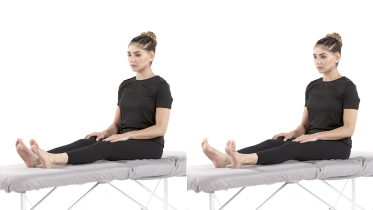
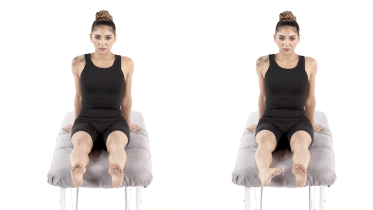
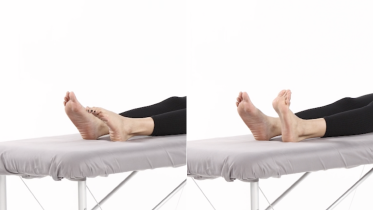
Plantar fascia ball release
The plantar fascia ball release is a self-massage for the sole of your foot. You sit on a chair with a tennis ball under one foot and slowly roll it along the arch, from the heel to the base of the toes, pressing only as firmly as feels comfortable. It targets the thick band of tissue under the foot (plantar fascia), and people often use it for a tight or sore sole, including heel pain from plantar fasciitis.
How to do the plantar fascia ball release
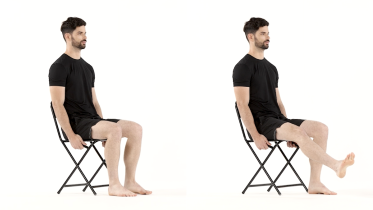
- Sit on a firm, straight-backed chair with your back upright and a slight natural curve in your lower back. Both feet start flat on the floor.
- Put a tennis ball on the floor and rest the arch of one foot on it. Your other foot stays flat on the floor.
- Let the weight of your leg press the foot gently into the ball. Your hands can rest on your thighs, as in the video.
- Slowly slide the foot forward and back so the ball travels from under the heel to the base of your toes and back again.
- Keep the pace slow and even, then change feet if both are in your program.
What you should feel
Pressure under the arch and heel, often with a tender spot or two near the heel. It should feel like a firm massage that eases as you go, never sharp or burning.
Common mistakes
- Standing up to roll, which puts far more weight on the ball than a sore sole needs.
- Digging hard into the most painful spot.
- Rushing the rolling instead of moving the foot slowly.
- Rolling only under the front of the foot and missing the arch and heel.
How often
Many people roll each foot for about 1 to 2 minutes, once or twice a day. Your physio will adjust this.
Stop and check with your physio if
- Sharp pain in the heel or arch, or burning, tingling or numbness in the sole or toes.
- A bruise, blister, red mark or break in the skin of the sole. Leave the ball out until it has healed. If you have diabetes or reduced feeling in your feet, get any such mark seen by your doctor, podiatrist or diabetes foot team the same day, and go to an emergency department if you also have a fever or feel very unwell, redness is spreading up your foot or leg, or part of your foot or a toe turns black.
- You have diabetes or numb feet and find a new blister, cut or sore on your foot, or one foot becomes hot, swollen or red, or changes color or shape. Stop, keep your weight off that foot and get it seen by your doctor or diabetes foot team the same day. If you also have a fever or feel very unwell, redness is spreading up your foot or leg, or part of your foot or a toe turns black, go to an emergency department.
- Your calf or thigh becomes swollen, warm, tender, red or darker than usual, or has a throbbing or cramping pain that feels different from normal muscle ache. Do not massage or roll it. Stop and get medical advice the same day, as this can be a blood clot. If you are also short of breath or have chest pain, call emergency services.
From the clinic
Take extra care if you have diabetes or reduced feeling in your feet. You may not feel how hard you are pressing, and a small mark on the sole can become a sore that is slow to heal. Ask your doctor, podiatrist or physio before you use a ball under your foot, and look over the whole sole afterward, with a mirror if you cannot see it easily. Never roll over a cut, blister, sore or cracked skin.
Check with your doctor or physio first if you take medicine that thins your blood or you bruise easily. A heel that hurts when you squeeze it from both sides can be a stress fracture of the heel bone rather than plantar fasciitis, so see a doctor within a few days and leave the ball alone until then. After an ankle fracture or ankle surgery, follow your surgeon's or physio's plan, and start this exercise only when they have cleared you. After a broken bone in your foot, or foot surgery such as a plantar fascia release, ask your surgeon or physio when you can start rolling the sole.
Plantar fasciitis programs often pair sole massage with stretching, such as the plantar fascia stretch and a calf stretch. The water bottle foot roll works the same area but spreads the pressure over a wider surface.
Written and checked by the PocketPhysio editorial team. Last updated 2026-09-28.
This page is general education, not a diagnosis or a personal treatment plan. If you have pain, an injury or a health condition, see a physiotherapist or doctor before starting new exercises.