
Side to side squat
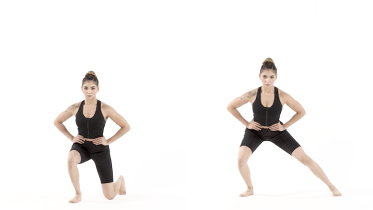
Side to side squats combine a sideways step with a wide squat. You step one foot out, lower into a squat with both knees bent, stand, bring your feet back together and step out again, moving across the room and back. The thighs and buttocks do the squatting, and the muscles at the side of the hip work with every step. It is often used as a leg warm-up, or to bring some sideways movement into a squat program.
How to do the side to side squat
- Stand with your feet together on a clear strip of floor, with room to step sideways several times.
- Step one foot out to the side so your feet end up wider than your shoulders, toes turned out slightly.
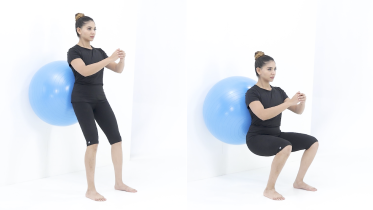
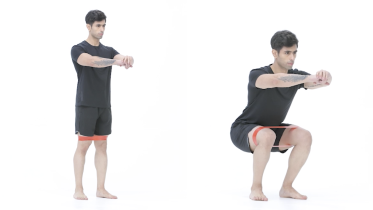
- Bend both knees and push your hips back to lower into a wide squat, bringing your hands together in front of your chest. Keep your knees over your ankles and pointing the same way as your toes.
- Push up to stand, then bring the other foot in to meet the first.
- Keep stepping and squatting in the same direction for a few reps, then come back the other way, as in the video.
What you should feel
Work in the thighs and buttocks, with the outer hip busy as you step and the inner thighs working as you lower into the wide stance.
Common mistakes
- Knees rolling in toward each other as you squat.
- Tipping the chest far forward instead of sitting the hips back and down.
- Stepping so wide that you cannot keep your knees over your ankles.
- Dragging or crossing the feet as you bring them together.
How often
Many programs start with 2 to 3 sets of 8 to 12 squats, counting each side step and squat as one. Your physio will adjust this.
Stop and check with your physio if
- The knee catches, buckles or gives a sharp pain.
- Sudden pain high in the inner thigh as you step wide.
- You catch a foot or stumble as you step.
From the clinic
The voice guide describes a side lunge, shifting your weight over one bent knee with the other leg straight. The video shows something else: side steps into a squat with both knees bending. The steps above follow the video. For the one-knee version, see the lateral lunge.
Sideways steps are where people tend to catch a foot, so clear rugs, cables and furniture from your path first. If your balance is not steady, work along a kitchen counter so you can rest a hand on it as you go. After a fall in the past year, ask your physio before you start, and begin with plain side stepping holding the counter.
If you have had a hip or knee replacement, get the go-ahead from your surgeon or physio before you try side to side squats. Some operations limit this kind of work for the first months, so the timing depends on your surgery. Ask how wide to step and how deep to squat as well.
Written and checked by the PocketPhysio editorial team. Last updated 2026-09-26.
This page is general education, not a diagnosis or a personal treatment plan. If you have pain, an injury or a health condition, see a physiotherapist or doctor before starting new exercises.
.png)