
Part of Cricket injuries: what the game asks of your body
Fast bowler back pain: why it is not ordinary back pain
Warning signs, and when to get help
Why does my back hurt after bowling?
Because of what the action does to the lower spine, six times an over, over after over. The ECB's own 2025 safety guidelines estimate the force through a fast bowler's lumbar spine at approximately three times bodyweight on every delivery, and describe that spine extending, flexing, side flexing and rotating inside the one movement. Four directions of movement under that load, at that speed, is what makes the bowling action different from running or jumping.
Most of the time the bone copes and then some. Twenty-three elite English fast bowlers were compared with other cricketers, rugby players and non-active controls, and the bowlers had significantly greater bone mineral density and content at the non-dominant side of the L3 and L4 vertebrae, with the differences reported as a range across the comparison groups of 13.3 to 45.3 percent at L3 and 15.7 to 44.0 percent at L4 (Alway and colleagues, Bone, 2019). The ECB's guidelines state that density in elite fast bowlers runs up to 44 percent above that of a typical person and up to 33 percent above that of rugby players. That split between the two comparison groups is the ECB's own statement in its own document, which carries no reference list, and the study closest to it reports its range across the three comparison groups together without saying which group the top of the range belongs to. Take the adaptation as real and the exact split as the ECB's, not as a research finding.
Growth is what turns that adaptation into a problem. Cricket Australia's guidelines explain that bones grow in length before they gain strength, which leaves the lower back particularly vulnerable in the two to three years after the main growth spurt. The ECB defines a growth spurt as growth faster than 7 cm a year and advises a player in one to follow the bowling limits for the age group below their own.
Lumbar bone stress injury, and why pain is a late sign
It is a spectrum rather than a single diagnosis. The ECB's guidelines describe it as a group of injuries running from swelling in the bone, also called bone stress, a hot spot or edema, through to a stress fracture. Most sit in the pars, the narrow bridge of bone at the back of a vertebra, and a crack through the pars has a name of its own, spondylolysis, which is the word you may hear in the clinic and the word the research papers use.
The stages along that spectrum are not interchangeable, and the earliest one is the one worth catching. A bone that is reacting to load without a crack through it yet is what the 2023 narrative review calls a precursor lesion to an actual fracture, and it says that an athlete who carries on loading it is at high risk of progressing to a fracture (Orchard and colleagues, 2023). That is the plainest statement of why the instruction is to stop bowling rather than to wait and see: the thing that turns a sore bone into a broken one is the next spell.
The part nobody tells bowlers is the order of events. Sixty-five elite junior fast bowlers were scanned up to six times across one eight month season, with the results withheld from the players and their clinicians. Fifteen of them, 23 percent, developed a bone stress injury during the season, and all 15 had bone marrow edema on at least one earlier scan, including the scan immediately before diagnosis (Kountouris and colleagues, 2019). In 38 asymptomatic elite Australian bowlers, 22 of 48 screening scans showed clinically significant edema, 46 percent with a confidence interval of 31 to 61 (Taylor and colleagues, 2021). Cricket Australia states the consequence in its own guidelines: these injuries often develop before pain is felt.
The 15 year England and Wales review is the strongest reason to act early, and it comes from the market most readers of this page play in. Across 197 lumbar bone stress injuries in 142 male fast bowlers aged 16 to 24, mean age at injury 19.4 years, 44 were found by screening and 153 clinically. The injuries found by screening were more likely to be early stress reactions, returned to play sooner, and returned successfully on conservative management in every single case, while the complete fractures were found clinically without exception (White and colleagues, 2025). Pain is what the late ones announce themselves with.
How common is it? That depends entirely on the definition, and anyone quoting one round number is hiding that. Cricket Australia's guidelines say around one in three adolescent pace bowlers experience this type of injury, which is Cricket Australia's own statement in a document with no reference list. Measured figures sit lower and vary with who was counted and how: 16.3 percent seasonal and 28.6 percent lifetime prevalence in 98 youth bowlers aged 10 to 20, of whom 23 were girls (Daniels and colleagues, 2026), and 20.5 percent of 40 asymptomatic English bowlers aged 14 to 17 carrying at least one injury at baseline, with a subsequent incidence of 27.3 injuries per 100 players per year (Keylock and colleagues, 2022). Those are different questions with different answers, and the sport has no single figure.
Is it a stress fracture, or an ordinary stiff bowler's back?
This page cannot tell you, and neither can any other page. That is not evasion, it is the finding: the injury can be present with little or no pain, so the absence of severe pain rules nothing out. Plenty of bowlers also have an achy back after a long spell with no bone involvement at all. In a bowler under 20 that is still not something to sort out at home, and pain that turns up once the spell is over counts the same as pain during it.
What makes a difference is who is asking. A 14 year old whose back hurts while bowling, in the two or three years after a growth spurt, sits in the group every one of these studies was built around. An adult club bowler with a stiff back after a weekend of 20 overs is a different proposition, and the ordinary low back pain advice to keep moving is likely to be the right one. Different is not the same as exempt, and the line is not 18: the England and Wales bowlers in the 15 year review were 16 to 24, with a mean age at injury of 19.4, so a bowler in their late teens or early twenties is inside that group rather than past it. Back pain that comes on while bowling gets the same answer at any age, which is to stop bowling and be seen. When back pain is serious covers the general warning signs, and lower back pain on one side covers the one-sided ache that most bowlers describe.
This is also the one place on this site where the usual advice runs the other way. NICE guideline NG59 advises against routinely offering imaging in a non-specialist setting for people with low back pain, and our back pages are built on that. One thing about that guideline matters a great deal here, and it is in its own title: it covers low back pain and sciatica in over 16s. It is not written about an 11 or a 14 year old bowler at all, and we could find no national guideline in England and Wales, Australia or New Zealand that tells a clinician whether to image a younger one. What covers that bowler instead is the governing bodies' own instruction, which is to come off, be assessed by someone who manages these injuries, and not bowl again until that has happened.
A 2023 narrative review by Cricket Australia and Australian Institute of Sport clinicians asked directly whether lumbar bone stress injury in young athletes should be an exception, and concluded it should, noting that structural management of bone stress injuries in high-demand athletes such as pace bowlers runs contrary to the functional management recommended for general adult back pain (Orchard and colleagues, 2023). The review frames the imaging advice it argues against as advice about adults, and says in its own opening that lumbar stress fractures almost always affect athletic teenagers and young adults. Read it for what it is: a narrative review in which the authors describe their own approach, in their own words, and not a clinical practice guideline.
Whether imaging is useful for you is a decision for the clinician who assesses you, and no published source gives a reader a rule of the kind "pain for more than a week means a scan". That gap is not a reason to wait and watch the clock. The instruction on this page is the assessment, not the scan, and in a bowler whose back hurts while bowling it applies on the day the pain turns up.
One thing about scans is worth knowing, whoever makes that call, because it is where the false reassurance in this injury comes from. The screening and healing studies behind this page all used MRI. The 2023 narrative review sets out the imaging options and puts plain X-ray down as able to see the chronic changes only, an established pars defect or a vertebra that has already slipped, while MRI with the right sequences and a CT with SPECT are what show bone stress while it is happening (Orchard and colleagues, 2023). So a normal X-ray does not tell you the bone is intact, and it is not a clearance to bowl.
Clinicians differ on what has to be shown before a bowler bowls again, and a page cannot settle that for you. The authors of that review describe their own approach as no return to bowling until an MRI shows the bone has healed completely, which they say generally takes four to six months, and they say in the same paper that this rests on cohort evidence rather than on trials, and that a more pragmatic course may suit a lower-demand player or a defect that is not going to unite. Your own surgical or sports medicine team sets the criteria for your bone, and their instructions come before anything written here.
How many overs should a young fast bowler bowl?
Three governing bodies answer this, in three documents, with three sets of numbers. Only one of them is mandatory. Use your own country's, and never average them. If you play somewhere that publishes none of its own, follow one of these three sets whole, the most cautious of them at that age, rather than working out a number in between.
England and Wales, mandatory. Regulation 5 of the ECB Recreational Cricket Safety Regulations, December 2025, applies to all players aged 19 or under in hardball cricket, other than Academy and Emerging Player Programme players, and does not apply to softball cricket.
| Age | Overs per spell | Overs per day |
|---|---|---|
| 11 and under | 4 | 8 |
| 12 to 13 | 5 | 10 |
| 14 to 15 | 5 | 12 |
| 16 to 17 | 6 | 15 |
| 18 to 19 | 7 | 18 |
Four rules inside that regulation catch people out. A bowler follows the limits for their own age, not for the age group of the match, so a 13 year old playing under 15 cricket bowls to a 13 year old's limits. One ball bowled at high intensity makes a player a fast bowler for the purposes of the regulation. A spell does not reset after one over off: once a fast bowler has completed a spell, the regulation keeps them out, from either end, until as many overs as their spell lasted have been bowled from the same end, so 5 in a spell and 10 in a day is not 10 overs with a single over's rest in the middle. And the umpire enforces it, from a warning through 5 penalty runs to awarding the match.
One more adjustment sits in the companion guidelines rather than the regulation, and it is the only one a parent can make from the table on their own: a player going through a growth spurt, which the ECB defines as growth faster than 7 cm a year, is advised to bowl to the band below their own age.
Australia, recommendations. Cricket Australia's Community Cricket Junior Pace Bowling Workload Guidelines, March 2026, give in-match maximums and two memorable rules. The 1, 3, 5 Rule covers bowlers under 17: one day of bowling before a bowling rest day, no more than 3 bowling sessions a week, and no more than 5 overs in a spell. The 2, 4, 6 Rule covers 17 to 19 year olds: at most 2 days bowling in a row, 4 bowling days a week, and 6 over spells.
| Age | Overs per spell | Overs per match day |
|---|---|---|
| Under 11 | 2 | 4 |
| 11 to 13 | 4 | 8 |
| 13 to 15 | 5 | 12 |
| 15 to 17 | 5 | 16 |
| 17 to 19 | 6 | 18 |
Those bands meet at 13, at 15 and at 17, so a bowler of exactly one of those ages sits in two rows at once and the two rows do not say the same thing. The overlap is in Cricket Australia's own document and the numbers are left as they are written there, so read both rows and take the lower pair, which is the cautious reading.
New Zealand, recommendations. New Zealand Cricket's Youth Pace Bowling Recommendations, November 2021, cover once-a-week games and start at U13.
| Age group | Overs per spell | Overs per day |
|---|---|---|
| U13 to U14 | 4 | 8 |
| U15 | 5 | 12 |
| U16 to U17 | 6 | 14 |
| U18 to U19 | 6 | 20 |
Put the three side by side and two things stand out. For a 14 year old they agree: 5 overs in a spell and 12 in a day in all three countries. For an 11 year old they differ by a factor of two, since the ECB mandates 4 and 8 while Cricket Australia recommends 2 and 4, and the New Zealand table does not reach down that far.
Why would three bodies draw the line in three places? Because no randomized trial has ever compared one over limit with another, at any age, in any country. The principle behind them has real support, which the next section covers, but the exact numbers are each body's judgment about where to be safe. None of that is a reason to treat them as optional, and the ECB's are not optional in any sense: they are regulation.
Nor are they a boys' rule. Cricket Australia's own FAQ says junior girls develop lower back bone stress injuries at similar rates to boys and that its guidelines apply to both.
All three also set rest and build-up, which matters at least as much as a single day's overs. The ECB gives target overs per week by age, from 12 to 16 for the youngest band up to 24 to 28 for 18 and 19 year olds, a maximum of 4 bowling days in any 7 with only one instance of bowling on consecutive days, a mid-season bowling break of 7 to 10 days, a lighter week at about half the target every 4 to 5 weeks, and a 4 week break after the season. It also counts soft ball and hard ball overs together, because the forces through the body are similar, and it says what to do once a bowler has already bowled too much, in a table keyed on overs bowled in a week. A high week means fewer overs the following week. Above a second, higher figure for each age, which runs from more than 22 overs in a week for the youngest band to more than 35 for 18 and 19 year olds, it means 7 consecutive days of bowling rest, to begin within 14 days of the breach. Cricket Australia asks for a pre-season build-up of two weeks under 13 rising to eight weeks for 17 to 19 year olds, a light bowling week every 4 to 6 weeks, a full week off every 10 to 12 weeks and around 3 months off at the end of a season. New Zealand Cricket sets weekly volumes from 15 to 17 overs at U15 and U16 up to 20 to 23 at U19, a week off every 10 to 12 weeks and a lighter week every 4 weeks, and repeats twice that common sense is needed and that every bowler has to be managed individually.
What does the workload evidence actually show?
One measured threshold, and then a set of qualifications that no page selling you a bowling plan will show you.
The threshold comes from 368 professional English fast bowlers between 2010 and 2016, among whom there were 57 lumbar stress fractures at a mean age of 22.81. A peak 7 day workload of more than 234 deliveries raised the odds of a lumbar stress fracture 11-fold compared with bowling fewer than 197 (Alway and colleagues, BMJ Open Sport and Exercise Medicine, 2019). Since bowlers count overs rather than balls, 234 deliveries is 39 overs in a week and 197 is about 33. That is a professional squad in one country, and nothing in the study makes 39 overs a safe or unsafe number for a 15 year old.
Now the qualifications. A systematic review of this exact question, covering eight studies, judged the overall quality of evidence low and the risk of bias high in the measurement of both workload and lower-back injury, and concluded that the association between external workload and lower-back injuries has minimal strength (Perrett and colleagues, 2020). In the junior screening study above, the number of balls bowled and the acute-to-chronic workload ratio were not associated with imaging abnormalities or with injury at all (Kountouris and colleagues, 2019). In asymptomatic elite bowlers there was no difference in days or balls bowled in the year after a screening scan between those who went on to be injured and those who did not (Taylor and colleagues, 2021). Anyone who quotes 234 without these is overstating what is known.
Two findings point in a direction that surprises people. Across 235 fast bowlers, 14,600 player innings and 15 years, bone stress injuries were associated with high three month workload and with low career workload. Too little bowling over a career is a risk as well as too much, and the authors recommend gradual upgrades particularly early in a career (Orchard and colleagues, 2015). In 29 male bowlers aged 15 to 18 on an ECB national programme, acute to chronic workloads at or above 142 percent carried a relative risk of 1.66, but a high chronic workload above 83 balls pulled that risk down to 0.35, and the authors describe the relationship as individual-specific (Warren and colleagues, 2018). Being well conditioned to bowl is itself protective; arriving in week one of the season unconditioned is not. That is an argument for building a bowler up over months, and never an argument for bowling on through back pain to stay conditioned, because conditioning is built in the weeks when nothing hurts.
The risk factor that survived statistical adjustment in the newest youth study was not a workload number at all. In 98 youth bowlers, once sex and biological maturity were accounted for, only a previous lumbar bone stress injury remained associated with a new one (Daniels and colleagues, 2026). A 2025 systematic review of cricket-related low back pain found associations with increased workload, lower bone mineral density and poor lumbo-pelvic control through increased side flexion in the action, and found exactly one low-quality randomized trial of any treatment (Singh and colleagues, 2025).
Can I keep bowling, and what happens next?
Bowling comes out, and most of the rest of your life stays in. All of the bowling, though: nets, school practice and the back garden as well as matches, and soft ball as well as hard, since the ECB counts the two together because the forces through the body are similar. Walking, school, work, gym work a clinician has cleared, and often batting and fielding as well: the bowling is the loading that caused it. How long for, and what you build back through, depends on what the assessment finds, and the person who assesses you decides when a ball leaves your hand again.
Healing is measured in months rather than weeks. Of 31 fractures in 20 elite adult Australian bowlers, 25 reached healing, at a median of 203 days from the diagnostic scan to the scan showing healing, with the middle half of the group between 141 and 301 days. A fracture at a previously healed site took a median 276 days against 114 for a first one (Singh and colleagues, 2021). Read those numbers for what they are. They are adult male professionals with daily medical access, they are a gap between two scans rather than a stopwatch on the bone, and we could find no published series that follows a growing bowler's healing the same way. The timeline for your bone comes from the clinician watching it, not from this page. The 2023 narrative review puts healing of non-chronic unilateral fractures at three to six months, well beyond the six to ten weeks that going by symptoms alone would suggest, and notes that a chronic lesion unlikely to heal can be managed more pragmatically, with return to activity as pain allows (Orchard and colleagues, 2023). That last part is about a bone a clinician has already imaged and judged chronic, and it is their call on that bowler. It is not a rule anybody can apply to a back that has not been assessed yet, and "as pain allows" on this injury would mean going by the one signal the screening studies show arrives late. The same review is blunt about what getting the bone to unite costs: many months off bowling, usually a full season.
Nothing here runs on how the back feels. A back that has stopped hurting is not the same thing as a bone that has knitted, which is the whole point of the three to six months sitting beyond the six to ten weeks that symptoms would have suggested. Bone density lags behind the bone as well: in 29 elite male bowlers it fell by 1.9 to 3.0 percent by 20 to 24 weeks and had only climbed back above baseline by a year (Alway and colleagues, 2022). Those authors draw the conclusion that matters to anybody coming back, which is that the loss of density after the injury may itself raise the chance of another fracture, so a bowler needs careful management on the way back in. The 2023 narrative review says the same thing from the other end: a second fracture the following year is common, and a second one takes longer to heal than the first. The months are not a punishment for the pain. They are what the bone is doing, and a bowler who feels fine at ten weeks is the bowler this evidence is about.
Surgery comes up rarely, and it is worth knowing how rarely, because the figures that follow read more encouragingly than the operation deserves. The 2023 narrative review puts it as very occasionally indicated where defects on both sides cause lasting pain that stops a bowler bowling at the level they want, and says that because of the high morbidity that goes with it, surgery is usually only an option when retirement is already being considered. Its own words are that it should not be considered routine but is instead a career-saving procedure (Orchard and colleagues, 2023). The published cricket series is 13 professional bowlers who had repeatedly failed conservative treatment, had a cable-screw repair, and all returned to professional cricket, at a median of 8 months with the middle half between 7 and 11 months (Schouten and colleagues, 2021). They were adult professionals, average age 26 and none younger than 20, operated on by one surgical group, so nothing in that series describes an operation on a spine that is still growing. If surgery has been raised with you, your surgeon's plan comes first, and this page offers no timeline and no program of its own.
If you have had an operation or an injection on your spine, one more thing belongs in this section. A spinal infection does not always cause a fever, and it is more likely if you have recently had spine surgery or an injection into your spine, inject drugs, or take medicine that weakens your immune system (Finucane and colleagues, 2020). If you have had spine surgery or a spinal injection in the last three months, contact your surgical team the same day about a fever, a wound that is red, hot, swollen or leaking, or back pain that is new or much worse, even without a fever.
Coming back is a graded process, not a date. All three governing bodies publish build-up templates by length of break, and the return to sport test battery sets out the tests clinicians use to decide readiness. The site's other bone stress page, foot stress fracture rehab, shows the same pattern in a different bone, and cricket injuries puts the bowler's back in the context of the rest of the sport.
Exercises a bowler's program usually contains
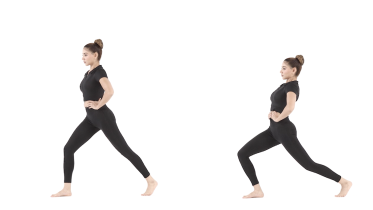
These are not a treatment for a suspected bone stress injury and they are not a substitute for being assessed. If your back hurts while you bowl, or it hurts after a spell and you are under 20, do not start these while you wait for the appointment: the warning signs at the foot of this page come first, and what is safe to do in the meantime is part of what the assessment decides. Read the precautions under the exercises before the numbers as well, in particular if you have had back surgery, are pregnant or have had a baby recently, have osteoporosis, low bone density or a past spine fracture, or have had a hip replacement or an injury to a wrist, hand or forearm. They are the trunk and hip work that a bowler's program tends to be built from once a clinician has decided what is going on, and they follow two of the targets set out in the rationale paper behind the one prevention trial in this sport, trunk extensor endurance and neuromuscular control. Usual starting points are 2 to 3 sets of 6 to 10 slow reps on each side for the dead bug, a 10 to 30 second hold 2 to 5 times on each side for the side plank, 1 to 2 sets of 6 to 10 reps on each side for the bird dog, 2 to 3 sets of 10 to 12 with a short hold at the top for the glute bridge, and a 20 to 30 second hold 2 to 3 times on each side for the hip flexor stretch. Where this paragraph and an exercise page differ, the exercise page wins. Your physio will adjust this.
The exercises below carry their own stop signs and precautions. Open the line under an exercise and read them before you try it.
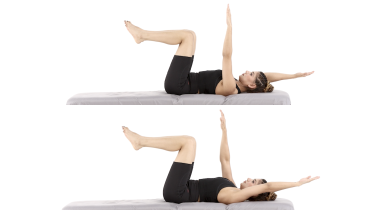 Dead bug
Stop signs and precautions for the dead bug
Before you start
- If you have had surgery on your stomach, or a hernia repair, get the go-ahead from your surgeon or physio before you start, and ask which version to begin with.
When to stop and get help
- Your back hurts and the pain does not settle after the set.
- You get numbness, tingling or pain spreading down a leg.
- Your stomach wall bulges or you feel pressure there. Tell your physio about it.
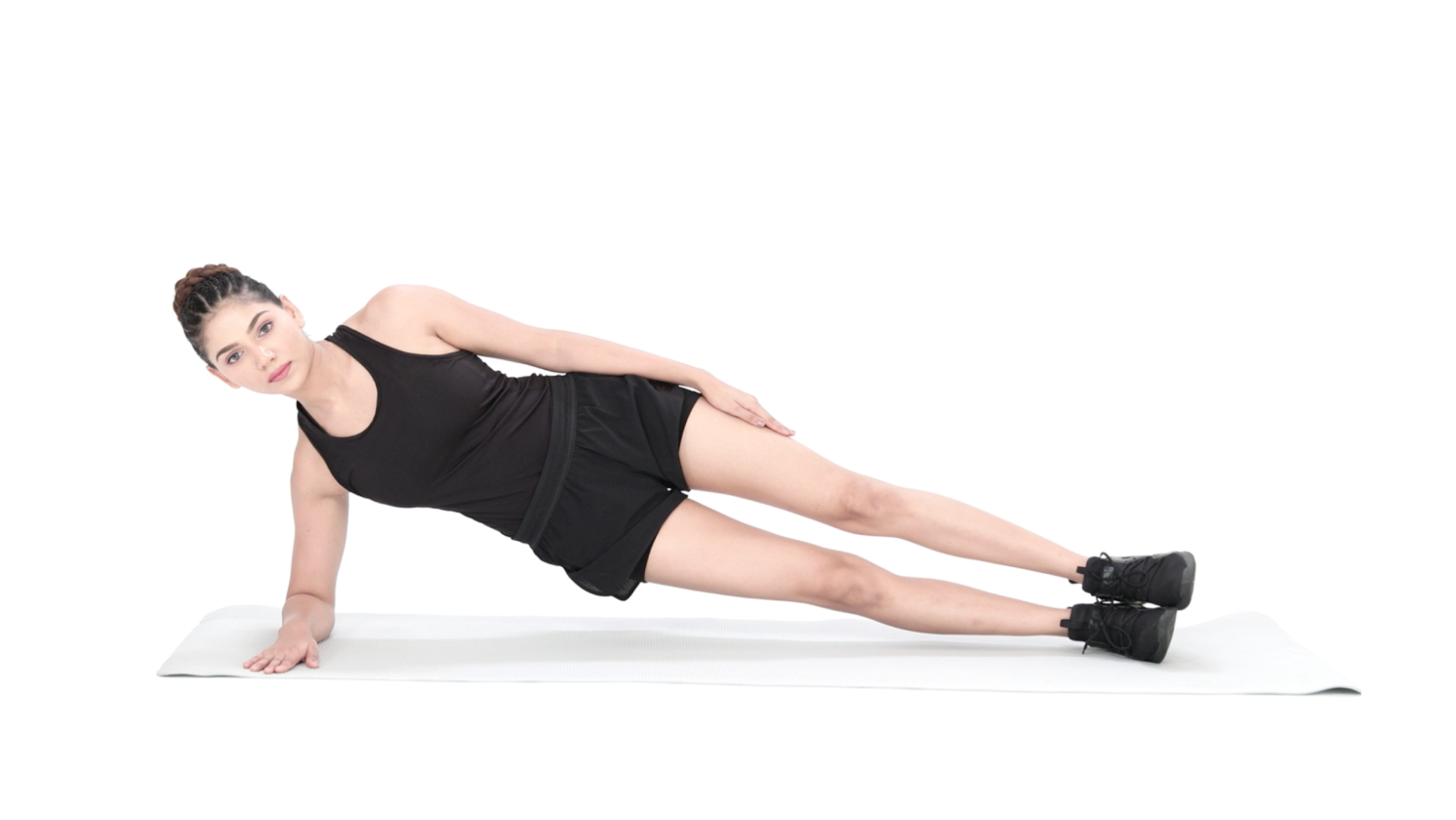 Side plank
Stop signs and precautions for the side plank
Before you start
- Holding your hips up also works the muscles at the side of the bottom hip, much like a side leg lift. If you have had a hip replacement or other hip surgery, get the go-ahead from your surgeon or physio before you try the side plank. Some operations limit this kind of work for the first months, so the timing depends on your surgery.
- With a painful shoulder, or after shoulder surgery or a dislocation, check with your physio before putting your full weight through one arm.
- After recent heart or chest surgery, get your surgeon's or surgical team's okay first, because the whole side plank balances on one hand, so all that weight goes through one arm and shears across the healing breastbone. If the breastbone clicks, grinds, shifts or feels as if it is moving while you do it, stop, and contact your surgical team the same day.
- If you have high blood pressure, keep the holds short and breathe steadily the whole time.
When to stop and get help
- Pain in the wrist, elbow or shoulder you are leaning on.
- Sharp pain in the lower back or the side of the hip.
- Pain or tingling spreads down the arm.
- Pins and needles in your arm or hand that do not go away after you stop, or part of your arm or hand goes numb. Get medical advice the same day. If one side of your face or body suddenly goes numb or weak, or your speech becomes slurred or muddled, call emergency services, even if it goes away.
- Chest pain or pressure, dizziness or feeling faint, a racing or irregular heartbeat, or being far more out of breath than the effort should cause.
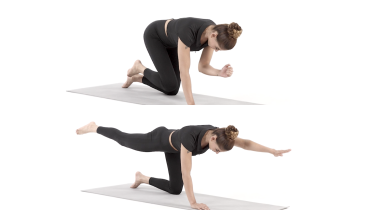 Bird dog
Stop signs and precautions for the bird dog
Before you start
- If you have had a hip replacement or other hip surgery, get the go-ahead from your surgeon or physio before you try bird dog. Lifting the leg takes the hip back behind the line of your body and drawing the knee in toward your elbow bends it well past a right angle, and many surgeons ask you to avoid that for the first months after some operations. After a hip or knee replacement, kneeling may not be comfortable yet either.
- After back surgery, keep to it until your surgeon and physio say bending the spine is fine.
- After a broken wrist, hand or forearm, or surgery on any of them such as a tendon repair, start only when your doctor, surgeon, physio or hand therapist says the bone or repair is ready to take weight through the arms, and follow their plan for how much to do.
- After recent heart or chest surgery, get your surgeon's or surgical team's okay first, because with one arm lifted, your whole upper body weight goes through the other hand, which shears across the healing breastbone. If the breastbone clicks, grinds, shifts or feels as if it is moving while you do it, stop, and contact your surgical team the same day.
When to stop and get help
- Your back hurts more during or after the exercise and it does not settle.
- You get pain running down your leg, or numbness or tingling.
- Your knees or wrists hurt from taking your weight. Ask your physio about padding under you or another position.
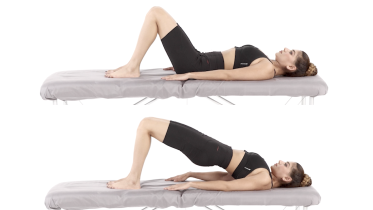 Glute bridge
Stop signs and precautions for the glute bridge
Before you start
- After hip, knee or back surgery, your surgeon's protocol decides when you can start bridges. Once you are past the first three months of pregnancy, check with your physio before exercising flat on your back.
- A bridge needs the knee bent to about 90 degrees before you lift, so if you have had knee surgery and been given a limit on how far the knee may bend, leave this one out and ask your surgeon or physio whether the bend it needs is allowed yet.
When to stop and get help
- You feel back pain rather than buttock work, even when you lift a little lower.
- Pain spreads down the leg or you get numbness or tingling.
- Your hamstrings (the back of the thighs) cramp. This is a common complaint with bridges, and bringing your feet a little closer to your bottom often eases it.
- Pain in the knee itself, or a knee that swells or is clearly more painful the next morning. The position holds the knee bent throughout, so after knee surgery stop and check with your surgeon or physio before you try it again.
 Hip flexor stretch
Stop signs and precautions for the hip flexor stretch
Before you start
- If you have had a hip replacement, get the go-ahead from your surgeon or physio before you try this stretch. Taking the back leg behind the line of your body stretches the front of that hip, and many surgeons ask you to avoid that for the first months after some operations, especially when the hip was replaced from the front.
When to stop and get help
- You feel a sharp or pinching pain in the front of the hip or the groin.
- Your lower back aches or pinches as you push your hips forward.
- Pain, numbness or tingling spreads down the front of the thigh.
- Your front knee hurts as you bend it and push your hips forward.
- You feel dizzy, lightheaded, faint or sick, or the room seems to spin. Stop, sit down and get medical advice the same day before you exercise again. If you faint, it does not settle within a few minutes of sitting still, your vision suddenly blurs or goes double, or you cannot stand or walk steadily, call emergency services.
Read the stop signs and precautions under each exercise before you try it: the exercise pages carry their own, and they come before anything written here. None of this replaces an assessment. If you have back pain while bowling, the first step is being seen, not a program.
After back surgery, do only what your surgeon and physio have cleared, and stay with the simpler version of the bird dog where the hand and knee return to the floor after each reach until they say bending the spine is fine. If you are pregnant and past the first three months, check with your physio before exercising flat on your back, which covers the dead bug and the glute bridge. If you are pregnant or have had a baby recently, also check before loaded trunk and side work, which here is the side plank. If you have had a hip replacement, get the go-ahead from your surgeon or physio before the side plank, because lying on your side lets the top leg drop across the lower one. Bird dog and side plank both put weight through the arms, so after a broken wrist, hand or forearm, or surgery on any of them, start them only when your doctor, surgeon, physio or hand therapist says the arm is ready to take weight.
If you have osteoporosis, low bone density or a past fracture in the spine, check with your physio before the side plank, which asks the trunk to hold your own weight sideways. That includes a bowler whose bone density is still recovering from a lumbar stress fracture, since the measurements above show it lags the bone by months.
If you have high blood pressure, breathe steadily through every repetition and never hold your breath. Stop any of these and get advice if they reproduce the pain you came here about, rather than working through it. If chest pain, pressure or tightness does not ease quickly when you rest, spreads to your arm, neck, jaw, stomach or back, or comes with sweating, feeling sick, feeling light-headed or being short of breath, call emergency services straight away, as this can be a heart attack.
When to see a physio, and what to take with you
Now, if your back hurts while you bowl. That is the whole trigger, and it does not wait for two weeks of soreness the way most complaints on this site do. Ask for someone who manages bone stress injuries in athletes, which is what Cricket Australia's guidelines also ask for, and say on the phone that you are a fast bowler with back pain, because it changes how the appointment is prioritized. The same-day part is getting advice, which can be a call to your doctor's surgery or a physiotherapy clinic on the day the pain turns up, and it is not the same thing as the full assessment, which may take longer to get. Do both, in that order. If the earliest appointment anybody can offer is a fortnight away, the bowling still waits for it. No governing body and no guideline puts a deadline on that assessment, and what protects the bone meanwhile is the bowling staying out, not the date in the diary.
Take the numbers with you. Overs bowled in each of the last few weeks, training as well as matches, how many bowling days in a row, how long since a break, how fast you have grown in the last year if you are still growing, and whether you have had this before. A previous bone stress injury is the one risk factor that survived adjustment in the newest youth study, so it is the first thing to mention.
One more thing is worth raising at that appointment, and the evidence behind it is thinner than the rest of this page, so it is a reason to mention something rather than a finding. Among 187 adolescent athletes aged 13 to 18 treated for a bone stress injury, set against 187 active adolescents with knee pain, there was a trend toward a greater fall in body mass index percentile before the injury and more eating disorder diagnoses afterward, with the odds ratio for that fall at 1.53 on a confidence interval of 0.83 to 2.12, which crosses 1, and the authors put it no more strongly than a trend (Potts and colleagues, 2026). Separately, among 127 female athletes aged 15 to 30 who had already had a bone stress injury, those whose injury sat at a higher-risk site were more likely to show signs of not eating enough for their training and to have lower bone density, though not to report menstrual problems (Holtzman and colleagues, 2022). Neither study was in cricketers. It is here because eating enough for the training load, and periods that have stopped, are things a clinician can only act on if somebody mentions them.
Parents and coaches have one job here that nobody else can do. A young bowler will almost always say they are fine, because the alternative is being taken off, and the whole point of the screening research is that this injury is quiet early on. So the call belongs to the adult, not to the bowler and not to the scoreboard: if the back hurts while bowling, the spell is over for the day, advice is asked for the same day, and the next bowling day waits for the assessment. A bowler who has come off for back pain does not go back on later in the same match, even if it has settled, and is not asked to bowl another over to show whether it still hurts. No result is worth a bone that takes months.
Cricket Australia names three groups of bowler it calls more vulnerable to these injuries: a bowler who has already had one, a bowler who has recently been through a rapid period of growth, and a bowler who is taller or bowls faster than their peers. It also names the two to three years after a growth spurt as the window that matters. It does not leave that list sitting there without an action, either. Cricket Australia says these bowlers carry higher recovery demands than their peers, that they are likely to need their age limits modified further in spell length, frequency and recovery, and it recommends consulting a medical professional experienced in managing these injuries to inform that bowler's program. So none of it is a reason to stop a child bowling. It is a reason to stay at the cautious end of the limits, which is also what the ECB advises for a bowler in a growth spurt, to get a plan from somebody who knows this injury if your child is in one of those three groups, and to take back pain at face value the first time it is mentioned. The warning signs below set out that line and everything that goes faster than it.
Related exercise programs
Warning signs
Get emergency help now
- Emergency: numbness, tingling or altered feeling around or under your genitals, between your inner thighs, or around your bottom (anus), for example it feels different when you wipe after using the toilet. Call emergency services or go to an emergency department straight away, and do not drive yourself. This can be a sign of pressure on the bundle of nerves at the base of the spine (cauda equina syndrome), which needs emergency treatment.
- Emergency: you find it hard to start peeing, cannot pee, cannot feel yourself peeing or cannot control when you pee, or you do not notice when you need to poo or cannot control when you poo, and this is not normal for you. The same applies to a new change in how your genitals feel during sex, new trouble getting or keeping an erection, new trouble ejaculating, or new trouble reaching orgasm. Call emergency services or go to an emergency department straight away, and do not drive yourself. These can also be signs of cauda equina syndrome.
- Emergency: sciatica in both legs, or pain, tingling, numbness or weakness in both legs. The same applies if you lose feeling in one leg. Call emergency services or go to an emergency department straight away, and do not drive yourself.
- Emergency: back or leg pain that started after a serious accident, such as a car crash or a fall from a height, or back pain with chest pain. Call emergency services. If the pain started straight after the accident, keep still while you wait.
- Emergency: new neck or back pain after a fall, a knock or a jolt, even a minor one such as a trip or a sudden stop in a car, if you have a condition that stiffens the spine, such as ankylosing spondylitis. Call emergency services or go to an emergency department straight away, do not drive yourself, and tell the staff about your spine condition, so they keep your neck and back in their usual position. A stiff spine can break after a small injury, and the break is easy to miss at first. If the pain started straight after the injury, or you also have numbness, tingling or weakness in your arms or legs, keep still and call emergency services.
- Emergency: you have had cancer, now or in the past, and your back or neck pain feels like a tight band around your body, or you have new or worsening pain spreading down an arm or leg, weakness, numbness, pins and needles or a loss of feeling in your arms or legs, trouble walking, or trouble controlling your bladder or bowels. Those symptoms count on their own, with or without back or neck pain. Call your cancer team's emergency number straight away, or go to an emergency department if you do not have one or cannot get through, and do not drive yourself. This can be cancer pressing on the spinal cord (metastatic spinal cord compression), which needs treatment straight away.
- Emergency: back pain with a fever, or you feel hot, shivery or very unwell, and you also have new weakness, numbness or tingling in one or both legs, or new trouble with your bladder or bowels. Call emergency services or go to an emergency department straight away, and do not drive yourself. This can be an infection pressing on the nerves in the spine (spinal epidural abscess), which needs emergency treatment.
- Emergency: sudden, severe pain in your lower back or tummy that is not like your usual back pain, if you have been told you have a swelling of the main blood vessel in your tummy (abdominal aortic aneurysm), you are over 60, you smoke or used to smoke, or you have high blood pressure. The same applies if sudden, severe back or tummy pain comes with feeling faint or passing out, pale, sweaty or clammy skin (on brown or black skin this can be easier to see on the palms of the hands or soles of the feet), a racing heartbeat or being short of breath. Call emergency services straight away. This can be a sign of an aneurysm bursting, which needs treatment in hospital at once.
- Emergency: if chest pain, pressure or tightness does not ease quickly when you rest, spreads to your arm, neck, jaw, stomach or back, or comes with sweating, feeling sick, feeling light-headed or being short of breath, call emergency services straight away, as this can be a heart attack. If it eases quickly and none of these happen, get medical advice the same day, and do not exercise again until you have been checked.
Get help today
- Same day: a leg or foot that is getting weaker, for example your foot drags, catches on the ground or slaps down when you walk (foot drop). Get medical advice the same day. If the weakness is getting worse by the hour, go to an emergency department.
- Same day: lower back pain that comes on while you are bowling fast, at any age and above all under 20. Stop bowling now, get medical advice the same day, and do not bowl again until a sports doctor or a physiotherapist who manages bone stress injuries has assessed you, which is what Cricket Australia's junior pace bowling guidelines tell a junior bowler to do. Keep walking and keep up your usual daily activities while you wait, because it is the bowling that comes out, not your life.
- Same day: lower back pain in a bowler under 20 that turns up after a spell rather than during it, or that comes back every time they bowl even if it settles in between. Stop bowling now, get medical advice the same day, and do not bowl again until a sports doctor or a physiotherapist who manages bone stress injuries has assessed you. Pain that waits until the spell is over is still bowling pain, and in a growing bowler it is read the same way.
- Same day: lower back pain that came on in a single delivery, that is severe, or that stops you standing up straight. Stop bowling and get medical advice the same day.
- Same day: back or leg pain with a fever, or you feel hot, cold, shivery or generally unwell. Get medical advice the same day, and go to an emergency department if you feel very unwell.
- Same day: back pain after a minor fall or strain if you are older, have low bone density (osteoporosis) or have taken steroid tablets for a long time. Get medical advice the same day.
- Same day: you have back pain and have lost weight without trying. Get medical advice the same day and mention the weight loss.
- Same day: new back pain and you have had cancer, now or in the past. Get medical advice the same day and mention your cancer history. If you are being treated for cancer now, contact your cancer team the same day.
- Same day: severe pain that comes on suddenly or is getting worse quickly. Get medical advice the same day.
- Same day: back pain that is worse at night, or does not ease at all when you rest. If you have had cancer, now or in the past, or you have lost weight without trying, get medical advice the same day.
Book an appointment
- Within a few days: back pain that is worse at night, or does not ease at all when you rest. See your doctor within a few days.
Common questions
How many overs should a 13 year old bowl?
It depends which country you play in, and the three answers are not the same. In England and Wales the ECB's Recreational Cricket Safety Regulations of December 2025 make it 5 overs in a spell and 10 in a day for a 13 year old, and that is regulation rather than advice: the umpire enforces it, and a breach runs from a warning to 5 penalty runs to the match being awarded to the other side. Cricket Australia's guidelines of March 2026 recommend 4 overs in a spell and 8 in a match day for the 11 to 13 band, and their bands meet at 13, because the next one up reads 13 to 15 at 5 and 12, so a 13 year old sits in both and the lower pair is the cautious reading. They also add the 1, 3, 5 Rule for bowlers under 17: one day of bowling before a bowling rest day, 3 bowling sessions a week at most, 5 overs in a spell at most. New Zealand Cricket's recommendations of November 2021 give U13 and U14 bowlers 4 overs in a spell and 8 in a day. Two further ECB rules catch people out: a bowler follows the limits for their own age rather than the age group of the match they are playing in, and a player going through a growth spurt, which the ECB defines as growth faster than 7 cm a year, is advised to follow the band below their age.
Can I bowl through back pain?
No, and this is the one question on this page with a short answer. Cricket Australia's junior guidelines tell a bowler with lower back pain to stop bowling and be assessed by a sports doctor or physiotherapist experienced with these injuries before bowling again, and the reason is in the screening data: in 65 elite junior fast bowlers scanned repeatedly through one season with the results hidden from the players and their clinicians, all 15 who went on to a bone stress injury already had bone marrow edema on an earlier scan (Kountouris and colleagues, 2019). The 15 year England and Wales review puts the cost of carrying on in plainer terms still: across 197 lumbar bone stress injuries in 142 bowlers, the complete fractures were all picked up clinically rather than by screening, and the injuries found by screening came back to play faster, with every one of them returning successfully on conservative management (White and colleagues, 2025). Stopping bowling means all of it, nets and the garden and school practice as well as matches, and it is not the same as stopping moving. Keep walking, keep going to school or work, keep fielding and batting if a clinician is happy with that, and let the person who assesses you decide when a ball leaves your hand again.
How long does a lumbar stress fracture take to heal?
Months, and the honest range is wide. Of 31 fractures in 20 elite adult Australian fast bowlers, 25 reached healing, and in those the median time from the scan that found the fracture to the scan that showed it healed was 203 days, with the middle half of the group between 141 and 301 days. A fracture at the site of one that had already healed once took a median 276 days against 114 days for a first fracture (Singh and colleagues, 2021). Six of the 31 are not in that median, which is part of the answer: not every one of these fractures is shown to heal. Those are adult male professionals, and the figures are gaps between two scans rather than a stopwatch on the bone, so take them as the shape of the thing and not as your own dates. A 2023 narrative review from Cricket Australia and Australian Institute of Sport clinicians states that most non-chronic unilateral fractures can heal, and that healing takes three to six months rather than the six to ten weeks of unloading that symptoms alone would suggest (Orchard and colleagues, 2023). The governing bodies tell their own players something similar: the ECB says a bowler with a spinal stress fracture may be unable to compete for up to 8 months or in some cases longer, and Cricket Australia's own FAQ says a diagnosed lower back bone stress injury can take 6 to 12 months to recover from. Bone density takes its own time on top of that, and in 29 elite male bowlers it had not climbed back above baseline until about a year after the injury (Alway and colleagues, 2022).
Why did the scan find something when it barely hurt?
Because the bone usually reacts before the pain does, and this is the single most useful thing to know about this injury. In 38 asymptomatic elite Australian fast bowlers, 22 of 48 screening scans showed clinically significant bone marrow edema, which is 46 percent with a confidence interval of 31 to 61 (Taylor and colleagues, 2021). Cricket Australia puts it in one sentence in its own guidelines, that lower back bone stress injuries often develop before pain is felt. In a bowler with no pain, a finding on a scan is not automatically a reason to stop everything, and the same study found no difference in days or balls bowled in the following year between bowlers who went on to injure and those who did not, so the finding is read alongside the symptoms, the bowler's age and growth, and their recent bowling load. That reading is a clinician's job, which is why this page's instruction is to be assessed rather than to book a scan. It works the other way round as well: if the back hurts while bowling, the instruction stands whatever an earlier scan showed, because a clear scan from last season says nothing about this week. One more thing about scans, because it is where the false reassurance comes from: the screening and healing studies behind this page all used MRI, and the 2023 narrative review puts plain X-ray down as able to show the chronic changes only, an established pars defect or a vertebra that has already slipped (Orchard and colleagues, 2023). A normal X-ray does not tell you the bone is intact, and it is not a clearance to bowl.
Is a lumbar bone stress injury the same as spondylolisthesis?
They sit on the same line, at different places along it. A lumbar bone stress injury is a spectrum, and the ECB's own guidelines describe it that way: from swelling in the bone, which you will also hear called bone stress, a hot spot or edema, through to a stress fracture. Most of these fractures sit in the pars, the narrow bridge of bone at the back of a vertebra, and a crack through the pars is called a spondylolysis, which is the word you may be given in the clinic. The 2023 narrative review notes that once a defect sits on both sides it can go on to allow one vertebra to slide forward on the one below, which is spondylolisthesis (Orchard and colleagues, 2023). That is a different problem with a different program, and this site has a page for it: spondylolisthesis exercises and physiotherapy. If what you have is an everyday stiff and achy bowler's back with no bone involvement, the low back pain program and when back pain is serious are the right places to start.
References
- Alway P, Brooke-Wavell K, Langley B, King M, Peirce N. Incidence and prevalence of lumbar stress fracture in English County Cricket fast bowlers, association with bowling workload and seasonal variation. BMJ Open Sport and Exercise Medicine. 2019;5(1):e000529. https://doi.org/10.1136/bmjsem-2019-000529
- Alway P, Peirce N, King M, Jardine R, Brooke-Wavell K. Lumbar bone mineral asymmetry in elite cricket fast bowlers. Bone. 2019;127:537-543. https://doi.org/10.1016/j.bone.2019.07.030
- Alway P, Peirce N, Johnson W, King M, Kerslake R, Brooke-Wavell K. Activity specific areal bone mineral density is reduced in athletes with stress fracture and requires profound recovery time: A study of lumbar stress fracture in elite cricket fast bowlers. Journal of Science and Medicine in Sport. 2022;25(10):828-833. https://doi.org/10.1016/j.jsams.2022.08.006
- Kountouris A, Sims K, Beakley D, Saw AE, Orchard J, Rotstein A, Cook JL. MRI bone marrow oedema precedes lumbar bone stress injury diagnosis in junior elite cricket fast bowlers. British Journal of Sports Medicine. 2019;53(19):1236-1239. https://doi.org/10.1136/bjsports-2017-097930
- Taylor J, Saw AE, Saw R, Sims K, Kountouris A. Presence of bone marrow oedema in asymptomatic elite fast bowlers: Implications for management. Bone. 2021;143:115626. https://doi.org/10.1016/j.bone.2020.115626
- White T, Alway P, Brooke-Wavell K, Wedatilake T, King M, Peirce N. MRI Screening for lumbar bone stress injuries in young male cricket fast bowlers: a 15-year retrospective cohort study. British Journal of Sports Medicine. 2025;59(24):1718-1725. https://doi.org/10.1136/bjsports-2025-110221
- Keylock L, Alway P, Felton P, McCaig S, Brooke-Wavell K, King M, Peirce N. Lumbar bone stress injuries and risk factors in adolescent cricket fast bowlers. Journal of Sports Sciences. 2022;40(12):1336-1342. https://doi.org/10.1080/02640414.2022.2080161
- Daniels AP, Weeks BK, Beck BR. Incidence, prevalence and risk factors for symptomatic lumbar bone stress injury in female and male youth cricket bowlers. Journal of Science and Medicine in Sport. 2026. https://doi.org/10.1016/j.jsams.2026.06.017
- Orchard JW, Saw R, Kountouris A, Redrup D, Farhart P, Sims K. Management of lumbar bone stress injury in cricket fast bowlers and other athletes. South African Journal of Sports Medicine. 2023;35(1). https://doi.org/10.17159/2078-516X/2023/v35i1a15172
- Singh SP, Rotstein AH, Saw AE, Saw R, Kountouris A, James T. Radiological healing of lumbar spine stress fractures in elite cricket fast bowlers. Journal of Science and Medicine in Sport. 2021;24(2):112-115. https://doi.org/10.1016/j.jsams.2020.06.018
- Orchard JW, Blanch P, Paoloni J, Kountouris A, Sims K, Orchard JJ, Brukner P. Cricket fast bowling workload patterns as risk factors for tendon, muscle, bone and joint injuries. British Journal of Sports Medicine. 2015;49(16):1064-1068. https://doi.org/10.1136/bjsports-2014-093683
- Warren A, Williams S, McCaig S, Trewartha G. High acute:chronic workloads are associated with injury in England and Wales Cricket Board Development Programme fast bowlers. Journal of Science and Medicine in Sport. 2018;21(1):40-45. https://doi.org/10.1016/j.jsams.2017.07.009
- Perrett C, Lamb P, Bussey M. Is there an association between external workload and lower-back injuries in cricket fast bowlers? A systematic review. Physical Therapy in Sport. 2020;41:71-79. https://doi.org/10.1016/j.ptsp.2019.11.007
- Singh S, Baker J, Egginton S. Risk Factors and Successful Interventions for Cricket-Related Low Back Pain: An Updated Systematic Review. Cureus. 2025;17(3):e79869. https://doi.org/10.7759/cureus.79869
- Schouten R, Shackel D, Inglis G. Surgical repair of lumbar stress fractures in professional cricketers. Journal of Spine Surgery. 2021;7(3):385-393. https://doi.org/10.21037/jss-21-18
- Forrest MRL, Scott BR, Hebert JJ, Dempsey AR. Injury Prevention Strategies for Adolescent Cricket Pace Bowlers. Sports Medicine. 2018;48(11):2449-2461. https://doi.org/10.1007/s40279-018-0981-6
- England and Wales Cricket Board. ECB Recreational Cricket Safety Regulations, December 2025 update. Regulation 5, Fast Bowling. https://resources.ecb.co.uk/ecb/document/2025/12/16/79efc12c-b0a0-4aeb-9774-347c138e00c0/Recreational-Cricket-Safety-Regulations-Dec-2025-Update.pdf
- England and Wales Cricket Board. ECB Recreational Cricket Safety Guidelines, December 2025 update. https://resources.ecb.co.uk/ecb/document/2025/12/16/28c76edf-7e04-4193-933d-cb2866010440/Recreational-Cricket-Safety-Guidelines-Dec-2025-Update.pdf
- Cricket Australia. Community Cricket Junior Pace Bowling Workload Guidelines. March 2026. https://resources.playcommunity.pulselive.com/playcommunity/document/2026/04/16/c6ec26ff-62b0-43fe-bd74-18f58c8e8e1e/Junior-Bowling-Guidelines.pdf
- New Zealand Cricket. Youth Pace Bowling Recommendations. November 2021. https://www.nzc.nz/media/18857/youth-pace-bowling-recommendations.pdf
- National Institute for Health and Care Excellence. Low back pain and sciatica in over 16s: assessment and management. NICE guideline NG59. https://www.nice.org.uk/guidance/ng59
- NHS. Back pain. Page last reviewed 5 March 2026. https://www.nhs.uk/conditions/back-pain/
- NHS. Sciatica. Page last reviewed 3 December 2024. https://www.nhs.uk/conditions/sciatica/
- NHS. Osteoporosis. Page last reviewed 13 October 2022. https://www.nhs.uk/conditions/osteoporosis/
- NHS. Abdominal aortic aneurysm. https://www.nhs.uk/conditions/abdominal-aortic-aneurysm/
- NHS. Chest pain. Page last reviewed 8 August 2023. https://www.nhs.uk/symptoms/chest-pain/
- Finucane LM, Downie A, Mercer C, et al. International framework for red flags for potential serious spinal pathologies. Journal of Orthopaedic and Sports Physical Therapy. 2020;50(7):350-372. https://doi.org/10.2519/jospt.2020.9971
- Darouiche RO. Spinal epidural abscess. New England Journal of Medicine. 2006;355(19):2012-2020. https://doi.org/10.1056/NEJMra055111
- Potts A, Soma D, Sim L, Lebow J, et al. The association of bone stress injuries with body mass index percentile drop and eating disorder diagnoses in adolescent athletes. Journal of Athletic Training. 2026;61(3):239-245. https://doi.org/10.4085/1062-6050-0160.25
- Holtzman B, Popp KL, Tenforde AS, Parziale AL, et al. Low energy availability surrogates associated with lower bone mineral density and bone stress injury site. PM and R. 2022;14(5):587-596. https://doi.org/10.1002/pmrj.12821
Written and checked by the PocketPhysio editorial team. Last updated 2026-11-06.
This page is general education, not a diagnosis or a personal treatment plan. See a physiotherapist or doctor for advice about your own situation.