
Part of Menopause and joints
Exercise for hot, aching joints and stiffness in menopause
How this kind of stiffness usually behaves
The pattern people describe in clinic is fairly consistent. Several joints ache at once rather than one. Hands and knees come up most often, then hips and shoulders, then the lower back. There is nothing much to see from the outside, and the worst of it is after sitting still or after a night's sleep.
That description matches what a 2026 review in Menopause sets out: pain and stiffness in multiple joints without obvious swelling, and a process that does not damage or destroy the joint (Manno 2026). The same review notes there are no large randomized trials of hormone therapy for joint pain in menopause, which is worth knowing before anyone promises you a fix. Osteoarthritis often sits alongside it in the same years, and that one prefers the joints that carry your weight: knees and hips first, then the lower back.
So two things are usually happening at once, and separating them is not always possible from symptoms alone. The handling is the same either way: move the joint often, load it gradually, and get anything that starts behaving differently checked.
Loosen up before you get out of bed
Stiff joints respond better to being eased into the day than to being asked to carry you downstairs cold. Give yourself 5 minutes before your feet hit the floor. Circle your ankles a few times, then roll your bent knees slowly from side to side while you wake up properly.
Warmth gets most people moving, so a shower before the rest of the routine is time well spent. Then do the standing movements: the stick lift for the shoulders, and a slow walk around the house before anything else.
None of this is a treatment for the underlying change. It is a way of getting the first hour back, and for people whose worst symptom is the 8 am seize-up, that is the hour that matters.
Building the week around the bad days
The weekly target does not change because your joints are noisy. The NHS asks adults aged 19 to 64 for at least 150 minutes of moderate activity a week, plus strengthening work for all the major muscle groups on at least 2 days. Resistance exercise is the first thing the Menopause review names for joint symptoms, and for muscle mass and bone health as well (Manno 2026).
The evidence specific to menopausal symptoms is thinner than the confidence around it. A 2025 systematic review turned up only 4 randomized trials of exercise for perimenopausal symptoms, 280 women in total. It scored them on a symptom questionnaire and ran no meta-analysis. In the single trial that separated it out, bone, joint and muscle pain fell in the two groups given a personalized diet, one of which added resistance training, and not in the group given education alone (Philip 2025).
Three of those four trials ran for 12 weeks, one had no true control group and one was unblinded. Treat that as a reason to train, not as a number you can expect.
Put the strength work on the days and times your joints tend to be at their best, which for many people is late afternoon. The strength plan for the menopause years in this topic sets out what one of those sessions looks like. Keep the gentle range of movement daily, including the days you do nothing else.
How to pace a bad day
Halve the amount, keep the habit. If your plan was 3 sets, do 1. If it was a 30 minute walk, do 10 minutes twice. Dropping the session entirely is what turns one sore day into a sore fortnight, because the return is always harder than the reduction.
Arthritis UK draws the line in a way that is easy to use at home: mild discomfort during exercise and some soreness afterward is normal, especially early on, but significantly more or severe pain during or after a session means stop and speak to a health professional. The NHS makes the same point from the other side, that exercise is one of the most important treatments for osteoarthritis and that doing too much too quickly can damage joints.
One rule keeps most people out of trouble. Whatever you did on a good day, do not repeat it the next day as well. The soreness from an overdone session usually arrives 24 to 48 hours later, which is exactly when it gets blamed on the wrong thing.
Exercises that can help
Gentle is the point here rather than effort, and each of these has a video, its own starting dose and its own stop signs. Most sit between 5 and 15 slow repetitions, 1 to 4 times a day, while the knee to chest stretch uses 3 to 5 holds of about 15 to 30 seconds on each leg. Your physio will adjust this.
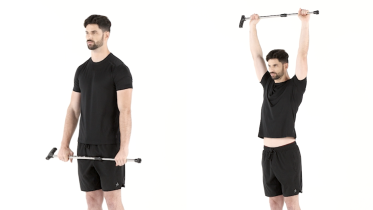 Shoulder flexion with a stick
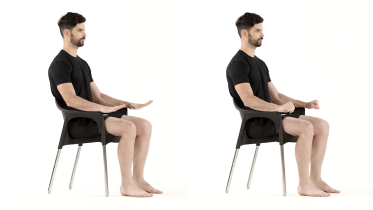 Open and close the hands
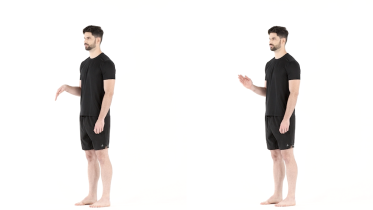 Wrist circles
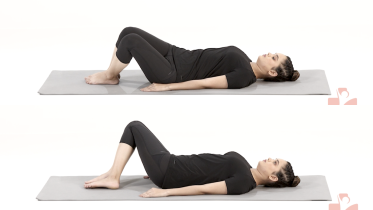 Lower trunk rotation
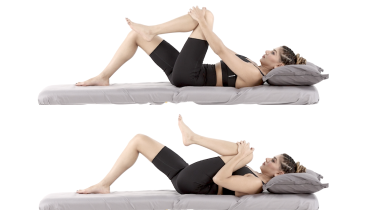 Knee to chest stretch
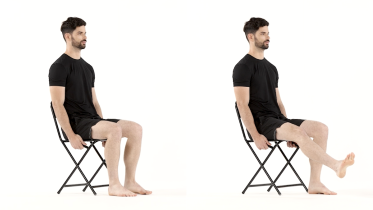 Ankle circles
Before you start
If you have had a hip replacement, get the go-ahead from your surgeon or physio before you try this stretch. Pulling the knee in bends the hip well past a right angle, and many surgeons ask you to avoid that for the first months after some operations. The same applies to the lower trunk rotation, where the upper knee turns that hip inward and across the middle of your body.
With low bone density (osteoporosis), keep the rolls small and gentle, and check with your physio before doing forward bending stretches such as the knee to chest. Repeated or long held forward bending of the spine is usually limited with osteoporosis. If you are pregnant and past the first three months, check with your physio before exercising flat on your back, which covers the knee to chest stretch and the lower trunk rotation. After shoulder surgery, a shoulder fracture or a dislocation, do only the movements and range your surgeon or physio has cleared.
After a broken wrist, hand or forearm, or surgery on any of them, start the hand and wrist movements only when your doctor, surgeon, physio or hand therapist says the bone or repair is ready, and follow their plan for how much to do. With rheumatoid or another inflammatory arthritis, keep the wrist circles small and gentle on days when a joint is hot or swollen. Leave all of it for now if one joint has gone red and swollen, or is too painful to move or stand on. That is a medical problem for today, not a stiff joint.
When hot and stiff means something else
Two words are doing different jobs here, and mixing them up is the risk. Joints that feel hot, burning or achy from the inside, with nothing to see, are what most women mean by hot joints in midlife. A joint that is visibly red and swollen, hot when you put the back of your hand on it, and too sore to move or stand on, is a medical problem for today.
The NHS lists sudden severe pain in a joint, not being able to move it or put weight on it, hot, swollen or red skin over it, and a high temperature (which not everyone gets) as the signs of infection in a joint. It says these usually develop quickly over a few days and need checking straight away. Risk is higher with rheumatoid arthritis, a weakened immune system, diabetes, recent joint surgery or an artificial hip or knee.
Morning stiffness is the second divider. Stiffness that eases within about half an hour fits osteoarthritis; stiffness in rheumatoid arthritis often lasts longer than that, and it tends to hit the small joints of the hands and feet on both sides, with joints that swell and feel hot and tender (NHS).
Back and buttock pain has its own version of the same question. The NHS describes ankylosing spondylitis, one form of axial spondyloarthritis, as back pain and stiffness that is worse in the morning and at night, wakes you regularly, gets better with exercise and does not improve or gets worse with rest, usually starting between 18 and 40 years of age. That pattern does not mean it is what you have, but it does mean it is worth naming at the appointment. The warning signs below give the timing for each of these.
When to see a physio
The Menopause review says women new to resistance training may benefit from a referral to physical therapy for supervised instruction on a progressive home-based program (Manno 2026). Book with a physio, or a physical therapist in the USA, when stiffness is changing what you do rather than just how you feel: stairs, driving, gripping a kettle, getting off the floor. Ask for a program set at the level of your worst days, not your best, and for a plan for what to cut when a flare arrives.
Bring two pieces of information with you. How long the morning stiffness lasts, timed rather than guessed, and which joints are involved on which sides. Those two answers do more to steer the appointment than any description of the pain itself.
If a joint has swollen, gone red or become hot, see a doctor first and leave the exercises until you have been checked. Hormone treatment, including whether any medicine suits you, is a conversation for your doctor or menopause clinic, and nothing on this page is a substitute for it. Never stop or change a prescribed medicine on your own.
Related exercise programs
See a doctor promptly if
- Same day: a joint is hot, red and swollen, or you have joint pain with a high temperature or feel hot, cold or shivery. Get medical advice the same day, and go to an emergency department if you feel very unwell. This can be a sign of infection in the joint, which needs treatment quickly.
- Same day: a calf or thigh that is newly swollen, warm, tender, red or darker than usual, has swollen veins that are sore to touch, or has a throbbing or cramping pain that does not fit your injury or condition, or that feels different from normal muscle soreness after exercise. This can be a sign of a blood clot (deep vein thrombosis), especially after surgery, an injury, time in a cast or boot, a long trip or a spell of being much less mobile than usual. Get medical advice the same day. If you are also short of breath or have chest pain, call emergency services.
- Within a few days: morning stiffness in your hands that lasts longer than 30 minutes, soft, puffy swelling over the big knuckles at the base of the fingers or over the wrists, or painful, swollen joints in your feet as well. This is not an emergency, but see your doctor within a few days, because it can be a sign of an inflammatory arthritis such as rheumatoid arthritis rather than osteoarthritis, and early treatment can stop it getting worse.
- Within a few days: pain at night or at rest that keeps getting worse. See your doctor within a few days. If you have had cancer, now or in the past, see your doctor sooner, within a day or two, and mention it, even if the pain is not getting worse. Do the same if you have joint pain and are losing weight without trying, even if it does not hurt at night. If you are being treated for cancer now, contact your cancer team the same day.
- Within 2 weeks: back or buttock pain that started before the age of 45, has lasted more than three months, is worse after rest and in the morning, and eases when you move. This is not an emergency, but see your doctor in the next week or two and ask whether it could be inflammatory back pain (axial spondyloarthritis).
Common questions
Does menopause joint stiffness go away on its own?
Nobody can give you a timeline, and a page that offers one is guessing. What the numbers show is that the aching does not stop at the last period: in a pooled analysis of 37 studies, muscle or joint pain was reported by 57% of perimenopausal women and 59% of postmenopausal women, against 40% before (Kruse 2026). The authors note that every included study was observational and that they varied a great deal, so this is a pattern rather than a cause, and aging, weight, activity and osteoarthritis are all moving over the same years. That is an argument for treating the stiffness you have rather than waiting it out.
Why are my joints so stiff first thing in the morning?
Joints that have been still for hours are slower to get going, and that is ordinary. What matters is the clock. The NHS puts osteoarthritis stiffness at around 30 minutes and says stiffness in rheumatoid arthritis often lasts longer than that. So stiffness that loosens off while you make a cup of tea is a different story from stiffness that is still there mid-morning, day after day, and the second one belongs in a doctor's appointment.
Should I exercise when my joints already ache?
Usually yes, in a smaller dose. The NHS calls exercise one of the most important treatments for osteoarthritis, whatever your age or fitness, and also warns that doing too much too quickly, or the wrong sort, can damage joints. Arthritis UK puts it plainly: mild discomfort while you exercise and some soreness afterward is normal, but if you get significantly more or severe pain during or after a session, stop and talk to a health professional. Keep the days and drop the amount, rather than skipping a whole week.
My joints feel hot and burning. Is that dangerous?
A burning or hot feeling in several joints, with nothing to see on the outside, is different from a joint that looks hot. Menopausal joint pain is usually described in more than one joint, with pain and stiffness but no obvious swelling, and it does not destroy the joint (Manno 2026). A joint you can see is red and swollen, that is hot to touch, or that has become too painful to move or put weight on, needs medical advice the same day. The NHS lists those, with or without a high temperature, as signs of infection in a joint, and says they usually build over a few days and need checking straight away.
Will strength training make aching joints worse?
It is not what the guidance expects. Resistance exercise is the first thing named in a 2026 Menopause review for treating joint symptoms while holding on to muscle and bone (Manno 2026), and the NHS asks adults for strengthening work on at least 2 days a week alongside 150 minutes of moderate activity. Trial evidence aimed at menopausal symptoms is thin: a 2025 review searching four databases found only 4 randomized trials of exercise for perimenopausal symptoms, 280 women between them, and in the one trial that reported it, bone, joint and muscle pain fell in the two groups given a personalized diet, one of which added resistance training, but not in the group given education alone (Philip 2025). Three of those four ran for 12 weeks. Start lighter than you think you need to and add one thing at a time.
References
- Kruse C, McKechnie T, Dworsky-Fried J, et al. Musculoskeletal manifestations of perimenopause: a systematic review and meta-analysis of 93,021 women. JBJS Open Access. 2026;11(1):e25.00254. https://doi.org/10.2106/JBJS.OA.25.00254
- Manno RL. Joint pain and menopause. Menopause. 2026;33(3):358-360. https://doi.org/10.1097/GME.0000000000002756
- Philip AE, Singh H, Nanjundiah SY, et al. Impact of exercise on perimenopausal syndrome: a systematic review of randomized controlled trials. Cureus. 2025;17(3):e80862. https://doi.org/10.7759/cureus.80862
- NHS. Menopause and perimenopause: symptoms. Page last reviewed 19 May 2026. https://www.nhs.uk/conditions/menopause-and-perimenopause/symptoms/
- NHS. Osteoarthritis: treatment and support. Page last reviewed 20 March 2023. https://www.nhs.uk/conditions/osteoarthritis/treatment/
- NHS. Rheumatoid arthritis: symptoms. Page last reviewed 8 March 2023. https://www.nhs.uk/conditions/rheumatoid-arthritis/symptoms/
- NHS. Ankylosing spondylitis: symptoms. Page last reviewed 5 January 2023. https://www.nhs.uk/conditions/ankylosing-spondylitis/symptoms/
- National Institute for Health and Care Excellence. Spondyloarthritis in over 16s: diagnosis and management (NG65). Published February 2017. https://www.nice.org.uk/guidance/ng65
- NHS. Septic arthritis. Page last reviewed 3 September 2026. https://www.nhs.uk/conditions/septic-arthritis/
- NHS. DVT (deep vein thrombosis). Page last reviewed 30 April 2026. https://www.nhs.uk/conditions/deep-vein-thrombosis-dvt/
- NHS. Physical activity guidelines for adults aged 19 to 64. Page last reviewed 22 May 2024. https://www.nhs.uk/live-well/exercise/physical-activity-guidelines-for-adults-aged-19-to-64/
- Arthritis UK (formerly Versus Arthritis). How much exercise should I do? https://www.arthritis-uk.org/information-and-support/living-with-arthritis/health-and-wellbeing/exercising-with-arthritis/how-much-exercise-should-i-do/
Written and checked by the PocketPhysio editorial team. Last updated 2026-09-30.
This page is general education, not a diagnosis or a personal treatment plan. See a physiotherapist or doctor for advice about your own situation.