
Part of Menopause and joints
Joint pain in the menopause
How common is joint pain in the menopause?
Very. The largest pooled estimate comes from 37 observational studies across 22 countries, covering 93,021 women. Muscle or joint pain came back at 57% in perimenopausal women and 59% in postmenopausal women, against 40% of women who had not yet started the transition. That is a risk ratio of 1.35 during the transition and 1.40 after it (Kruse 2026). An older and much smaller review of 16 studies put the figure at 71%, confidence interval 64% to 78%, in the 5,836 perimenopausal women its 14 cross-sectional studies covered, with odds 1.63 times those before the transition. The same review could not tell the perimenopausal and postmenopausal groups apart statistically, while the share reporting moderate or severe pain rose across the stages (Lu 2020).
Those are not small numbers, and they are worth knowing if you have been told the aching is in your head. They are also not proof of anything about cause. Both reviews pooled observational work: 14 of the 16 studies in the older one were snapshots taken at a single moment, and the newer one is observational throughout. Both reported heterogeneity they could not explain away, and both conclusions ask for better research to sort out what comes first, because aging itself runs over the same years, alongside changes in body weight and in how active people are.
Why does estrogen get the blame?
The reasoning runs like this. Estrogen receptors turn up in joint tissue, estrogen falls at the menopause, joints hurt at the menopause, therefore the fall explains the pain. Each step is reasonable and the chain has never been tested end to end in a way that settles it.
The nearest thing to a natural experiment involves a different group of women. Aromatase inhibitors, given after breast cancer, cut estrogen production hard and deliberately, and joint pain is one of their best known effects. A 2024 review put the mean incidence at 39.1%, with 9.3% of women stopping the drug because of it, and described symptoms in the hands and wrists, knees, back, hips and ankles and feet, starting on average around four and a half months in. A shorter time since the last menstrual period was one of the factors linked to higher rates (Kim 2024).
Even there, the authors wrote that the exact mechanism remains unclear and treated estrogen deprivation as a proposed pathway rather than an established one. Those women are also on cancer treatment, at a dose of estrogen loss no natural menopause produces, and nothing in that review tests what a natural fall in estrogen does to a joint. It tilts the argument. It does not close it.
The term you will have seen online
A 2024 review in Climacteric proposed the name musculoskeletal syndrome of menopause for the collection of musculoskeletal signs and symptoms that accompany estrogen loss at this stage (Wright 2024). The phrase has traveled a long way since.
Treat it as a label somebody suggested for a group of complaints, not as a diagnosis you have been handed. There are no agreed criteria and no test, and it has no place yet in the guidelines clinicians use to work out what is wrong with a joint. If it helps you take the symptoms seriously, good. If it stops you getting a painful knee properly examined, it has cost you something.
What else turns up at this age
The reason a physio pushes back against a hormone-only explanation is practical. Several conditions become common in the forties and fifties, they look similar from the outside, and they have different treatments.
Osteoarthritis
The usual story is pain that comes on with use and settles with rest, with stiffness after sitting still that loosens within half an hour. From age 45, NICE treats activity-related joint pain, with either no morning stiffness or morning stiffness of no more than 30 minutes, as enough to make the diagnosis clinically, with no imaging required. The common sites are the knee, the hip, the base of the thumb and the small finger joints. The knee osteoarthritis program and the hand osteoarthritis program set out the exercise side, and pain at the base of the thumb covers the joint people notice first when opening jars.
Inflammatory arthritis
Here the pattern flips. Stiffness lasts well past 30 minutes in the morning, joints look puffy rather than bony, and both sides tend to be involved. The NHS points out that the small joints of the hands and feet are often first. This is the one to catch early, which is why it sits in the warning signs on this page with a few days rather than a few months attached to it.
Tendons under load
Tendon problems cluster at this age too, most often at the side of the hip and at the Achilles, with the shoulder close behind. They are load problems more than joint problems, and they respond to graded strengthening rather than rest. Hip pain at night and shoulder pain at night cover the two that wake people.
Everything else going on at once
Broken sleep, a heavier body, less activity than five years ago, and the general noise of a busy decade all raise how loud a joint feels. None of that is imagined and all of it is workable.
What helps
Load, mostly. Guideline groups for osteoarthritis and inflammatory arthritis both put exercise at the front of management, and the trials behind them measured pain and function rather than hormone levels (Kolasinski 2020; Rausch Osthoff 2018). For hand joints specifically, the practical review of hand osteoarthritis is worth reading alongside the program here (Watt 2025).
The dose rule is what most people get wrong. Start below what you think you can do, keep it identical for two weeks, then raise one thing. Aching during a session that fades within a day is the working zone. Pain that is clearly worse the next morning means the session was too big, not that exercise is wrong for you.
For bones and general health, the NHS advice at this stage is regular exercise with a focus on weight-bearing work to build strength, naming walking, running or dancing, plus resistance exercise such as weights. That doubles as joint care, because the same sessions load the tissue around the joints. The osteoporosis program is the staged version if a scan has already shown thin bones, and strength training for older adults is the graded whole-body build-up.
Where hormone questions go
Off this page and into a consulting room. Whether to start, stop, change or continue any hormone treatment turns on your own history and what matters to you, and it needs a prescriber. No page on this site will nudge you either way, and none of these pages recommends a supplement.
What you can do is arrive prepared. Write down which joints hurt, when it started relative to your cycle changes, how long the morning stiffness lasts, and what you have already tried. That gives a clinician something to work with, whichever direction the conversation goes.
Exercises that can help
Between them these cover a lot of ground: standing up, bending the knees, pulling with the upper back, opening and closing the hands, and lifting the heels. Sit to stand often begins at 2 to 3 sets of 5 to 10, the chair squat at 2 to 3 sets of 8 to 12, the seated band row at 2 to 3 sets of 10 to 15 pulls, opening and closing the hands at 5 to 10 slow repetitions 3 to 4 times a day, and calf raises at 2 to 3 sets of 10 to 15 on both legs. Take the numbers from each exercise page, not from this paragraph. Your physio will adjust this.
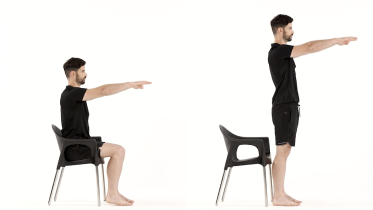 Sit to stand
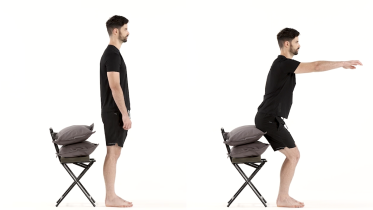 Chair squat
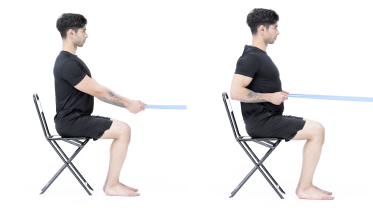 Seated row with band
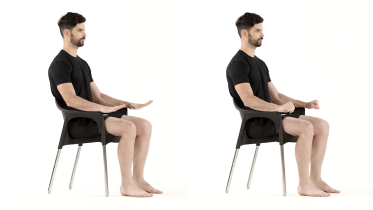 Open and close the hands
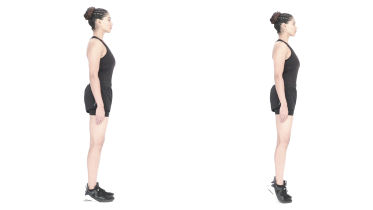 Calf raises
Precautions first. If you have high blood pressure, breathe steadily through every repetition and never hold your breath. With a heart condition or high blood pressure, check with your doctor before you start. If you have had a hip replacement, get the go-ahead from your surgeon or physio before you try sit to stand and the chair squat. Standing up from a low seat and squatting down bend the hip past a right angle, and many surgeons ask you to avoid that for the first months after some operations.
Keep a counter or a sturdy chair within reach for every repetition of the chair work if you have osteoporosis or feel shaky on your feet. Do the same if you have fallen in the past year, and ask your physio before you lower the seat height.
If chest pain, pressure or tightness does not ease quickly when you rest, spreads to your arm, neck, jaw, stomach or back, or comes with sweating, feeling sick, feeling light-headed or being short of breath, call emergency services straight away, as this can be a heart attack. If it eases quickly and none of these happen, get medical advice the same day, and do not exercise again until you have been checked.
With low bone density the seated row is a comfortable choice, because your spine stays upright throughout, but check the band for nicks and thin patches and tug the anchor before each set, and ask your physio first if you have had a fracture in your spine. After shoulder surgery, band rows usually wait until later in rehab. Calf raises come in at the stage your surgeon's protocol sets if you have had an Achilles repair or ankle surgery. After a wrist fracture or hand surgery such as a tendon repair, how far the fingers and thumb may move is often limited for weeks, so open and close the hands only as far as your surgeon or hand therapist has shown you.
When to see a physio (physical therapist)
Six weeks is a fair trigger. If an ache has not shifted in that time, if it is worse in one joint than the rest, if you have started avoiding a movement, or if you have stopped something you used to enjoy, an assessment will get you further than another month of guessing. A physio can tell a tendon from a joint surface, set a starting dose that does not flare you, and write the progression.
Go to a doctor rather than a physio first if the picture matches the warning signs below, particularly puffy joints on both sides, long morning stiffness, a hot swollen joint, or pain at rest that keeps building. Those need a diagnosis before they need a program, and the earlier ones are picked up the better the outcome tends to be.
Related exercise programs
See a doctor promptly if
- Emergency: if chest pain, pressure or tightness does not ease quickly when you rest, spreads to your arm, neck, jaw, stomach or back, or comes with sweating, feeling sick, feeling light-headed or being short of breath, call emergency services straight away, as this can be a heart attack. If it eases quickly and none of these happen, get medical advice the same day, and do not exercise again until you have been checked.
- Emergency: you have had a fall or an injury and now have severe hip pain, or you cannot walk or put weight on the leg. Call emergency services or go to an emergency department. This can be a sign of a broken hip (hip fracture).
- Same day: you feel dizzy, lightheaded or faint as you get up. Sit back down and wait for it to pass. If it does not pass within a minute or two, or it keeps happening, get medical advice the same day before you practice again. If you faint, or it does not settle within a few minutes of keeping still, call emergency services.
- Same day: a joint is hot, red and swollen, or you have joint pain with a high temperature or feel hot, cold or shivery. Get medical advice the same day, and go to an emergency department if you feel very unwell. This can be a sign of infection in the joint, which needs treatment quickly.
- Same day: a calf or thigh that is newly swollen, warm, tender, red or darker than usual, has swollen veins that are sore to touch, or has a throbbing or cramping pain that does not fit your injury or condition, or that feels different from normal muscle soreness after exercise. This can be a sign of a blood clot (deep vein thrombosis), especially after surgery, an injury, time in a cast or boot, a long trip or a spell of being much less mobile than usual. Get medical advice the same day. If you are also short of breath or have chest pain, call emergency services.
- Same day: back pain after a minor fall or strain if you are older, have low bone density (osteoporosis) or have taken steroid tablets for a long time. Get medical advice the same day.
- Same day: back pain that comes on suddenly after lifting, bending, a cough or a sneeze, even without a fall, if you have low bone density (osteoporosis). Get medical advice the same day. This can be a sign of a broken bone in the spine (vertebral fracture). Stop the exercises until you have been checked.
- Within a few days: you have not been diagnosed, and several joints in your hands, wrists or feet are painful, swollen and stiff, especially in the morning. This is not an emergency, but see your doctor within a few days, because early treatment can stop the condition getting worse and lower the risk of joint damage.
- Within a few days: you are over 50 and have aching and stiffness in both shoulders, often in the neck or hips too, that is worst in the morning and lasts more than 45 minutes after you get up. See your doctor within a few days, as this can be an inflammatory condition (polymyalgia rheumatica) rather than a local joint problem. If you also get a new headache, pain or tenderness at your temples or on your scalp, or jaw pain when you eat or talk, get medical advice the same day, and if your vision changes, call emergency services.
- Within a few days: the pain is there at night or at rest and keeps getting worse. See your doctor within a few days. If you have had cancer, now or in the past, or are losing weight without trying, see your doctor sooner, within a day or two, and mention it. This applies even if the pain is not getting worse. If you are being treated for cancer now, contact your cancer team the same day.
- Routine: you have lost height, or your upper back has become more rounded and you are starting to stoop, or you have back pain, or pain that wraps around to your ribs, with no clear cause. Book an appointment with your doctor. A broken bone in the spine can cause this, and it does not always cause the pain you would expect. If the pain came on suddenly, get medical advice the same day.
Common questions
Can the menopause cause joint pain all over your body?
Widespread aching is a common report at this stage, and the research describes the pattern without explaining it. In the largest pooled analysis, 37 studies in 93,021 women, muscle or joint pain was reported by 57% of perimenopausal and 59% of postmenopausal women, against 40% before the transition (Kruse 2026). An older and smaller review found moderate or severe pain climbing steadily from premenopause to postmenopause (Lu 2020). What neither could do, on observational data with heterogeneity they could not explain, was separate the hormone change from getting older. Aching in many places at once is also how inflammatory conditions and polymyalgia rheumatica announce themselves, so a body-wide ache that is new deserves a doctor's opinion rather than a search result.
Why are my joints so stiff in the morning during perimenopause?
The length of the stiffness matters more than the fact of it. NICE sets its threshold at half an hour: from age 45, joint pain that comes on with activity, with either no morning stiffness or morning stiffness that lasts no longer than 30 minutes, is enough for a doctor to diagnose osteoarthritis on the history and examination, with no scan needed. The NHS says morning stiffness in rheumatoid arthritis often lasts longer than that, and that the small joints of the hands and feet are often affected first, usually on both sides. Time yourself from getting out of bed to feeling reasonably loose. If it is regularly past the half hour, or your knuckles look puffy, take that to your doctor rather than to a program.
Is menopausal joint pain permanent?
Nobody can tell you that, because no study has followed menopausal joint pain to a finish line. The figures that speak to it point the wrong way for wishful thinking: reported muscle or joint pain was a little commoner after the menopause than during it, 59% against 57% (Kruse 2026), and moderate or severe pain was commoner again after it in an older review (Lu 2020). That is a reason to treat what is treatable now rather than to sit it out. Most of the specific conditions behind joint pain at this age respond to loading and strength work over months.
Does exercise make joint pain worse in menopause?
Sore joints usually tolerate exercise better than they tolerate rest, provided the dose is sensible. The most direct evidence in an estrogen-deprived group comes from women on aromatase inhibitors, where a 2024 review found yoga, exercise and tai chi all linked with less joint pain, with randomized trials behind the walking and resistance programs and behind yoga, and single-arm studies behind tai chi (Kim 2024). Those women were being treated for breast cancer rather than going through a natural menopause, so read it as encouraging rather than as proof for you. The rule of thumb in clinic is that discomfort during a session that settles within about 24 hours is acceptable, while pain that is clearly worse the next morning means the dose was too high.
Should I get a blood test for joint pain in perimenopause?
That is your doctor's call, and there is no hormone test that diagnoses joint pain. What a doctor is checking for is a treatable condition hiding behind the label, which is why puffy knuckles, joints that swell, stiffness beyond half an hour and symptoms on both sides matter at the appointment. Take a short written history with you: which joints, how long, what makes it worse, and how long the morning stiffness lasts. Anything about hormone treatment belongs in the same conversation, not on this page.
References
- NHS. Menopause and perimenopause symptoms. Page last reviewed 19 May 2026. https://www.nhs.uk/conditions/menopause/symptoms/
- NHS. Things you can do to help menopause and perimenopause symptoms. Page last reviewed 19 May 2026. https://www.nhs.uk/conditions/menopause/things-you-can-do/
- NHS. Symptoms: Rheumatoid arthritis. Page last reviewed 8 March 2023. https://www.nhs.uk/conditions/rheumatoid-arthritis/symptoms/
- NHS. Septic arthritis. Page last reviewed 3 September 2026. https://www.nhs.uk/conditions/septic-arthritis/
- Kruse C, McKechnie T, Dworsky-Fried J, et al. Musculoskeletal manifestations of perimenopause: a systematic review and meta-analysis of 93,021 women. JBJS Open Access. 2026;11(1):e25.00254. https://doi.org/10.2106/JBJS.OA.25.00254
- Lu CB, Liu PF, Zhou YS, et al. Musculoskeletal pain during the menopausal transition: a systematic review and meta-analysis. Neural Plasticity. 2020;2020:8842110. https://doi.org/10.1155/2020/8842110
- Kim S, Chen N, Reid P. Current and future advances in practice: aromatase inhibitor-induced arthralgia. Rheumatology Advances in Practice. 2024;8(2):rkae024. https://doi.org/10.1093/rap/rkae024
- Wright VJ, Schwartzman JD, Itinoche R, Wittstein J. The musculoskeletal syndrome of menopause. Climacteric. 2024;27(5):466-472. https://doi.org/10.1080/13697137.2024.2380363
- National Institute for Health and Care Excellence. Osteoarthritis in over 16s: diagnosis and management (NG226). 2022. https://www.nice.org.uk/guidance/ng226
- Kolasinski SL, Neogi T, Hochberg MC, et al. 2019 American College of Rheumatology/Arthritis Foundation guideline for the management of osteoarthritis of the hand, hip, and knee. Arthritis Care and Research. 2020;72(2):149-162. https://doi.org/10.1002/acr.24131
- Rausch Osthoff AK, Niedermann K, Braun J, et al. 2018 EULAR recommendations for physical activity in people with inflammatory arthritis and osteoarthritis. Annals of the Rheumatic Diseases. 2018;77(9):1251-1260. https://doi.org/10.1136/annrheumdis-2018-213585
- Watt FE, Kennedy DL, Gardiner MD, Vincent TL. Current and future advances in practice: practical management of hand osteoarthritis. Rheumatology Advances in Practice. 2025;9(4):rkaf093. https://doi.org/10.1093/rap/rkaf093
Written and checked by the PocketPhysio editorial team. Last updated 2026-10-01.
This page is general education, not a diagnosis or a personal treatment plan. See a physiotherapist or doctor for advice about your own situation.