Isometric shoulder internal rotation
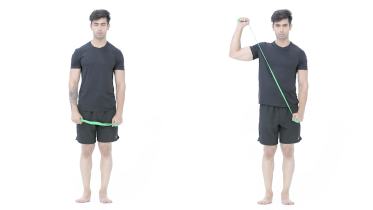
Isometric shoulder internal rotation strengthens the muscles that turn your arm inward without the arm moving. The main one is at the front of the shoulder blade (subscapularis, part of the rotator cuff), helped by the big chest and back muscles. You stand with your elbow bent at your side, press the inside of your wrist inward against your other hand, and hold. It is often used early in shoulder rehab, before the arm is ready to move against a band.
How to do the isometric shoulder internal rotation
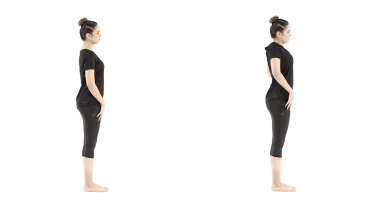
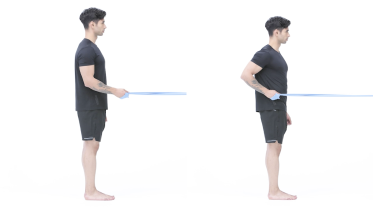
- Stand tall. Bend the elbow of your sore arm to a right angle, keep the elbow close to your side, and point the forearm forward.
- Reach across with your other hand and place the palm on the inside of the wrist of the sore arm.
- Keep your body still and try to turn the forearm inward toward your stomach. Your other hand pushes back just as hard, so the arm does not actually move.
- The effort should come from turning the arm, not from pulling the elbow across your body.
- Hold the push steady and keep breathing normally, then ease off slowly and relax.
What you should feel
Effort at the front of the shoulder and into the chest, sometimes toward the armpit. It should feel like work, not pain.
Common mistakes
- Pulling the elbow away from your side or across the front of your body.
- Pushing so hard that the arm shakes or the shoulder hurts. Start gentle and build up.
- Twisting your trunk toward the pushing hand instead of keeping it still.
How often
Often 5 to 10 holds of 5 to 10 seconds each, once or twice a day, starting with gentle pressure. Your physio will adjust this.
Stop and check with your physio if
- Pushing gives you a sharp pain or a catch in the shoulder.
- You feel pain or tingling spread down the arm.
- Pins and needles in your arm or hand that do not go away after you stop, or part of your arm or hand goes numb. Get medical advice the same day. If one side of your face or body suddenly goes numb or weak, or your speech becomes slurred or muddled, call emergency services, even if it goes away.
- The shoulder aches more after the holds and is still sore a few minutes later.
- A sudden pop or tearing feeling in the shoulder that brings sharp pain, new weakness or trouble lifting the arm. Stop and contact your surgical team the same day, or get medical advice the same day if you have not had surgery.
- The shoulder feels as if it has slipped out of place, looks a different shape or suddenly locks so you cannot move the arm, or your hand turns cold, pale or blue. Go to an emergency department straight away, without driving yourself, and do not try to put the shoulder back in yourself.
From the clinic
You only need your own hand for this, so it fits in at a desk or the kitchen counter. Start with a press you could hold easily and build up over the days if the shoulder stays settled. Do not hold your breath while you push, especially if you have high blood pressure. Physios often pair it with isometric shoulder external rotation, which uses the same setup with your hand on the outside of the wrist.
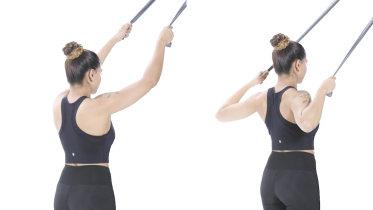
When the holds feel easy and pain free, a common next step is shoulder internal rotation with a band, where the arm actually moves. After shoulder surgery, including a rotator cuff repair, or after a shoulder fracture or dislocation, follow your surgeon's or physio's plan, and do only the movements and range they have cleared. Many plans allow only passive movement at first, where the arm is moved for you and its muscles stay relaxed. Many shoulder replacements and some stabilization operations go through the tendon at the front of the shoulder (subscapularis), and so does a repair of that tendon. After these, pushing inward against resistance is usually held off for several weeks, and your surgeon and physio will tell you when to start.
Written and checked by the PocketPhysio editorial team. Last updated 2026-09-28.
This page is general education, not a diagnosis or a personal treatment plan. If you have pain, an injury or a health condition, see a physiotherapist or doctor before starting new exercises.