Seated knee bend
The seated knee bend is a chair exercise for getting a stiff knee to bend further. You slide your foot back under the chair as far as the knee will go, then bring it forward and straighten the leg out in front. Physios often give it when a knee has stiffened after surgery, an injury or a long spell of rest.
How to do the seated knee bend
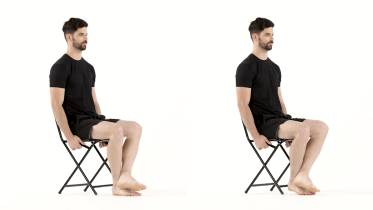
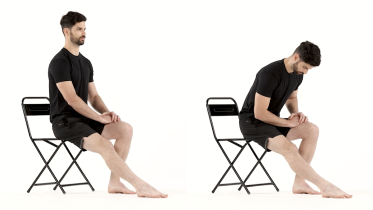
- Sit tall on a steady chair, feet flat and hands resting on your thighs. Pick a chair with a gap under the seat so your foot has room to travel back.
- Slide the foot of the knee you are working back under the chair, bending the knee as far as it will go. Let the heel lift so only the toes stay on the floor.
- Pause for a moment at the deepest bend you can reach without sharp pain.
- Bring the foot forward again and straighten the knee until the leg is out in front of you, about level with your thigh.
- Lower the foot back to the floor with control, then repeat. Keep sitting tall with your thigh resting on the seat throughout.
What you should feel
A stretch or tightness around the front of the knee as it bends back, then some work in the front of the thigh as the leg straightens.
Common mistakes
- Sliding your bottom forward on the seat, which makes the bend look bigger than it really is.
- Jerking the foot back or rushing the reps.
- Leaning back or lifting the thigh off the seat to help the leg straighten.
How often
Programs often use 10 to 15 slow reps, 2 or 3 times a day. Your physio will adjust this.
Stop and check with your physio if
- Sharp or catching pain in the knee, the knee locks, or it swells and stays more painful into the next day.
- Your calf or thigh is getting more swollen, or becomes warm, tender, red or darker than usual, or has a new throbbing or cramping pain. This can be a blood clot, especially after an operation, an injury, time in a cast, boot or brace, or a spell of being much less mobile than usual, and after an operation it can also be an infection. Stop and contact your medical team or get medical advice the same day. If you are also short of breath or have chest pain, call emergency services.
- Your wound becomes more red, hot, swollen or painful, or starts to leak. Contact your medical team the same day.
From the clinic
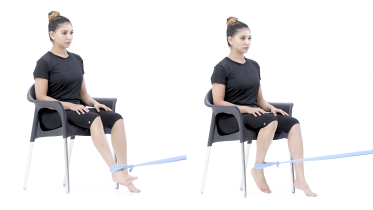
Put a strip of tape on the floor by the chair leg. Mark where your toes reach this week, then check whether they get further back over the next few weeks. If the knee is very stiff, heel slides lying down are a gentler start, Once this one feels easy, the assisted seated knee bend lets your other leg add a little push.
The voice guide with this video talks about ankle weights with the feet off the floor. The video shows no weight and the foot staying on the floor. These steps follow the video. Add a weight only if your physio suggests it.
After a knee fracture or knee surgery, including a knee replacement, follow your surgeon's or physio's plan, and start this exercise only when they have cleared you. After a meniscus repair and some other operations, the knee may only bend to a set angle for a while, so ask what your limit is before you slide the foot all the way back.
Written and checked by the PocketPhysio editorial team. Last updated 2026-09-26.
This page is general education, not a diagnosis or a personal treatment plan. If you have pain, an injury or a health condition, see a physiotherapist or doctor before starting new exercises.