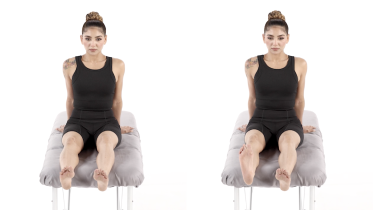
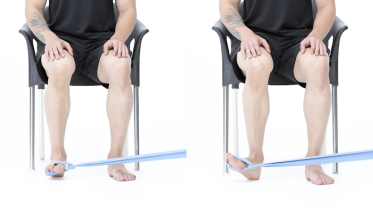
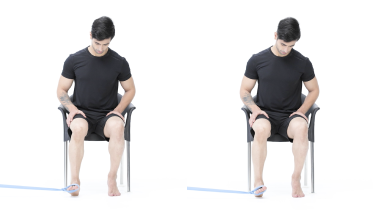
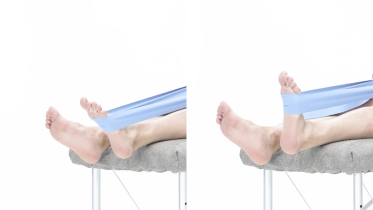
Seated sciatic nerve glide
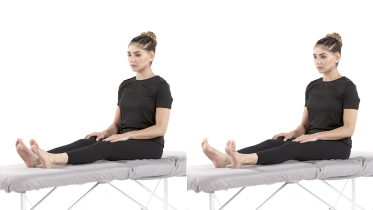
A seated sciatic nerve glide gently moves the large nerve that runs down the back of your leg (the sciatic nerve) without stretching it hard. You sit slumped with one knee partly straight, then look up as you pull your toes toward you, and look down as you point them. Physios often give it for sciatica type leg symptoms, and the whole exercise stays well short of pain or tingling.
How to do the seated sciatic nerve glide
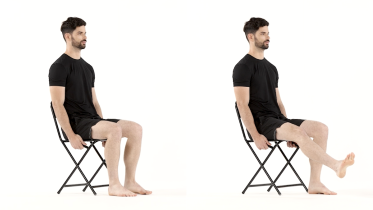
- Sit toward the front of a firm chair with your feet flat on the floor and your hands resting on your thighs.
- Let your back round into a slump and drop your chin toward your chest.
- Slowly straighten the knee of your affected leg until you feel the first hint of tension behind the knee or thigh. Stop there, or a little before. This is a glide, not a stretch.
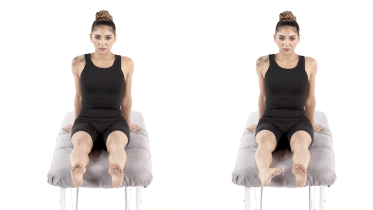
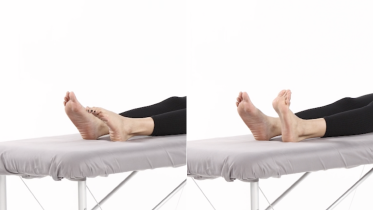
- Keep the knee where it is. Lift your head to look up and, at the same time, pull your toes back toward you.
- Then drop your head again as you point your toes away. Move smoothly between the two, like a slow see-saw, with no hold at either end.
- When you finish the set, bend the knee, put the foot down and sit up to rest.
What you should feel
A mild, easy pull behind the knee, thigh or calf that comes and goes with the movement. Aim for no tingling at all. If a faint tingle appears, make the movement smaller; it should settle within a few seconds.
Common mistakes
- Straightening the knee further to feel more. Stay in the easy range, short of any strong pull.
- Moving the head and ankle the same way together, for example looking down while pulling the toes up. That tightens the nerve from both ends at once.
- Going fast or bouncing at the end of the movement.
- Holding your breath.
How often
Many programs start with 5 to 10 slow, easy glides, 1 to 3 times a day. Your physio will adjust this.
Stop and check with your physio if
- Tingling, numbness or pain in the leg does not settle within a few seconds of easing off.
- Leg symptoms spread further down the leg or get stronger as you go.
- Numbness around your genitals or bottom, new trouble with your bladder or bowels, pain, tingling, numbness or weakness in both legs, or loss of feeling in one leg. Call emergency services or go to an emergency department straight away.
- Your leg or foot gets weaker, for example your foot drags, catches on the ground or slaps down when you walk (foot drop). Get medical advice the same day. If the weakness is getting worse by the hour, go to an emergency department.
- An electric shock feeling runs down your back or into your arms or legs as your head bends forward. Stop and get medical advice the same day.
From the clinic
The rule for any nerve glide is to stay short of symptoms. A mild pull as your head and ankle move is fine. If a tingle hangs around after you ease off, or your leg feels worse later that day or the next morning, stop the glides and check with your physio before you try again. The lying sciatic nerve glide moves the same nerve from a different starting position, and your physio may give you that one instead.
Nerve glides usually belong in a plan for leg pain that a physio or doctor has assessed. If your leg symptoms started after a fall or accident, or you have had back surgery recently, get checked before you start.
Written and checked by the PocketPhysio editorial team. Last updated 2026-09-28.
This page is general education, not a diagnosis or a personal treatment plan. If you have pain, an injury or a health condition, see a physiotherapist or doctor before starting new exercises.