
Wrist pain when doing push-ups: why it hurts and what to change
Warning signs, and when to get help
Why you get wrist pain when doing push-ups
Get into a push-up position and look at your forearms. On most people they lean forward past the heel of the hand. That bends the wrist back further than it ever goes in daily life, and then asks it to hold a large share of your body weight there. The wrist is not one joint but a stack of eight small bones with ligaments threaded between them, and the back of that stack is where a loaded bend closes down first. That is the whole mechanism, and it explains why the pain usually appears at the crease on the back of the wrist rather than in the palm.
Two other things decide whether it becomes a problem. One is how much of this your week contains, counting planks, burpees, downward dog, cycling with the wrists cocked on the bars, and a keyboard. The other is how much range your wrist has to begin with, because a stiff wrist reaches its limit in a position where a more mobile one is still some way short of it.
Nothing here is a diagnosis. Take it as a way of describing your wrist to a clinician, not as a way of avoiding one, and read the warning signs section before you load the wrist again if anything on it fits you.
Where it hurts, and what each spot points to
Put one fingertip on the sorest point before you read on. Where that fingertip lands does a lot of the narrowing down for you.
The back of the wrist, right at the crease where the hand meets the forearm, is the loaded bending pattern and by far the commonest. It usually hurts at the bottom of the push-up, eases when you stand up, and feels better immediately if you raise your hands onto a bench.
The little finger side of the wrist behaves differently. It tends to catch when you twist, open a door or turn a key, and it often clicks. That side of the joint holds a pad of cartilage and ligaments between the end of the forearm bone and the small wrist bones, and loading it in a bent, turned-out position is hard on it. The TFCC injury program covers that. Little finger side pain that is still there once the training soreness has gone is worth having examined rather than stretched.
The thumb side is its own question, usually the tendons that lift the thumb or the joint at the thumb base, and we deal with it on pain at the base of the thumb. The palm side, with numbness or tingling into the fingers, is not a joint problem at all. Pins and needles in the hand and the carpal tunnel syndrome program are the pages for it.
Wrist pain when bending back, with or without push-ups
The push-up is one way to find this, and most people who get it there also notice it elsewhere once they look. Pressing up off a low chair. Leaning on the kitchen counter. Taking weight on your hands to get off the floor, or carrying a tray with the wrist cocked back. All of those load the wrist into bending, so the problem is the mechanism rather than the exercise, and fixing only the push-up often leaves the wrist no better.
The wrist responds to the total, so it pays to know what else is adding to it. A desk week with the wrists resting bent back on the edge of a laptop is a quiet contributor, and our page on wrists at a desk deals with that. Gym work with a barbell across a bent-back wrist does the same job under load.
How do I do push-ups without wrist pain?
Three changes do most of the work, and you can test all three in the next five minutes.
Move the hands under the shoulders. Put the heel of each hand directly beneath the shoulder joint, not in front of it, and point the fingers forward or very slightly outward. If your forearm sits vertically over your wrist at the top of the push-up, the joint is being asked for far less bend.
Spread the fingers and press through the whole palm. Most people rest on the heel of the hand with the fingers along for the ride. Open them wide, grip the floor lightly, and push through the pads at the base of the fingers as well, which moves pressure forward off the back of the joint and brings the forearm muscles into the job.
Take the body higher. Hands on a counter, a windowsill, a bench or the third stair change how much weight the wrist holds, far more than any grip change does. This is the lever that always works, and it is the one people skip because it feels like a step backward. It is not: incline push-ups train the same movement and let the wrist adapt while you keep training.
Then cut the number of repetitions by roughly a third for a week or two. Wrists that have been loaded into a new position need time to build tolerance, and position changes alone will not outrun too much volume.
Should I do push-ups on my fists or use push-up bars?
Both keep the wrist straight, and both are honest options rather than fixes. On your fists or on bars the wrist no longer sits at its end range, so the pinch at the back of the joint goes, and many people train that way indefinitely. The trade is that the load has moved rather than gone: onto the knuckles and the back of the hand, and onto the muscles that now have to hold the wrist steady rather than letting it rest on bone and ligament.
A few practicalities. Fists need a mat or carpet, and the knuckles take a week or two to stop complaining. Bars and parallettes need a grip strong enough to hold the body still, so people with a weak grip wobble. And if your wrist pain is coming from the amount you are doing, a bar will mask it for a few weeks and the complaint will reappear in the forearm, the elbow or the shoulder. Use them to keep training while you sort out the dose, and keep working on the wrist's own tolerance alongside.
If your joints are generally very flexible
Very flexible joints go almost unmentioned in the usual push-up advice, and the position asks more of them than it does of a stiffer wrist. A wrist that bends back further than most ends up with the hand almost flat against the forearm at the bottom of the movement, and joints that sit at the far end of their range under load tend to get sore. Nobody has counted how often this group ends up with push-up wrist pain, so the mechanism is the part to use rather than a risk figure. The NHS describes joint hypermobility syndrome as very flexible joints, with joint and muscle pain and frequent sprains among the symptoms, and says the main approach is building muscle strength and fitness to protect the joints, often with physiotherapy. It also says that not doing any exercise can make symptoms worse, and warns against overstretching joints.
Translated into push-ups: do not chase more wrist flexibility, because you have enough. Work instead on holding the wrist a little short of its end range, which is what the isometric work on this page is for, and on strength in the forearm and the hand. The NHS also tells this group not to do repetitive exercises or activities without regular breaks, which it calls pacing, so spread the volume across the week and break a session up rather than grinding through one long set. Our hypermobility program sets out the wider version. A physio or hand therapist is worth seeing if this is you, because the dose has to be more careful than average.
Warming the wrist up, and what to do after a session
Two minutes before you train changes more than most people expect. Slow bends forward and back, slow turns of the palm up and down, and a gentle stretch of the back of the forearm, all without load, get the joint moving through the range you are about to use. Then take a few seconds in the push-up position on your hands before the first repetition, rock gently forward and back, and let the wrist meet the position before it has to hold weight in it.
Afterward, the NHS wrist pain advice is a reasonable default for a sore wrist: rest it when you can, a cold pack wrapped in a towel for up to 20 minutes every 2 to 3 hours, gentle hand and wrist movements rather than complete stillness, and paracetamol or ibuprofen as a gel or tablets if that suits you. It advises avoiding heat packs and hot baths for the first 2 to 3 days after an injury, and avoiding heavy lifting and tight gripping while it settles. A pharmacist can tell you whether a painkiller is right for you.
Working back to push-ups on the floor
Exercises that can help
This is a ladder rather than a list, and you start on the rung where the wrist is comfortable. Wall push-ups often begin at 2 to 3 sets of 10 to 15, a few days a week, and incline push-ups at 2 to 3 sets of 8 to 15 on 2 or 3 days a week, finishing each set before the body starts to sag. Knee push-ups commonly start at 2 to 3 sets of 8 to 15, a few days a week, ending each set while the back still stays straight, and full push-ups at 2 to 3 sets of 5 to 10. The wrist extensor stretch usually uses 2 to 4 holds of 15 to 30 seconds, a few times a day, and isometric wrist extension 5 to 10 holds of 5 to 10 seconds, once or twice a day, at a gentle effort that builds over the following days. Your physio will adjust this. Move down a rung rather than through pain, and give each rung two to three weeks before you judge it. If you have high blood pressure, breathe steadily through every hold and never hold your breath. After a broken wrist, hand or forearm, or surgery on any of them such as a tendon repair, start only when your doctor, surgeon, physio or hand therapist says the bone or repair is ready for this, and follow their plan for how much to do. After a broken or dislocated elbow, or elbow surgery, follow your surgeon's or physio's plan and start only when they have cleared you. After recent heart or chest surgery, get your surgeon's or surgical team's okay before any push-up, because taking your body weight through your arms loads the healing breastbone. If the breastbone clicks, grinds, shifts or feels as if it is moving while you do it, stop, and contact your surgical team the same day. After shoulder surgery or a dislocated shoulder, or with ongoing shoulder pain, check with your physio before you take weight on your arms. If chest pain, pressure or tightness does not ease quickly when you rest, spreads to your arm, neck, jaw, stomach or back, or comes with sweating, feeling sick, feeling light-headed or being short of breath, call emergency services straight away, as this can be a heart attack. If it eases quickly and none of these happen, get medical advice the same day, and do not exercise again until you have been checked. If you faint while exercising, call emergency services, even if you feel fine again quickly.
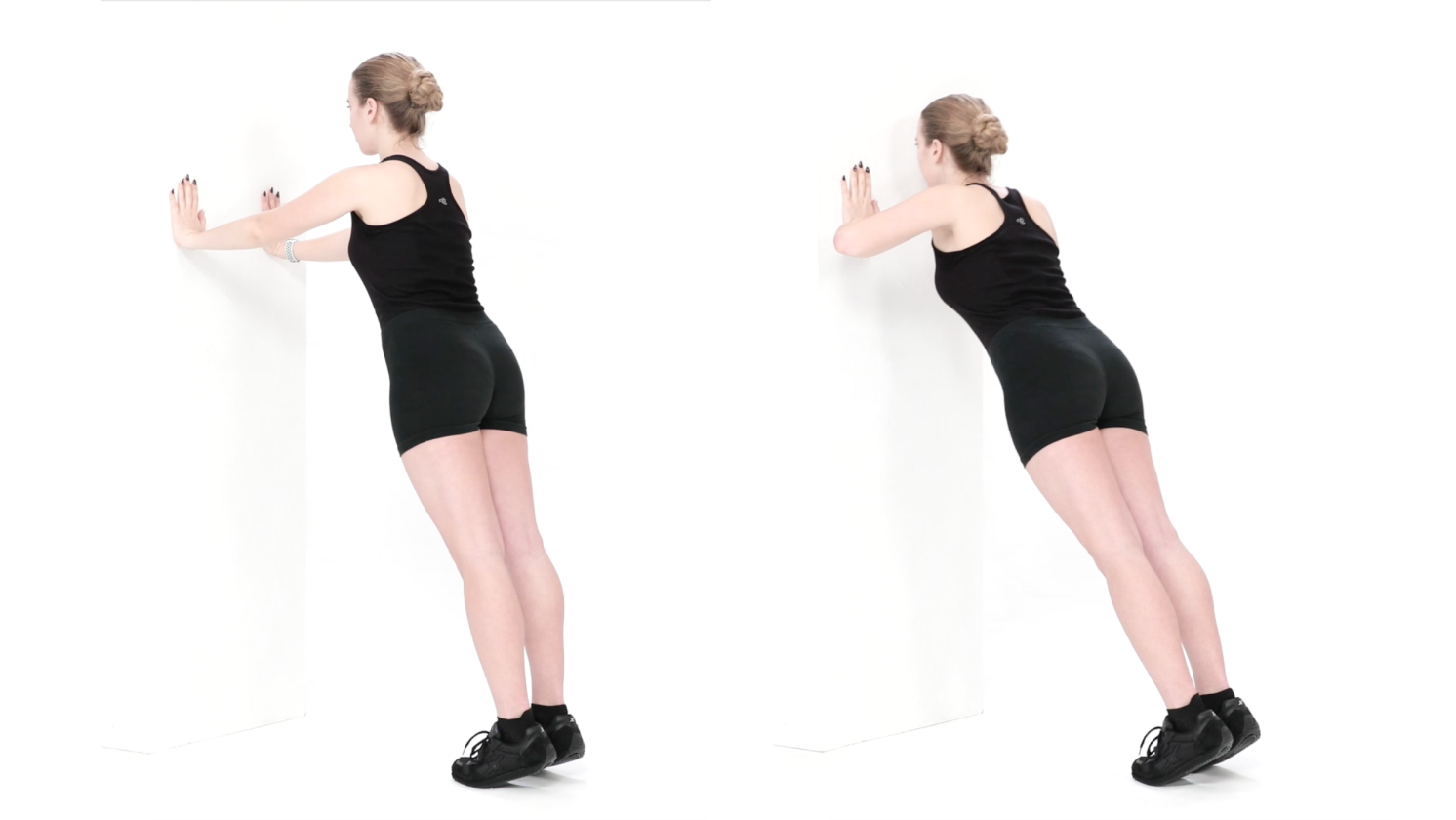 Wall push-ups
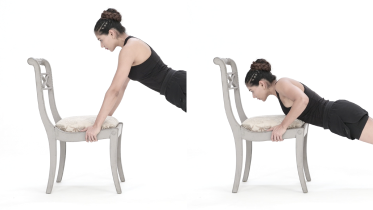 Incline push-ups
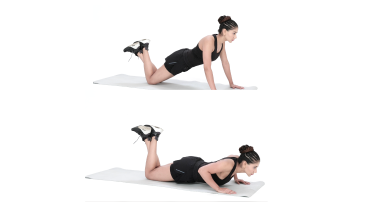 Knee push-ups
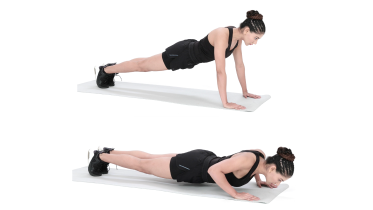 Push-ups
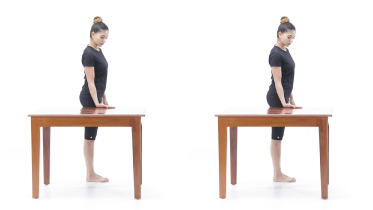 Wrist extensor stretch
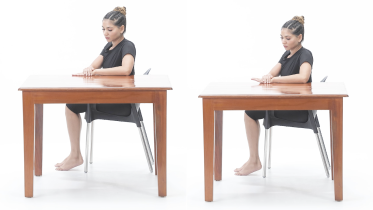 Isometric wrist extension
A broken wrist gives you a different starting point and a different set of rules. If you have had a wrist fracture, the wrist fracture rehab program is where to start, and if you broke the small bone on the thumb side, the scaphoid fracture rehab program is yours. Both pages set out when and how a healed wrist goes back to taking weight, which is a staged process your surgeon or hand therapist leads rather than something to work out from a page about push-ups. Returning to the gym after injury covers the broader way back.
When to see a physio (physical therapist)
Book an appointment if the wrist is stopping you doing normal activities, is getting worse or keeps coming back, or has not improved after 2 weeks of looking after it at home, which are the NHS thresholds for wrist pain. Add to those a wrist that clicks painfully, swelling that is still there once the training soreness has gone, pain on the little finger side that does not settle, and any numbness or tingling. The NHS also says not to try to diagnose the cause of wrist pain yourself, which is fair: the structures sit very close together and the tests that separate them are done by hand.
An appointment here is mostly a sorting job followed by a dose. A physio or hand therapist will measure how far the wrist bends back, press the joint, the tendons and the little finger side separately, load the wrist in the position that hurts, test the nerves, check your grip, and watch you do a push-up. That last part is usually the most informative. Then they set the rung of the ladder you start on and the rate you move up it. Some signs should not wait: read the warning signs section on this page and act on the timing given for each line, because they are not all at the same level of urgency.
Related exercise programs
Warning signs
Get emergency help now
- Emergency: any sign of a stroke, even if it goes away. That means a face that droops on one side, an arm you cannot lift or keep up, slurred or muddled speech, weakness or numbness on one side of your body or face, sudden blurred vision, double vision or loss of sight, trouble swallowing, sudden dizziness with unsteadiness or falling over, a sudden severe headache, or a sudden fall where your legs give way but you do not black out (a drop attack). Call emergency services straight away. With neck pain, these can rarely come from a tear in an artery in the neck.
- Emergency: numbness, tingling or pins and needles in the hand after a fall or injury to the wrist, or a wrist that has changed color, changed shape or sits at an odd angle. The same applies to a bone showing through the skin or a cut that is bleeding heavily. Go to an emergency department or call emergency services straight away, and do not drive yourself. The wrist may be broken.
- Emergency: you heard a crack in the wrist at the moment of the injury. Go to an emergency department or call emergency services straight away, and do not drive yourself, which is what the NHS advises for any injury where you hear a crack.
- Emergency: new problems walking, for example your legs feel stiff, heavy or weak or you have become unsteady on your feet, new trouble controlling your bladder or bowels, or hands that suddenly become clumsy, for example you can no longer do up buttons. Call emergency services straight away. These can be signs of pressure on the spinal cord in the neck.
- Emergency: while you are in a cast or splint, your fingers turn blue, white or pale, or feel cold. Do not wait to see if raising your hand helps. Go to an emergency department straight away, and do not drive yourself. The cast or splint may be cutting off the blood supply, or pressure may be building up inside the forearm (compartment syndrome), and both need checking quickly.
Get help now, day or night
- In a cast or splint, the pain gets worse, your fingers feel numb or tingle or look more swollen, or the cast feels too tight. Stop, rest your hand at about the level of your heart, keep moving your fingers and contact your fracture clinic or get medical advice straight away. Do not lift the hand higher than your heart and do not put ice on it, because if pressure is building up inside the forearm both of those cut down the blood reaching it. If you cannot move your fingers, the pain is severe even after painkillers, or the numbness, tingling or swelling has not settled within 30 minutes, go to your fracture clinic or an emergency department straight away, and do not drive yourself.
Get help today
- Same day: after a fall onto your hand, pain, swelling or tenderness on the thumb side of the wrist, especially in the small hollow at the base of the thumb that shows when you give a thumbs-up (the anatomical snuffbox). Get medical advice the same day, even if it feels like a mild sprain, and ask about an X-ray. It can be hard to tell a broken wrist from a bad sprain, and a break in the small wrist bone on the thumb side (scaphoid) does not always show on the first X-ray. If your doctor still suspects one, you may wear a splint or cast and have a repeat X-ray or a scan, so keep that appointment even if the wrist feels better. A missed scaphoid break can fail to heal.
- Same day: severe wrist pain, pain that makes you feel faint, dizzy or sick, a snap, grinding or popping sound or feeling in the wrist at the moment it was loaded, a wrist you cannot move or use to hold things, a sudden loss of wrist strength, or loss of feeling in part or all of your hand rather than it feeling dulled or tingly. Get medical advice the same day, and do not load the wrist again until it has been checked. The NHS puts severe wrist pain, feeling faint, dizzy or sick from the pain, a snap, grinding or popping noise at the time of the injury, a wrist you cannot move or hold things with, and loss of feeling in part or all of the hand on its urgent same day route. A sudden loss of wrist strength is not on that list, and healthdirect in Australia sends it to an emergency department, along with severe wrist pain, a snap, grinding or pop and a wrist that looks pale or abnormal, so go there if your wrist strength has suddenly gone, the pain is severe, you cannot use the wrist at all, or you cannot get advice the same day.
- Same day: new wrist pain after a fall, even a small one, if you are older, have low bone density (osteoporosis) or have taken steroid tablets for a long time, even if you can still move the wrist. Get medical advice the same day and ask about an X-ray. A broken wrist is not always obvious at first.
- Same day: the wrist is hot, red and swollen, or you have wrist pain with a high temperature or feel hot, cold or shivery. Get medical advice the same day, and go to an emergency department if you feel very unwell. This can be a sign of infection in the joint, which needs treatment quickly. If you have a very high or very low temperature, shivering you cannot control, you are breathing very fast or finding it hard to breathe, you are confused or your speech is slurred, your skin, lips or tongue look blue, gray, pale or blotchy (on brown or black skin this can be easier to see on the palms of the hands or soles of the feet), or you have a rash that does not fade when you press it, call emergency services, as this can be sepsis.
- Same day: hands that have slowly become clumsy, for example trouble doing up buttons or dropping things, or numbness in both hands. Get medical advice the same day. These can be signs of pressure on the spinal cord in the neck (cervical myelopathy). If the clumsiness or numbness gets worse quickly, call emergency services straight away.
- Same day: pain or tingling in both arms at the same time, rather than in one. Get medical advice the same day. This can also be a sign of pressure on the spinal cord in the neck.
- Same day: you have had surgery for a squeezed nerve in the hand or arm, such as a carpal tunnel release or ulnar nerve surgery at the elbow, and the tingling or numbness has come back after settling, has not improved at all, or new weakness has appeared. The same applies if the wound becomes red, hot, swollen, more painful or starts leaking, or you get a fever. Get advice from your surgeon or hand therapist the same day, and go to an emergency department if you feel very unwell. Symptoms that return or never settle after an operation are a question for the team that operated, because they know what was released and what the nerve looked like, and an infection in an operated hand needs treating quickly. One yardstick worth having while you wait: OrthoInfo says night symptoms improve dramatically for most people in the first week or so after a carpal tunnel release, so nights that never improved, or settled and have since come back, are a reason to go back to that team rather than something to solve with exercises.
Book an appointment
- Within a few days: numbness in the hand that is there all the time, the fleshy muscle at the base of your thumb looks flatter or thinner than on the other hand, or your thumb is getting weaker and you keep dropping things. See a doctor within a few days rather than waiting for it to settle. If the weakness is getting worse from day to day or spreads beyond the thumb, get medical advice the same day. In long-standing cases the nerve can be damaged for good, and surgery may be recommended to prevent that.
- Within a week or two: numbness, tingling or pins and needles in the hand or fingers during or after push-ups that does not clear within a few minutes of getting off your hands. Loading a healthy wrist does not usually leave lasting numbness, so see a doctor or physio within a week or two to find the cause, such as a squeezed nerve at the wrist (carpal tunnel syndrome). The NHS lists tingling or loss of feeling in the hand or wrist as a reason to see a GP about wrist pain.
- Within a week or two: swelling, stiffness or a lump on the wrist that is still there once the soreness from training has gone, or a wrist that is painful, warm, swollen and stiff. See a doctor or physio within a week or two. A very painful, hot or red lump on the wrist needs medical advice the same day instead.
- Routine: wrist pain that stops you doing normal activities, is getting worse, keeps coming back, or has not improved after 2 weeks of looking after it at home, or any wrist or hand pain if you have diabetes. Book an appointment with your doctor or physio, which are the thresholds the NHS uses for wrist pain, and it names diabetes among them because hand problems can be more serious when you have it. The NHS also says not to try to diagnose the cause of wrist pain yourself.
Common questions
Why do my wrists hurt when I do push-ups?
Because the push-up position asks the wrist to do two hard things at once. It bends the wrist back toward the end of its range, which closes down the back of the joint, and it then puts a large share of your body weight through that closed position on a joint built out of eight small bones. Hands placed ahead of the shoulders, rather than directly under them, push the wrist further back still and are the single commonest reason a set starts to bite. Volume matters as much as position: wrists that were fine at 20 push-ups a session and complain at 60 are telling you about the amount, not about the technique. OrthoInfo notes that a wrist sprain often happens when the wrist is forcefully bent or twisted and the supporting ligaments are stretched or torn, which is the same tissue the loaded position stresses, and healthdirect lists repeated bending and twisting of the wrist among the causes of longer-term wrist pain.
How do I do push-ups without wrist pain?
Change the angle first, then the load, then the volume, in that order. Put the heel of each hand directly under the shoulder joint and turn the fingers to point forward or very slightly out, so the forearm sits over the wrist instead of behind it. Spread the fingers wide and press through the whole palm, including the pads at the base of the fingers, which shares the pressure instead of dumping it all into the back of the joint. Then take the body higher: hands on a kitchen counter, a bench or a stair ask the wrist to hold a fraction of the weight that the floor does, and the same movement still trains the chest, shoulders and trunk. Finally cut the number of repetitions by about a third for a week or two and build back up, because a wrist that is being irritated by volume will not be fixed by hand placement alone.
Should I do push-ups on my fists or use push-up bars?
Both work, and neither is a cure. Going onto your fists or onto push-up bars keeps the wrist straight instead of bent back, which takes the pinch off the back of the joint, and plenty of people train comfortably that way for years. What they do is move the load rather than remove it: on your fists, the pressure goes through the knuckles and the small bones on the back of the hand, and the wrist now has to be held steady by muscle instead of resting on its own end range. Bars need a soft surface or they bruise the knuckles, and both options ask more of your grip and forearm. If the real problem is that you have added too much volume too quickly, a bar will hide it for a few weeks and then the pain comes back somewhere else. Use them as a way to keep training while you fix the dose, not instead of fixing it.
Is it normal for wrists to hurt doing push-ups?
Mild aching in a position you are new to is common and usually settles as the wrist adapts over two or three weeks. What is not normal is pain that is sharp, pain that is still there the next morning, swelling, clicking that is painful rather than just noisy, or any numbness and tingling. Those four are worth sorting out rather than training through. The honest answer about frequency is that nobody has counted it properly: no national health service page we could read puts a number on how many people get wrist pain from push-ups, so anyone quoting you a percentage is quoting themselves. What we can say from clinic is that it is one of the most common reasons people stop doing push-ups, and that it is one of the easier ones to work around.
How do I stop wrist pain during press-ups?
Press-ups and push-ups are the same movement under two names, and the answer is the same in both. Get the hands under the shoulders, spread the fingers and press through the whole palm, then raise the hands onto a bench or counter so less weight goes through the wrist. Warm the wrists before you start, with slow bends and turns and a gentle stretch, rather than going straight from cold into a loaded position. Then look at the week rather than the set: how many press-ups, how many planks, how much cycling or rowing with the wrists bent back on a bar, and how much time at a keyboard. Wrists usually give way to the total, and that total is often built from several things that all bend the wrist back.
Can I keep doing push-ups with wrist pain?
Usually yes, in a version the wrist is comfortable in. There is no need to stop training the pattern altogether, and stopping is often what makes the wrist less able to take weight later. Drop down the ladder to the rung that is comfortable, which may be wall push-ups, hands on a counter, or knee push-ups with the hands raised, and then take two to three weeks on each rung before stepping up. Keep it honest with one rule: the wrist should be no worse the next morning than it was before the session. Two patterns earn an exception and should be checked before you load the wrist again, which are pain that followed a fall onto the hand and numbness or tingling that does not clear within a few minutes.
When should I get wrist pain from push-ups checked?
Sooner than you would think for a few specific findings, and at two weeks for everything else. The NHS says to see a GP about wrist pain that stops you doing normal activities, is getting worse or keeps coming back, has not improved after 2 weeks of home treatment, or comes with tingling or loss of feeling in the hand. It puts severe pain, a snap, grinding or popping at the time of injury, a wrist you cannot move or hold things with, and a wrist that has changed shape or color on a faster route, and hearing a crack during the injury straight to an emergency department. healthdirect in Australia sends severe wrist pain, a snap, grinding or pop, and a sudden loss of wrist strength to an emergency department too. Tenderness in the small hollow at the base of the thumb after a fall onto the hand is the one we push hardest on, because OrthoInfo says a scaphoid fracture can be mild enough to be mistaken for a wrist sprain and the first X-ray does not always show it. Read the warning signs section on this page and act on the timing given for each line, because they are not all at the same level of urgency.
References
- NHS. Wrist pain. Page last reviewed 5 November 2025. Read 29 October 2026. https://www.nhs.uk/symptoms/hand-pain/wrist-pain/
- NHS. Hand pain. Read 29 October 2026. https://www.nhs.uk/symptoms/hand-pain/
- NHS. Carpal tunnel syndrome. Read 29 October 2026. https://www.nhs.uk/conditions/carpal-tunnel-syndrome/
- NHS. Sprains and strains. Read 29 October 2026. https://www.nhs.uk/conditions/sprains-and-strains/
- NHS. Broken arm or wrist. Read 29 October 2026. https://www.nhs.uk/conditions/broken-arm-or-wrist/
- NHS. Septic arthritis. Read 29 October 2026. https://www.nhs.uk/conditions/septic-arthritis/
- NHS. Sepsis. Read 29 October 2026. https://www.nhs.uk/conditions/sepsis/
- NHS. Symptoms of a stroke. Read 29 October 2026. https://www.nhs.uk/conditions/stroke/symptoms/
- NHS. Joint hypermobility syndrome. Read 29 October 2026. https://www.nhs.uk/conditions/joint-hypermobility-syndrome/
- healthdirect. Wrist pain. Australian Government. Read 29 October 2026. https://www.healthdirect.gov.au/symptoms/aches-and-pains/wrist-pain
- American Academy of Orthopaedic Surgeons. Wrist sprains. OrthoInfo. Read 29 October 2026. https://www.orthoinfo.org/en/diseases--conditions/wrist-sprains/
- American Academy of Orthopaedic Surgeons. Carpal tunnel syndrome. OrthoInfo. Read 29 October 2026. https://www.orthoinfo.org/en/diseases--conditions/carpal-tunnel-syndrome/
- American Academy of Orthopaedic Surgeons. Scaphoid fracture of the wrist. OrthoInfo. Read 29 October 2026. https://www.orthoinfo.org/en/diseases--conditions/scaphoid-fracture-of-the-wrist/
Written and checked by the PocketPhysio editorial team. Last updated 2026-10-29.
This page is general education, not a diagnosis or a personal treatment plan. See a physiotherapist or doctor for advice about your own situation.