
Part of Desk job pain: neck, back and wrist aches sorted by body area
Wrist pain from typing: where it hurts, what it usually is and what helps
Warning signs, and when to get help
Why do my wrists hurt when I type?
Typing and mousing are light work done thousands of times a day. The small muscles in the forearm that lift and steady the wrist and fingers rarely get a proper rest, and the tendons that run from them past the wrist take that repetition with them. When the hours go up, the breaks go down or the wrist sits bent for long spells, those tissues can start to ache before they adapt.
The NHS describes pain from repeated movement and overuse as repetitive strain injury, a broad label rather than a diagnosis, and lists typing at a computer among the jobs that can bring it on. An overview of systematic reviews found that computer use is linked with reports of pain and discomfort, especially in the forearm and hand, but only limited evidence linking it to specific conditions (Andersen and colleagues, 2011). In plain terms, sore forearms and wrists after long screen days are common, while lasting damage from typing is not well supported.
Three things turn up again and again in clinic. A mouse held far out to the side or gripped hard, often during a long spell of detailed work. Wrists bent back on the edge of a laptop or tipped toward the little finger to reach the keys. And a sudden jump in hours, such as a deadline week or the first weeks of working from home on a laptop.
Sorting wrist pain by where it hurts
Where you feel it is the most useful clue you have. None of this is a diagnosis, and more than one pattern can apply at once, but it tells you which page to read next.
Thumb side of the wrist
Pain over the bony bump on the thumb side, worse when you lift the thumb, grip, or use the space bar and trackpad with the side of your thumb, fits De Quervain's tenosynovitis. Aching deeper at the base of the thumb, where it joins the wrist, is a different problem, and pain at the base of the thumb sorts the usual causes there, including thumb arthritis.
Palm side, with tingling in the thumb and first fingers
Tingling, numbness or burning in the thumb, index and middle fingers, often worse at night or when you wake, points toward carpal tunnel syndrome. Shaking the hand out to ease it is a common story. This is a nerve problem rather than a tendon one, so it follows a different plan, usually built around a night splint.
Back of the wrist and the outer elbow
An ache along the top of the forearm that runs toward the outer elbow, worse when you grip the mouse or lift a mug with your palm facing down, fits tennis elbow. The US physical therapy guideline for this problem lists repeated bending and straightening of the wrist or elbow for more than 2 hours a day among its modifiable risk factors (Lucado and colleagues, 2022). The tendon sits at the elbow, but many typists feel it first in the forearm.
Little finger side
Tingling in the ring and little fingers, especially after long spells with your elbows bent or leaning on the edge of the desk, fits cubital tunnel syndrome, where the nerve is squeezed at the elbow rather than the wrist. Pain on the little finger side of the wrist itself, without tingling, has several causes and is worth having examined if it lasts.
A finger that catches or locks as you bend it is not a wrist problem at all; trigger finger covers that.
Is it carpal tunnel from typing?
Typing alone is an unlikely cause. When the American Academy of Orthopaedic Surgeons and the American Society for Surgery of the Hand put together their 2024 carpal tunnel guideline, they looked for solid research on keyboard use and found none. In its place, the guideline panel gave a consensus opinion: long hours at a keyboard are not associated with carpal tunnel syndrome (Shapiro and colleagues, 2025). An earlier systematic review of mouse and keyboard use reached a similar place, finding the evidence insufficient to show that computer work causes it (Thomsen and colleagues, 2008).
The NHS lists other things that make carpal tunnel syndrome more likely, including pregnancy, being overweight, diabetes, arthritis, a family history and work or hobbies that involve repeated wrist bending or hard gripping. So if you have it and you type for a living, the keyboard may be making your symptoms worse on a given day without being the reason you have it. Changing your setup is still worth doing if typing brings the tingling on.
Desk changes that take load off the wrists
Start with the cheap changes. Sit close enough that your elbows rest near your sides, with the keyboard at about elbow height so your forearms are roughly level and your wrists near straight. Bring the mouse in beside the keyboard rather than out at arm's length, and hold it loosely. On a laptop, a separate keyboard and mouse let you raise the screen to eye level, keeping the top line at or below eye level and about 50 to 100 cm (20 to 40 inches) away, as the US Occupational Safety and Health Administration suggests, without bending your wrists to reach the keys. The home desk setup page goes through the whole workstation.
Equipment is where the evidence runs thin. A Cochrane review of ergonomic programs for office workers found inconsistent evidence for alternative mouse designs and forearm supports, no clear effect from adjusting workstations, and very low-quality evidence that extra short breaks eased discomfort in the forearm, wrist and hand (Hoe and colleagues, 2018). That does not make a vertical mouse useless. It means it is worth trying if it feels easier, not worth buying in the hope it will cure anything on its own.
Change the work as well as the desk. Swap the mouse to the other hand for simple tasks, use keyboard shortcuts for repeated clicks, and try dictation for long emails. Short breaks every half hour or so, as practice rather than a tested rule, give the forearm a rest; the movement breaks page has routines. Rest your wrists on a pad between bursts of typing rather than pressing on it while you type.
Exercises for wrists that ache from typing
These four keep the fingers and wrist moving through a long screen day. Tendon glides slide the finger tendons through the wrist, and wrist flexion and extension takes the wrist gently through its range. The wrist extensor stretch eases the top of the forearm, which is the side that tightens most with mousing, and the wrist flexor stretch eases the palm side.
If you have tingling in the thumb and first fingers, leave out the two stretches for now, because holding the wrist fully bent can press on the nerve; the carpal tunnel program keeps the wrist nearer straight for that reason. Stop any exercise that brings on tingling or numbness in the hand and tell your physio. After a broken wrist, hand or forearm, or surgery on any of them such as a tendon repair, start only when your doctor, surgeon, physio or hand therapist says the bone or repair is ready for this, and follow their plan for how much to do. After a broken or dislocated elbow, or elbow surgery such as a tendon repair, follow your surgeon's or physio's plan, and start these exercises only when they have cleared you.
Exercises that can help
These four keep the fingers, wrist and forearm moving through a typing day. Many programs go through the tendon glide sequence 5 to 10 times with each position held for about 3 to 5 seconds, 2 to 4 times a day, use 2 to 3 sets of 10 to 15 slow wrist bends 1 to 3 times a day, and hold each forearm stretch for 15 to 30 seconds, 2 to 4 times, a few times a day. Your physio will adjust this.
 Tendon glides
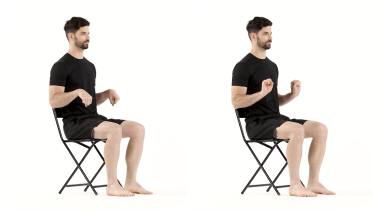 Wrist flexion and extension
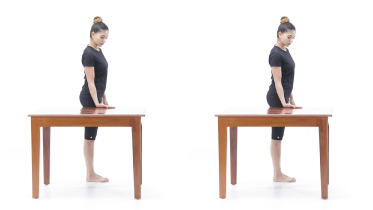 Wrist extensor stretch
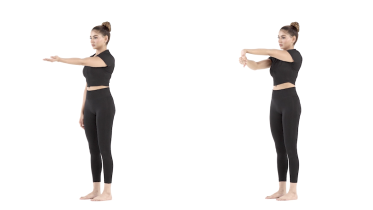 Wrist flexor stretch
Stretches only go so far. If an ache at the outer elbow has lasted more than a few weeks, the tennis elbow program builds up strength in the forearm, which is what the guideline for that problem recommends; it found that stretching the wrist extensors on its own had no lasting effect on pain or function compared with stretching plus strengthening (Lucado and colleagues, 2022).
When should you see someone about wrist pain from typing?
The NHS advice is to see a doctor if wrist pain gets in the way of normal activities, if it is worsening or returning, if 2 weeks of home care have not helped, or if you have any tingling or loss of feeling in the hand. A physio can examine where the pain comes from, check the nerves in your neck and arm, and look at how you work, which is often where the lasting fix sits.
Some signs need quicker help. Numbness that stays, a thumb that is getting weaker, or the muscle at the base of the thumb looking flatter than on the other side need a doctor within a few days. Tingling that comes on when you turn your neck, or pain running from the neck into the arm, may start in the neck, and the neck and back page has more on desk-related neck pain. If your wrist or fingers will not lift properly, or your hand keeps getting weaker rather than just sore, get medical advice the same day.
Any sign of a stroke, such as a face that droops on one side, an arm you cannot lift or keep up, slurred speech or sudden dizziness with a fall, means calling emergency services straight away. The warning signs below give the full list with their time frames, and the working from home and desk work hub covers the rest of the desk day.
Related exercise programs
Warning signs
Get emergency help now
- Emergency: any sign of a stroke, even if it goes away. That means a face that droops on one side, an arm you cannot lift or keep up, slurred or muddled speech, weakness or numbness on one side of your body or face, sudden blurred vision, double vision or loss of sight, trouble swallowing, sudden dizziness with unsteadiness or falling over, a sudden severe headache, or a sudden fall where your legs give way but you do not black out (a drop attack). Call emergency services straight away.
- Emergency: numbness, tingling or pins and needles in the hand after a fall or injury to the wrist, or a wrist that has changed shape or sits at an odd angle. The same applies to a bone showing through the skin or a cut that is bleeding heavily. Go to an emergency department or call emergency services straight away, and do not drive yourself. The wrist may be broken.
- Emergency: new problems walking, for example your legs feel stiff, heavy or weak or you have become unsteady on your feet, new trouble controlling your bladder or bowels, or hands that suddenly become clumsy, for example you can no longer do up buttons. Call emergency services straight away. These can be signs of pressure on the spinal cord in the neck.
Get help today
- Same day: a wrist injury that has left the wrist swollen, bruised or so painful you cannot use the hand, without numbness or a change in shape. Get medical advice the same day.
- Same day: the pain on the thumb side of your wrist started with a fall onto your hand or another injury, even if it feels like a sprain. Get medical advice the same day. A break in the small wrist bone on the thumb side (scaphoid) can cause pain in just this spot, can feel mild at first and is easy to mistake for a sprain.
- Same day: the wrist is hot, red and swollen, or you have wrist pain with a high temperature or feel hot, cold or shivery. Get medical advice the same day, and go to an emergency department if you feel very unwell. This can be a sign of infection in the joint or tendon, which needs treatment quickly.
- Same day: numbness or tingling in both hands together with hands that have slowly become clumsy, for example trouble doing up buttons or dropping things. Get medical advice the same day. These can be signs of pressure on the spinal cord in the neck (cervical myelopathy) rather than a problem at the wrist. If the clumsiness or numbness gets worse quickly, call emergency services straight away.
- Same day: pain spreads from your neck down the arm, or turning or tilting your neck brings on the tingling in your hand. The problem may be in the neck rather than the wrist or elbow. If a doctor or physio has not checked it yet, get medical advice the same day.
- Same day: your wrist or fingers will not lift properly, for example the fingers droop at the knuckles or the wrist drops when you hold your arm out in front of you. Get medical advice the same day. If the weakness is getting worse by the hour, go to an emergency department.
- Same day: the pain is there at night or at rest and keeps getting worse. If you are being treated for cancer now, contact your cancer team the same day.
Book an appointment
- Within a few days: numbness in the hand that is there all the time, the fleshy muscle at the base of your thumb looks flatter or thinner than on the other hand, or your thumb is getting weaker and you keep dropping things. See a doctor within a few days rather than waiting for it to settle. If the weakness is getting worse from day to day or spreads beyond the thumb, get medical advice the same day. In long-standing cases the nerve can be damaged for good, and surgery may be recommended to prevent that.
- Within a day or two: the pain is there at night or at rest and keeps getting worse. If you have had cancer, now or in the past, or are losing weight without trying, see your doctor sooner, within a day or two, and mention it. This applies even if the pain is not getting worse.
- Within a few days: the pain is there at night or at rest and keeps getting worse. See your doctor within a few days.
- Within a week or two: tingling or numbness in your ring and little fingers that has lasted more than 6 weeks, even if it is mild. See a doctor in the next week or two, or within a few days if the symptoms are severe. OrthoInfo advises seeing a doctor for these symptoms if they are severe, or if milder symptoms have lasted more than 6 weeks, because muscle wasting from a squeezed nerve cannot be reversed.
- Within a week or two: several joints in your hands or feet are painful, swollen and stiff, not just the thumb side of one wrist. This is not an emergency, but see your doctor in the next week or two, because it can be a sign of an inflammatory arthritis such as rheumatoid arthritis, and early treatment helps.
Common questions
Why do my wrists hurt when I type?
Usually because the muscles and tendons that move your wrist and fingers are doing more than they are used to, for longer, with fewer breaks. Long sessions, a mouse gripped hard or held far out to the side, and wrists bent back or tipped toward the little finger all add load. The NHS describes this kind of pain from repeated movement and overuse as repetitive strain injury, and says most people get better without further treatment. Cutting down or changing the task that brings it on is usually the first step. Most cases settle once the load comes down for a while and then builds back up gradually.
Is wrist pain from typing carpal tunnel or tendonitis?
It depends on where it hurts and what it feels like. Carpal tunnel syndrome is mainly tingling, numbness or burning in the thumb, index and middle fingers, often worse at night. Tendon pain is more of an ache or a sharp pain at one spot that gets worse with use, such as on the thumb side of the wrist with De Quervain's tenosynovitis or at the outer elbow with tennis elbow. An examination is the way to tell them apart, especially if you have both pain and tingling.
Does typing cause carpal tunnel syndrome?
It is unlikely to be the cause by itself. US orthopedic and hand surgeons reviewed this for their joint 2024 carpal tunnel guideline and could not find any trustworthy studies on it. With no good research to go on, the panel that wrote the guideline agreed by consensus that there is no link between a lot of keyboard work and the condition (Shapiro and colleagues, 2025). An earlier systematic review also found the evidence too weak to say computer work causes it (Thomsen and colleagues, 2008). If typing brings your tingling on, it is still sensible to change how you type.
Do wrist rests, braces or a vertical mouse help wrist pain from typing?
They help some people, but the evidence is weak. A Cochrane review of ergonomic changes for office workers found inconsistent evidence for alternative mouse designs and arm supports, and no clear effect from other equipment changes (Hoe and colleagues, 2018). A wrist rest works best as somewhere to rest between bursts of typing rather than something to lean on while you type. A daytime brace for typing pain is not backed by good trials, and a splint worn at night belongs to the carpal tunnel plan, so ask your physio before you buy one.
References
- Shapiro LM, Kamal R, Brault J, et al. American Academy of Orthopaedic Surgeons/ASSH clinical practice guideline summary: management of carpal tunnel syndrome. Journal of the American Academy of Orthopaedic Surgeons. 2025;33(7):e356-e366. https://doi.org/10.5435/JAAOS-D-24-01179
- Thomsen JF, Gerr F, Atroshi I. Carpal tunnel syndrome and the use of computer mouse and keyboard: a systematic review. BMC Musculoskeletal Disorders. 2008;9:134. https://doi.org/10.1186/1471-2474-9-134
- Andersen JH, Fallentin N, Thomsen JF, Mikkelsen S. Risk factors for neck and upper extremity disorders among computers users and the effect of interventions: an overview of systematic reviews. PLoS One. 2011;6(5):e19691. https://doi.org/10.1371/journal.pone.0019691
- Hoe VCW, Urquhart DM, Kelsall HL, Zamri EN, Sim MR. Ergonomic interventions for preventing work-related musculoskeletal disorders of the upper limb and neck among office workers. Cochrane Database of Systematic Reviews. 2018;(10):CD008570. https://doi.org/10.1002/14651858.CD008570.pub3
- Lucado AM, Day JM, Vincent JI, MacDermid JC, Fedorczyk J, Grewal R, Martin RL. Lateral Elbow Pain and Muscle Function Impairments: Clinical Practice Guidelines. Journal of Orthopaedic and Sports Physical Therapy. 2022;52(12):CPG1-CPG111. https://doi.org/10.2519/jospt.2022.0302
- Occupational Safety and Health Administration. Computer workstations eTool: monitors. https://www.osha.gov/etools/computer-workstations/components/monitors
- NHS. Repetitive strain injury (RSI). https://www.nhs.uk/conditions/repetitive-strain-injury-rsi/
- NHS. Wrist pain. https://www.nhs.uk/symptoms/hand-pain/wrist-pain/
- NHS. Carpal tunnel syndrome. Page last reviewed 17 April 2024. https://www.nhs.uk/conditions/carpal-tunnel-syndrome/
- NHS. Broken arm or wrist. Page last reviewed 26 May 2023. https://www.nhs.uk/conditions/broken-arm-or-wrist/
- NHS. Symptoms of a stroke. https://www.nhs.uk/conditions/stroke/symptoms/
- American Academy of Orthopaedic Surgeons. Cubital tunnel syndrome (ulnar nerve entrapment at the elbow). OrthoInfo. https://www.orthoinfo.org/en/diseases--conditions/ulnar-nerve-entrapment-at-the-elbow/
- American Academy of Orthopaedic Surgeons. Scaphoid fracture of the wrist. OrthoInfo. https://www.orthoinfo.org/en/diseases--conditions/scaphoid-fracture-of-the-wrist/
- NHS. Septic arthritis. Page last reviewed 3 September 2026. https://www.nhs.uk/conditions/septic-arthritis/
- Davies BM, Mowforth OD, Smith EK, Kotter MR. Degenerative cervical myelopathy. BMJ. 2018;360:k186. https://doi.org/10.1136/bmj.k186
Written and checked by the PocketPhysio editorial team. Last updated 2026-10-16.
This page is general education, not a diagnosis or a personal treatment plan. See a physiotherapist or doctor for advice about your own situation.