
Part of Weightlifting injuries: common gym injuries by body area and lift
Lower back pain after deadlifts: soreness, strain and getting back to the bar
Warning signs, and when to get help
Is it normal for your lower back to be sore after deadlifts?
Often it is. The muscles that run either side of your spine (the erector spinae) hold your trunk rigid on every rep, and they also control the bar on its way back down, which is the part of a lift that tends to leave muscles aching. After a heavier day, a new program or your first pulls in a while, a dull ache across both sides of the low back the next morning is ordinary training soreness. It is stiffest when you get out of bed, eases once you have moved about, and is clearly better by the third or fourth day.
The hamstrings and buttocks often ache along with it. That is a reassuring detail, because the soreness is spread across the muscles that did the work rather than sitting at one point. The page on muscle soreness or injury covers this pattern for the whole body. Plain soreness asks for nothing more than easy movement, time and a lighter session if it is still hanging about when you next train.
Soreness or a strain: telling them apart after a heavy pull
A strain usually belongs to one rep. Lifters describe a catch, a twinge or a hot feeling as the bar broke from the floor, often on the last rep of a grinding set, or on a rep where the bar drifted forward and the hips shot up first. Sometimes it feels like nothing at the time and the back seizes an hour later in the car. Either way the story has a moment in it, and that moment is the best clue you have.
Other features point the same way. The pain sits more on one side, socks and shoes are suddenly a project, getting up from a chair takes two goes, and the muscles beside the spine feel guarded and tight. If one side is the whole story, lower back pain on one side sorts the usual causes. None of this is a diagnosis, and an early scan would not settle it either, which is one reason NICE advises against routine imaging for low back pain outside specialist care.
Pain that travels is a different problem. Pain running below the knee, tingling or numbness in the leg or foot, or a back that jumps when you cough or sneeze points toward an irritated nerve root, the pattern covered by the sciatica and lumbar disc herniation programs. Get that examined before you pull again. A few signs are emergencies: numbness around your genitals or bottom, new trouble with your bladder or bowels, or pain, tingling, numbness or weakness in both legs means calling emergency services or going to an emergency department straight away. The warning signs below give the full list.
What to do in the first few days
Keep moving. UK guidance for low back pain is to stay as active as you can and keep up normal activities, and to avoid long spells in bed (NICE NG59; NHS). For a lifter that means walking, the easy exercises further down this page, and training whatever does not hurt, such as upper body work done seated or with your chest supported.
Park anything that loads the back hard for now: deadlifts, heavy squats, bent-over rows and good mornings. Resist the urge to test the back with a heavy single on day two to see whether it is still sore. In clinic, that test is how a three-day tweak turns into a three-week one. A warm shower or a heat pack can ease the guarding, and a pharmacist can tell you which painkiller suits you.
How long does a back tweaked deadlifting take to settle?
No study has timed this in lifters, so treat any number here as a rough guide. The NHS says back pain usually improves within a few weeks or months. A Lancet review found that for nearly everyone with low back pain no specific cause can be identified, and that serious causes such as a fracture, cancer or infection make up only a small proportion (Hartvigsen and colleagues, 2018).
In practice, plain soreness is gone within a few days. A mild strain often lets people train most lifts again within a week or two, and pulling heavy from the floor tends to be the last thing to come back. If the back is not clearly improving after a couple of weeks, or every attempt to return sets it off again, get it assessed rather than going round the same loop.
When can you deadlift again?
Check three things first. You can bend down to your shins and stand back up with no more than mild discomfort, the exercises below do not stir the back up, and it feels no worse the following morning. That is a common clinical gate, not one that trials have tested.
Then come back in stages, and let the next morning decide each one. The order below is common practice:
- Rehearse the hinge with no load. A broomstick held along your spine, or the single leg deadlift from the exercises below, done with body weight only as on its page, grooves the pattern while the back is still touchy.
- Pull light. Start at a weight you would normally use for an early warm-up set. If your working sets were 100 kg (220 lb), that might be 60 kg (132 lb), the bar with one large plate a side, for sets of 5.
- Use an easier version if the straight bar still bites. A trap bar (hexagonal bar) puts the handles beside you, so your trunk stays more upright. In a lab study comparing the two bars at the same loads, the trap bar gave a lower peak load at the lower back than the straight bar and moved more of the work to the knees (Swinton and colleagues, 2011). That was measured in healthy lifters, not sore ones. Pulling from blocks or a rack, with the bar starting around knee height, cuts the range in a similar way.
- Add weight in small steps. If the back is no worse the next morning, add a little load next session. If it is worse, drop back to the last weight that felt fine. The pain monitoring model explains the next-day check physios use for this.
- Return to your usual bar and working sets, and leave heavy singles and slow, grinding reps until last.
Some discomfort during a set is fine, as long as it fades soon after and the next day is no worse. Sharp pain, pain that climbs rep by rep, or anything new running down a leg means stop and go back a step.
Does bad deadlift form cause back pain?
Less clearly than gym wisdom suggests. A systematic review with meta-analysis found low-quality evidence that more bending of the lower back while lifting was not a risk factor for back pain starting or persisting, and did not tell people with back pain apart from people without it (Saraceni and colleagues, 2020). Those studies looked mostly at everyday and work lifting rather than maximal barbell pulls. They do not show that a rounded back is safe under a heavy bar.
Studies of powerlifters point to where problems collect. In a survey of 104 powerlifters, the lower back and pelvis was the region most often injured, and injuries that began during deadlift or bench press training were linked with being injured at the time of the survey (Stromback and colleagues, 2018). A narrative review tied the start of lower back injuries mostly to deadlift training, though it found only four studies on the deadlift itself, so the evidence is thin (Bengtsson and colleagues, 2018).
In clinic, back tweaks after deadlifts usually follow a change rather than a single technical fault: a jump in weight, a new block with more volume, pulling when already tired, or the first heavy day after a break. Look at those before you rebuild your technique from scratch. The low back pain program covers the wider picture if the pain is slow to clear.
The deadlift is not banned for good. In a randomized trial of 70 people with recurring low back pain, an 8 week program built around a coached deadlift reduced pain about as much as low-load control exercises, although the control exercise group improved more on everyday activities (Aasa and colleagues, 2015). The lift that hurt you can be part of the way back.
Exercises to keep training while your back settles
These five work the trunk, the buttocks and the hinge with little load on the spine. They suit the days when pulling from the floor is off, and most lifters keep a couple in their warm-up afterward. Mild effort or a stretch in the back is fine; stop the exercise if pain builds through the set or anything spreads into a leg.
Exercises that can help
These are for the days when pulling from the floor is off. Common starting points are 1 to 2 sets of 6 to 10 reps on each side for the bird dog, 2 to 3 sets of 6 to 10 slow reps on each side for the dead bug, 2 to 3 sets of 10 to 12 for the glute bridge, side plank holds of 10 to 30 seconds done 2 to 5 times on each side, and 2 to 3 sets of 6 to 10 on each leg for the single leg deadlift. Each exercise page says how often to do it. Your physio will adjust this.
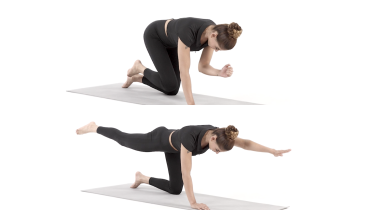 Bird dog
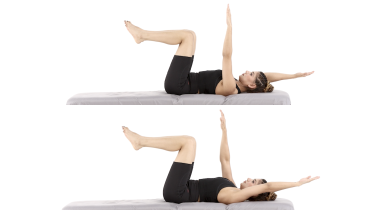 Dead bug
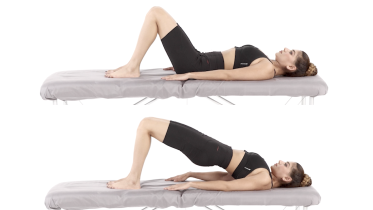 Glute bridge
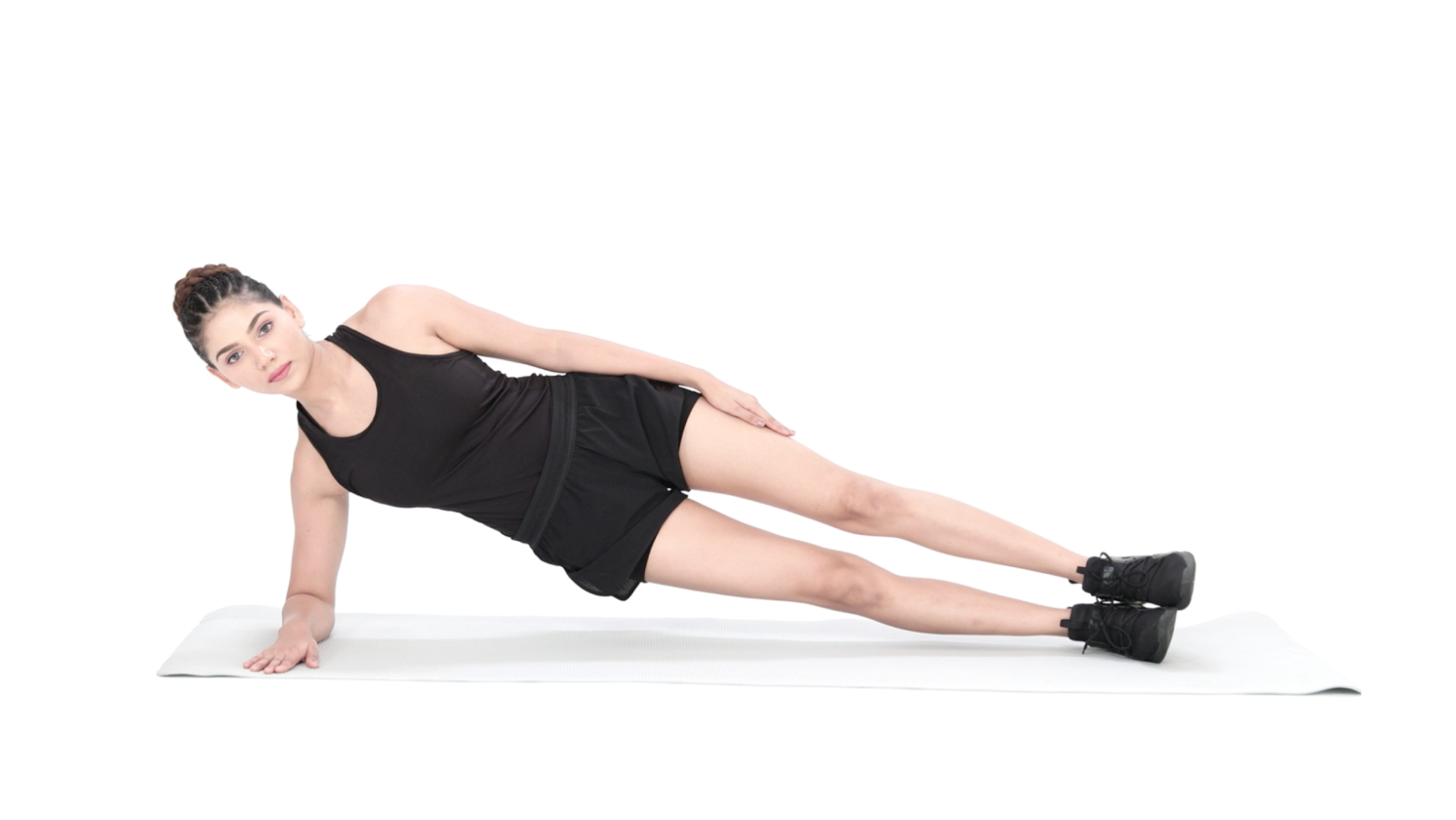 Side plank
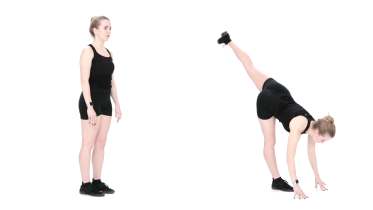 Single leg deadlift
If you have high blood pressure, breathe steadily through every repetition and never hold your breath. Heavy pulls are often done with a held breath to brace the trunk, and an American Heart Association statement advises avoiding that breath-hold during resistance exercise because of the rise in blood pressure it brings (Williams and colleagues, 2007). In practice that means choosing a weight you can move while breathing out through the hardest part, which leaves maximal pulls out. With a heart condition or high blood pressure, check with your doctor before you start.
If you are pregnant and past the first three months, check with your physio before exercising flat on your back. That applies to the glute bridge and the dead bug. If you are pregnant or have given birth in the last few months, ask your physio, midwife or doctor before you go back to heavy lifting.
If you have had a hip replacement or other hip surgery, get the go-ahead from your surgeon or physio before you try the single leg deadlift and the side plank. The forward hinge of the single leg deadlift bends the standing hip to a right angle or more, and many surgeons ask you to avoid that for the first months after some operations. The side plank is limited by load rather than position. Some operations limit this kind of work for the first months, so the timing depends on your surgery.
With low bone density (osteoporosis), or if you have had a broken bone in your spine, ask your physio before you go back to deadlifts or other heavy pulls from the floor, and keep the lower back from rounding under load. Ask before the single leg deadlift too, keep its range small with the back straight, and use the simpler bird dog where the hand and knee return to the floor after each reach. After back surgery, your surgeon's protocol decides when bending and loading work like this can begin.
If you are a teenager or still growing and your lower back hurts when you arch backward or lock out the top of a lift, stop deadlifting and see a doctor or physio within a few days, before you train it again. In young lifters this can be a stress fracture in a bone of the lower back (spondylolysis), which usually settles with time away from the activity that loads it. The warning signs below give the full line.
If your shoulder is painful, or has been operated on or dislocated, check with your physio before you lean your full weight on one arm in the side plank.
When to see a physio (physical therapist)
Book an assessment if the back is not clearly better after a couple of weeks, if pain or tingling runs below the knee, or if the same tweak comes back every training block. A physio will watch you bend and hinge, test the nerves to your legs, and set a return plan with weights and a rough timescale, which beats guessing. Serious causes are uncommon, but they are screened for on purpose, using the warning features clinicians work from internationally (Finucane and colleagues, 2020).
If the back mainly objects to bending in daily life, lower back pain when bending forward is the better read. For the other common lifting injuries, start at the gym and lifting hub, and for planning load after any injury, see returning to the gym after injury. The warning signs below come with their own time frames.
Related exercise programs
Warning signs
Get emergency help now
- Emergency: if chest pain, pressure or tightness does not ease quickly when you rest, spreads to your arm, neck, jaw, stomach or back, or comes with sweating, feeling sick, feeling light-headed or being short of breath, call emergency services straight away, as this can be a heart attack. If it eases quickly and none of these happen, get medical advice the same day, and do not exercise again until you have been checked.
- Emergency: numbness, tingling or altered feeling around or under your genitals, between your inner thighs, or around your bottom (anus), for example it feels different when you wipe after using the toilet. Call emergency services or go to an emergency department straight away. This can be a sign of pressure on the bundle of nerves at the base of the spine (cauda equina syndrome), which needs emergency treatment.
- Emergency: you find it hard to start peeing, cannot pee, cannot feel yourself peeing or cannot control when you pee, or you do not notice when you need to poo or cannot control when you poo, and this is not normal for you. The same applies to a new change in how your genitals feel during sex, or new trouble getting an erection or ejaculating. Call emergency services or go to an emergency department straight away. These can also be signs of cauda equina syndrome.
- Emergency: sciatica in both legs, or pain, tingling, numbness or weakness in both legs. The same applies if you lose feeling in one leg. Call emergency services or go to an emergency department straight away.
- Emergency: back or leg pain that started after a serious accident, such as a car crash or a fall from a height, or back pain with chest pain. Call emergency services. If the pain started straight after the accident, keep still while you wait.
- Emergency: sudden, severe pain in your lower back or tummy that is not like your usual back pain, if you have been told you have a swelling of the main blood vessel in your tummy (abdominal aortic aneurysm), you are over 60, you smoke or used to smoke, or you have high blood pressure. The same applies if sudden, severe back or tummy pain comes with feeling faint or passing out, pale, sweaty or clammy skin, a racing heartbeat or being short of breath. Call emergency services straight away. This can be a sign of an aneurysm bursting, which needs treatment in hospital at once.
- Emergency: you have had cancer, now or in the past, and your back or neck pain feels like a tight band around your body, or comes with pain spreading down an arm or leg, weakness, numbness or pins and needles in your arms or legs, trouble walking, or trouble controlling your bladder or bowels. Call your cancer team's emergency number straight away, or go to an emergency department if you do not have one or cannot get through. This can be cancer pressing on the spinal cord (metastatic spinal cord compression), which needs treatment straight away.
- Emergency: new neck or back pain after a fall, a knock or a jolt, even a minor one such as a trip or a sudden stop in a car, if you have a condition that stiffens the spine, such as ankylosing spondylitis. Call emergency services or go to an emergency department straight away, do not drive yourself, and tell the staff about your spine condition, so they keep your neck and back in their usual position. A stiff spine can break after a small injury, and the break is easy to miss at first. If the pain started straight after the injury, or you also have numbness, tingling or weakness in your arms or legs, keep still and call emergency services.
- Emergency: if you faint while exercising, call emergency services, even if you feel fine again quickly.
- Emergency: back pain with a fever, or you feel hot, shivery or very unwell, and you also have new weakness, numbness or tingling in one or both legs, or new trouble with your bladder or bowels. Call emergency services or go to an emergency department straight away. This can be an infection pressing on the nerves in the spine (spinal epidural abscess), which needs emergency treatment.
Get help today
- Same day: a leg or foot that is getting weaker, for example your foot drags, catches on the ground or slaps down when you walk (foot drop). Get medical advice the same day. If the weakness is getting worse by the hour, go to an emergency department.
- Same day: back or leg pain with a fever, or you feel hot, cold, shivery or generally unwell. Get medical advice the same day, and go to an emergency department if you feel very unwell.
- Same day: you have back pain and have lost weight without trying. Get medical advice the same day and mention the weight loss.
- Same day: new back pain and you have had cancer, now or in the past. Get medical advice the same day and mention your cancer history. If you are being treated for cancer now, contact your cancer team the same day.
- Same day: back pain after a minor fall or strain if you are older, have low bone density (osteoporosis) or have taken steroid tablets for a long time. Get medical advice the same day.
- Same day: severe pain that comes on suddenly or is getting worse quickly. Get medical advice the same day.
- Same day: pain that is worse at night, or does not ease at all when you rest. If you have had cancer, now or in the past, or you have lost weight without trying, get medical advice the same day.
Book an appointment
- Within a few days: pain that is worse at night, or does not ease at all when you rest. See your doctor within a few days.
- Within a few days: you are a teenager or still growing, and your lower back hurts when you arch backward or lock out the top of a lift. Stop deadlifting and any exercise that brings the pain on, and see a doctor or physio within a few days, as this can be a stress fracture in a bone of the lower back (spondylolysis).
- Within a week or two: back or buttock pain that started before the age of 45, has lasted more than three months, is worse after rest and in the morning, and eases when you move. This is not an emergency, but see your doctor in the next week or two and ask whether it could be inflammatory back pain (axial spondyloarthritis).
Common questions
Is it normal for my lower back to be sore after deadlifts?
Often, yes, especially after a heavier session, more sets than usual, or your first deadlifts after time off. The muscles either side of your spine work hard to hold your trunk still and to lower the bar under control, and that lowering work is what tends to leave muscles aching. Ordinary soreness feels like a broad, dull ache across both sides, is stiffest when you first get up, loosens as you move and is clearly easing by the third or fourth day. An ache that is sharp, sits on one side, started with one rep or is still there a week later fits a strain better, and is worth having checked.
How long does a back tweaked deadlifting take to recover?
There is no study that times this in lifters. The NHS says back pain usually gets better within a few weeks or months, and in practice a mild tweak with no leg symptoms often lets people train most lifts again within a week or two, with heavy pulls from the floor coming back last. Keep walking and moving in the meantime rather than resting in bed. If the back is not clearly improving after a couple of weeks, or keeps flaring each time you go back to the bar, have a physio look at it.
When can I deadlift again after hurting my back?
A sensible gate, used in practice rather than tested in trials, is this: you can bend to your shins and stand back up with only mild discomfort, the trunk exercises on this page do not make it worse, and the back is no worse the morning after. Then start with a weight you would normally use as an early warm-up, add load only when the next morning is no worse, and leave heavy singles until last. Your physio will adjust this.
How do I deadlift without back pain?
Look at your training before your technique. The tweaks that physios see after deadlifts usually follow a change: a jump in weight, extra sets, a new program, or pulling at the end of a hard session. Build load in small steps, keep the bar close to your legs, and treat a trap bar or a pull from blocks as useful options while a back is touchy rather than as a step down. A review of lifting studies found low-quality evidence that a rounded lower back during lifting was not a risk factor for back pain, so chasing a perfectly flat back is not the whole answer (Saraceni and colleagues, 2020).
References
- National Institute for Health and Care Excellence. Low back pain and sciatica in over 16s: assessment and management (NG59). Published 2016, last updated July 2026. https://www.nice.org.uk/guidance/ng59
- NHS. Back pain. Page last reviewed 5 March 2026. https://www.nhs.uk/conditions/back-pain/
- NHS. Sciatica. Page last reviewed 3 December 2024. https://www.nhs.uk/conditions/sciatica/
- Hartvigsen J, Hancock MJ, Kongsted A, et al. What low back pain is and why we need to pay attention. The Lancet. 2018;391(10137):2356-2367. https://doi.org/10.1016/S0140-6736(18)30480-X
- Saraceni N, Kent P, Ng L, Campbell A, Straker L, O'Sullivan P. To flex or not to flex? Is there a relationship between lumbar spine flexion during lifting and low back pain? A systematic review with meta-analysis. Journal of Orthopaedic and Sports Physical Therapy. 2020;50(3):121-130. https://doi.org/10.2519/jospt.2020.9218
- Stromback E, Aasa U, Gilenstam K, Berglund L. Prevalence and consequences of injuries in powerlifting: a cross-sectional study. Orthopaedic Journal of Sports Medicine. 2018;6(5):2325967118771016. https://doi.org/10.1177/2325967118771016
- Bengtsson V, Berglund L, Aasa U. Narrative review of injuries in powerlifting with special reference to their association to the squat, bench press and deadlift. BMJ Open Sport and Exercise Medicine. 2018;4(1):e000382. https://doi.org/10.1136/bmjsem-2018-000382
- Aasa B, Berglund L, Michaelson P, Aasa U. Individualized low-load motor control exercises and education versus a high-load lifting exercise and education to improve activity, pain intensity, and physical performance in patients with low back pain: a randomized controlled trial. Journal of Orthopaedic and Sports Physical Therapy. 2015;45(2):77-85. https://doi.org/10.2519/jospt.2015.5021
- Swinton PA, Stewart A, Agouris I, Keogh JWL, Lloyd R. A biomechanical analysis of straight and hexagonal barbell deadlifts using submaximal loads. Journal of Strength and Conditioning Research. 2011;25(7):2000-2009. https://doi.org/10.1519/JSC.0b013e3181e73f87
- Finucane LM, Downie A, Mercer C, et al. International framework for red flags for potential serious spinal pathologies. Journal of Orthopaedic and Sports Physical Therapy. 2020;50(7):350-372. https://doi.org/10.2519/jospt.2020.9971
- Williams MA, Haskell WL, Ades PA, et al. Resistance exercise in individuals with and without cardiovascular disease: 2007 update. A scientific statement from the American Heart Association. Circulation. 2007;116(5):572-584. https://doi.org/10.1161/CIRCULATIONAHA.107.185214
- NHS. Chest pain. Page last reviewed 8 August 2023. https://www.nhs.uk/symptoms/chest-pain/
- NHS. Heart attack. Page last reviewed 31 March 2026. https://www.nhs.uk/conditions/heart-attack/
- Cancer Research UK. Spinal cord compression. https://www.cancerresearchuk.org/about-cancer/coping/physically/spinal-cord-compression
- Brooke-Wavell K, Skelton DA, Barker KL, et al. Strong, steady and straight: UK consensus statement on physical activity and exercise for osteoporosis. British Journal of Sports Medicine. 2022;56(15):837-846. https://doi.org/10.1136/bjsports-2021-104634
- American Academy of Orthopaedic Surgeons. Spondylolysis and spondylolisthesis. OrthoInfo. https://orthoinfo.aaos.org/en/diseases--conditions/spondylolysis-and-spondylolisthesis/
- NHS. Abdominal aortic aneurysm. https://www.nhs.uk/conditions/abdominal-aortic-aneurysm/
- National Institute for Health and Care Excellence. Abdominal aortic aneurysm: diagnosis and management (NG156). 2020. https://www.nice.org.uk/guidance/ng156
- Darouiche RO. Spinal epidural abscess. New England Journal of Medicine. 2006;355(19):2012-2020. https://doi.org/10.1056/NEJMra055111
Written and checked by the PocketPhysio editorial team. Last updated 2026-10-16.
This page is general education, not a diagnosis or a personal treatment plan. See a physiotherapist or doctor for advice about your own situation.