
Part of Running injuries: where they happen and what to do
Running with shin splints: when to stop and how to start again
Warning signs, and when to get help
Can you keep running with shin splints?
Not through pain, and not at your old level. The NHS advises against carrying on with the exercise that brought shin splints on, and against rushing back to where you were before. The review by Moen and colleagues (2009) describes shin splints as a stress reaction in the bone, where the shinbone is being broken down faster than it is rebuilt. Every painful run adds to the side of that balance you are trying to shrink.
That still leaves room for plenty of training. What you do this week depends on where your shin is today.
- It hurts with ordinary walking, aches in bed at night, or is sore at one spot you can point to. No running at all. That pattern needs a doctor to rule out a stress fracture, and the warning signs below give the timing.
- Walking is comfortable, but the shin hurts during or after a run. Pause running and keep your fitness with cycling or swimming, whichever leaves the shin quiet. OrthoInfo advises being pain free for at least 2 weeks before going back to the activity that caused it.
- Walking, stairs and a few low hops on both feet are all pain free. You are ready for a graded walk and run plan. The hop check is common physio practice rather than part of the trial.
Stage 2 is where most of the temptation lies, because the shin feels fine by lunchtime. A fortnight off running now costs less than a month of running through it and then being forced to stop.
How do you start running again after shin splints?
Short sessions, with walking breaks, on alternate days. The Dutch trial that tested this approach had athletes run 3 times a week with a rest day between, starting with a few minutes of running alternated with walking and working up to continuous running (Moen and colleagues, 2012). The shin splints program sets out its levels in full, and the return to running plan gives a walk and run structure you can use after most running injuries.
The rule for moving up matters more than the exact minutes. In that trial, shin pain had to stay below 4 out of 10 during the runs before an athlete moved up a level. If it reached 4 or more after a run or the next morning, they repeated the level with a shorter run.
Copy that idea: a session only counts as a pass if the shin is quiet that evening and the following day. The pain monitoring model explains how physios use a pain score this way. Note that the shin splints trial drew its line at 4 out of 10, a little lower than the 5 out of 10 often used for tendon pain.
Build time on your feet first. Speed and hills come last, once you are running continuously without the shin complaining. Your first race back belongs at the end of that list, not the start.
Then keep one guardrail for good. A 2025 study tracked 5,205 runners through their sports watches. A run that went more than 10% past their longest run of the previous 30 days was linked with more overuse injuries (Frandsen and colleagues, 2025). That is a link, not proof, but it is the easiest check a returning runner can make before heading out.
Do surfaces, shoes and insoles help?
A little, and they are easy to change. The NHS lists running on hard surfaces among the causes of shin splints, and suggests exercising on soft ground once you feel better. OrthoInfo adds shoes that are worn out or unsuitable to its list of risk factors.
Insoles have some support for prevention. Moen and colleagues (2009) found that neoprene or semi-rigid insoles may help prevent shin splints, though the evidence is limited. A compression stocking added nothing to the graded running program in the 2012 trial.
Change one of these at a time. Swap shoes and surface in the same week and you will not know which one helped or hurt.
Why do shin splints keep coming back?
Usually because the running came back faster than the bone could keep up. OrthoInfo links shin splints to sudden jumps in training, which is why a gradual build-up is the main defense. If the pain returns each time you reach the same weekly distance, write that number down: it is the ceiling to creep past slowly, not to charge at.
Look beyond the training too. OrthoInfo names not eating enough for the amount you exercise, low vitamin D and short sleep among the things that raise the risk of bone stress injuries. In women, periods that have stopped or become irregular are a sign the body is short of energy for the training load, which weakens bone (Mountjoy and colleagues, 2023). Tell your doctor or physio if any of these apply.
New runners get caught most. The beginner running injuries page covers which aches are normal in the first weeks and which are not.
Strength work while you run less
No exercise has been proven to cure shin splints, and in the 2012 trial calf stretching and strengthening did not shorten the time to finish the running program (Moen and colleagues, 2012). So treat the list below as a way to keep the lower leg working while running is reduced, not as the treatment itself. The calf work in the strength training for runners guide picks up where this leaves off once you are running again.
Keep a hand on a wall or counter for the standing raises if your balance is unsteady. Stop any exercise that brings the pain to one spot on the bone.
Exercises that can help
These keep the calf and the muscles at the front of the shin working while you run less. Many programs start with 2 to 3 sets of 10 to 15 for calf raises on both feet, 2 to 3 sets of 8 to 15 on each leg for the single leg and bent knee raises, and 2 to 3 lengths of 10 to 15 steps for heel walking, with the shin staying close to pain free. Your physio will adjust this.
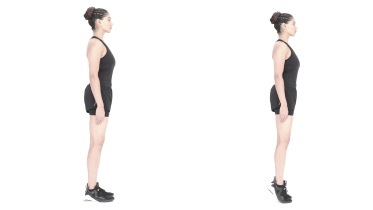 Calf raises
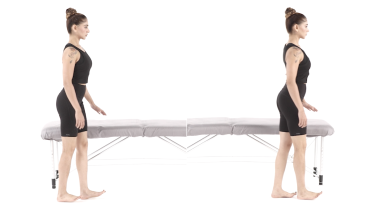 Heel walking
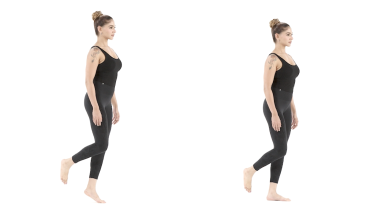 Single leg heel raise
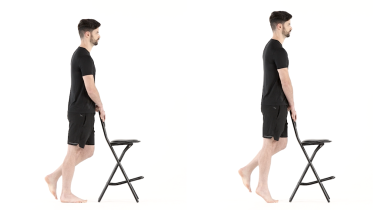 Bent-knee calf raise
When to see a physio (physical therapist)
Get an assessment if the shin is getting worse or not getting better after a few weeks of looking after it yourself, as the NHS advises, or if it flares every time you try to build up. A physio will press along the bone to separate a long tender stretch from one sore spot, check your calf strength on each leg, and look at your training log and your shoes. Many will watch you run.
For other running problems, go by body area on the running injuries hub. Each warning sign below tells you how fast to act.
Related exercise programs
Warning signs
Get emergency help now
- Emergency: sudden, severe pain in your lower leg that is much worse than you would expect, especially after an injury or with a plaster cast or tight bandage on the leg. It may come with a tight, swollen leg, pain that gets worse when the muscle is stretched, numbness, pins and needles or weakness. Call emergency services or go to an emergency department straight away, and do not drive yourself. This can be acute compartment syndrome, which needs urgent surgery.
Get help today
- Same day: the pain started with a fall, a blow or a twist, or you cannot put weight on the leg. Get it checked the same day.
- Same day: a calf or thigh that is newly swollen or getting more swollen, warm, tender, red or darker than usual, has swollen veins that are sore to touch, or has a throbbing or cramping pain that does not fit your injury or condition, or that feels different from normal muscle soreness after exercise. This can be a sign of a blood clot (deep vein thrombosis), especially after surgery, an injury, time in a cast or boot, a long trip or a spell of being much less mobile than usual. Get medical advice the same day. If you are also short of breath or have chest pain, call emergency services.
- Same day: your shin is hot, red and swollen, or you have a fever or feel unwell. Get medical help the same day, and go to an emergency department if you feel very unwell. If you have a very high or very low temperature, shivering you cannot control, you are breathing very fast or finding it hard to breathe, you are confused or your speech is slurred, your skin, lips or tongue look blue, gray, pale or blotchy (on brown or black skin this can be easier to see on the palms of the hands or soles of the feet), or you have a rash that does not fade when you press it, call emergency services, as this can be sepsis.
- Same day: the pain is there at night or at rest as well as with activity and keeps getting worse. If you are being treated for cancer now, contact your cancer team the same day.
Book an appointment
- Within a few days: the pain sits at one small spot on a bone that you can point to with a finger, such as the shinbone, the bone aches at rest or at night, or hopping on that leg hurts at that one spot. Stop running, jumping and any exercise that hurts at that spot, and see a doctor within a few days, as this can be a stress fracture rather than shin splints. This matters even more if the spot is on the front of the shinbone, because doctors treat stress fractures there as high risk. If walking hurts or makes you limp, get it checked the same day. An X-ray can look normal for the first 2 to 3 weeks, so a normal early X-ray does not rule it out.
- Within a day or two: the pain is there at night or at rest as well as with activity and keeps getting worse. If you have had cancer, now or in the past, or are losing weight without trying, see your doctor sooner, within a day or two, and mention it. This applies even if the pain is not getting worse.
- Within a few days: the pain is there at night or at rest as well as with activity and keeps getting worse. See your doctor within a few days.
- Within a week or two: your lower leg muscles get tight, cramping or painful during exercise and settle when you stop and rest, especially if your foot goes numb or tingly, feels weak, or slaps down as you run. This is not an emergency, but stop that activity and see a doctor in the next week or two, as it can be chronic exertional compartment syndrome. If the numbness or weakness is still there after you have rested, get it checked the same day.
Common questions
Can I run with shin splints?
Not through pain. The NHS advises against carrying on with the exercise that caused shin splints and against rushing back to your old level. Pause the runs that hurt, keep fit with cycling or swimming, and start short walk and run sessions once everyday walking has been pain free for a while. If the pain sits at one spot on the bone or aches at night, do not run at all, and see a doctor within a few days, or the same day if walking hurts or makes you limp.
How long should I rest shin splints before running?
OrthoInfo advises being pain free for at least 2 weeks before going back to the activity that caused shin splints. Rest here means rest from running, not from all exercise. In the Dutch trial, athletes whose shin hurt with walking waited until they had walked pain free for 2 days in a row before their first run (Moen and colleagues, 2012), and the full graded program took them about 3 to 4 months on average.
Should I run on grass instead of the road with shin splints?
The NHS lists running on hard surfaces among the causes of shin splints and suggests exercising on soft ground once you feel better. No trial has shown that a softer surface speeds recovery, so treat it as a small change worth making, not the answer. Pick ground that is soft but even.
Is it shin splints or a stress fracture?
Shin splints are sore along a stretch of the inner edge of the shinbone, while a stress fracture tends to hurt at one small spot you can point to, sometimes with swelling over it (Patel and colleagues, 2011). Pain with ordinary walking and an ache in bed at night also point toward bone stress (OrthoInfo). An early X-ray misses most stress fractures, so a normal one does not settle it. If in doubt, stop running and see a doctor within a few days, or the same day if walking hurts or makes you limp.
References
- Moen MH, Holtslag L, Bakker E, Barten C, Weir A, Tol JL, Backx F. The treatment of medial tibial stress syndrome in athletes; a randomized clinical trial. Sports Medicine, Arthroscopy, Rehabilitation, Therapy and Technology. 2012;4:12. https://doi.org/10.1186/1758-2555-4-12
- Moen MH, Tol JL, Weir A, Steunebrink M, De Winter TC. Medial tibial stress syndrome: a critical review. Sports Medicine. 2009;39(7):523-546. https://doi.org/10.2165/00007256-200939070-00002
- Patel DS, Roth M, Kapil N. Stress fractures: diagnosis, treatment, and prevention. American Family Physician. 2011;83(1):39-46. https://www.aafp.org/pubs/afp/issues/2011/0101/p39.html
- Frandsen JSB, Hulme A, Parner ET, et al. How much running is too much? Identifying high-risk running sessions in a 5200-person cohort study. British Journal of Sports Medicine. 2025;59(17):1203-1210. https://doi.org/10.1136/bjsports-2024-109380
- Mountjoy M, Ackerman KE, Bailey DM, et al. 2023 International Olympic Committee's (IOC) consensus statement on Relative Energy Deficiency in Sport (REDs). British Journal of Sports Medicine. 2023;57(17):1073-1097. https://doi.org/10.1136/bjsports-2023-106994
- NHS. Shin splints. Page last reviewed 9 February 2023. https://www.nhs.uk/conditions/shin-splints/
- American Academy of Orthopaedic Surgeons. Shin splints. OrthoInfo. https://www.orthoinfo.org/en/diseases--conditions/shin-splints/
- American Academy of Orthopaedic Surgeons. Stress fractures. OrthoInfo. https://www.orthoinfo.org/en/diseases--conditions/stress-fractures/
- NHS. Compartment syndrome. Page last reviewed 4 September 2026. https://www.nhs.uk/conditions/compartment-syndrome/
- NHS. Deep vein thrombosis (DVT). Page last reviewed 30 April 2026. https://www.nhs.uk/conditions/deep-vein-thrombosis-dvt/
Written and checked by the PocketPhysio editorial team. Last updated 2026-10-16.
This page is general education, not a diagnosis or a personal treatment plan. See a physiotherapist or doctor for advice about your own situation.