
Part of Running injuries: where they happen and what to do
Hip pain when running: where it hurts and what to do
Warning signs, and when to get help
Where does your hip hurt when you run?
Put a finger on the sorest spot before you read anything else. The location narrows things down more than any other clue, although only an examination can tell you what it is. The groups below are the common running causes, not a diagnosis.
On the outside of the hip
Pain over the bony point at the side of the hip, tender to press and sometimes spreading a short way down the outer thigh, is the typical picture of greater trochanteric pain syndrome. The tendons of the buttock muscles that attach there are the main source. Those tendons dislike being squeezed against the bone, which happens whenever the thigh drifts across the midline of the body (Grimaldi and colleagues, 2015). That is why the same hip also complains when you lie on it at night or sit with your legs crossed.
In runners, physios look for the things that let the thigh drift inward on each step: a footfall that lands close to or across the midline, and roads that slope to one side. The research on these running factors is thin, so treat them as things to check, not established causes. The outer hip pain page covers the other problems that hurt in the same spot.
At the front of the hip or in the groin
A sudden pull at the front of the hip during a sprint or a hill effort fits a hip flexor strain. A deeper ache in the groin, with pinching when you bring the knee toward the chest or sit low for a long time, points more toward the joint itself, such as hip impingement or a hip labral tear.
Then there is the one runners must not miss. A stress fracture in the neck of the thighbone usually shows as groin pain, and doctors class that site as high risk (Patel and colleagues, 2011). OrthoInfo describes bone stress pain that starts at the end of activity, then comes during it and with ordinary walking. A groin ache that has followed that path, especially after a jump in training, needs a doctor the same day, and the warning signs below give the detail. The groin pain page sorts the other causes.
At the back of the hip, by the sitting bone
A deep ache low in the buttock, right at the bone you sit on, fits high hamstring tendinopathy. Goom and colleagues (2016) describe it as deep buttock pain at the hamstring attachment, made worse when the tendon is compressed with the hip bent. Long spells of sitting on a hard seat usually give it away.
Pain that starts in the back or buttock and runs below the knee with pins and needles is a different story. That pattern points to a nerve in the lower back, not the hip, and needs its own assessment.
Can you keep running with hip pain?
For the gradual tendon and muscle problems, most runners can keep some running while the hip settles. The aim is a dose that leaves the hip no worse the next morning and is not building from week to week. The pain monitoring model explains how physios use pain to set that dose.
The evidence behind loading the hip, rather than resting it, is reasonable. In the LEAP trial of 204 adults with gluteal tendinopathy, 8 weeks of education about load plus exercise did better than a steroid injection or waiting and seeing (Mellor and colleagues, 2018). For pain from the hip joint in young and middle-aged active adults, an international consensus recommends exercise-based treatment for at least 3 months (Kemp and colleagues, 2020). Neither was a trial in runners, so the running part of the plan rests on clinical reasoning.
Stop running altogether if the groin pain hurts with walking, makes you limp or aches at night. That is bone until proven otherwise.
How should you change your running?
Work from the cheapest change upward, and change one thing at a time.
- Shorten the runs and slow them down before anything else. A smaller dose of the same activity is the core of every plan on this page.
- For outer hip pain, run on flat, level paths rather than cambered roads, and on a track switch direction regularly so the same hip is not always on the outside of the bend. These running changes are common practice, not tested in trials. At home, stop crossing your legs and stop hanging your weight on that hip while you stand, as Grimaldi and colleagues (2015) advise for these tendons.
- For front of hip and sitting bone pain, take out hills and fast running first. Both ask the hip to bend further and work harder with each stride.
- Cap the long run until the hip has been quiet for a couple of weeks, then add distance in small steps.
If you have stopped running for a while, the return to running plan gives a walk and run structure to come back with.
Strength work for the hip
The list below works the buttock and outer hip muscles that hold the pelvis level when you land on one leg. Start with the bridges and the standing work, and add the single leg deadlift once those feel steady. A working ache in the buttock muscles is expected. Pain over the bony point at the side of the hip, or a sharp pinch in the groin, means make the exercise smaller or leave it out for now.
If your pain is at the sitting bone, leave the single leg deadlift out until your physio adds it, and then keep the forward lean small at first. Bending forward at the hip presses the hamstring tendon against the bone, and programs usually bring that position in later (Goom and colleagues, 2016). The strength training for runners page builds on this once you are running freely.
If you have had a hip replacement, get the go-ahead from your surgeon or physio before you try the glute bridge, the single leg bridge, standing hip abduction, side stepping or the single leg deadlift. Some operations limit this kind of work for the first months, so the timing depends on your surgery.
If you are pregnant and past the first three months, check with your physio before exercising flat on your back. That includes both bridges. If you have had a hip or knee replacement, get the go-ahead from your surgeon before you try running. Many surgeons advise against running and jogging after a joint replacement for good, not just for the first months, because each step sends impact through the new joint.
Exercises that can help
These build the buttock and outer hip muscles that steady the pelvis each time a foot lands. Many programs start with 2 to 3 sets of 10 to 12 for the glute bridge, 2 to 3 sets of 8 to 12 on each side for the single leg bridge, 2 to 3 sets of 10 to 15 on each leg for standing hip abduction, 2 to 3 lengths of about 10 to 15 steps each way for side stepping, and 2 to 3 sets of 6 to 10 on each leg for the single leg deadlift. Your physio will adjust this.
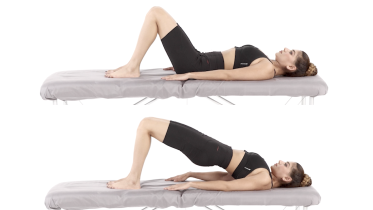 Glute bridge
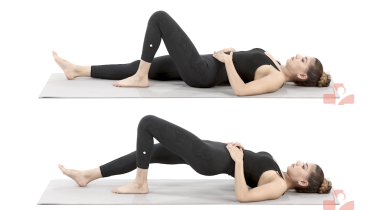 Single leg bridge
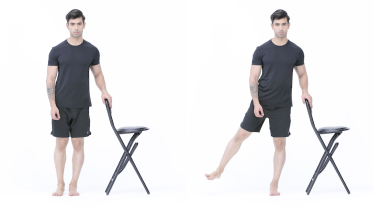 Standing hip abduction
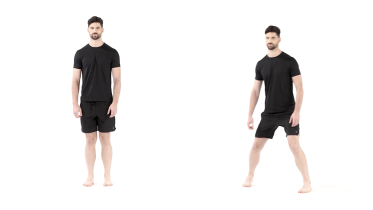 Side stepping
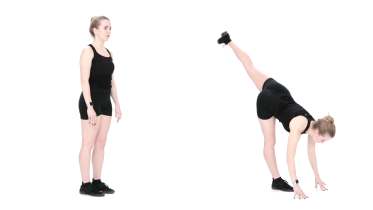 Single leg deadlift
When to see a physio (physical therapist)
Book an assessment if the hip is no better after a few weeks of changing your running, if it keeps you awake, or if you cannot tell where the pain is coming from. The NHS suggests seeing a GP if hip pain is stopping you doing normal activities or has not improved after 2 weeks of treating it at home. A physio will press over the bony points, test the hip muscles on each side, move the joint through its range and check your back, then set a running dose and a strength dose with you.
The running injuries hub lists the other common problems by body area. The warning signs below say how quickly to act.
Related exercise programs
Warning signs
Get emergency help now
- Emergency: you have had a fall or an injury and now have severe hip pain, or you cannot walk or put weight on the leg. Call emergency services or go to an emergency department. This can be a sign of a broken hip (hip fracture).
- Emergency: pain, tingling, numbness or weakness in both legs, numbness or altered feeling around your genitals or bottom, or new trouble peeing or controlling your bladder or bowels. The same applies if you lose feeling in one leg. Call emergency services or go to an emergency department straight away. These can be signs of pressure on the nerves at the base of the spine (cauda equina syndrome).
Get help today
- Same day: groin pain that built up with running, marching or jumping, often after you increased your training, and now hurts when you walk, makes you limp, or aches at rest or at night. Stop running and jumping and keep walking to a minimum until it has been checked. Get medical advice the same day and mention your training. If you cannot put weight on the leg, go to an emergency department. This can be a stress fracture in the neck of the thighbone (femoral neck stress fracture), which is easy to miss at first and can become a full break if you keep loading it.
- Same day: a sudden sharp pain, pop or snap at the back of your thigh. Stop straight away. If you then get large bruising spreading down the back of the thigh, a gap or dip you can feel, a stiff-legged walk, or clear weakness when you bend the knee, get assessed the same day at urgent care or an emergency department, as the tendon may have pulled away from the bone near the buttock.
- Same day: the hip is hot and swollen, the skin around it has changed color, or you have hip pain with a high temperature or feel hot, cold or shivery. Get medical help the same day, and go to an emergency department if you feel very unwell. A joint infection needs treatment quickly. If you have a very high or very low temperature, shivering you cannot control, you are breathing very fast or finding it hard to breathe, you are confused or your speech is slurred, your skin, lips or tongue look blue, gray, pale or blotchy (on brown or black skin this can be easier to see on the palms of the hands or soles of the feet), or you have a rash that does not fade when you press it, call emergency services, as this can be sepsis.
- Same day: severe hip pain that came on suddenly without a fall, or pain that is getting worse quickly over a few days. Get medical advice the same day.
- Same day: new hip or groin pain after a fall, even a small one, if you are older, have low bone density (osteoporosis) or have taken steroid tablets for a long time, even if you can still walk. Get medical advice the same day. A broken hip is not always obvious at first.
- Same day: a child or teenager has sudden pain in the hip, thigh or knee, is limping, or cannot put weight on one leg. Get an urgent appointment with a doctor the same day. If they have a high temperature or seem very unwell, go to an emergency department. This page is for adults, and hip pain in children has different causes.
- Same day: a calf or thigh that is newly swollen or getting more swollen, warm, tender, red or darker than usual, has swollen veins that are sore to touch, or has a throbbing or cramping pain that does not fit your injury or condition, or that feels different from normal muscle soreness after exercise. This can be a sign of a blood clot (deep vein thrombosis), especially after surgery, an injury, time in a cast or boot, a long trip or a spell of being much less mobile than usual. Get medical advice the same day. If you are also short of breath or have chest pain, call emergency services.
- Same day: hip pain at night or at rest that does not ease when you change position, and keeps getting worse. If you are being treated for cancer now, contact your cancer team the same day.
- Same day: a leg or foot that is getting weaker, for example your foot drags, catches on the ground or slaps down when you walk (foot drop). Get medical advice the same day. If the weakness is getting worse by the hour, go to an emergency department.
Book an appointment
- Within a day or two: hip pain at night or at rest that does not ease when you change position, and keeps getting worse. If you have had cancer, now or in the past, or are losing weight without trying, see your doctor sooner, within a day or two, and mention it. This applies even if the pain is not getting worse.
- Within a few days: hip pain at night or at rest that does not ease when you change position, and keeps getting worse. See your doctor within a few days.
- Within a few days: new pain in the groin or buttock, and you take steroid tablets long term, or have in the past, or you regularly drink a lot of alcohol. This can be a sign of a problem with the blood supply to the top of the thighbone (avascular necrosis). Book an appointment with your doctor within a few days and mention the steroids or alcohol.
- Within 2 weeks: pain that spreads down the leg below the knee, especially with numbness or tingling in the leg or foot. The pain may be coming from your lower back rather than the hip tendons. Book an appointment with a doctor or physio.
Common questions
Why do my hips hurt when I run?
Running hip pain that builds up over weeks usually follows a change the hip was not ready for, such as a jump in distance, more hills or faster sessions. Where it hurts points to which structure is involved: the outside of the hip to the buttock tendons, the front or groin to the hip flexors or the joint, and the sitting bone to the hamstring tendon. Only an examination can confirm which one it is.
Can I keep running with hip pain?
With the gradual tendon problems, usually yes, at a lower dose. Cut distance, hills and pace until the run leaves the hip no worse the next morning, and build back up as the strength work progresses. Groin pain that makes you limp, hurts with ordinary walking or aches at night is different: stop running and get it checked the same day. Your physio will adjust this to your hip.
What does pain on the outside of the hip after running mean?
Pain over the bony point at the side of the hip, sore to press and sometimes spreading down the outer thigh, fits greater trochanteric pain syndrome, where the tendons of the buttock muscles are irritated where they attach (Grimaldi and colleagues, 2015). It tends to be worse lying on that side at night and after sitting with your legs crossed. The outer hip pain page covers the other causes of pain in that spot.
Is groin pain from running serious?
Groin pain in runners has several causes, from a strained muscle to a problem in the hip joint itself, and many of them are not emergencies. The one not to miss is a stress fracture in the neck of the thighbone, which usually shows as groin pain that builds with running and is classed by doctors as a high-risk site (Patel and colleagues, 2011). If the pain hurts with walking, makes you limp or aches at night, stop running and get medical advice the same day.
References
- Grimaldi A, Mellor R, Hodges P, Bennell K, Wajswelner H, Vicenzino B. Gluteal Tendinopathy: A Review of Mechanisms, Assessment and Management. Sports Medicine. 2015;45(8):1107-1119. https://doi.org/10.1007/s40279-015-0336-5
- Mellor R, Bennell K, Grimaldi A, Nicolson P, Kasza J, Hodges P, Wajswelner H, Vicenzino B. Education plus exercise versus corticosteroid injection use versus a wait and see approach on global outcome and pain from gluteal tendinopathy: prospective, single blinded, randomised clinical trial. BMJ. 2018;361:k1662. https://doi.org/10.1136/bmj.k1662
- Kemp JL, Risberg MA, Mosler A, et al. Physiotherapist-led treatment for young to middle-aged active adults with hip-related pain: consensus recommendations from the International Hip-related Pain Research Network, Zurich 2018. British Journal of Sports Medicine. 2020;54(9):504-511. https://doi.org/10.1136/bjsports-2019-101458
- Goom TS, Malliaras P, Reiman MP, Purdam CR. Proximal Hamstring Tendinopathy: Clinical Aspects of Assessment and Management. Journal of Orthopaedic and Sports Physical Therapy. 2016;46(6):483-493. https://doi.org/10.2519/jospt.2016.5986
- Patel DS, Roth M, Kapil N. Stress fractures: diagnosis, treatment, and prevention. American Family Physician. 2011;83(1):39-46. https://www.aafp.org/pubs/afp/issues/2011/0101/p39.html
- American Academy of Orthopaedic Surgeons. Stress fractures. OrthoInfo. https://www.orthoinfo.org/en/diseases--conditions/stress-fractures/
- NHS. Hip pain in adults. https://www.nhs.uk/symptoms/hip-pain/
- NHS. Deep vein thrombosis (DVT). Page last reviewed 30 April 2026. https://www.nhs.uk/conditions/deep-vein-thrombosis-dvt/
Written and checked by the PocketPhysio editorial team. Last updated 2026-10-16.
This page is general education, not a diagnosis or a personal treatment plan. See a physiotherapist or doctor for advice about your own situation.