
Scoliosis exercises and physiotherapy for adults
What is scoliosis in adults?
Scoliosis means your spine curves to the side. The NHS lists the signs you might notice: a visibly curved spine, leaning to one side, uneven shoulders, one shoulder or hip sticking out, ribs sticking out on one side, and clothes that do not fit well. In most cases the cause is not known, which doctors call idiopathic scoliosis. Bad posture, exercise and diet are not thought to cause it (NHS).
Adults usually have one of two kinds. Some have had a curve since childhood or their teens, whether or not it was treated back then (AANS). Others develop degenerative scoliosis later in life, from wear and tear in the spine (NHS). This kind is most common in the lower back and in people aged 65 and over (AANS).
Most adults with scoliosis get on with life as normal. The NHS says most people with it can do most activities, including exercise and sport. In a study that followed 117 people with untreated idiopathic scoliosis for about 50 years, most stayed active and productive. Back pain was more common than in people without scoliosis, although most of those with pain described it as little or moderate (Weinstein 2003).
Scoliosis and spinal stenosis
Degenerative scoliosis can come with spinal stenosis, a narrowing of the spinal canal that can squeeze the nerves (AANS). The typical sign is pain, heaviness or tingling in the buttocks or legs that comes on when you stand or walk and eases when you sit or bend forward (OrthoInfo, lumbar spinal stenosis). If that sounds like you, the spinal stenosis program explains the pattern and a walking plan in more detail. Back pain from degenerative scoliosis itself usually builds up gradually and is linked with activity (AANS).
The warning signs below treat pain, tingling, numbness or weakness in both legs as an emergency. There is one exception. If a doctor has already told you that you have spinal stenosis, and the symptoms in both legs follow this walking pattern the way they usually do, that on its own is not an emergency, and the warning signs on the spinal stenosis program apply. Symptoms in both legs that are new or getting worse quickly, or both legs getting weaker, even slowly, are still an emergency.
If your pain stays in your back and you have no leg symptoms, the low back pain program is another good starting point.
Does exercise help scoliosis in adults?
Exercise can help with pain and function, but it does not straighten the curve. The NHS says activities that strengthen and stretch your back may help reduce your pain, and that these are unlikely to improve the curvature of your spine. OrthoInfo adds that physical therapy has not been proven to help the scoliosis itself.
The evidence in adults is thin. A systematic review of non-surgical care for adult scoliosis found only low-level evidence for any conservative treatment, and none had enough support to be preferred over the others (Everett 2007). A later review looked for trials of stabilization exercise for back pain in adults with scoliosis and found only one that met its criteria (Alanazi 2018). A review of adult degenerative scoliosis in people aged 50 and over found too little good evidence to advise for or against injections, bracing or yoga (Schoutens 2020).
That one trial is worth a closer look. It took 130 adults with idiopathic curves under 35 degrees, average age about 52, and compared 20 weeks of scoliosis-specific exercise with standard physiotherapy (Monticone 2016). The scoliosis-specific group practiced actively correcting their posture, used the corrected posture in everyday tasks, and had a talking therapy approach for pain. They ended up with clearly less disability, and the gain held a year later. Their curves differed by 4 degrees from the other group, which the authors did not see as a meaningful change.
What about scoliosis-specific exercise methods?
Scoliosis-specific exercise methods, sometimes called PSSE, such as the Schroth method, are built around learning to correct your own posture. Most of the research behind them is in children and teenagers who are still growing. The SOSORT guideline, an international guideline on non-surgical scoliosis care, is written for scoliosis during growth and says very little about adults (Negrini 2018). If you want to try one of these methods, look for a physio trained in it, and treat it as a way to manage pain and function rather than a way to change the curve.
Easing pain and staying active
In adults, back pain is one of the main problems scoliosis causes, so treatment mostly aims to ease it (NHS). Anti-inflammatory painkillers such as ibuprofen are usually the first medicine suggested, and a GP may offer other options or a referral to a pain clinic if they do not help. Ask a pharmacist or your GP which painkiller is right for you. When the nerves are affected, steroid injections may help, but the NHS notes the benefit usually lasts only a few weeks or months.
No single exercise has been shown to be best for adult scoliosis. According to the NHS, the type of exercise matters less than keeping your back moving, so pick something you enjoy and can stick with. For back pain in general, it advises staying active and carrying on with your daily activities rather than staying in bed for long periods. Walking and the program below give you somewhere to begin.
How to use this program
The NHS suggests checking with a GP, scoliosis specialist or physio before you start a new exercise program. Pick the stage that matches how your back feels today. If you are not sure, start at stage 1. Move up when the current stage feels easy and your back settles well afterward.
Each exercise page gives a typical starting dose. As a rough guide, many programs start with 5 to 10 slow repetitions of the movement exercises, or stretch holds of 20 to 30 seconds, once or twice a day. The strength exercises often start with 1 to 3 sets of 5 to 15 slow repetitions, or side plank holds of 10 to 30 seconds, on a few days a week. Your physio will adjust this. Walking often starts at 10 to 20 minutes on most days, adding time before speed.
Mild discomfort or a stretching feeling during the exercises is common. It is usually fine if it settles soon after and your back is no worse the next morning. Stop and tell your physio if pain spreads into your leg, you get new numbness or tingling, or your back is clearly worse the next day. If you have high blood pressure, breathe steadily through every hold and never hold your breath.
The exercise program
Stage 1: Ease stiffness and keep moving
For a flare-up of back pain, or if your back feels stiff and you are not sure where to begin. These move your spine gently in different directions, all inside a comfortable range. One side often feels tighter than the other, and that is expected with a curve, so do not force the tight side to match. Walking starts here too, at a distance you can manage.
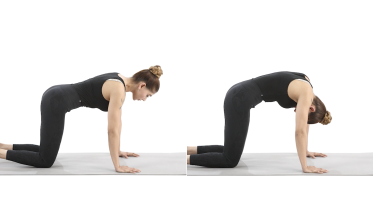 Cat-camel stretch
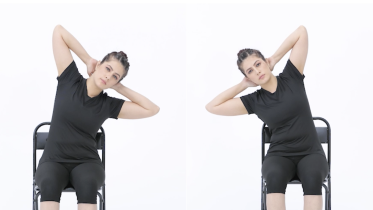 Seated side bend
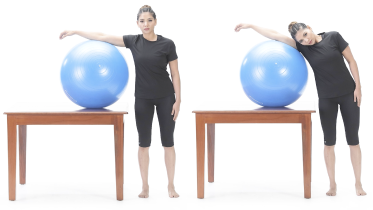 Side stretch over a ball
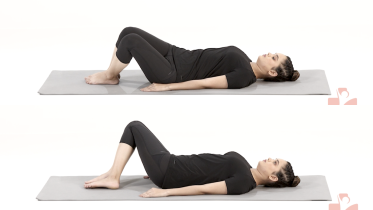 Lower trunk rotation
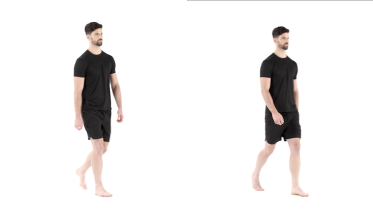 Brisk walking
Stage 2: Build control around your trunk
When the stage 1 movements feel comfortable, often after a week or two. These ask your trunk muscles to hold your spine steady while your arms or legs move. The lying trunk twist with a ball turns your knees and arms in opposite directions, and the seated ball and band exercises add a gentle twist against a load. Aim for smooth, slow repetitions rather than a big range.
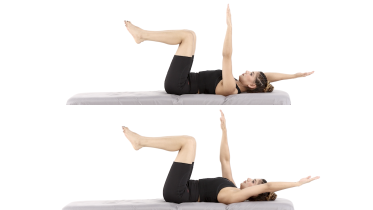 Dead bug
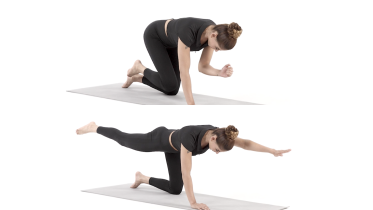 Bird dog
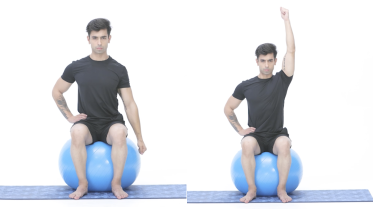 Seated ball arm raise
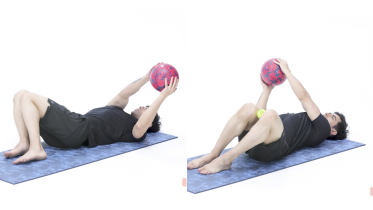 Lying trunk twist with a ball
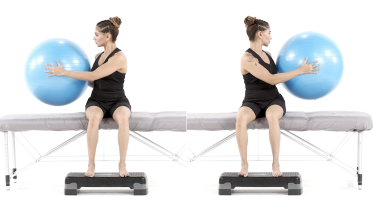 Seated ball twist
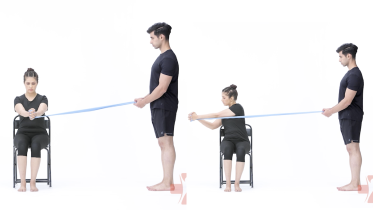 Seated band trunk rotation
Stage 3: Build strength for daily life
Once stage 2 feels steady and your back settles well afterward. The superman and Pilates swimming work the muscles along the back of your spine, and the side planks work the muscles along the sides of your trunk. Start the side planks on your knees if a full hold is too much, and add the rolling side plank only once a steady side plank feels comfortable on each side. Check with your physio first if you have spinal stenosis, osteoporosis or a fracture in your spine, as explained below the program.
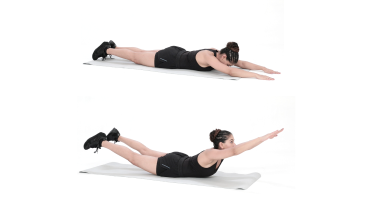 Superman
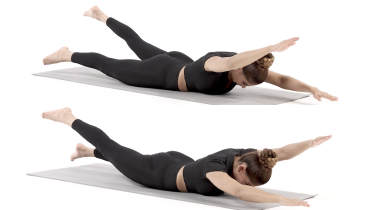 Pilates swimming
.png) Side plank
Side plank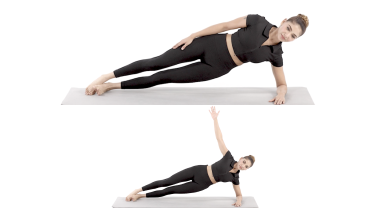 Rolling side plank
What to avoid or change
If you have spinal stenosis as well, bending backward often makes the leg symptoms worse. Check with your physio before the superman and Pilates swimming, and see the spinal stenosis program for exercises that bend you gently forward instead.
If you have low bone density (osteoporosis), ask your physio before the twisting and side bending exercises and the cat-camel stretch, and keep them smooth and well short of the end of your range. Twisting while you hold the ball or pull on the band adds load, so leave those two out until your physio says they suit you. If you have had a fracture in your spine, check with your physio before you begin. If your balance is not steady, do the standing and ball exercises next to a kitchen counter or a sturdy chair you can hold. If you have fallen in the past year or have osteoporosis, do the seated ball arm raise on a firm chair until your physio says the ball is right for you.
This program is not for rehab after spinal surgery. If you have had an operation on your back, follow your surgeon's program. If you have had a hip replacement, several of these exercises turn the hip inward across your body, bend it past a right angle or take it back past straight, which many surgeons ask you to avoid for the first months after some operations, so get the go-ahead from your surgeon or physio first. If you are pregnant, check with your physio or midwife before you start. If you are pregnant and past the first three months, check with your physio before exercising flat on your back.
Children and teenagers
This page is written for adults, and its program is not meant for children. If you think a child or teenager has scoliosis, see a GP, who can refer them to a specialist. Decisions about monitoring, bracing, exercise and surgery while they are still growing are for that specialist team (NHS).
When is surgery considered?
Few adults with scoliosis need an operation. The NHS says it is needed only very occasionally. It may be considered when the curve is severe or getting significantly worse, when severe back pain has not got better with other treatments, or when nerves in the spine are irritated or squashed. The AANS says surgery in adults may be recommended when the curve is greater than 50 degrees and there is nerve damage in the legs or bladder or bowel symptoms. The operation may take pressure off the nerves (decompression), join two or more vertebrae together (fusion), or both (NHS).
It is a big operation. The NHS lists a wound infection, a blood clot and, rarely, nerve damage that can cause permanent leg numbness or weakness, and says full recovery can take a year or more. It also notes that surgery is generally better at easing pain that spreads into the legs than pain in the back. If pain or leg symptoms keep limiting your life after a good trial of exercise and pain relief, ask your GP about seeing a spine specialist to talk the options through.
When to see a physio or doctor
See a GP if you think you have scoliosis and it has not been checked. It is unlikely anything is seriously wrong, but the NHS advises getting it looked at. Book an appointment too if back pain is stopping you doing your usual activities, if you are not improving after several weeks of regular exercise, or if you get pain or heaviness in one leg when you walk.
Some changes need a doctor sooner. A curve that seems to be getting worse quickly, or breathlessness that is new or getting worse, needs a doctor within a few days. In the long-term study, shortness of breath was more likely in people whose curve was greater than 80 degrees and in the upper back (Weinstein 2003). The emergency signs are listed below.
For physiotherapists
This page gives patients a starting framework. The key adult trial (Monticone 2016) used active self-correction, task-oriented exercises and cognitive-behavioral therapy over 20 weeks in adults with idiopathic curves under 35 degrees, with Oswestry Disability Index as the primary outcome. It found a 12-point between-group difference that held at 12 months, and a 4-degree radiographic difference the authors judged not clinically meaningful. The Alanazi 2018 review found this was the only study meeting its criteria and rated it as limited evidence from one study at high risk of bias, so the evidence rests on a single trial.
The 2016 SOSORT guideline is written for idiopathic scoliosis during growth. It includes adult and elderly rows in its strength of treatment table, but gives adults little specific guidance (Negrini 2018). For degenerative curves, screen for neurogenic claudication and manage it alongside the spinal stenosis program. In older adults, consider bone health, and consider a vertebral fracture when pain comes on suddenly or the shape changes quickly.
See a doctor promptly if
- Emergency: numbness, tingling or altered feeling around or under your genitals, between your inner thighs, or around your bottom (anus), for example it feels different when you wipe after using the toilet. Call emergency services or go to an emergency department straight away. This can be a sign of pressure on the bundle of nerves at the base of the spine (cauda equina syndrome), which needs emergency treatment.
- Emergency: you find it hard to start peeing, cannot pee, cannot feel yourself peeing or cannot control when you pee, or you do not notice when you need to poo or cannot control when you poo, and this is not normal for you. The same applies to a new change in how your genitals feel during sex, or new trouble getting an erection or ejaculating. Call emergency services or go to an emergency department straight away. These can also be signs of cauda equina syndrome.
- Emergency: sciatica in both legs, or pain, tingling, numbness or weakness in both legs. The same applies if you lose feeling in one leg. Call emergency services or go to an emergency department straight away.
- Emergency: back or leg pain that started after a serious accident, such as a car crash or a fall from a height, or back pain with chest pain. Call emergency services.
- A leg or foot that is getting weaker, for example your foot drags, catches on the ground or slaps down when you walk (foot drop). Get medical advice the same day. If the weakness is getting worse by the hour, go to an emergency department.
- Emergency: new neck or back pain after a fall, a knock or a jolt, even a minor one such as a trip or a sudden stop in a car, if you have a condition that stiffens the spine, such as ankylosing spondylitis. Call emergency services or go to an emergency department straight away, do not drive yourself, and tell the staff about your spine condition, so they keep your neck and back in their usual position. A stiff spine can break after a small injury, and the break is easy to miss at first. If the pain started straight after the injury, or you also have numbness, tingling or weakness in your arms or legs, keep still and call emergency services.
- Back pain after a minor fall or strain if you are older, have low bone density (osteoporosis) or have taken steroid tablets for a long time. Get medical advice the same day.
- Back pain that comes on suddenly after lifting, bending, a cough or a sneeze, even without a fall, if you have low bone density (osteoporosis). Get medical advice the same day. This can be a sign of a broken bone in the spine (vertebral fracture). Stop the exercises until you have been checked.
- Breathlessness that is new or getting worse, especially if you have a large curve in your upper back, for example you get out of breath doing everyday things you used to manage or when you lie down, or you are short of breath and your ankles are swollen. See your doctor within a few days. If you are having trouble breathing or are more short of breath than usual right now, you cough up blood, you feel sick with it, or your heart is racing, fluttering or skipping beats, get medical advice the same day. If you are gasping, choking or cannot get your words out, your chest feels tight or heavy, you have pain that spreads to your arms, back, neck or jaw, your lips or skin turn very pale, blue or gray, you feel suddenly confused, or you are short of breath and one leg is painful or swollen, call emergency services.
- Your curve seems to be getting worse quickly, for example over a few weeks or months you lean further to one side, your clothes hang differently, or your ribs or one hip stick out more than before. See your doctor within a few days. If it came on with sudden back pain, get medical advice the same day.
- Routine: you have lost height, or your upper back has become more rounded and you are starting to stoop, or you have back pain, or pain that wraps around to your ribs, with no clear cause. Book an appointment with your doctor. A broken bone in the spine can cause this, and it does not always cause the pain you would expect. If the pain came on suddenly, get medical advice the same day.
- Back or leg pain with a fever, or you feel hot, cold, shivery or generally unwell. Get medical advice the same day, and go to an emergency department if you feel very unwell.
- You have back pain and have lost weight without trying. Get medical advice the same day and mention the weight loss.
- New back pain and you have had cancer, now or in the past. Get medical advice the same day and mention your cancer history. If you are being treated for cancer now, contact your cancer team the same day.
- Emergency: you have had cancer, now or in the past, and your back or neck pain feels like a tight band around your body, or comes with pain spreading down an arm or leg, weakness, numbness or pins and needles in your arms or legs, trouble walking, or trouble controlling your bladder or bowels. Call your cancer team's emergency number straight away, or go to an emergency department if you do not have one or cannot get through. This can be cancer pressing on the spinal cord (metastatic spinal cord compression), which needs treatment straight away.
- Pain that is worse at night, or does not ease at all when you rest. See your doctor within a few days. If you have had cancer, now or in the past, or you have lost weight without trying, get medical advice the same day. If you are being treated for cancer now, contact your cancer team the same day.
- Severe pain that comes on suddenly or is getting worse quickly. Get medical advice the same day.
Common questions
Can exercise fix scoliosis in adults?
Not the curve itself. The NHS says exercises to strengthen and stretch your back are unlikely to improve the curvature of your spine but may help with your pain. In the only trial that met the criteria of a 2018 review of exercise for back pain in adults with scoliosis (Alanazi 2018), 20 weeks of scoliosis-specific exercise with a talking therapy approach cut disability more than standard physiotherapy, while the curves of the two groups differed by only 4 degrees, which the authors did not see as a meaningful change (Monticone 2016). So the realistic aim is less pain and better function, not a straighter spine.
Can scoliosis get worse in adults?
It can, but usually slowly. The NHS says scoliosis tends to stay the same after you stop growing. The SOSORT guideline notes that a curve over 30 degrees when growth ends is more likely to increase in adulthood, and that experts agree a curve over 50 degrees almost always does. The AANS describes research in which about 40% of adults with scoliosis had some progression over 20 years: about 10% had a very significant progression and the other 30% a very mild one, usually less than 1 degree a year. If you notice your shape changing quickly, see your doctor.
Is walking good for scoliosis?
For most adults, yes. The NHS says exercise is good for your overall health and should not be avoided unless your doctor advises it, and that most people with scoliosis can do most activities, including sport. Walking is easy to start with, and you can add time slowly. If walking brings on pain or heaviness in one leg that eases when you sit or bend forward, you may also have spinal stenosis, so mention it to your doctor or physio. Symptoms in both legs are covered by the warning signs on this page.
What exercises should I avoid with scoliosis?
No exercise is banned for every adult with scoliosis, and the NHS encourages staying active. What needs care depends on what else is going on. If you also have spinal stenosis, bending backward often stirs up leg symptoms. If you have osteoporosis or have had a fracture in your spine, deep forward bending and twisting, especially while holding a weight, usually need changing, so ask your physio first.
When is surgery needed for scoliosis in adults?
Only very occasionally, according to the NHS: when the curve is severe or getting much worse, when severe back pain has not got better with other treatments, or when nerves in the spine are irritated or squashed. The AANS says it may be recommended for adults with a curve over 50 degrees and nerve damage in the legs or bladder or bowel symptoms. Risks include a wound infection, a blood clot and, rarely, nerve damage that can leave permanent leg numbness or weakness, and full recovery can take a year or more (NHS). Older age, smoking, being overweight and other health problems raise the risk, and recovery takes longer in older adults (AANS).
References
- NHS. Scoliosis. https://www.nhs.uk/conditions/scoliosis/
- NHS. Scoliosis: treatment in adults. https://www.nhs.uk/conditions/scoliosis/treatment-in-adults/
- NHS. Scoliosis: treatment in children. https://www.nhs.uk/conditions/scoliosis/treatment-in-children/
- Negrini S, Donzelli S, Aulisa AG, et al. 2016 SOSORT guidelines: orthopaedic and rehabilitation treatment of idiopathic scoliosis during growth. Scoliosis and Spinal Disorders. 2018;13:3. https://doi.org/10.1186/s13013-017-0145-8
- Everett CR, Patel RK. A systematic literature review of nonsurgical treatment in adult scoliosis. Spine. 2007;32(19 Suppl):S130-S134. https://doi.org/10.1097/BRS.0b013e318134ea88
- Alanazi MH, Parent EC, Dennett E. Effect of stabilization exercise on back pain, disability and quality of life in adults with scoliosis: a systematic review. European Journal of Physical and Rehabilitation Medicine. 2018;54(5):647-653. https://doi.org/10.23736/S1973-9087.17.05062-6
- Monticone M, Ambrosini E, Cazzaniga D, et al. Adults with idiopathic scoliosis improve disability after motor and cognitive rehabilitation: results of a randomised controlled trial. European Spine Journal. 2016;25(10):3120-3129. https://doi.org/10.1007/s00586-016-4528-y
- Schoutens C, Cushman DM, McCormick ZL, et al. Outcomes of nonsurgical treatments for symptomatic adult degenerative scoliosis: a systematic review. Pain Medicine. 2020;21(6):1263-1275. https://doi.org/10.1093/pm/pnz253
- Weinstein SL, Dolan LA, Spratt KF, et al. Health and function of patients with untreated idiopathic scoliosis: a 50-year natural history study. JAMA. 2003;289(5):559-567. https://doi.org/10.1001/jama.289.5.559
- American Association of Neurological Surgeons. Scoliosis. https://www.aans.org/patients/conditions-treatments/scoliosis/
- American Academy of Orthopaedic Surgeons. Nonsurgical treatment options for scoliosis. OrthoInfo. https://www.orthoinfo.org/en/treatment/nonsurgical-treatment-options-for-scoliosis/
- American Academy of Orthopaedic Surgeons. Lumbar spinal stenosis. OrthoInfo. https://www.orthoinfo.org/en/diseases--conditions/lumbar-spinal-stenosis/
- NHS. Back pain. https://www.nhs.uk/conditions/back-pain/
- NHS. Shortness of breath. https://www.nhs.uk/symptoms/shortness-of-breath/
Written and checked by the PocketPhysio editorial team. Last updated 2026-09-28.
This page is general education, not a diagnosis or a personal treatment plan. See a physiotherapist or doctor for advice about your own situation.