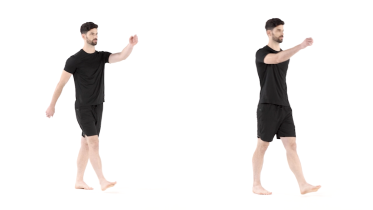
Forward and backward weight shift
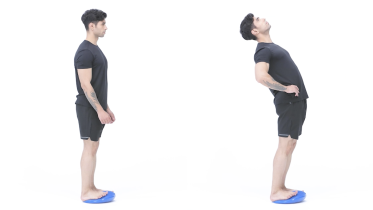
A forward and backward weight shift is a slow sway toward your toes and back toward your heels, with both feet flat on the floor the whole time. Your body stays straight and tips as one piece from the ankles. That trains the small corrections your ankles make to keep you upright. It is an early standing balance exercise, and it is safest with a counter or chair within reach.
How to do the forward and backward weight shift
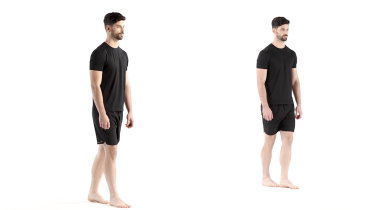
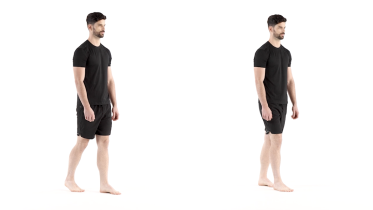
- Stand with a kitchen counter or the back of a sturdy chair in front of you, close enough to hold. Place your feet a little apart and share your weight evenly between them.
- Stand tall with your arms relaxed by your sides, or rest your hands lightly on the support.
- Keeping your body straight from ankles to head, slowly sway forward so your weight moves toward the balls of your feet. Your heels stay on the floor.
- Sway slowly back through the middle until your weight is over your heels. Your toes stay down.
- Keep the movement small and smooth. As it gets easier, your physio may ask you to lean a little further each way, or to hold the support more lightly.
What you should feel
Your calves working as you sway forward, and the muscles at the front of your shins as you sway back. Your toes may grip the floor a little. It should feel slow and controlled.
Common mistakes
- Bending at the hips or waist instead of swaying from the ankles.
- Lifting the heels as you go forward, or the toes as you go back.
- Going so far that you have to take a step or grab the support to catch yourself.
How often
Many programs start with 10 slow sways forward and back, repeated 2 to 3 times, once or twice a day. Your physio will adjust this.
Stop and check with your physio if
- You feel dizzy, lightheaded, faint or sick, or the room seems to spin. Hold your support, sit down and get medical advice the same day before you practice again. If you faint, it does not settle within a few minutes of sitting still, your vision suddenly blurs or goes double, or you cannot stand or walk steadily, call emergency services.
- Your calf or thigh becomes swollen, warm, tender, red or darker than usual, or has a throbbing or cramping pain that feels different from normal muscle ache. Stop and get medical advice the same day, as this can be a blood clot. If you are also short of breath or have chest pain, call emergency services.
- Sharp pain in your ankle or foot as your weight moves onto your toes or heels.
- Since the fracture or cast, the foot or ankle is getting more painful rather than less, the skin becomes very sensitive to light touch, or the foot changes color, temperature, swelling or sweating compared with the other one, or looks shiny. See your doctor or physio as soon as you can, within a few days at most, as this can be complex regional pain syndrome (CRPS) and early treatment may help.
From the clinic
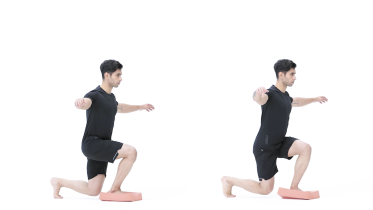
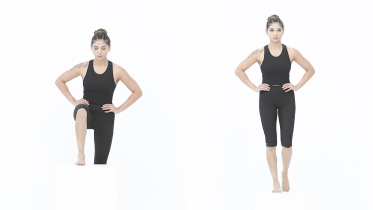
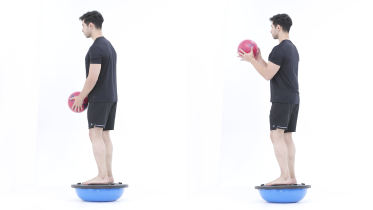
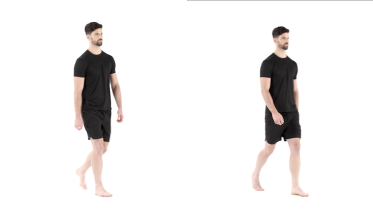
The person in the video stands without holding anything, and the voice guide says to use a chair only if needed. Start with a counter or a sturdy chair within reach instead, on a floor that does not slip, with rugs and clutter moved out of the way. Wear flat shoes that fit well and grip the floor, not socks, tights or bare feet. If you have had a fall in the last year, feel unsteady on your feet or take medicines that can make you lightheaded, keep a hand on the support the whole time and ask your doctor or physio whether a falls assessment would help. If you need to grab the support to stay up, make the sway smaller.
A sudden loss of balance is different. Call emergency services straight away for any sign of a stroke, even if it goes away: sudden dizziness with unsteadiness or falling over, a face that droops on one side, an arm you cannot lift or keep up, slurred or muddled speech, weakness or numbness on one side of your body or face, sudden blurred vision, double vision or loss of sight, or a sudden severe headache.
After an ankle fracture or ankle surgery, follow your surgeon's or physio's weight-bearing plan, and start this exercise only when they have cleared you. Swaying forward loads the front of the foot and swaying back loads the heel. Both feet share your weight, so ask how much you may put through the injured leg before you start. Once this feels steady, the side to side weight shift moves your weight from one foot to the other, and tandem stance narrows your base further.
Written and checked by the PocketPhysio editorial team. Last updated 2026-09-26.
This page is general education, not a diagnosis or a personal treatment plan. If you have pain, an injury or a health condition, see a physiotherapist or doctor before starting new exercises.