Prone back extension
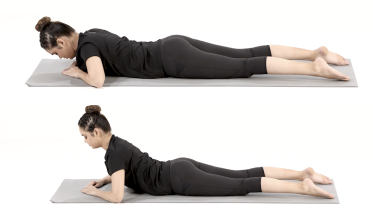
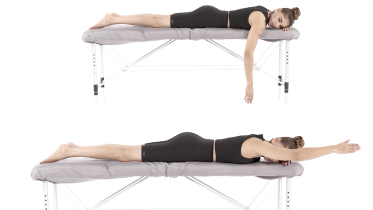
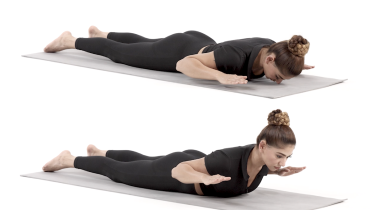
The prone back extension strengthens the muscles along your spine. You lie face down with your arms by your sides and use your back muscles to lift your head and chest off the floor, while your legs stay down. It is an easier step than the superman, where your arms and legs lift as well.
How to do the prone back extension
- Lie face down on a mat with your legs straight and your arms resting by your sides. Rest your forehead on the mat.
- Gently tighten your stomach and squeeze your buttocks so your legs stay heavy on the floor.
- Using your back muscles, slowly lift your head and then your chest off the mat. Your hands stay beside you and do not push.
- Go only as high as feels comfortable in your lower back. A few inches is plenty to start.
- Keep your chin gently tucked and your eyes on the floor a little in front of you, so your neck stays in line with your back. Keep breathing.
- Pause for a moment, then lower yourself slowly back to the mat.
What you should feel
Work in the muscles along your spine, mostly in the lower and middle back, with your buttocks helping to keep your legs down.
Common mistakes
- Jerking up quickly to get higher. A slow, controlled lift is the exercise.
- Leading the lift with your head, tipping it back to look up or far ahead. This loads your neck.
- Pushing through your hands or lifting your legs.
- Holding your breath at the top.
How often
Many programs start with 1 to 3 sets of 8 to 12 slow lifts, with a pause of a second or two at the top. Your physio will adjust this.
Stop and check with your physio if
- Pain moves into your buttock or down a leg, or you notice numbness or tingling.
- You feel a sharp or pinching pain in your lower back as you lift.
- Your neck starts to hurt during the lift.
From the clinic
Height is not the goal here. The voice guide says to lift as far as you can, but a smaller lift you control well is the better place to start, and you can build from there. If even a small lift is too much for now, begin with prone lying to get used to the position. When this feels easy, the superman adds your arms and legs.
The lift arches your lower back, which often aggravates narrowing of the spinal canal (spinal stenosis) and a vertebra that has slipped forward (spondylolisthesis). With either diagnosis, or if you are pregnant or have had recent back surgery, check with your physio first. If you have had a fracture in your spine, check with your physio before you begin.
Written and checked by the PocketPhysio editorial team. Last updated 2026-09-26.
This page is general education, not a diagnosis or a personal treatment plan. If you have pain, an injury or a health condition, see a physiotherapist or doctor before starting new exercises.