
Part of Knee osteoarthritis
Surgery for knee arthritis: when to consider it and which kind
Warning signs, and when to get help
When should you think about surgery for knee arthritis?
There is no score or X-ray finding that tells you it is time. NICE suggests that a referral for a joint replacement is worth considering when the knee is substantially affecting your quality of life, through pain, stiffness, reduced function or a joint that is becoming more deformed, and when non-surgical care such as therapeutic exercise, weight loss and pain relief has not worked or does not suit you. It also asks clinicians to judge this by assessing you, not by adding up a severity score.
In clinic, the people who go on to choose surgery usually describe a knee that has started to shrink their life. They have stopped walking the dog, they plan every trip around stairs, or the knee wakes them most nights. Those are the things worth telling your doctor, more than how the X-ray looks. The NHS makes the same point from the other side: a replacement may be offered when knee pain has a big effect on your life and other treatments have not worked.
NICE also says people should not be excluded from referral because of their age, sex or gender, smoking, other health conditions, or their weight measured as BMI. That does not mean those things do not matter to the result. It means they are part of the discussion with the surgeon, not a reason to turn you away before it starts.
What should you try before surgery?
Exercise is the main non-surgical treatment, and the knee osteoarthritis program is built around it. If you carry extra weight, losing some of it is the other core treatment NICE recommends, and GLP-1 medicines and knee arthritis covers one newer route. Injections are a separate question, covered in PRP and stem cell injections for knee arthritis.
No guideline sets a length for a fair trial of exercise. As a working rule, physios tend to think in months of regular strengthening, two or three sessions a week, rather than a few weeks. That is practice experience, not a tested cut-off.
The program also has to be the right one. A trial of exercise that never got past gentle leg lifts, or that kept flaring the knee because the load jumped too fast, has not really been tried. Exercises to avoid with knee arthritis and the pain monitoring model show how to set and adjust the load.
A Danish trial gives a sense of how the two paths compare. It randomized 100 people with moderate to severe knee osteoarthritis who were eligible for a replacement. Half had the operation followed by 12 weeks of non-surgical care, and half had the 12 weeks of non-surgical care alone (exercise, education, diet advice, insoles and pain medicine).
At 12 months the surgery group had improved more on average, but it also had more serious adverse events, 24 against 6. In the non-surgical group, 13 of the 50 went on to have a replacement within the year (Skou and colleagues, 2015). So surgery helped more on average, came with more risk, and most people in the non-surgical group got through the year without it.
What happens if you wait?
Nobody can give you the right moment, but the research says a few useful things. A prospective study followed 222 people having a hip or a knee replaced in Boston and Montreal, and split them in two at the middle of their function scores before surgery. Both halves improved. The half who went in with the worst pain and function were still worse off 2 years later than the half who went in better (Fortin and colleagues, 2002). The authors were careful about what that means: there are no validated indications for when a joint replacement is best done, and their data only suggest that operating earlier in the slide may go with a better result. It compared two groups who differed in other ways too, and it mixed hips with knees, so it cannot show that waiting caused the gap.
Age pulls the other way. A UK study of 54,276 total knee replacements estimated the lifetime risk of needing the knee redone at about 5% for people operated on after the age of 70, rising to about 35% for men who had a knee replaced in their early 50s, and lower than that for women of the same age (Bayliss and colleagues, 2017). A knee fitted at 52 has to last decades longer than one fitted at 75, and the authors argue those figures belong in the conversation when someone young is weighing up the timing.
So there is no deadline, and no single right week. What you can do while you think is keep the thigh strong and keep walking, because the strength you take into an operation is the strength you start rehab with. A referral is not a commitment either. It is a consultation, and you can still say no at the end of it.
What kinds of surgery are there for knee arthritis?
In a total knee replacement, the worn joint surfaces are replaced with metal and plastic parts. The total knee replacement rehab page covers recovery and the exercises that follow.
Recovery from one is counted in months rather than weeks. The NHS says you usually leave hospital 1 to 4 days after the operation, can try walking without an aid at about 6 weeks if you feel ready, go back to work at about 6 to 12 weeks depending on the job, and should not lift or move anything heavy for the first 3 months, and that full recovery may take several months or longer, varying with your age and general health. It also says to wait at least 6 weeks before driving after a total replacement, or 3 weeks after a partial one. Those are typical figures rather than a timetable you have to keep up with, and your own team will give you theirs. A new knee is not a new natural knee either, and what counts as normal afterwards, from clicking to a numb patch of skin beside the scar, is covered with its sources on the rehab page.
A partial knee replacement resurfaces only the worn part of the knee and leaves the healthy parts and the ligaments in place. The wear has to be limited to one area of the joint for it to be an option. OrthoInfo gives the advantages as a quicker recovery, less pain after the operation, less blood loss and a lower risk of infection and blood clots, and gives the main drawback as the chance of needing more surgery later, because a total replacement may be needed if the parts of the knee that were left alone wear out in their turn.
How readily a partial is offered varies between surgeons. Partial replacements accounted for 8 to 15% of all knee replacements at the time one London hospital prospectively assessed 200 knees already booked for a replacement and judged 47.6% of them suitable for a partial by its own criteria (Willis-Owen and colleagues, 2009). That unit was making the case for wider use, so read the figure as what one enthusiastic team found rather than as a national standard.
The trade-off between the two runs in both directions. In the TOPKAT trial, 528 people with arthritis in the inner half of the knee at 27 UK hospitals were randomized to a total or a partial replacement, and at 5 years there was no difference in knee scores and a similar rate of re-operations and complications (Beard and colleagues, 2019). Over much longer follow-up, pooled national registry data put about 82% of total replacements and about 70% of partials still in place at 25 years (Evans and colleagues, 2019). Which fits your knee is a conversation with your surgeon.
An osteotomy keeps your own joint. The surgeon cuts and reshapes the shinbone or the thighbone so that weight shifts away from the worn side of the knee. OrthoInfo says it works best for thin, active people under the age of 60, with pain on one side of the knee only, no pain under the kneecap, and pain brought on mostly by activity or by standing for a long time. It also expects you to be able to straighten the knee fully and bend it to at least 90 degrees before the operation, says you will most likely need crutches for several weeks afterwards, and puts a return to full activity 3 to 6 months out.
How long you stay off the leg is your surgeon's decision, and it is genuinely unsettled. A French trial randomized 50 people having a medial opening wedge osteotomy held with a locking plate to immediate weight bearing or to waiting 2 months, and at one year found no difference in knee scores, no loss of the correction in either group, and one bone that failed to join in each (Lansdaal and colleagues, 2017). What is safe depends on where the bone was cut and how it was fixed, so the instructions your own surgeon gives you are the ones to follow, not anything you read here.
What are the risks, and how long does a new knee last?
A knee replacement is major surgery, and the Danish trial above puts a number on that: 24 serious adverse events among the 50 people randomized to the operation, against 6 among the 50 who had non-surgical treatment alone (Skou and colleagues, 2015). The complications worth asking your surgeon about by name are infection in the new joint, a blood clot in the leg or the lungs, a knee that ends up stiff and needs further treatment, injury to a nerve or a blood vessel, a break in the bone around the implant, and pain that never settles. Ask for their own figures and for what your own health adds to them, because an average taken from everybody is not a figure about you.
Pain that does not settle is the risk people are least often warned about. A review of prospective studies in unselected patients, covering 11 knee replacement cohorts followed from 3 months to 5 years after surgery, found the proportion reporting an unfavorable pain outcome ranged from 10% to 34% across the studies, and sat at about 20% in the best quality ones (Beswick and colleagues, 2012). Most people do get a big improvement in pain and walking. A minority do not, and knowing that beforehand is part of making a fair choice rather than a disappointed one.
On how long a new knee lasts, the largest pooled analysis drew on 299,291 total knee replacements reported by national joint registries, and from the 14 registries that had followed people that far it estimated about 82% still in place 25 years later, against about 70% of partial replacements (Evans and colleagues, 2019). Hold two things alongside that number. It counts only whether the knee had been replaced again, which is not the same as how well it was working. And those implants were fitted years or decades ago, mostly in older people, so it describes what happened to them rather than predicting what will happen to you.
Does keyhole surgery help knee arthritis?
Not for the arthritis itself. Washing out the joint or trimming rough cartilage through a keyhole (arthroscopic lavage and debridement) was common for years. NICE's 2022 guideline now says it should not be offered to people with osteoarthritis. The American Academy of Orthopaedic Surgeons guideline does not recommend it either when knee osteoarthritis is the main diagnosis. An international panel writing in the BMJ made a strong recommendation against arthroscopy for degenerative knee disease, including knees with a worn or degenerative meniscus tear (Siemieniuk and colleagues, 2017).
If a surgeon suggests a keyhole operation, it is fair to ask what problem it is meant to fix. A knee that is truly locked (stuck bent and impossible to straighten) is a different situation from the catching and stiffness of arthritis, and the warning list on this page says how quickly to get it seen.
Questions to ask a surgeon
These are questions patients often find useful to take in. Treat them as a starting point, not a checklist from a guideline.
- Which operation do you suggest for my knee, and why that one rather than the others?
- What do you expect it to change for me, and what will it probably not change?
- What are the main risks for someone like me?
- What happens if I wait, and is there anything I could lose by waiting?
- How long is the recovery, and what will I need at home in the first weeks?
- What should I do before the operation to prepare?
Writing down the two or three things you most want to get back to doing helps keep the conversation on your life rather than on the scan.
When to get the knee checked sooner
Some changes do not wait for a planned appointment. A knee that swells up fast after a twist or fall, looks out of shape, or leaves your foot cold or numb needs an emergency department straight away, and you should not drive yourself. A hot, red, swollen knee, or a knee that locks, needs medical advice the same day. The warning list below gives the full set of signs.
If you have already had an operation on this knee, contact your surgical team the same day about a knee that becomes hot, red or more swollen, a wound that leaks, or a high temperature, as these can be signs of infection. That holds at any time afterwards, even years later, because a new joint can become infected long after the operation.
Three more apply if you have a knee replacement. If you cannot put weight on the leg after a fall or a knock, or the leg looks out of shape, go to an emergency department straight away and do not drive yourself, and call emergency services if you cannot get up, because a break in the bone around an implant needs treating in hospital. If a smaller knock leaves the knee newly painful or swollen even though you can still walk on it, keep your full weight off that leg and get it checked by your surgical team the same day, as this kind of break is not always obvious at first. And if you suddenly cannot straighten the knee or lift the leg straight when you could before, often after a pop or a stumble, keep the weight off it and contact your surgical team the same day, because a tendon at the front of the knee may have torn and a repair does better done early. The total knee replacement rehab page lists the full set of signs to watch for after a replacement.
Getting ready if you choose surgery
NICE advises that people having a knee replacement get advice on exercises to do before and after the operation, along with lifestyle advice such as weight, diet and stopping smoking. The research on exercise before surgery is modest. A review found low to very low certainty evidence that it improved knee function before the operation and for up to 3 months after it, and the long-term effect was unclear (Gränicher and colleagues, 2022).
In practice, a stronger thigh and a routine you already know tend to make the first weeks of rehab less of a shock, though that is clinical experience rather than a trial result, and the same exercises are part of good non-surgical care anyway. Your surgeon's or hospital team's plan comes first. That holds before the operation and after it, so check with them before you start or change anything.
Before you start, a few safety points. Check with your doctor first if you have a heart or lung condition, or blood pressure that is not under control. If you have high blood pressure, breathe steadily through every repetition and never hold your breath. If you are pregnant and past the first three months, check with your physio before exercising flat on your back, as the quad sets and straight leg raises are done lying down. If you have had a hip replacement, get the go-ahead from your surgeon or physio before sit to stand and the straight leg raise. Standing up from a low seat bends the hip past a right angle, and many surgeons ask you to avoid that for the first months after some operations, so ask them how high your seat should be.
For sit to stand, use a sturdy chair that will not slide, ideally with its back against a wall, and a higher seat if standing up hurts. If you have fallen in the past year or feel unsteady, have someone nearby, or set the chair beside a kitchen counter you can reach. Wear flat shoes that fit well and grip the floor, not socks, tights or bare feet.
A mild ache while you exercise is common and is usually fine if it settles by the next morning and is not building up from week to week. Sharp pain, or a knee that is more painful or swollen the next day, means the load was too much, so drop back to the last amount that settled. If any of the signs above or in the warning list appear, stop the exercises and get help at the level the list gives.
Exercises that can help
These are common choices for strengthening the thigh before knee surgery, and they also belong to the non-surgical program. Typical starting doses from each exercise page: quad sets, 10 with a 5 to 10 second hold, several times a day; straight leg raise, 2 to 3 sets of 10 on each leg, once a day; seated knee extension, 2 to 3 sets of 10 to 15 on each leg with a short hold, once a day; sit to stand, 2 to 3 sets of 5 to 10, once a day or on most days. Start at the low end of each dose and judge it by how your knee feels the next morning. Your physio will adjust this.
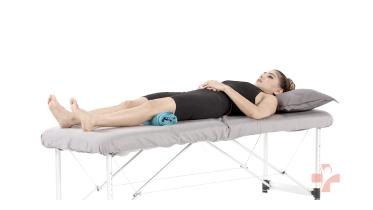 Quad sets (towel under knee)
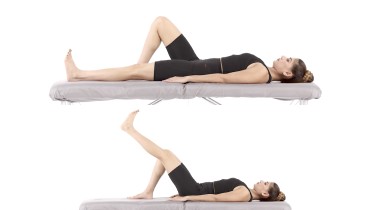 Straight leg raise
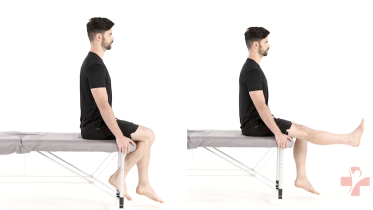 Seated knee extension
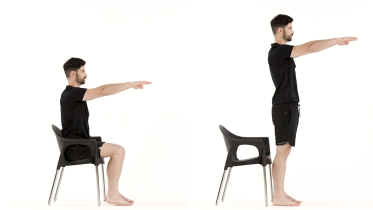 Sit to stand
Related exercise programs
Warning signs
Get emergency help now
- Emergency: if chest pain, pressure or tightness does not ease quickly when you rest, spreads to your arm, neck, jaw, stomach or back, or comes with sweating, feeling sick, feeling light-headed or being short of breath, call emergency services straight away, as this can be a heart attack. If it eases quickly and none of these happen, get medical advice the same day, and do not exercise again until you have been checked.
- Emergency: the knee has moved out of place, looks misshapen or is pointing at an odd angle, or you have tingling or no feeling in the knee, leg or toes, or your foot turns cold, pale or blue. Go to an emergency department straight away. Do not drive yourself: ask someone to drive you or call an ambulance.
- Emergency: the knee became very swollen very quickly, within a few hours of a twist, fall or blow, or you felt a pop or snap. Go to an emergency department straight away. Do not drive yourself: ask someone to drive you or call an ambulance.
Get help today
- Same day: the pain started with a fall, a twist or a blow to the knee, or you cannot put weight on the leg. Get medical advice the same day.
- Same day: the knee is locked, which means it is stuck bent and you cannot fully straighten it, even after gently trying to move it, or you cannot bend or straighten the leg at all. Get assessed the same day by a doctor, at urgent care or at an emergency department. A torn piece of meniscus can get caught in the joint and block it, and when a tear like this can be repaired, it should be done as early as possible. A knee that catches for a moment and then frees itself can happen with a meniscus tear. That is not the same as a locked knee, but tell your physio or doctor about it.
- Same day: the knee keeps giving way under you, or it gave way after a recent injury, or it gives way and is also very painful or swollen. Get medical advice the same day. If it only happens now and then, with no recent injury and no swelling, it is not an emergency, but book an assessment with a physio or doctor in the next few days.
- Same day: the knee swells up with no clear reason, especially if you take medicine to thin your blood. Get medical advice the same day.
- Same day: the knee is hot, red and swollen, or you have knee pain with a high temperature or feel hot, cold or shivery. Get medical advice the same day, and go to an emergency department if you feel very unwell. This can be a sign of infection in the joint, which needs treatment quickly.
- Same day: a calf or thigh that is newly swollen or getting more swollen, warm, tender, red or darker than usual, has swollen veins that are sore to touch, or has a throbbing or cramping pain that does not fit your injury or condition, or that feels different from normal muscle soreness after exercise. This can be a sign of a blood clot (deep vein thrombosis), especially after surgery, an injury, time in a cast or boot, a long trip or a spell of being much less mobile than usual. Get medical advice the same day. If you are also short of breath or have chest pain, call emergency services.
- Same day: pain at night or at rest that keeps getting worse. If you are being treated for cancer now, contact your cancer team the same day.
Book an appointment
- Within a day or two: pain at night or at rest that keeps getting worse. If you have had cancer, now or in the past, see your doctor sooner, within a day or two, and mention it, even if the pain is not getting worse. Do the same if you have knee pain and are losing weight without trying, even if it does not hurt at night.
- Within a few days: pain at night or at rest that keeps getting worse. See your doctor within a few days.
Common questions
Do I need surgery for knee arthritis?
Most people with knee osteoarthritis never need an operation. Surgery comes into the picture when the knee is having a big effect on your life and exercise, weight loss where it applies, and pain relief have not done enough, or cannot be used. Even then it is a choice rather than a must, and some people decide to keep going with non-surgical care. A doctor or surgeon can talk through the options with you.
Does arthroscopy help knee arthritis?
For osteoarthritis itself, the guidelines say no. NICE advises against offering arthroscopic lavage or debridement to people with osteoarthritis, the American Academy of Orthopaedic Surgeons does not recommend it when knee osteoarthritis is the main diagnosis, and an international BMJ panel made a strong recommendation against keyhole surgery for degenerative knee disease. A surgeon may look differently at a separate problem, such as a knee that is truly locked.
Am I too young or too heavy for a knee replacement?
NICE says people with osteoarthritis should not be ruled out of referral for a joint replacement because of their age, sex or gender, smoking, other health conditions, or their weight or BMI. The decision rests on how much the knee affects your life and whether other treatment has worked. Individual surgeons and health systems may still have their own criteria, so ask yours what applies to you. Age does change the arithmetic of timing, though, rather than the right to be referred: the younger a knee is replaced, the more likely it is to need redoing within that person's lifetime (Bayliss and colleagues, 2017), which is covered in the section on waiting.
Does exercise before knee surgery help?
It may help a little in the short term. NICE advises that people having a knee replacement get advice on exercises to do before and after the operation. A review of trials found low to very low certainty evidence that exercise before surgery improved knee function before the operation and up to 3 months after it, while the longer-term effect was unclear (Gränicher and colleagues, 2022). Your surgical team will tell you what to do and what to avoid before your operation.
References
- National Institute for Health and Care Excellence. Osteoarthritis in over 16s: diagnosis and management (NG226). 2022. https://www.nice.org.uk/guidance/ng226
- National Institute for Health and Care Excellence. Joint replacement (primary): hip, knee and shoulder. NICE guideline NG157. Published 4 June 2020. https://www.nice.org.uk/guidance/ng157
- American Academy of Orthopaedic Surgeons. Management of Osteoarthritis of the Knee (Non-Arthroplasty): Evidence-Based Clinical Practice Guideline, third edition. 2021. https://www.aaos.org/globalassets/quality-and-practice-resources/osteoarthritis-of-the-knee/oak3cpg.pdf
- Siemieniuk RAC, Harris IA, Agoritsas T, et al. Arthroscopic surgery for degenerative knee arthritis and meniscal tears: a clinical practice guideline. BMJ. 2017;357:j1982. https://doi.org/10.1136/bmj.j1982
- Skou ST, Roos EM, Laursen MB, et al. A randomized, controlled trial of total knee replacement. New England Journal of Medicine. 2015;373(17):1597-1606. https://doi.org/10.1056/NEJMoa1505467
- Gränicher P, Mulder L, Lenssen T, et al. Prehabilitation improves knee functioning before and within the first year after total knee arthroplasty: a systematic review with meta-analysis. Journal of Orthopaedic and Sports Physical Therapy. 2022;52(11):709-725. https://doi.org/10.2519/jospt.2022.11160
- NHS. Why a knee replacement is done. https://www.nhs.uk/tests-and-treatments/knee-replacement/why-its-done/
- NHS. Recovering from a knee replacement. https://www.nhs.uk/tests-and-treatments/knee-replacement/recovery/
- American Academy of Orthopaedic Surgeons. Osteotomy of the knee. OrthoInfo. https://www.orthoinfo.org/en/treatment/osteotomy-of-the-knee/
- American Academy of Orthopaedic Surgeons. Unicompartmental (partial) knee replacement. OrthoInfo. https://www.orthoinfo.org/en/treatment/unicompartmental-knee-replacement/
- Beard DJ, Davies LJ, Cook JA, et al. The clinical and cost-effectiveness of total versus partial knee replacement in patients with medial compartment osteoarthritis (TOPKAT): 5-year outcomes of a randomised controlled trial. Lancet. 2019;394(10200):746-756. https://doi.org/10.1016/S0140-6736(19)31281-4
- Evans JT, Walker RW, Evans JP, Blom AW, Sayers A, Whitehouse MR. How long does a knee replacement last? A systematic review and meta-analysis of case series and national registry reports with more than 15 years of follow-up. Lancet. 2019;393(10172):655-663. https://doi.org/10.1016/S0140-6736(18)32531-5
- Beswick AD, Wylde V, Gooberman-Hill R, Blom A, Dieppe P. What proportion of patients report long-term pain after total hip or knee replacement for osteoarthritis? A systematic review of prospective studies in unselected patients. BMJ Open. 2012;2(1):e000435. https://doi.org/10.1136/bmjopen-2011-000435
- Bayliss LE, Culliford D, Monk AP, et al. The effect of patient age at intervention on risk of implant revision after total replacement of the hip or knee: a population-based cohort study. Lancet. 2017;389(10077):1424-1430. https://doi.org/10.1016/S0140-6736(17)30059-4
- Fortin PR, Penrod JR, Clarke AE, et al. Timing of total joint replacement affects clinical outcomes among patients with osteoarthritis of the hip or knee. Arthritis and Rheumatism. 2002;46(12):3327-3330. https://doi.org/10.1002/art.10631
- Willis-Owen CA, Brust K, Alsop H, Miraldo M, Cobb JP. Unicondylar knee arthroplasty in the UK National Health Service: an analysis of candidacy, outcome and cost efficacy. The Knee. 2009;16(6):473-478. https://pubmed.ncbi.nlm.nih.gov/19464898/
- Lansdaal JR, Mouton T, Wascher DC, et al. Early weight bearing versus delayed weight bearing in medial opening wedge high tibial osteotomy: a randomized controlled trial. Knee Surgery, Sports Traumatology, Arthroscopy. 2017;25:3670-3678. https://doi.org/10.1007/s00167-016-4225-8
Written and checked by the PocketPhysio editorial team. Last updated 2026-10-16.
This page is general education, not a diagnosis or a personal treatment plan. See a physiotherapist or doctor for advice about your own situation.