
Reverse lunge
A reverse lunge is a lunge done backward. You step back, lower the back knee toward the floor and come up again, while the buttock and thigh of the front leg do the lifting. Stepping back is easier to control than stepping forward. In knee and hip rehab it is often the first lunge people learn.
How to do the reverse lunge
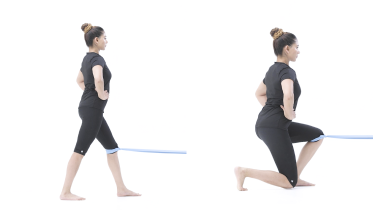
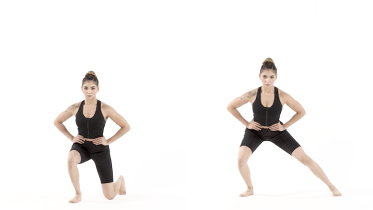
- Stand tall with your feet about hip width apart and your hands on your hips.
- Shift your weight onto one leg and take a large step straight back with the other, landing on the ball of the foot.
- Lower your hips until the front thigh is about level with the floor. The back knee bends to roughly a right angle and points down at the floor, with the back heel lifted. Keep your chest upright.
- Check that the front knee sits directly over the ankle and points over your second toe, and that the front heel stays down.
- Press through the front heel to stand up and bring the back leg forward to the start. That is one rep. Next time, step back with the other leg, so you alternate sides.
What you should feel
Your front buttock and the front of that thigh. The back leg may feel a light stretch at the front of the hip, nothing more.
Common mistakes
- Stepping back in a narrow line, as if on a tightrope. Keep the feet hip width apart, like train tracks.
- Letting the chest fall forward over the front thigh.
- Pushing off the back foot to get up instead of using the front leg.
- The front knee caving in toward the other leg as you come up.
How often
A common starting range is 2 to 3 sets of 6 to 10 on each leg, holding a wall or chair back if your balance is shaky. Your physio may change this for you.
Stop and check with your physio if
- Sharp pain in the knee or hip.
- The knee gives way, or you feel unsteady enough that you might fall.
From the clinic
Many people find this kinder to the knee than the forward lunge. Your front foot stays planted the whole time, so there is no landing to absorb.
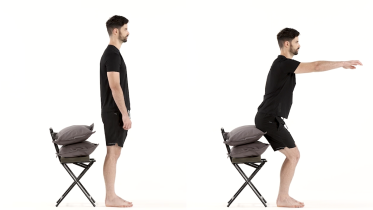
One cue that helps: push the floor away with your front foot to come up. If you feel yourself springing off the back toes instead, shorten the step and slow the whole thing down. Letting your arms swing forward as you lower, as in the video, is fine if it helps you balance.
Reviewed by the PocketPhysio by VirtueLife expert physiotherapy team. Last reviewed 2026-09-25.
This page is general education, not a diagnosis or a personal treatment plan. If you have pain, an injury or a health condition, see a physiotherapist or doctor before starting new exercises.
.png)