
Part of Meniscus tear
Swelling, locking and giving way: does a meniscus tear cause instability?
Warning signs, and when to get help
Does a meniscus tear cause instability?
In the everyday sense, yes. The NHS lists a knee that gives way among the signs of a torn ligament or meniscus, and plenty of people with a tear describe the leg letting them down as they stand up or turn. What a meniscus tear does not usually cause is the kind of instability a torn cruciate ligament causes, where the joint itself can shift because the structure holding it has gone.
The distinction is not word play. It changes who examines you and what they look for, and it is why a knee that gives way after a sports injury is treated more urgently than one that has given way once or twice in a year with no injury behind it.
A knee with a tear can give way for more than one reason, and they are worth telling apart.
A torn flap can get in the way inside the joint, interrupting the movement for a moment. That is the mechanical version, and it often comes with catching.
A swollen knee can switch the thigh off. This one has been tested directly: when researchers injected 30 ml or 60 ml of saline into the knees of healthy volunteers, the muscles on the inner and outer side of the thigh worked less during a single leg landing (Palmieri-Smith and colleagues, 2007). Those were healthy knees with fluid put into them rather than knees with a tear, but it explains a pattern physios see constantly, where a swollen knee buckles because the quadriceps is not holding it.
And a tear from a real injury often brings ligament damage with it, which is instability of the structural kind. Meniscus tear vs ACL tear or MCL sprain covers how those are told apart.
One more thing gets called giving way and is none of those. If the kneecap itself slipped sideways out of its groove and went back on its own, usually with the knee buckling and a lot of pain at the front, that has its own same-day line in the warning signs below, because the knee needs checking for a broken piece of cartilage or bone, which happens often when a kneecap comes out. Our patellar dislocation page covers that one.
What counts as a truly locked knee?
This is the one symptom on this page that changes the urgency, so it is worth being exact.
A locked knee is stuck bent and will not fully straighten, even after you have relaxed it and gently tried to move it. The block feels like something in the way rather than like pain stopping you. The BMJ guideline panel defined it as being objectively unable to fully extend the knee, and it named that as the one possible exception to its strong recommendation against keyhole surgery for degenerative knee disease (Siemieniuk and colleagues, 2017).
The simplest way to check is to lie on your back with both legs out straight and relaxed, and compare them. Let the knee rest where it rests. Do not push it down, get someone to lean on it or try to work it straight, because if a torn fragment is sitting in the joint, force will not free it and can hurt a great deal. A knee that sits a few degrees short of flat while it is swollen is worth telling your physio or doctor about, and worth looking at again as the swelling goes down. A knee that stays clearly bent, however gently you try, is the locked knee in the warning signs below, and that one is a same-day job rather than something to wait on. If you cannot tell which of the two you have, treat it as the same-day one.
Why the hurry? A torn piece of meniscus can get caught in the joint and block it, and when a tear like this can be repaired, it should be done as early as possible. ESSKA recommends prompt repair of a bucket-handle tear that cannot be reduced, which is the classic cause of a knee that will not straighten (Kopf and colleagues, 2020).
The guidelines are candid that this language is slippery. The ESSKA consensus on degenerative tears notes that catching and locking symptoms are hard to define (Beaufils and colleagues, 2017), which is why the description you give a clinician is worth more than the label you put on it. Say what the knee does and when, rather than reaching for the word locked.
A knee that locks or catches again after an operation on the meniscus is a separate problem with its own route. Keep your weight off it and contact your surgical team the same day, because a repair can come apart before the tear has healed and a trimmed meniscus can tear again. The limits you were given after the operation come from your own surgeon, and nothing on this page changes them or replaces the follow-up appointment where that knee gets examined.
What a locked knee is not: a stiff knee. A knee that is stiff for half an hour in the morning and then loosens off is a different complaint, and it belongs with knee osteoarthritis rather than here.
What does the swelling tell you?
Mostly, how fast it arrived.
Swelling from a meniscus tear often builds up more slowly, over a few hours to 2 or 3 days. A knee that became very swollen very quickly, within a few hours of a twist, fall or blow, or where you felt a pop or snap, needs an emergency department straight away, and you should not drive yourself. Fast swelling suggests bleeding into the joint, and a meniscus tear from sport often comes with other damage inside the knee such as a torn ACL.
Three other swelling patterns have their own routes, and all three are on the warning list below. A knee that swells up with no clear reason needs medical advice the same day, particularly if you take medicine to thin your blood. A knee that is hot, red and swollen, or swollen with a temperature or shivering, needs medical advice the same day because of the risk of infection in the joint. And since an operation on the meniscus, swelling that follows a twist, a kneel or a deep bend means keeping your weight off it and contacting your surgical team.
Swelling that creeps up after a long day and settles overnight is the ordinary kind, and it is the dial you use to set how much exercise to do. More swelling the next morning means the last step was too big.
That dial is only for a knee that has not been operated on. After an operation on the meniscus, swelling is not something to manage by doing a bit less. New swelling, swelling that keeps building, or a knee that puffs up again after it had settled, is a message for your surgical team the same day, because a repair can come apart before the tear has healed, a trimmed meniscus can tear again, and an infected joint can swell while the wound still looks reasonable from the outside.
What should you do about each of these?
Match the symptom to the route, and do not average them out.
- The knee swelled up within a few hours of an injury, or you felt a pop: emergency department straight away, without driving yourself.
- The knee is locked and will not fully straighten: same day, a doctor, urgent care or an emergency department.
- Since an operation on your meniscus, the knee locks, catches or gives way again, or it swells or hurts much more: keep your weight off it and contact your surgical team the same day, or get assessed the same day at urgent care or an emergency department. After an operation these symptoms mean something different, so this is your route and the two reassuring lines at the bottom of this list are not.
- The knee keeps giving way, or gave way after a recent injury, or gives way and is very painful or swollen: medical advice the same day.
- The knee gives way now and then, with no recent injury, no swelling and no operation on this knee: book an assessment with a physio or doctor in the next few days, and until it has been checked, leave out the exercises you do standing on one leg, hold the rail on stairs and take care on uneven ground, because a knee that gives way without warning is how people fall.
- The knee catches for a second and frees itself, and you have not had an operation on this knee: not an emergency, but tell your physio or doctor about it.
If falling is a worry for you already, our balance and falls prevention program is the one to read alongside this page. If the knee is behaving itself and you want the exercise plan, the meniscus tear program is the place to start, and exercises to avoid with a meniscus tear covers what to turn down while it is irritable.
Exercises that can help
These three are deliberately done lying down, because they build the thigh without asking the knee to hold you up on one leg while it is still letting you down. If your knee is locked right now and will not fully straighten, get it assessed the same day before you start any of them, and do not try to work it straight: all three push the knee toward the last part of straightening, which is the part a torn fragment caught in the joint blocks, and exercise will not free it. Quad sets are often 10 repetitions with a 5 to 10 second hold, several times a day. Short arc quads are often 2 to 3 sets of 10 to 15 with a 3 to 5 second hold at the top, once or twice a day. The straight leg raise is often 2 to 3 sets of 10 on each leg, once a day. Your physio will adjust this, and after surgery the plan from your surgeon and physio comes first.
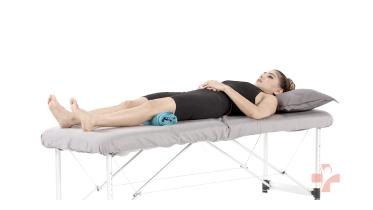 Quad sets (towel under knee)
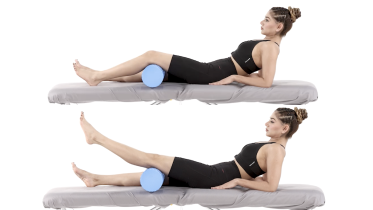 Short arc quads
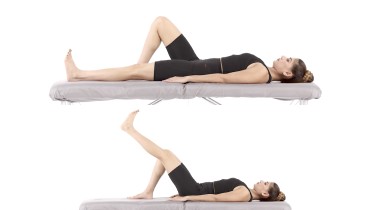 Straight leg raise
If you have had an operation on this knee, follow the program your surgeon and physio gave you instead of this one. Check with your doctor before you start if you have a heart or lung condition, or blood pressure that is not under control. If you are pregnant and past the first three months, check with your physio before exercising flat on your back, as all three of these are done lying down. If you have had a hip replacement, get the go-ahead from your surgeon or physio before the straight leg raise. If you have high blood pressure, breathe steadily through every hold and never hold your breath.
If the tear came from a twist, a fall or a tackle and nobody has assessed the knee yet, get that done before you start, because some of those tears are best repaired early. This page is for adults. A child or teenager with a knee injury should be assessed by a doctor or physio before starting any exercise program.
Related exercise programs
Warning signs
Get emergency help now
- Emergency: the knee has moved out of place, looks misshapen or is pointing at an odd angle, or you have tingling or no feeling in the knee, leg or toes, or your foot turns cold, pale or blue. Go to an emergency department straight away. Do not drive yourself: ask someone to drive you or call an ambulance.
- Emergency: the whole knee, not just the kneecap, felt as though it slid or shifted right out of place at the moment of injury, even if it went back straight away, or the knee now feels loose or wobbly in more than one direction. Go to an emergency department straight away. Do not drive yourself: ask someone to drive you or call an ambulance. A knee that comes out of place and goes back can tear several ligaments at the same time and can damage the artery or the nerve behind the knee. That damage is not always obvious at first, and the knee can look almost normal, so it is checked in hospital on the day rather than worked out at home.
- Emergency: the knee became very swollen very quickly, within a few hours of a twist, fall or blow, or you felt a pop or snap. Go to an emergency department straight away. Do not drive yourself: ask someone to drive you or call an ambulance. Swelling from a meniscus tear often builds up more slowly, over a few hours to 2 or 3 days, and a meniscus tear from sport often comes with other damage inside the knee, such as a torn ligament (the ACL), so fast swelling needs checking.
Get help today
- Same day: the knee is locked, which means it is stuck bent and you cannot fully straighten it, even after gently trying to move it, or you cannot bend or straighten the leg at all. Get assessed the same day by a doctor, at urgent care or at an emergency department. A torn piece of meniscus can get caught in the joint and block it, and when a tear like this can be repaired, it should be done as early as possible. A knee that catches for a moment and then frees itself can happen with a meniscus tear. That is not the same as a locked knee, but tell your physio or doctor about it.
- Same day: the knee straightens when someone else moves it for you, but you cannot lift the straight leg off the bed yourself or hold the knee straight against gravity, or you can feel a gap or a dip just above or just below the kneecap. Get assessed the same day by a doctor, at urgent care or at an emergency department. The tendon that straightens the knee can tear, which is not a meniscus or a ligament problem and is not treated with exercises. It is usually repaired, and a tendon repaired late does less well than one repaired early.
- Same day: you felt the kneecap slip out of place and it went back by itself. Get assessed the same day.
- Same day: since an operation on your meniscus, the knee locks, catches or gives way again, or you feel a pop or a shift inside it, or it swells up or becomes much more painful after a twist, a kneel or a deep bend. Keep your weight off it and contact your surgical team, or get assessed the same day at urgent care or an emergency department. A repair can come apart before the tear has healed, and a trimmed meniscus can tear again. If the knee is only a little achy after a busy day, with no swelling and no catching, it is not an emergency, but tell your physio or surgeon in the next few days.
- Same day: the knee swells up with no clear reason, especially if you take medicine to thin your blood. Get medical advice the same day.
- Same day: you cannot walk or put weight on the leg, whether or not there was a fall or injury, or you have very bad knee pain after a fall or injury, or very bad knee pain that came on suddenly with no injury at all. Get medical advice the same day.
- Same day: the knee keeps giving way under you, or it gave way after a recent injury, or it gives way and is also very painful or swollen. Get medical advice the same day. If it only happens now and then, with no recent injury and no swelling, it is not an emergency, but book an assessment with a physio or doctor in the next few days. Until it has been checked, leave out the exercises you do standing on one leg, hold the rail on stairs and take care on uneven ground, because a knee that gives way without warning is how people fall.
- Same day: since your operation, your wound is oozing, leaking or has pus coming out of it, or its edges start to come apart, or your knee is tender, swollen, painful or red and it is not getting better or is getting worse, or you have a high temperature or feel hot and cold or shivery. Redness can be harder to see on brown or black skin. Contact your surgical team the same day, or get urgent medical advice if you cannot reach them. These can be signs of an infection in the wound or the knee joint. If you feel very unwell, go to an emergency department. If you have a very high or very low temperature, shivering you cannot control, you are breathing very fast or finding it hard to breathe, you are confused or your speech is slurred, your skin, lips or tongue look blue, gray, pale or blotchy (on brown or black skin this can be easier to see on the palms of the hands or soles of the feet), or you have a rash that does not fade when you press it, call emergency services, as this can be sepsis.
- Same day: the knee is hot, red and swollen, or you have knee pain with a high temperature or feel hot, cold or shivery. Get medical advice the same day, and go to an emergency department if you feel very unwell. This can be a sign of infection in the joint, which needs treatment quickly.
- Same day: a calf or thigh that is newly swollen or getting more swollen, warm, tender, red or darker than usual, has swollen veins that are sore to touch, or has a throbbing or cramping pain that does not fit your injury or condition, or that feels different from normal muscle soreness after exercise. This can be a sign of a blood clot (deep vein thrombosis), especially after surgery, an injury, time in a cast or boot, a long trip or a spell of being much less mobile than usual. Get medical advice the same day. If you are also short of breath or have chest pain, call emergency services.
- Same day: pain at night or at rest that keeps getting worse. If you are being treated for cancer now, contact your cancer team the same day.
Book an appointment
- Within a day or two: pain at night or at rest that keeps getting worse. If you have had cancer, now or in the past, see your doctor sooner, within a day or two, and mention it, even if the pain is not getting worse. Do the same if you have knee pain and are losing weight without trying, even if it does not hurt at night.
- Within a few days: pain at night or at rest that keeps getting worse. See your doctor within a few days.
Common questions
What does a locked knee feel like?
It feels stuck. The knee sits bent, usually somewhere short of straight, and the last part of straightening is blocked rather than painful, so it stops as though something is in the way. The test is to lie on your back with both legs out straight and relaxed and compare the two, letting the knee rest where it rests rather than pushing it down. A knee that stays clearly bent, however gently you try, is a locked knee and needs assessing the same day. The BMJ guideline panel defined it as being objectively unable to fully extend the knee (Siemieniuk and colleagues, 2017).
Is a knee that catches the same as a locked knee?
No, and the difference changes what you do next. A knee that catches for a moment and then frees itself can happen with a meniscus tear. That is not the same as a locked knee, but tell your physio or doctor about it. A knee that is stuck bent and will not fully straighten needs to be seen the same day. If you cannot tell which of the two you have, treat it as the same-day one.
Why does my knee give way with a meniscus tear?
Three reasons come up. A torn flap can get in the way inside the joint and interrupt the movement. A swollen knee makes the muscle at the front of the thigh harder to switch on, so the leg buckles because the thigh is not holding it. And a tear from a sports injury often comes with ligament damage, which is instability of a different kind. A knee that keeps giving way needs medical advice the same day, and the warning list below explains what to leave out until it has been checked. There is a fourth reason after surgery: a knee that starts giving way again once an operation on the meniscus is behind you can mean a repair has come apart or a trimmed meniscus has torn again, so keep your weight off it and contact your surgical team the same day.
How quickly should a meniscus tear swell?
Slowly is the usual pattern. Swelling from a meniscus tear often builds up over a few hours to 2 or 3 days. A knee that became very swollen very quickly, within a few hours of a twist, fall or blow, needs an emergency department straight away, and you should not drive yourself: that speed suggests bleeding into the joint, and a meniscus tear from sport often comes with other damage inside the knee such as a torn ACL. A knee that has been operated on is read differently again, whatever the speed: tell your surgical team the same day, because swelling after a meniscus operation can be a repair giving way or an infection in the joint.
Should I stop exercising if my knee gives way?
Change what you do and get it checked. Until it has been checked, leave out the exercises you do standing on one leg, hold the rail on stairs and take care on uneven ground, because a knee that gives way without warning is how people fall. The three exercises on this page are all done lying down for that reason. If it keeps happening, or it happened after a recent injury, or the knee is also very painful or swollen, get medical advice the same day. If you have had an operation on this knee and it has started giving way again, keep your weight off it and contact your surgical team the same day instead.
References
- Siemieniuk RAC, Harris IA, Agoritsas T, et al. Arthroscopic surgery for degenerative knee arthritis and meniscal tears: a clinical practice guideline. BMJ. 2017;357:j1982. https://doi.org/10.1136/bmj.j1982
- Kopf S, Beaufils P, Hirschmann MT, et al. Management of traumatic meniscus tears: the 2019 ESSKA meniscus consensus. Knee Surgery, Sports Traumatology, Arthroscopy. 2020;28(4):1177-1194. https://doi.org/10.1007/s00167-020-05847-3
- Beaufils P, Becker R, Kopf S, et al. Surgical management of degenerative meniscus lesions: the 2016 ESSKA meniscus consensus. Knee Surgery, Sports Traumatology, Arthroscopy. 2017;25(2):335-346. https://doi.org/10.1007/s00167-016-4407-4
- Palmieri-Smith RM, Kreinbrink J, Ashton-Miller JA, Wojtys EM. Quadriceps inhibition induced by an experimental knee joint effusion affects knee joint mechanics during a single-legged drop landing. American Journal of Sports Medicine. 2007;35(8):1269-1275. https://doi.org/10.1177/0363546506296417
- NHS. Meniscus tear (knee cartilage damage). Page last reviewed 2 September 2026. https://www.nhs.uk/conditions/meniscus-tear/
- NHS. Knee pain. Page last reviewed 21 December 2023. https://www.nhs.uk/symptoms/knee-pain/
- NHS. Deep vein thrombosis (DVT). Page last reviewed 30 April 2026. https://www.nhs.uk/conditions/deep-vein-thrombosis-dvt/
- American Academy of Orthopaedic Surgeons. Meniscus Tears. OrthoInfo. https://www.orthoinfo.org/en/diseases--conditions/meniscus-tears/
Written and checked by the PocketPhysio editorial team. Last updated 2026-10-16.
This page is general education, not a diagnosis or a personal treatment plan. See a physiotherapist or doctor for advice about your own situation.