
Part of Total knee replacement rehab
Knee replacement prehab exercises: what they do and which ones
Warning signs, and when to get help
Do knee replacement prehab exercises help?
A little, and mostly for a while. Nobody has shown that prehab transforms a recovery, and a promise of a faster one is not in the trials.
A systematic review found 16 trials with 968 people having a knee replaced, pooled 14 of them, and reported better knee function before the operation and for up to 3 months after it in the groups who exercised beforehand, on evidence it rated low to very low certainty, with the longer-term picture inconclusive and no significant difference at 6 to 12 months (Gränicher and colleagues, 2022). A more recent overview gathered 3 systematic reviews and 21 meta-analyses of hip and knee replacement, analyzed separately. On the knee side that came to 46 trials in 3,362 people. It found prehabilitation favorable for complication rates, strength, measured function, quality of life and patients' own ratings of function in both operations, with the effects fading over time and generally confined to the first 6 months, and it rated the underlying evidence from critically low to moderate quality (Keogh and colleagues, 2025).
So the direction is consistently positive and the size is modest. Nothing in either review licenses a claim about your hospital stay, your discharge day or how quickly you will walk, and this page makes none.
NICE's joint replacement guideline asks for people having a hip or knee replacement to be given advice on rehabilitation before the operation, including exercises to do before and after surgery that will aid recovery (NICE NG157). What the guideline recommends is the advice. It does not set out a program or a dose, and it asks for two other things alongside the exercises: advice on lifestyle, meaning weight management, diet and stopping smoking, and on keeping your independence and quality of life up before and after the operation. The NHS puts the same thing in plainer language on its preparation page, which asks you to do exercises before and after the operation to help your recovery, and to get on with them while you wait, because the wait is usually long.
One more reason sits outside the trials and belongs to clinic rather than to evidence. The strength you take into the operation is the strength you start rehabilitation with, and people who already know how to switch the thigh on have one fewer thing to learn in a sore first week. Treat that as practice experience, not as a result.
Which exercises, and why those?
Most of the work is thigh work, because that is the muscle group the operation is hardest on. Quad sets teach the switch itself with almost no joint movement, so they survive a painful knee. Short arc quads add the last part of straightening, which is the part that gets lost. Straight leg raise and seated knee extension load the same muscle through more range once the knee lets you.
Then the bend. Heel slides rehearse the movement that the first fortnight after surgery is mostly about, and the bend you take in does matter: across 4,727 replaced knees at one center, the range before the operation was the strongest single predictor of the range afterward (Ritter and colleagues, 2003). Read that as an association rather than a promise, because the same study found what the surgeon does inside the joint counts as well, including clearing the extra bone at the back of the knee and releasing tight tissue. A good deal of what stops a worn knee bending is bone and a tight capsule, which the operation deals with and stretching does not, so take the bend to firm tightness and leave it there instead of forcing it. Ask your surgeon what range your knee has now and what they expect of it, because that answer is theirs and not ours.
Standing up is the movement you will repeat most in the first weeks at home. Sit to stand and the mini squat train the thigh and the hip together in the position you will actually need. Sit to stand is written without using your hands, which a knee waiting for a replacement often cannot manage on a sore day, so start with sit to stand using the armrests and leave the hands-free version until it is comfortable. The mini squat is a small bend at the counter, roughly a quarter of the way down, and it is not the exercise to chase depth in.
The calf and ankle get skipped. Calf raises matter for walking and for stairs, and ankle pumps are the ones to know in advance, since they are often the first thing asked of you after the operation, when nobody can concentrate.
Two things worth having strong are not on the list above. The muscles at the side and back of your hip (gluteus medius and the buttock muscles) are what keep your pelvis level while you walk with a stick or a frame, and your other leg does most of the work getting you out of bed and out of chairs in the first weeks. Neither of them needs the operated knee to bend much, which is the reason they are worth your time when the knee itself is limiting what you can do.
And the part that is not the leg at all. OrthoInfo asks people having a hip or knee replacement to strengthen the upper body, because that is what makes crutches or a walker manageable, and the arms are usually the thing nobody thought about until the day they are needed. Our library is not written around that job, so ask your physio or your pre-admission team for two or three arm and shoulder exercises that suit you. The knee osteoarthritis program is the fuller program to follow while you wait if your knee allows more than this.
How long before surgery should you start, and how often?
Nobody can give you a tested number, and the reviews are the reason. The trials used programs of different lengths, different frequencies and different loads, and the overview that pooled them found the amount of resistance training did not change outcomes after surgery in its two meta-regressions, with no analysis examining what changing frequency or load does (Keogh and colleagues, 2025). No analysis in those reviews settles which prehab dose works best, so any specific number comes from general strength training practice and not from a prehab trial.
What follows from that is practical. Start when you find out, not when the date gets close, because the lists are long and the weeks are free. The NHS makes that point on its preparation page, listing the exercises among the things to get on with while you wait. Waiting for physio and what to do while you wait cover the wait itself.
For how much, each exercise page gives its own starting dose, which is where the numbers live. Where that dose and your physio's instruction differ, the physio wins. If you are already on a program from your surgical team, that program is the one to follow, and this page is for filling gaps in it rather than replacing it.
Nothing in the guideline or in either review sets a date to stop. Unless your team tells you otherwise, keep going as you have been up to the operation, and follow their instructions for the day before and the day itself, which is where fasting, washing and which medicines to take are decided. A restriction they give you at any point, including one that comes out of the pre-admission clinic, replaces anything on this page.
What if your knee is too painful to exercise?
A knee bad enough to be on a replacement list is often bad enough to make exercise look impossible, and that describes a large share of the people reading this page.
Change the exercise and keep the week. Isometric work, where the muscle tightens and the joint barely moves, is what OrthoInfo names for keeping leg strength up before surgery, and quad sets are the clearest example. Shorten the range so the knee only travels through the part that does not complain. Sit down for work you were doing standing. Split one session into three short ones across the day.
Load the rest of you while the knee is the problem. The other leg, the arms, the trunk and your general fitness are all available, and none of them is wasted effort when the operation is coming.
A knee that hurts in every version needs a phone call. Your physio or the pre-admission team can look at what you are doing, and exercises to avoid with knee arthritis covers the loading mistakes that make a painful knee worse. If the pain is new, changed, or comes with any of the warning signs below, treat that as the first thing to sort out.
Should you practice the after-surgery exercises first?
Yes. Of everything on this page, this is the one that pays best, and it is the one almost nobody thinks of in time.
OrthoInfo's instruction is plain. Get familiar with the exercises before the operation and you will, it says, "be ready to perform them after surgery". In the first days afterward you are sore, tired, on new medicines and being asked to do something unfamiliar with a leg that does not feel like yours. A movement you already know is a much smaller ask.
The exercises for weeks 0 to 2 explains what that fortnight is for and which exercises belong to it, and total knee replacement rehab carries the program itself with the doses. Learn the movements and the set-up. Do not try to arrive at the hospital with a dose, because the one you follow afterward is the one the ward physio gives you, built around the operation you had.
If your hospital runs a joint school or a pre-admission class, go to it, and take the person who will be helping you at home.
What else helps before surgery that is not exercise?
The rest of getting ready is not really this page's subject. The NHS preparation page names stopping smoking, eating well and managing your weight, along with arranging help at home, getting the things you use often within easy reach, putting cooked meals in the freezer, sorting transport because you will not be driving for several weeks, and talking to your employer about going back to work.
Do not shave your leg, and do not tidy up the area around the knee. OrthoInfo's instruction is direct: do not shave the area of the surgery, and if shaving is needed it will be done in the hospital. This one is not a preference. NICE, which writes the UK guidance on preventing wound infection after surgery, says hair should not be removed routinely at all, and that where it has to come off the hospital uses electric clippers with a single-use head on the day of the operation, never a razor, because razors raise the risk of a surgical site infection. A razor leaves small nicks you can neither see nor feel, and intact skin is what has to be there for the operation to go ahead.
What to pack and prepare at home is the page for all of that, including the equipment and the pre-admission clinic. On weight specifically, weight loss and knee arthritis covers what is known, and your surgical team's view on your own situation comes first.
Medicines are not this page's business at all. OrthoInfo asks you to take a list of everything you take regularly, with the doses, including vitamins, minerals and anything bought over the counter, to your pre-operative appointment. It adds that your doctor may ask you to stop certain medicines or supplements a week or two before the operation, and that steroids, insulin and blood thinners have to be managed both before and after it. The team then tells you what to do with each one. Never stop or change a prescribed medicine on your own.
When to speak to your surgical team
Before you start, if you have been given any restriction on what you may do with that knee, or if you have a heart or lung condition, blood pressure that is not under control, or you have had a fall in the past year. If you have high blood pressure, breathe steadily through every repetition and never hold your breath.
During the weeks before surgery, contact them if the knee changes rather than just hurts: a knee that locks, gives way, swells for no clear reason, or becomes hot and red. Tell them as well if the knee is simply getting worse while you wait. Your pain relief, your walking aid and how urgent your date is are all theirs to review, and a knee that is deteriorating is not a reason to push harder through the exercises.
Anything that could stop the operation going ahead is worth a call early rather than a surprise on the day. OrthoInfo asks you to tell your doctor about any skin irritation on the leg being operated on, naming cuts, scratches, grazes, rashes and insect bites, because a break in the skin raises the risk of infection and an infection means the surgery is cancelled. So look the leg over as you go, and tell them about any new illness or infection anywhere, including a dental problem, since OrthoInfo also asks for planned dental work to be scheduled well in advance of your date. Tell them too if you have had an injection into that knee recently, or are offered one while you wait, because how an injection sits against an operation date is their call and not a general rule. The pre-admission clinic a few weeks beforehand exists to check you are well enough for the operation to go ahead (NHS), and it is the right place to raise all of this.
The warning signs below set out which changes need an emergency department, which need advice the same day, and which can wait a few days. When to consider surgery for knee arthritis covers the decision itself if you are still weighing it up, and why a knee replacement is needed and when explains how that decision gets made.
Exercises that can help
Grouped by the job they do: the thigh, the bend, getting out of a chair, and the calf and ankle. Nobody does all of them. Pick the two or three your knee will tolerate and do those properly, and ask your physio or your pre-admission team which ones belong in your plan. Each exercise page carries its own starting dose and set-up, and your physio will adjust this. Before your first session, put a sturdy chair that will not slide, tip or fold with its back against a wall, keep a kitchen counter within reach for anything done standing, and wear flat shoes that grip the floor rather than socks or bare feet. Read the checks in the section just above this list before you start. Two stop rules apply to all of them. Sharp pain during a repetition means stop that exercise rather than push through it. And the morning after is the judge of how much was right: if the knee is more swollen or more painful when you wake than it was the day before, take the amount back to where it last settled and build from there.
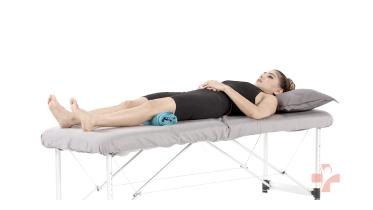 Quad sets (towel under knee)
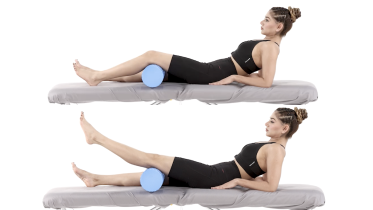 Short arc quads
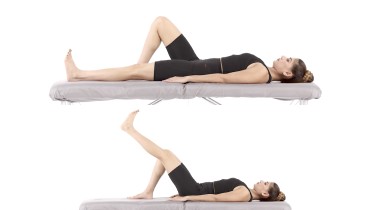 Straight leg raise
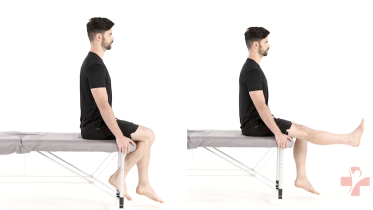 Seated knee extension
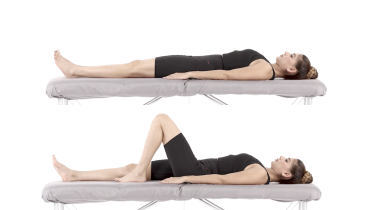 Heel slides
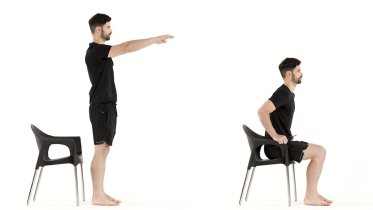 Sit to stand using armrests
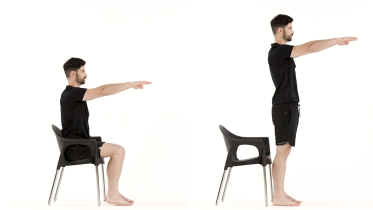 Sit to stand
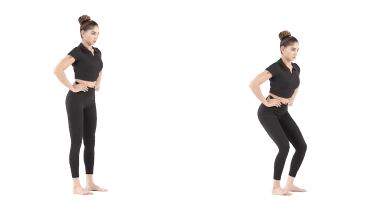 Mini squat
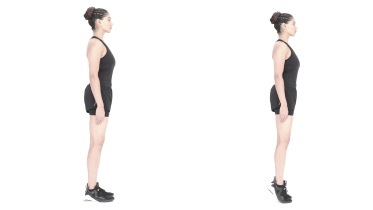 Calf raises
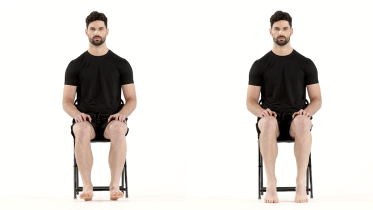 Ankle pumps
Related exercise programs
Warning signs
Get emergency help now
- Emergency: if chest pain, pressure or tightness does not ease quickly when you rest, spreads to your arm, neck, jaw, stomach or back, or comes with sweating, feeling sick, feeling light-headed or being short of breath, call emergency services straight away, as this can be a heart attack. If it eases quickly and none of these happen, get medical advice the same day, and do not exercise again until you have been checked.
- Emergency: the knee has moved out of place, looks misshapen or is pointing at an odd angle, or you have tingling or no feeling in the knee, leg or toes, or your foot turns cold, pale or blue. Go to an emergency department straight away. Do not drive yourself: ask someone to drive you or call an ambulance.
- Emergency: the knee became very swollen very quickly, within a few hours of a twist, fall or blow, or you felt a pop or snap. Go to an emergency department straight away. Do not drive yourself: ask someone to drive you or call an ambulance.
Get help today
- Same day: the pain started with a fall, a twist or a blow to the knee, or you cannot put weight on the leg. Get medical advice the same day.
- Same day: the knee is locked, which means it is stuck bent and you cannot fully straighten it, even after gently trying to move it, or you cannot bend or straighten the leg at all. Get assessed the same day by a doctor, at urgent care or at an emergency department. A torn piece of meniscus can get caught in the joint and block it, and when a tear like this can be repaired, it should be done as early as possible. A knee that catches for a moment and then frees itself can happen with a meniscus tear. That is not the same as a locked knee, but tell your physio or doctor about it.
- Same day: the knee keeps giving way under you, or it gave way after a recent injury, or it gives way and is also very painful or swollen. Get medical advice the same day. If it only happens now and then, with no recent injury and no swelling, it is not an emergency, but book an assessment with a physio or doctor in the next few days.
- Same day: the knee swells up with no clear reason, especially if you take medicine to thin your blood. Get medical advice the same day.
- Same day: the knee is hot, red and swollen, or you have knee pain with a high temperature or feel hot, cold or shivery. Get medical advice the same day, and go to an emergency department if you feel very unwell. This can be a sign of infection in the joint, which needs treatment quickly.
- Same day: with an operation date coming up, you develop a cold, a cough, a high temperature or any other illness, or a cut, scratch, graze, rash or insect bite anywhere on the leg being operated on, or a dental problem such as toothache or a sore gum. Tell your surgical team the same day. Any break in the skin raises the risk of infection, and an infection means the operation is cancelled, so they need to hear about it while there is still time to act rather than on the morning of surgery. Keep taking your prescribed medicines as instructed; never stop or change one on your own.
- Same day: a calf or thigh that is newly swollen or getting more swollen, warm, tender, red or darker than usual, has swollen veins that are sore to touch, or has a throbbing or cramping pain that does not fit your injury or condition, or that feels different from normal muscle soreness after exercise. This can be a sign of a blood clot (deep vein thrombosis), especially after surgery, an injury, time in a cast or boot, a long trip or a spell of being much less mobile than usual. Get medical advice the same day. If you are also short of breath or have chest pain, call emergency services.
- Same day: pain at night or at rest that keeps getting worse. If you are being treated for cancer now, contact your cancer team the same day.
Book an appointment
- Within a day or two: pain at night or at rest that keeps getting worse. If you have had cancer, now or in the past, see your doctor sooner, within a day or two, and mention it, even if the pain is not getting worse. Do the same if you have knee pain and are losing weight without trying, even if it does not hurt at night.
- Within a few days: pain at night or at rest that keeps getting worse. See your doctor within a few days.
- Within a few days: you have had a fall, even if you were not hurt, or you keep tripping, stumbling or feeling that your legs might give way. Book an appointment with your doctor within a few days and ask about a falls assessment. Tell them about every fall, even the ones where you were not hurt.
Common questions
Does prehab before a knee replacement actually work?
It helps a little, mostly in the short run, and the evidence behind it is not strong. Across 16 trials in 968 people, 14 of them pooled, exercise before a knee replacement was linked with better knee function before the operation and up to 3 months afterward, on low to very low certainty evidence, and by 6 to 12 months there was no significant difference from no prehab (Gränicher and colleagues, 2022). An overview of 3 systematic reviews and 21 meta-analyses of hip and knee replacement, with 46 of the knee trials covering 3,362 people, found prehab favorable for complication rates, strength, measured function, quality of life and patients' own ratings of function in both operations, with the effects fading over time and generally confined to the first 6 months, on evidence the authors rated from critically low to moderate quality (Keogh and colleagues, 2025). That is worth doing. It is not a shortcut, and nobody can promise you a faster recovery from it.
How long before surgery should I start, and how often?
There is no tested answer, which is itself worth knowing. The trials in these reviews used programs of different lengths, frequencies and loads, and the overview found that the amount of resistance training did not change postoperative outcomes in its two meta-regressions, with no analysis at all of how changing frequency or load affects the result (Keogh and colleagues, 2025). So start when you find out, rather than counting back from your date, which is also what the NHS advises for a long wait. Each exercise page gives its own starting dose, and your physio will adjust this.
What if my knee hurts too much to exercise?
Then you change the exercise rather than skip the week. The ones that ask least of a painful knee are the ones where the knee barely moves: OrthoInfo names isometric exercises, where the muscle tightens without the joint traveling, as a way to keep leg strength up before surgery. Shortening the range, supporting the leg, sitting instead of standing and splitting the work across the day all buy you something. If every version hurts, that is worth a call to your physio or the pre-admission team rather than a decision to do nothing, because the arms, the other leg and the trunk are all still available.
Should I practice the after-surgery exercises before the operation?
Yes, and if you only do one thing on this page, do this one. OrthoInfo's advice is direct. Learn the exercises now and, in its words, you will be ready to perform them after surgery. The first days after the operation are a poor time to learn anything, because you are sore, tired and on new medicines. Learn the movements, not a dose, and expect the ward physio's version to be the one you follow afterward.
Will exercising make my knee worse before surgery?
A sore knee after a session is common and not damage. What tells you the amount was wrong is the next morning: if the knee is more swollen or more painful when you wake than it was the day before, take the load back to where it last settled and build from there. Sharp pain during a repetition is a stop sign rather than something to push through. Anything in the warning signs below is a different matter and needs the help at the level given there.
References
- Gränicher P, Mulder L, Lenssen T, Scherr J, Swanenburg J, de Bie R. Prehabilitation improves knee functioning before and within the first year after total knee arthroplasty: a systematic review with meta-analysis. Journal of Orthopaedic and Sports Physical Therapy. 2022;52(11):709-725. https://doi.org/10.2519/jospt.2022.11160
- Keogh JAJ, Keng I, Dhillon DS, Bourgeault-Gagnon Y, Simunovic N, Ayeni OR. The effects of structured prehabilitation on postoperative outcomes following total hip and total knee arthroplasty: an overview of systematic reviews and meta-analyses of randomized controlled trials. Journal of Orthopaedic and Sports Physical Therapy. 2025;55(5):344-365. https://doi.org/10.2519/jospt.2025.13075
- Ritter MA, Harty LD, Davis KE, Meding JB, Berend ME. Predicting range of motion after total knee arthroplasty. Clustering, log-linear regression, and regression tree analysis. Journal of Bone and Joint Surgery (American). 2003;85(7):1278-1285. https://doi.org/10.2106/00004623-200307000-00014
- National Institute for Health and Care Excellence. Joint replacement (primary): hip, knee and shoulder. NICE guideline NG157. Published 4 June 2020. https://www.nice.org.uk/guidance/ng157
- National Institute for Health and Care Excellence. Surgical site infections: prevention and treatment. NICE guideline NG125. https://www.nice.org.uk/guidance/ng125/chapter/Recommendations
- Chartered Society of Physiotherapy. NICE recommends rehab on same day as surgery for joint replacement patients. 10 June 2020. https://www.csp.org.uk/news/2020-06-10-nice-recommends-rehab-same-day-surgery-joint-replacement-patients
- NHS. Preparing for a knee replacement. Page last reviewed 9 September 2026. https://www.nhs.uk/tests-and-treatments/knee-replacement/preparation/
- American Academy of Orthopaedic Surgeons. Preparing for joint replacement surgery. OrthoInfo. https://www.orthoinfo.org/en/treatment/preparing-for-joint-replacement-surgery/
Written and checked by the PocketPhysio editorial team. Last updated 2026-10-17.
This page is general education, not a diagnosis or a personal treatment plan. See a physiotherapist or doctor for advice about your own situation.