
Calf pain when walking: the four questions that sort it
Warning signs, and when to get help
Calf pain when walking but not sitting: does it stop when you stand still?
Start here, because the answer splits this symptom in two and the two halves are treated by different people.
If walking brings the pain on at roughly the same distance each time, and standing still clears it within a few minutes, that is the pattern of a muscle not getting enough blood for the work. The NHS describes peripheral arterial disease exactly that way: a painful ache in the legs when you walk, which usually disappears after a few minutes' rest, and gives intermittent claudication as the medical term. What people notice is the regularity. The same hill, the same corner, the same two or three minutes of standing, every time.
If the pain builds as you keep going, is sore to press afterward, is stiff first thing in the morning, or is worse the day after a long walk rather than during it, that is more like a tendon or a muscle. It is also usually less predictable: some days you get further than others, and a warm up changes it.
Neither of those is something you can confirm at home, and plenty of people have both. The circulation pattern is a reason to book an appointment and let an examination settle it, which is what the warning list on this page says. It is not a reason to panic, and it is not a reason to stop walking either, for a reason the section on what helps sets out.
There is a third pattern worth knowing. Leg and buttock pain that comes on after a set walking distance can also come from narrowing in the lower back. OrthoInfo notes that people with lumbar spinal stenosis often feel better leaning forward or sitting, while standing up straight and walking make it worse, which is close to the opposite of the vascular pattern, where standing still is enough. Our spinal stenosis program covers that version.
Calf pain in one leg, and the clot question
One leg rather than two came up in all five national search lists we measured for this phrase, and it is the right thing to be asking about.
The NHS gives the signs of a deep vein thrombosis as throbbing pain in one leg, rarely both, usually in the calf or thigh; swelling in one leg, rarely both; skin that is red, blue or darkened around the painful area, which it notes may be harder to see on brown or black skin; and swollen veins. Any single one of those is enough. The warning line on this page is deliberately written to trigger on one sign rather than two.
One version of this does not wait for the same day. If the whole leg swells up and goes tight over a few hours, the skin turns blue or purple, and the pain is severe rather than aching, that has its own line on the emergency list on this page and does not belong on the same day list at all. A large clot high in the leg can block almost all of the blood trying to leave it, and when that happens the leg itself is at risk.
A hot, red, spreading, tender calf with a temperature can be a skin infection rather than a clot, and the two are hard to separate without an examination. That has its own line on the warning list, at the same day level, because an infection in the leg can move quickly.
The things that raise the chance are worth knowing, because they are often the missing piece: recent surgery, a hospital stay, three days or more confined to bed, a journey of more than four hours, pregnancy or the six weeks after having a baby, cancer, and contraception or HRT containing estrogen.
A torn calf muscle produces pain, swelling and bruising too, and the two can look the same from the outside. That is not a reason to assume the muscle. Get medical advice the same day, and call emergency services if you are short of breath or have chest pain.
If you have simply torn a calf muscle, this page is the wrong shape for you, and the difference is the moment. A tear has one: a sudden tearing or stabbing pain at the back of the lower leg while you pushed off, sprinted or changed direction, often with swelling and bruising that tracks down toward the ankle over the next day or two. Calf pain that comes on gradually when you walk, which is what the rest of this page is about, has no such moment.
For a tear, the first job is still to have the clot and the Achilles tendon ruled out, because all three start in the same place. Our page on telling muscle soreness from an injury sets out how a strain behaves afterward, pain behind the knee covers a tear high in the calf, and the pickleball page on Achilles and calf injuries has the fullest version, including the early protection and the way back into loading.
The exercises at the bottom of this page suit a calf that has settled enough to be loaded. A fresh tear starts with protected movement instead, not with calf raises. Of everything on that list, the slow lowering version and anything done on one leg put the most load through the muscle and its tendon at once, so after a tear those are the last things to come back rather than the first, and the clinician who examined the calf sets that timing. A calf you cannot push off on, or that has a gap or soft spot you can feel in the tendon above the heel, is a different problem and is on the warning list rather than in the exercises.
Calf pain when walking uphill, fast, or up and down stairs
These three are the load questions, and they are the ones a physio will ask about first if the circulation pattern has been ruled out.
Uphill and brisk walking both ask the calf for more force per step. So does pushing off at the end of each stride, and so does lowering yourself down a step under control. If hills and stairs are the trigger and flat strolling is tolerable, the calf and the Achilles tendon are the obvious suspects, and the Achilles tendinopathy program is where the staged work for that lives. Pain low down at the back of the heel and pain in the middle of the tendon are managed a little differently, and that page separates them.
Pain that sits on the outside of the lower leg and ankle rather than at the back more often belongs to the tendons running behind the outer ankle bone, covered on our peroneal tendinopathy page. Pain running down the inside of the shin and behind the inner ankle, often with the arch dropping, points instead at the tendon on that side, which has its own page on posterior tibial tendon dysfunction.
One pattern turns the order of urgency around. Lower leg muscles that get tight, cramping or painful during exercise and settle when you stop, especially with a foot that goes numb or tingly or slaps down as you run, can be chronic exertional compartment syndrome. That is on this page's warning list with its own timing, and the instruction there is to stop that activity rather than to train through it.
Calf pain when walking but not running
This sounds backward and it comes up often enough to be worth a paragraph. Running and walking load the calf differently: running uses a faster, springier push off and a shorter time on the ground, walking uses a longer, slower push and more time in a stretched position. A tendon that copes with quick elastic loading can object to the slow version, and a calf that has been trained for running volume can still be underprepared for a day of walking on holiday.
The more common version of this is a training error with nothing wrong at all. A week that quietly doubled the amount of walking, a new pair of shoes with a lower heel, or a flat beach instead of a hill all change how much the calf is asked for without anyone counting it. Our shin splints page covers the lower leg version of that story and the staged way back into load.
Calf pain when walking in pregnancy
This is a signpost rather than advice: the urgency changes in pregnancy, and the first stop is your own team.
The NHS names pregnancy, and the six weeks after having a baby, among the times when the chance of a deep vein thrombosis is higher. So a calf that is newly painful, swollen, warm or a different color in pregnancy or soon after the birth is checked rather than explained away as cramp, and it is checked the same day. Calf cramp in pregnancy is common and is a different complaint from pain brought on by walking. Tell your midwife or maternity team about either, and go to them first rather than to this page. Back and pelvic pain in pregnancy is handled on our pregnancy back and pelvic pain program, with your own midwife or maternity physio leading.
What helps, and what the evidence actually shows
For the circulation version, exercise is the treatment, and the evidence behind it is unusually strong for this field. Lane and colleagues (2017) reviewed 32 randomized trials covering 1,835 people with stable leg pain from intermittent claudication due to peripheral arterial disease. Pooling the 9 of those trials that reported it, 391 people in total, exercise improved pain-free walking distance by an average of 82 meters compared with no exercise, graded high certainty. Pooling the 10 trials that reported maximum walking distance, 500 people, the average gain was 120 meters, also graded high certainty, and improvements were seen for up to two years.
What the review did not find matters as much. Exercise did not improve the ankle-brachial index, the ankle and arm pressure comparison used to diagnose the condition, across 13 trials and 570 people, on moderate certainty evidence.
The outcomes people worry about most had the least data behind them. The review reported no evidence of an effect on death from any cause, from 5 trials and 540 people, graded moderate certainty, and no evidence of an effect on amputation, which rested on a single trial of 177 people and was graded low certainty. One trial that size cannot settle an amputation question in either direction, and the range around its result is wide enough to cover both a large benefit and a large harm. So nothing on this page should be read as exercise protecting a leg from amputation. What the evidence does support is how far you can walk before the pain starts, which is what most people came for.
The trials generally left out people whose other medical problems limited their exercise capacity, so this is evidence for people judged fit for a program, which is who gets offered one.
Before the dose, the limit on it. Everything from here until the paragraph that begins "For the muscle and tendon version" is advice for one group only: someone whose peripheral arterial disease has already been diagnosed and whose leg has been examined. If that is not you, skip to that paragraph. NICE's exercise recommendations sit inside its section on managing intermittent claudication, which is the stable pattern that comes on with walking and clears with rest. Critical limb ischemia has its own separate section of the same guideline, and that one says everyone with it is assessed by a vascular multidisciplinary team before any treatment decision is made (CG147, recommendation 1.6.1).
Walking into the pain is therefore not the instruction for a leg that hurts at rest or wakes you at night, for a sore on the foot that will not heal, or for a leg that has turned cold, pale, numb or weak. It is not the instruction for a calf whose clot has not been ruled out yet either. If nobody has told you which problem you have, the appointment comes before the program.
In practice that program is a walking one rather than a calf one. NICE puts it plainly: offer a supervised exercise program to everyone with intermittent claudication, and the program to consider is 2 hours of supervised exercise a week for 3 months, with people encouraged to exercise to the point of maximal pain (CG147, recommendations 1.5.1 and 1.5.2). The NHS gives the same figures and describes the method: one of the best exercises is walking, so walk as far and as long as you can before the pain becomes intolerable, rest until it goes, start again, and keep using that stop-start pattern until you have spent at least 30 minutes walking in total, several times a week.
It then asks you to aim to exercise daily for the rest of your life, because the benefits are quickly lost if the exercise is not frequent and regular. That last part is the one people are not told clearly enough. The NHS is also honest about the course being hard, because the episodes of pain are the point rather than a side effect. Both of those figures describe a supervised program a doctor arranges and watches, which is also where a leg that is getting worse rather than better gets noticed. That is where this group's advice ends: none of it applies to a calf a clinician has judged to be a muscle or a tendon, where pain during a walk is a reason to shorten the walk and the next morning is the test.
For the muscle and tendon version, the work is calf strength and a controlled build up of walking, which is what the exercises below start. Nothing on this page is a substitute for finding out which problem you have.
A few checks before you start any of them. Calf raises put you up on your toes, and the single leg and slow lowering versions narrow your base further, so if your balance is not steady, you have fallen in the past year, or you have numbness or reduced feeling in your feet, keep a hand on a counter and ask your physio before you do them without support. If you have high blood pressure, breathe steadily through every hold and never hold your breath. And if you have diabetes or reduced feeling in your feet, look at the skin of both feet after each walk, including between the toes and under the heels, using a mirror or asking someone else if you cannot see the soles. A rub or a blister you never felt is the thing that check is for, and finding one has its own line in the warning signs on this page.
After surgery to the Achilles tendon or the calf, or a broken bone in the leg or ankle, your surgeon's or physio's own instructions on heel raises come first and set the timing. Surgeons differ on when a repaired tendon is ready for them, and heel raises on the operated leg alone, or with a slow lowering, are usually held back for months rather than weeks, so do not add either until your own team says so. Nothing on this page replaces the reviews your surgical team has already booked.
If you are pregnant, check with your midwife or physio before you start. If a leg is being checked for a blood clot, wait for that answer before you load the calf or build up your walking. And if a clinician has told you the pain is coming from your circulation, the walking program above is your exercise, not the calf work here.
Exercises that can help
These are for calf pain that a clinician has judged to be muscle or tendon, not for leg pain from circulation, where a supervised walking program is the treatment instead. They are also not the starting point for a calf that has been torn in the last week or two, or for a leg that is still being checked for a blood clot. Calf raises usually begin at 2 to 3 sets of 10 to 15, and the eccentric version is often built up gradually over weeks rather than started at full volume. The seated calf raise is the version to start with when standing work is too much. Calf and soleus stretches are held about 30 seconds and repeated 2 to 3 times each side. Brisk walking commonly starts at 10 to 20 minutes, adding time before speed. Your physio will adjust this. Tendon work often feels mildly sore during and shortly after, and the test is the next morning: a calf that is stiffer or more painful the following day was loaded too hard.
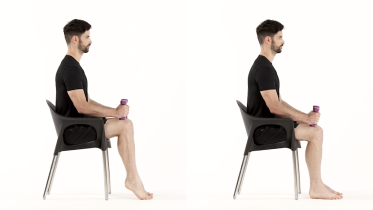 Seated calf raise
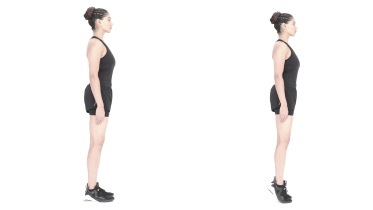 Calf raises
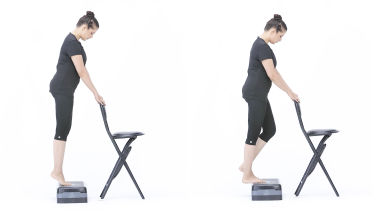 Eccentric calf raise
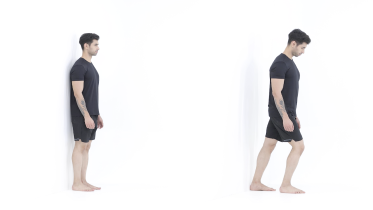 Calf stretch
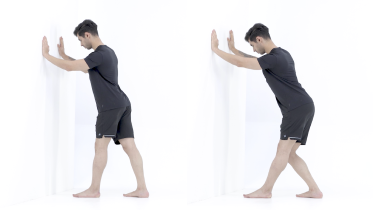 Soleus stretch
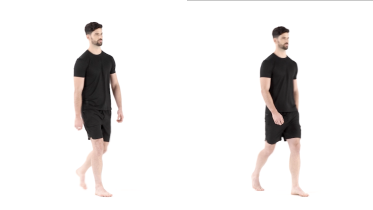 Brisk walking
When should you see someone about calf pain when walking?
Sooner than most people do, and the reason is the one this whole page is built around: the most important thing about calf pain on walking is which kind it is, and that is an examination question rather than a reading question.
Book an appointment with your doctor if leg pain comes on when you walk and goes after a few minutes' rest and nobody has checked it yet. Ask to be seen within a few days if the distance you can manage before it starts has shortened noticeably over a few weeks. See a physio if the pain is load related, has not settled over a few weeks of easier walking, or keeps returning each time you build up. Bring the details that are easy to forget: the distance it starts at on flat ground, what hills and stairs do, whether standing still alone relieves it, and whether anything has changed about the leg's color, temperature or size. A physio will also check your foot pulses and your back, because this is a symptom with more than one home.
There is a second reason for that appointment, and it is not the leg. The NHS describes peripheral arterial disease as a form of cardiovascular disease, and says having it makes coronary heart disease, angina, heart attack and stroke more likely. So the visit that sorts out your calf is also the one that gets your blood pressure, cholesterol, blood sugar and smoking looked at.
Some signs should not wait for an appointment. Read the warning signs below, and act on the timing given for each line.
Related exercise programs
Warning signs
Get emergency help now
- Emergency: your foot or leg suddenly turns cold, pale or blue, or suddenly becomes very painful, numb or weak, even while you are resting. Call emergency services or go to an emergency department straight away. This can be a sign that the blood supply to the leg is blocked, which needs treatment at once.
- Emergency: a whole leg that swells up and becomes tight over a few hours, with skin that turns blue or purple, and pain that is severe rather than aching. Call emergency services or go to an emergency department straight away, and do not drive yourself. A large clot high in the leg can block almost all of the blood trying to leave it, and that condition (phlegmasia cerulea dolens) can cost the leg or be fatal unless it is treated in an early phase (Chinsakchai and colleagues, 2011). Do not wait for the same day advice given lower down this list.
- Emergency: you suddenly become short of breath, you get chest pain or pain in your upper back that may be worse when you breathe in, you cough up blood, your heart is beating very fast, or you faint. Call emergency services straight away, even if your leg looks normal. These can be signs of a blood clot in the lungs (pulmonary embolism).
- Emergency: sudden, severe pain in your lower leg that is much worse than you would expect, especially after an injury or with a plaster cast or tight bandage on the leg. It may come with a tight, swollen leg, pain that gets worse when the muscle is stretched, numbness, pins and needles or weakness. Call emergency services or go to an emergency department straight away, and do not drive yourself. This can be acute compartment syndrome, which needs urgent surgery.
- Emergency: pain, tingling, numbness or weakness in both legs, numbness or altered feeling around your genitals or bottom, or new trouble peeing or controlling your bladder or bowels. The same applies if you lose feeling in one leg. Call emergency services or go to an emergency department straight away. These can be signs of pressure on the nerves at the base of the spine (cauda equina syndrome).
- You felt a sudden pop or snap at the back of your ankle or heel, it felt as if someone hit or kicked you in the calf, walking or rising onto your toes on that leg suddenly became weak or difficult, or the tendon above your heel has a dip or soft spot in it where the other leg feels like a firm cord. Stop, take the weight off that leg carefully, and go to an urgent care center or emergency department the same day, even if you can still walk, as this can be a torn (ruptured) Achilles tendon. Walking on a torn tendon lets the two ends draw further apart, and a rupture is easier to treat when it is found early. This page does not cover a rupture.
Get help now, day or night
- A severe burning pain in your feet or legs that carries on even when you rest, including pain that wakes you at night or eases when you hang the foot out of bed, skin on your feet or lower legs that has become pale, shiny, smooth and dry, sores on your feet or legs that do not heal, or toes that have become cold and numb and are turning red and then black. A change in skin color can be harder to see on brown and black skin. Contact your doctor straight away, the same day. These can be signs that poor circulation in the legs has become serious (critical limb ischemia), and it is assessed by a vascular team rather than treated with exercise. If a sore or toe is also getting red, hot and swollen, or you feel feverish or very unwell, go to an emergency department.
- Your tendon pain or swelling started while you were taking a fluoroquinolone antibiotic, such as ciprofloxacin or levofloxacin, or in the months after a course. Contact your doctor straight away. The UK medicines regulator (MHRA) advises stopping the antibiotic at the first sign of tendon pain or swelling and talking to your doctor. Hold off the calf exercises until you have been checked.
Get help today
- Same day: a calf or thigh that is newly swollen or getting more swollen, warm, tender, red or darker than usual, has swollen veins that are sore to touch, or has a throbbing or cramping pain that does not fit your injury or condition, or that feels different from normal muscle soreness after exercise. This can be a sign of a blood clot (deep vein thrombosis), especially after surgery, an injury, time in a cast or boot, a long trip or a spell of being much less mobile than usual. Get medical advice the same day. If you are also short of breath or have chest pain, call emergency services.
- The calf is hot, red and swollen, or you have a fever or feel unwell. Get medical help the same day, and go to an emergency department if you feel very unwell. If you have a very high or very low temperature, shivering you cannot control, you are breathing very fast or finding it hard to breathe, you are confused or your speech is slurred, your skin, lips or tongue look blue, gray, pale or blotchy (on brown or black skin this can be easier to see on the palms of the hands or soles of the feet), or you have a rash that does not fade when you press it, call emergency services, as this can be sepsis.
- Same day: you have diabetes or numb feet and find a new blister, cut or sore on your foot, especially one you did not feel, a wound that smells or is leaking, or new pain in your foot that you cannot explain. Get it seen by your doctor or foot team the same day. If you also have a fever or feel very unwell, redness is spreading up your foot or leg, or part of your foot or a toe turns black, go to an emergency department.
- Same day: you have diabetes or numb feet, and one foot becomes hot, swollen or red, or changes color or shape, with or without pain. Take your weight off that foot straight away and get advice the same day from your doctor or your diabetes foot team. This can be Charcot foot, where the bones and joints of the foot are damaged and the foot can collapse. Do not exercise that foot until it has been checked. If you also have a fever or feel very unwell, or redness is spreading up your foot or leg, go to an emergency department.
- Same day: a leg or foot that is getting weaker, for example your foot drags, catches on the ground or slaps down when you walk (foot drop). Get medical advice the same day. If the weakness is getting worse by the hour, go to an emergency department.
- The pain started with a fall or a blow to the back of the ankle, and there is bruising or you cannot put weight on the foot. Get it checked the same day.
- The pain is there at night or at rest as well as with activity and keeps getting worse. If you are being treated for cancer now, contact your cancer team the same day.
Book an appointment
- The pain is there at night or at rest as well as with activity and keeps getting worse. If you have had cancer, now or in the past, or are losing weight without trying, see your doctor sooner, within a day or two, and mention it. This applies even if the pain is not getting worse.
- You have numbness, tingling, burning or loss of feeling in the foot, often along the outer edge. Book an assessment with a doctor or physio in the next week or two. If it came on over hours or days, started after an injury, is spreading, or comes with weakness in the foot, get medical advice the same day.
- Routine: pain or aching in a leg that comes on when you walk and goes after a few minutes' rest, and a doctor has not checked it yet. Book an appointment with your doctor. Narrowed arteries in the legs (peripheral arterial disease) can cause this too, and they need different treatment. If the distance you can walk before the pain starts has become much shorter over a few weeks, see your doctor within a few days. If it has shortened over days rather than weeks, or the pain has started coming on while you are sitting still or lying in bed, contact your doctor the same day: the NHS says symptoms that develop quickly or get suddenly worse can be a sign of a serious problem needing immediate treatment. Pain, tingling, numbness or weakness in both legs is on the emergency list above.
- Within a week or two: your lower leg muscles get tight, cramping or painful during exercise and settle when you stop and rest, especially if your foot goes numb or tingly, feels weak, or slaps down as you run. This is not an emergency, but stop that activity and see a doctor in the next week or two, as it can be chronic exertional compartment syndrome. If the numbness or weakness is still there after you have rested, get it checked the same day.
- The pain is there at night or at rest as well as with activity and keeps getting worse. See your doctor within a few days.
Common questions
Why does my calf hurt when I walk but not when I sit?
Because walking is the only thing asking the calf for anything. Two very different problems produce that, and telling them apart is the whole job. A muscle or tendon problem hurts when it is loaded, so it hurts while you walk and settles when you stop, but it also tends to be sore to press, stiffer first thing in the morning, and worse the day after a long walk. A circulation problem hurts because the working muscle is not getting enough blood, which the NHS describes as a painful ache in the legs when you walk that usually disappears after a few minutes' rest, and calls intermittent claudication. The tell is predictability. Circulation pain arrives at roughly the same distance every time, clears in a few minutes of standing still, and returns at about that distance again. A tendon rarely behaves that precisely. Either way, leg pain on walking that a doctor has not checked is worth an appointment.
Can calf pain when walking be a blood clot?
It can, and this is not something to settle at home. The NHS lists the signs of a deep vein thrombosis as throbbing pain in one leg, rarely both, usually in the calf or thigh, swelling in one leg, skin that is red, blue or darker around the painful area, which may be harder to see on brown or black skin, and swollen veins. Any one of those is enough to get medical advice the same day. The NHS also names the situations that raise the risk, including recent surgery, a hospital stay, being confined to bed for 3 days or more, a journey of more than 4 hours, pregnancy, the 6 weeks after having a baby, cancer, and estrogen-containing contraception or HRT. A pulled calf muscle can look identical, which is exactly why a scan is sometimes the only way to separate them. If you are also short of breath or have chest pain, call emergency services.
Why does my calf hurt when I walk uphill or fast?
Both raise the demand on the calf without changing anything else, so both bring forward whatever your limit is. For a tendon or muscle problem, uphill and fast walking ask the calf for more force and more push off, which is why people with Achilles trouble often notice hills and brisk pace long before flat strolling. For a circulation problem, the working muscle needs more blood than a narrowed artery can deliver, so the pain arrives earlier on a hill and later on the flat, and a slower pace buys more distance. That difference is useful at an appointment: say what hills and pace do, and at what distance the pain starts on level ground.
Should I keep walking with calf pain?
It depends which problem you have, and this is the one question where getting it wrong matters. For peripheral arterial disease that a doctor has already diagnosed, walking is the treatment rather than something to avoid, and that advice belongs to the stable pattern that comes on with walking and clears with rest. The NHS says one of the best exercises is walking, describes a stop-start method of walking until the pain becomes intolerable, resting until it goes, then walking again, with the aim of at least 30 minutes of walking in total, several times a week, and says a supervised program usually involves 2 hours of supervised exercise a week for 3 months. For a calf muscle or tendon problem, the dose is managed differently: shorter and flatter for a while, judged by the next morning rather than by how it feels at the time. And if a clot has not been ruled out, if the pain carries on while you are resting or in bed, or if the leg is cold, pale, numb or weak, the answer is to stop and be seen rather than to walk at all.
When should I worry about calf pain when walking?
Call emergency services if the foot or leg suddenly turns cold, pale or blue, or suddenly becomes very painful, numb or weak at rest, if a whole leg swells up tight over a few hours with blue or purple skin and pain that is severe rather than aching, if you are short of breath or have chest pain, or if you have symptoms in both legs or any change in bladder or bowel control. Get medical advice the same day if the calf is newly swollen, warm, tender or a different color, if you felt a pop or snap at the back of the ankle, if the pain now carries on while you are resting or in bed, if a sore on the foot is not healing, or if the foot is getting weaker. Book an appointment with your doctor if leg pain comes on when you walk and goes after a few minutes' rest and nobody has checked it, and ask to be seen within a few days if the distance you can manage has shortened noticeably over a few weeks. Read the full warning list on this page rather than this summary, because each line carries its own timing.
References
- NHS. Peripheral arterial disease (PAD). Overview. Page last reviewed 10 April 2026. https://www.nhs.uk/conditions/peripheral-arterial-disease-pad/
- NHS. Peripheral arterial disease (PAD). Treatment. Page last reviewed 10 April 2026. https://www.nhs.uk/conditions/peripheral-arterial-disease-pad/treatment/
- NHS. DVT (deep vein thrombosis). Page last reviewed 30 April 2026. https://www.nhs.uk/conditions/deep-vein-thrombosis-dvt/
- Lane R, Harwood A, Watson L, Leng GC. Exercise for intermittent claudication. Cochrane Database of Systematic Reviews. 2017;12(12):CD000990. https://doi.org/10.1002/14651858.CD000990.pub4
- National Institute for Health and Care Excellence. Peripheral arterial disease: diagnosis and management (CG147). https://www.nice.org.uk/guidance/cg147
- National Institute for Health and Care Excellence. Venous thromboembolic diseases: diagnosis, management and thrombophilia testing (NG158). https://www.nice.org.uk/guidance/ng158
- Chinsakchai K, Ten Duis K, Moll FL, de Borst GJ. Trends in management of phlegmasia cerulea dolens. Vascular and Endovascular Surgery. 2011;45(1):5-14. https://doi.org/10.1177/1538574410388309
- healthdirect. Calf pain, causes, treatment and prevention. Australian Government. https://www.healthdirect.gov.au/calf-pain
- NHS. Compartment syndrome. Page last reviewed 4 September 2026. https://www.nhs.uk/conditions/compartment-syndrome/
- American Academy of Orthopaedic Surgeons. Compartment syndrome. OrthoInfo. https://www.orthoinfo.org/en/diseases--conditions/compartment-syndrome/
- NHS. Tendonitis. Page last reviewed 9 June 2023. https://www.nhs.uk/conditions/tendonitis/
- University Hospitals Plymouth NHS Trust. Calf muscle tears and strains (patient information, A-538 v2). February 2025. https://www.plymouthhospitals.nhs.uk/display-pil/pil-calf-muscle-tears-and-strains-6064/
- Medicines and Healthcare products Regulatory Agency. Fluoroquinolone antibiotics: must now only be prescribed when other commonly recommended antibiotics are inappropriate. Drug Safety Update. 22 January 2024. https://www.gov.uk/drug-safety-update/fluoroquinolone-antibiotics-must-now-only-be-prescribed-when-other-commonly-recommended-antibiotics-are-inappropriate
- American Academy of Orthopaedic Surgeons. Lumbar spinal stenosis. OrthoInfo. https://www.orthoinfo.org/en/diseases--conditions/lumbar-spinal-stenosis/
Written and checked by the PocketPhysio editorial team. Last updated 2026-10-28.
This page is general education, not a diagnosis or a personal treatment plan. See a physiotherapist or doctor for advice about your own situation.