
Ankle pain after walking: why it shows up later and what helps
Warning signs, and when to get help
Why your ankle hurts after the walk rather than during it
The delay is the part people find most confusing, and most advice about ankle pain walks straight past it.
During a walk you are warm, moving, and the tissue around the ankle is being loaded and unloaded in a rhythm. When you stop, all of that stops with you. The joint cools and stiffens, any fluid that the day produced is no longer being pushed around, and the tissue that was worked hardest starts to let you know. Sit down for 2 hours after a long walk and the first few steps when you get up are often worse than anything that happened on the walk itself.
OrthoInfo's description of ankle arthritis names the same shape of thing from the other direction: pain that flares up with vigorous activity, and increased pain and swelling in the morning or after sitting or resting. A delay of hours is not a sign that nothing happened. It is how joints and tendons usually report.
What the delay does not tell you is how serious it is. A mild ache that turns up in the evening and is gone by the following afternoon is a dose message. The same delay, getting a little worse each time you do the same walk, is a loading problem that needs the amount changed. And a bone that aches in bed at night after a run of long days is a different thing again, which the warning signs on this page handle with their own timing.
Ankle pain after walking a lot, all day or a long distance: how much is too much
Nobody can give you a step count, because the number that is too much is set by what you did last month, not by what the internet does on average. What we can give you is a rule for reading the morning after.
The pattern to expect from an ankle that has simply done more than usual: soreness that you notice when you stop, that is clearly easing within a day or two, and that is no worse the next morning than it was the night before. That is the same rule a physio uses to set the dose of an exercise, and it works just as well for a walking distance.
The pattern that means the amount is wrong: a little worse after each walk rather than the same, the soreness lasting longer each time, stiffness in the morning that takes more than about 30 minutes to clear, or any limp. A limp is the single most useful thing on that list, because people put up with it without noticing and it changes how the whole leg loads.
Three jumps in load hide inside an unchanged step count, which is why "I only did my usual walk" is often not true. A new hill. A different surface. And a shoe change, which includes a new pair, an old pair gone soft, and switching from trainers to sandals in warm weather.
Where it hurts: the outside, inside, front and back
This is the sorting that matters, and it is worth 5 minutes with your thumb before anything else. Press around the ankle and find the sorest spot, then match it below.
The outside, below and behind the bony bump. The ligaments that get sprained sit there, and so do two tendons that run down behind that bump and turn the foot outward (the peroneals). Pain there after walking, particularly on uneven ground or a camber, points at those tendons or at an ankle that has sprained before and has not fully got its control back. Our pages on peroneal tendinopathy, ankle sprain and chronic ankle instability cover those.
The inside, below and behind the inner bump, running down toward the arch. That is the tendon that holds the arch up (tibialis posterior), and it is the one that complains after long days on your feet, especially if the arch flattens as you walk. Watch for an arch that looks lower by the evening or a heel that drifts outward. The posterior tibial tendon dysfunction page and the flat feet page go into it, and our page on arch pain covers the nearby version.
The front of the ankle, in the crease where the foot meets the leg. Pain pressed into that line, worse going uphill or up stairs and stiff after sitting, points at the joint itself, either wear in it or something pinching at the front of it when the ankle bends as far as it will go. The ankle osteoarthritis page is the one for that. If there is also tenderness at one small spot on the bone just in front of the ankle, read the stress fracture line in the warning signs, because that spot is one of the ones treated as high risk.
The back, above the heel. A sore, sometimes thickened cord above the heel, stiff for the first few minutes in the morning and easier once you are warm, is the Achilles. Our Achilles tendinopathy program is where the loading work lives, and where the Achilles hurts matters enough to change the exercises.
Two more worth naming. Pins and needles, burning or numbness on the sole rather than aching in the ankle raises the nerve that runs behind the inner bump, which is the tarsal tunnel syndrome page. And pain that is mostly in the calf while you are walking, easing within a few minutes of stopping, is a different question with its own page: calf pain when walking.
Ankle pain when walking with no swelling, and no injury
A swollen ankle is easy to believe in. A painful ankle that looks exactly like the other one is harder to accept, so here it is plainly: most of what hurts after walking does not swell enough to see.
Tendons hurt when you load them and when you press along them, and a tendon that is irritated usually looks the same as the one on the other side. Joint surfaces produce pain with movement well before they produce a bulge. OrthoInfo does list swelling, warmth and redness among the symptoms of ankle arthritis, but it lists pain with motion, pain that flares with activity and tenderness to pressure alongside them, and plenty of people have the second set without the first.
No swelling is genuinely useful in one direction. An infected joint and a fresh bleed into one are both described with swelling and heat as part of the picture, so a cool ankle of normal size is much less likely to be either, and both of those are on the same day list in the warning signs. It does not make tendon trouble, joint wear, an old sprain or a stress fracture any less likely. Compare the two ankles side by side in the same light and in the same position before you conclude there is nothing there, because a small amount of swelling is easy to miss on your own foot.
Shoes and surfaces: barefoot, flip flops, sand, treadmill and downhill
Each of these loads the ankle differently, and all of them can be tested in a week.
Flip flops and backless sandals are the clearest offenders. Nothing holds the heel, so your toes grip to keep the shoe on and the ankle has to steady itself at every step without help. A week of holiday walking in them is a common story behind a sore ankle that had never complained before. Barefoot on hard floors does something similar: the foot and ankle do the whole job, which is fine if they are used to it and is a sudden load increase if they are not.
Sand is harder work than it looks and is worse the more it slopes, because every push-off happens from a surface that gives way and the ankle corrects for it constantly. Soft wet sand near the water is also a camber, which tilts one ankle in and the other out for the whole walk. If one ankle came back sore from a beach week, the side you walked on probably explains which one.
Downhill is the mechanical one. Walking down a long slope asks the calf and Achilles to control your descent step after step, which is the kind of work tendons get sore from, and it drives the front of the ankle into its full bend on the leading leg. Stairs down do the same thing in a shorter version. A treadmill is the opposite problem: it is consistent, which is comfortable, and it is identical for the whole walk, so there is no variety at all and whatever gets loaded gets loaded 8,000 times the same way.
The NHS advice for ankle pain names wide comfortable shoes with a low heel and a soft sole, and soft insoles or heel pads, and it says not to wear high heels or tight pointy shoes. In practice, test the shoe with your hands: if it twists easily along its length and folds in the middle rather than at the ball of the foot, it is giving the ankle very little.
What to do for the next two or three days
The NHS self-care for a sprain or strain is the right starting frame even when there was no single injury: for the first 2 to 3 days, protect the ankle, rest it, put an ice pack wrapped in a cloth on it for up to 20 minutes every 2 to 3 hours, compress it with a bandage during the day, and raise it on a pillow when you can. It also says to avoid heat, alcohol and massage in those first couple of days, and to start moving the ankle again as soon as the pain allows so it does not stiffen up.
Two of those need expanding here. Resting does not mean sitting still for 3 days: it means not repeating the walk that caused it. And the moving part matters more here than the ice does, because the stiffness you feel the morning after is the thing that makes the next walk hurt.
Take the pressure off the ankle for a few days in the ways that cost nothing. Flatter routes. Shorter and more often rather than one long trip. Shoes that hold the heel. Standing less on hard floors in the evening, which is the part people forget because it is not exercise.
If the ankle is calm after 2 or 3 days, start rebuilding the distance. When it is no calmer at all, or worse, the warning signs below give you the timings, and the sections above give you something specific to describe when you ring.
Should I keep walking with ankle pain?
Keep walking, unless something on the warning list says otherwise. An ankle that is rested completely for 3 weeks comes back stiffer and weaker, and the walk that was too much before is then too much by a wider margin.
Here is a workable way to step the distance back up, and your physio will adjust it once they have seen the ankle. Take about a fifth off whatever distance produced the soreness and hold that for a few days. If the ankle is quiet the following morning, add a few minutes, once, and wait another few days. Keep the surface flat and even while you are doing it, and put the hills and the uneven ground back in last, one at a time, after the distance is comfortable again.
Two rules make that safe. The morning after is the judge, not how the ankle felt during the walk. And if a step up makes it worse, you go back to the last amount that was fine rather than to nothing at all.
The exercises below belong in the same few weeks, because distance alone does not build what walking demands of an ankle. Calf strength is the biggest single piece of it, and the band work and the balance work are for the side to side control that uneven ground asks for.
Flat feet, older walkers, pregnancy and an operated ankle
Flat feet get blamed for this more than they deserve, and the honest position is that flat feet on their own are not a diagnosis and not a problem. What matters is whether the arch collapses further as you walk and whether the tendon on the inside of the ankle is sore, which is the combination that turns a foot shape into a complaint. The flat feet page covers what does and does not help.
If you are over about 65 and the ankle has started hurting after your usual walks, the thing to look at alongside the ankle is steadiness. A sore ankle changes how you step without your noticing, and it shortens the distance you walk, which costs you balance over months. Our balance tests page is a way of checking, and the balance and falls prevention program is the program.
In pregnancy, ankle and foot ache after walking is common and the advice about load and shoes still applies, but new swelling, swelling in one leg rather than both, or swelling with pain goes to your midwife or maternity unit rather than being treated as a sore ankle. Pregnancy raises the risk of a blood clot rather than lowering it, so the swollen, tender, warm calf on the warning list needs advice the same day in pregnancy as much as at any other time. Back and pelvic pain in pregnancy has its own program at pregnancy back and pelvic pain.
If your ankle has been fractured, fused or replaced, the plan from your own surgeon and physio sets what you walk on and how far, and it comes before this page. The same goes for a foot that has been operated on. After a broken ankle, the staged version is our ankle fracture rehab program, and it is the one to follow rather than this page. Take new pain in an operated ankle to the team that operated rather than reducing your walking and waiting.
Exercises that can help
These are for the weeks after, not for the evening the ankle is sore. Calf raises commonly start at 2 to 3 sets of 10 to 15 on both legs, once a day or a few days a week, and the heel raise with eversion, which is the same movement with the front of each foot turned out a little, at 2 to 3 sets of 10 to 15, once a day or on most days. Ankle eversion with a band usually begins with a light band and 2 to 3 sets of 10 to 15 slow repetitions, once a day. The calf stretch is typically held about 30 seconds, 2 to 3 times on each leg, once or twice a day. Single leg stance often starts at 5 to 10 lifts on each leg, holding each one for a few seconds, and brisk walking at 10 to 20 minutes on most days of the week, including a few minutes of slow walking at each end, adding time before adding speed. Your physio will adjust this. After an ankle fracture or ankle surgery, follow your surgeon's or physio's weight-bearing plan, and start these exercises only when they have cleared you. If you have had surgery on your Achilles tendon, check with your surgeon or physio before you start. If you have had a hip or knee replacement, get the go-ahead from your surgeon or physio before you try single leg stance. Standing on the operated leg alone comes at a set stage of rehab, and some hip operations limit how high the knee can lift in the first months after surgery. If you have fallen in the past year, feel unsteady on your feet, or take medicines that make you dizzy, keep a hand on a kitchen counter or the back of a sturdy chair for the single leg stance and the calf raises, practice only when someone else is at home, and ask your doctor or physio about a falls check before you try either without support. If you have high blood pressure, breathe steadily through every repetition and never hold your breath. With a heart or lung condition, high blood pressure, or after a recent operation, ask your doctor or physio how much to walk and how fast before you start the brisk walking. If you are pregnant, check with your midwife or physio before you start. Leave all of them out, and get the ankle seen, if one point of bone is tender to press.
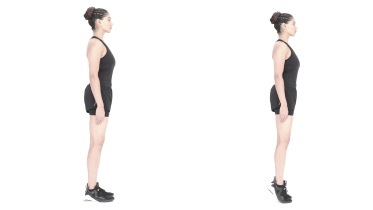 Calf raises
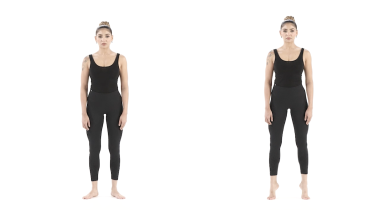 Heel raise with eversion
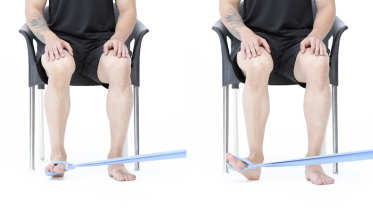 Ankle eversion with band
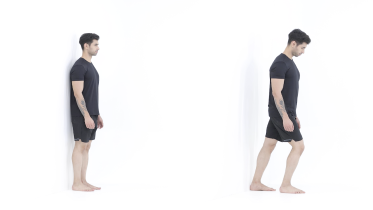 Calf stretch
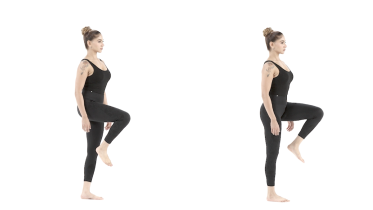 Single leg stance
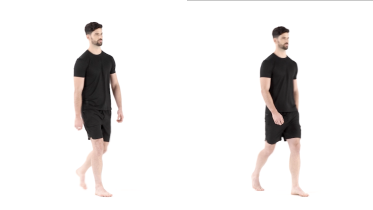 Brisk walking
When should ankle pain after walking be checked?
The NHS threshold for ankle pain is to see a GP if it is stopping you doing normal activities, if it is getting worse or keeps coming back, if it has not improved after treating it at home for 2 weeks, if you have any tingling or loss of feeling in the foot, or if you have diabetes and foot pain, because foot problems are more serious then. It puts severe ankle pain, feeling faint, dizzy or sick from it, an ankle or foot that has changed shape or sits at an odd angle, a snap, grinding or popping noise at the time of an injury, or not being able to walk, on the urgent route instead.
healthdirect uses much the same thresholds for Australian readers, adding several painful, stiff or swollen joints to the list of reasons to see a doctor, and a hot, swollen, red, painful ankle with a fever to the reasons to go to an emergency department.
Bring the detail that is hard to reconstruct later. How far you can walk before it starts, and whether that distance is shrinking. Where your thumb finds the sorest spot. What the morning after is like. What is on your feet, and what changed in the month before it started, including routes, surfaces and shoes.
A physio will watch you walk, test how far the ankle bends and how strong the calf is on each leg separately, press the tendons one at a time, and check whether the ankle is steady on one leg. The calf test on its own tells them a lot, because walking is thousands of small calf contractions and a side difference shows up there before it shows up anywhere else.
Some signs should not wait for an appointment. Read the warning signs below, and act on the timing given for each line, because they are not all at the same level of urgency.
Related exercise programs
Warning signs
Get emergency help now
- Emergency: the ankle or foot looks deformed or out of place, you heard a crack when you were injured, or the foot is numb, tingling, cold, pale or blue. Go to an emergency department straight away, and do not drive yourself.
- Emergency: part of your foot or a toe turns cold, pale, blue or black. Call emergency services or go to an emergency department straight away, and do not drive yourself, as the blood supply to the foot may be blocked.
Get help now, day or night
- Your tendon pain or swelling started while you were taking a fluoroquinolone antibiotic, such as ciprofloxacin or levofloxacin, or in the months after a course. Contact your doctor straight away. The UK medicines regulator (MHRA) advises stopping the antibiotic at the first sign of tendon pain or swelling and talking to your doctor. Hold off the foot and ankle exercises until you have been checked.
Get help today
- Same day: you felt a pop or snap at the back of your ankle or heel, it felt as if someone hit or kicked you in the calf, walking or rising onto your toes on that leg suddenly became weak or difficult, or the tendon above your heel has a dip or soft spot in it where the other leg feels like a firm cord. Stop, take the weight off that leg carefully, and go to an urgent care center or emergency department the same day, even if you can still walk, as this can be a torn (ruptured) Achilles tendon. Walking on a torn tendon lets the two ends draw further apart, and a rupture is easier to treat when it is found early. This page does not cover a rupture.
- Same day: the pain started with a fall, a twist, a roll of the ankle or something heavy landing on your foot or ankle, and there is swelling or bruising, you heard a snap, grinding or popping noise, or you cannot put weight on the foot. Get it checked the same day.
- Same day: the ankle or foot is hot, red and swollen, or you have a fever or feel unwell. Get medical help the same day, and go to an emergency department if you feel very unwell. If you have a very high or very low temperature, shivering you cannot control, you are breathing very fast or finding it hard to breathe, you are confused or your speech is slurred, your skin, lips or tongue look blue, gray, pale or blotchy (on brown or black skin this can be easier to see on the palms of the hands or soles of the feet), or you have a rash that does not fade when you press it, call emergency services, as this can be sepsis.
- Same day: the pain is severe, the pain is getting worse, it makes you feel faint, dizzy or sick, you cannot walk or cannot manage more than a few steps, or the swelling or bruising is very large or getting worse. Get medical advice the same day, which is the urgent route the NHS gives for those signs. healthdirect in Australia treats a very painful ankle as urgent care, to your doctor or the nearest emergency department, so go to an emergency department if you cannot walk or cannot get advice the same day.
- Same day: the ankle locks and you cannot move it out of that position, you cannot put your weight on it, it keeps giving way under you, or it gives way or catches and is also very painful or much more swollen than usual. Get medical advice the same day. If it only catches or gives way now and then, with no new injury and no new swelling, it is not an emergency, but book an appointment with a doctor or physio within a few days. Until it has been checked, leave out the exercises you do standing on one leg, hold the rail on stairs and take care on uneven ground, because an ankle that gives way without warning is how people fall.
- Same day: you have diabetes or numb feet, and one foot becomes hot, swollen or red, or changes color or shape, with or without pain. Take your weight off that foot straight away and get advice the same day from your doctor or your diabetes foot team. This can be Charcot foot, where the bones and joints of the foot are damaged and the foot can collapse. Do not exercise that foot until it has been checked. If you also have a fever or feel very unwell, or redness is spreading up your foot or leg, go to an emergency department.
- Same day: you have diabetes or numb feet and find a new blister, cut or sore on your foot, especially one you did not feel, a wound that smells or is leaking, or new pain in your foot that you cannot explain. Get it seen by your doctor or foot team the same day. If you also have a fever or feel very unwell, redness is spreading up your foot or leg, or part of your foot or a toe turns black, go to an emergency department.
- Same day: a calf or thigh that is newly swollen or getting more swollen, warm, tender, red or darker than usual, has swollen veins that are sore to touch, or has a throbbing or cramping pain that does not fit your injury or condition, or that feels different from normal muscle soreness after exercise. This can be a sign of a blood clot (deep vein thrombosis), especially after surgery, an injury, time in a cast or boot, a long trip or a spell of being much less mobile than usual. Get medical advice the same day. If you are also short of breath or have chest pain, call emergency services.
- Same day: a leg or foot that is getting weaker, for example your foot drags, catches on the ground or slaps down when you walk (foot drop). Get medical advice the same day. If the weakness is getting worse by the hour, go to an emergency department.
- Same day: the pain is there at night or at rest as well as when you stand and walk, and it is getting worse. If you are being treated for cancer now, contact your cancer team the same day.
Book an appointment
- Within a day or two: the pain is there at night or at rest as well as when you stand and walk, and it is getting worse. If you have had cancer, now or in the past, or are losing weight without trying, see your doctor sooner, within a day or two, and mention it. This applies even if the pain is not getting worse.
- Within a few days: the pain is there at night or at rest as well as when you stand and walk, and it is getting worse. See your doctor within a few days.
- Within a few days: the pain sits at one small spot on a bone that you can point to with a finger, such as the shinbone or a bone in the foot, the bone aches at rest or at night, or hopping on that leg hurts at that one spot. Stop running, jumping and any exercise that hurts at that spot, and see a doctor within a few days, as this can be a stress fracture. This matters even more if the spot is on the front of the shinbone, the inner ankle bone itself (the medial malleolus), the bone directly under the ankle joint (the talus), the top of the foot in the middle, just in front of the ankle (the navicular bone), or the outer edge of the foot at the base of the little toe bone, because doctors treat stress fractures at those sites as high risk: they heal slowly and unpredictably and they are the ones most likely to need fixing or an orthopedic opinion. Keep your weight off that leg as much as you can until it has been looked at. If walking hurts or makes you limp, get it checked the same day. An X-ray can look normal for the first 2 to 3 weeks, so a normal early X-ray does not rule it out.
- Within a few days: you have not been diagnosed, and several joints in your hands, wrists or feet are painful, swollen and stiff, especially in the morning. This is not an emergency, but see your doctor within a few days, because early treatment can stop the condition getting worse and lower the risk of joint damage.
- Within a week or two: you have new numbness, tingling, burning or loss of feeling in the foot or toes. Book an assessment with a doctor or physio in the next week or two. If it came on over hours or days, started after an injury, is spreading, or comes with weakness in the foot or toes, get medical advice the same day.
- Within a week or two: the ankle keeps giving way or rolling over, even on flat ground, weeks or months after the sprain. This is not an emergency, but book an assessment with a physio or doctor in the next week or two.
- Routine: you have diabetes and new foot or ankle pain, even without any of the signs above. Book an appointment with your doctor or your foot team, as the NHS advises, because foot problems are more serious when you have diabetes.
Common questions
Why do my ankles hurt after walking a lot?
Nearly always because the amount was more than the ankle is currently used to, and the ankle is where the whole load lands. Every step puts your body weight through a joint and a set of tendons about the size of your fist, and a day of 15,000 steps asks them for roughly twice what a 7,000 step day does. Three things multiply the amount without changing the step count: slope, because downhill walking makes the calf and the front of the ankle work harder at controlling you; surface, because sand, gravel and uneven ground make the ankle correct itself hundreds of extra times; and shoes, because a flat flexible sole leaves the ankle to do work that a firmer shoe shares. If both ankles ache equally after a long day and neither is swollen, that combination is the likeliest answer. If one is clearly worse than the other, there is usually something specific on that side, and the section on where it hurts is the place to start.
Is it normal for ankles to hurt after walking?
Mild soreness after a walk that was longer, hillier or faster than usual is ordinary, and the test is what happens next rather than how it feels at the time. The pattern to expect is discomfort that settles within a day or two and is no worse the next morning than it was the evening before. The pattern that is not ordinary is pain that gets worse each time you walk the same distance, pain that has started turning up on short walks around the house, a limp, or swelling that keeps building over several days. Length of time matters too. A sore ankle that is still sore in the same way after 2 weeks of sensible walking has stopped being a dose problem and needs looking at, which is the threshold the NHS uses for ankle pain as well.
Why does my ankle hurt when I walk but there is no swelling?
Because most of what hurts after walking is tendon or joint irritation, and neither has to swell visibly to hurt. A tendon that has been asked for more than it can currently give is sore to load and sore to press along its line, and from the outside it often looks identical to the other ankle. Joint surfaces that are wearing produce pain with movement long before they produce a visible swelling. OrthoInfo lists swelling, warmth and redness among the symptoms of ankle arthritis, but it also lists pain with motion, pain that flares with vigorous activity and tenderness when the joint is pressed, and plenty of people have the second group without the first. No swelling is useful information in one direction only: it makes an infected joint and a fresh bleed much less likely, and it rules out nothing else.
Should I keep walking if my ankle hurts afterwards?
Usually yes, and usually less of it. Stopping altogether tends to backfire, because an ankle that does nothing for 3 weeks is weaker and stiffer when you ask it to walk again, and the same distance then hurts more than it did. The workable version is to take roughly a fifth off whatever distance produced the soreness, keep that going on most days, and add a few minutes at a time once a week when the ankle is quiet the following morning. Flat and even beats hilly and uneven while it settles, and splitting one long walk into two shorter ones is often all it takes. What should stop you is a limp, soreness that is worse after each walk rather than steady, swelling that is building, or one point of bone that is tender to press, which is on the warning list on this page and needs checking rather than reducing.
What shoes help ankle pain from walking?
Something with a firm midsole that does not twist easily in your hands, a heel that is held rather than loose, and a fastening that actually fastens. That rules out the usual suspects in the order they come up: flip flops and backless sandals, because your toes have to grip to keep them on and nothing holds the heel; worn-out trainers whose midsole has gone soft; and a long spell barefoot on hard floors if you are not used to it. The NHS advice for ankle pain names wide comfortable shoes with a low heel and a soft sole, and soft insoles or heel pads, and tells people not to wear high heels or tight pointy shoes. Beyond that, what suits an ankle depends on which part of it is sore, which is why there is no single best shoe: a stiff sole helps a sore joint line at the front, and a supportive heel and arch help the tendon on the inside. Our page on shoes for plantar fasciitis goes through the features in more detail, and most of them apply here too.
References
- NHS. Ankle pain. Read 29 October 2026. https://www.nhs.uk/symptoms/foot-pain/ankle-pain/
- NHS. Sprains and strains. Read 29 October 2026. https://www.nhs.uk/conditions/sprains-and-strains/
- NHS. Gout. Read 29 October 2026. https://www.nhs.uk/conditions/gout/
- NHS. Septic arthritis. Read 29 October 2026. https://www.nhs.uk/conditions/septic-arthritis/
- NHS. DVT (deep vein thrombosis). Read 29 October 2026. https://www.nhs.uk/conditions/deep-vein-thrombosis-dvt/
- healthdirect. Ankle pain. Australian Government. Read 29 October 2026. https://www.healthdirect.gov.au/symptoms/aches-and-pains/ankle-pain
- American Academy of Orthopaedic Surgeons. Arthritis of the Foot and Ankle. OrthoInfo. Read 29 October 2026. https://www.orthoinfo.org/en/diseases--conditions/arthritis-of-the-foot-and-ankle/
- American Academy of Orthopaedic Surgeons. Stress Fractures. OrthoInfo. Read 29 October 2026. https://www.orthoinfo.org/en/diseases--conditions/stress-fractures/
- Patel DS, Roth M, Kapil N. Stress fractures: diagnosis, treatment, and prevention. American Family Physician. 2011;83(1):39-46. Read 29 October 2026. https://www.aafp.org/pubs/afp/issues/2011/0101/p39.html
- Medicines and Healthcare products Regulatory Agency. Fluoroquinolone antibiotics: must now only be prescribed when other commonly recommended antibiotics are inappropriate. Drug Safety Update. 22 January 2024. Read 29 October 2026. https://www.gov.uk/drug-safety-update/fluoroquinolone-antibiotics-must-now-only-be-prescribed-when-other-commonly-recommended-antibiotics-are-inappropriate
Written and checked by the PocketPhysio editorial team. Last updated 2026-10-29.
This page is general education, not a diagnosis or a personal treatment plan. See a physiotherapist or doctor for advice about your own situation.