
Cracking joints: is it arthritis, and should you stop?
Warning signs, and when to get help
Why do my joints crack?
Two explanations cover most of it, and only one of them has been filmed.
The first is what happens when the surfaces of a joint are pulled apart. Researchers put ten finger joints under traction inside an MRI scanner and recorded the moment each one cracked: the sound came as a cavity formed in the fluid while the surfaces separated, not as a bubble collapsed (Kawchuk and colleagues, 2015). Those were knuckles, under a steady pull, in a machine. Nothing in that study establishes what makes a knee, a shoulder or a back crack, and it does not say your joint did the same thing. What it does say is that a pop coming out of a joint is not in itself the sound of something breaking.
The second explanation is tendons and other soft tissue traveling across bony edges and snapping back. That is set out for the knee on our page about knee clicking and cracking, and shoulder clicking lists the four places a shoulder makes noise, which is as close as anyone can get to naming a structure.
Which of the two is making your noise cannot be worked out from the sound. People describe the same joint as clicking, cracking, popping, clunking, grinding and creaking, and none of those words points reliably at one tissue. That is why a clinician examines the joint and does not go by the sound.
Does cracking your knuckles cause arthritis?
It has not been shown to, and two studies have gone looking for a link.
The larger one compared people with and without hand osteoarthritis proven on x-ray, among 215 respondents aged 50 to 89 who had had a radiograph of the right hand in the previous five years. One in five of them cracked their knuckles. Osteoarthritis in any joint turned up in 18.1 percent of the crackers and 21.5 percent of the non-crackers, a difference that did not reach significance, and looking joint by joint, cracking a particular knuckle was not a risk for arthritis in that knuckle. Neither the number of years of cracking nor the total volume of it, counted as daily frequency multiplied by years, was correlated with arthritis at the joint. The authors concluded that a history of habitual knuckle cracking, including its duration and its cumulative total, does not appear to be a risk factor for hand osteoarthritis (deWeber and colleagues, 2011).
The older study is the one that stops this being a clean win. Among 300 consecutive patients aged 45 and over, none of whom had a neuromuscular, inflammatory or malignant condition, 74 habitual knuckle crackers were compared with 226 who did not do it, and the two groups had no difference in hand arthritis. But the crackers were more likely to have hand swelling and a weaker grip, and the authors concluded that the habit results in functional impairment of the hand (Castellanos and Axelrod, 1990). It was one study, it was 1990, and an association found at a single visit cannot say which came first. It is also not the last word, because two later studies went back to hand function rather than to x-rays.
The first examined 400 knuckle joints in 40 adults whose hands were not troubling them, 30 of whom cracked their knuckles every day. Two orthopedic surgeons who did not know which group anyone was in found no difference in grip strength or in a standard hand function questionnaire, and no swelling in anybody, before or after a crack (Boutin and colleagues, 2017). The second matched 35 people who cracked their knuckles at least five times a day, aged 19 to 27, against 35 who did not: grip strength was the same in the two groups, and on ultrasound the crackers' knuckle cartilage measured thicker rather than thinner (Yildizgoren and colleagues, 2017). So the honest summary is that knuckle cracking has not been shown to cause arthritis, and that the swelling and grip finding of 1990 has not held up in the two studies that went looking for it. Every one of them studied hands that were not hurting, which settles nothing about a hand that already aches, swells or has become weaker.
There is a third paper everyone quotes, a single-subject letter, indexed in PubMed as a case report (Unger, 1998). PubMed carries no abstract for it, so nothing in it has been read here, and this page states nothing about what it found.
Now the part that matters more than any of the above. Every one of those papers is about knuckles. The two that looked for arthritis looked in adults aged 45 and over, and the two that looked at hand function looked in people whose hands were not hurting, one of those groups aged 19 to 27. A finding about knuckles is not a finding about knees, necks, hips or backs. No study read for this page has asked the same question about any of them.
The knee's own evidence, which is about noise in knees rather than about cracking on purpose, lives on the knee clicking and cracking page and stays there, because it does not transfer either.
One more separation, and it is the one this page most wants you to make. Saying that the noise is not arthritis is not saying that your symptoms are nothing. Knuckles that ache, several small joints that swell, stiffness that is still there half an hour after you get up, or hands that have become weaker at jars and buttons are a different question from a noise, and they have their own answers: hand osteoarthritis, pain at the base of the thumb and, for the duration of the stiffness, joint stiffness in the morning. If that is you, read those rather than taking the reassurance at the top of this page as your answer.
One hand symptom does not belong with the others on that list. Hands that have become clumsy rather than sore, fumbling buttons or dropping things, or numbness in both hands at once, point at the neck rather than at the hand joints, and that is a same day matter with its own warning line below.
Is cracking your joints bad for you?
For the joints themselves, there is nothing to say that it is, with the one exception further down this page. If you are cracking your knuckles, your fingers, your toes or your back out of habit, no evidence read for this page says you are wearing the joint out, and the arthritis question above is as settled as a question of that size gets.
None of that amounts to a blanket permission. Every study of the habit is a study of knuckles, in people whose hands were not hurting, so none of it speaks for a joint that already aches, swells or does less than it did. And your neck is not covered by any of it, for reasons set out in its own section below.
There is a quieter cost on the other side, among people who are frightened of the noise rather than fond of it. Avoiding the movement that makes a joint crack is how a joint loses range and strength, slowly enough that nobody notices, and then the movement that was being avoided genuinely is harder than it was. That is how a painless noise ends up leading somewhere bad, and it runs through what you stopped doing. Judge how much to do by how the joint feels the next morning, which is what the pain monitoring model sets out, and leave the sound out of it.
Why do my joints crack so much, and why all the time?
Start with what cannot be answered. No paper we read for this page explains why a joint becomes noisier over the years, so the explanations you will see offered, drying out, thinning cartilage, roughened surfaces, are not ones this page will state as fact. Joint noise is common at every age, including in teenagers and in people whose joints have never hurt, and it is not a measure that can be read.
What usually changes when the noise suddenly seems constant is the week rather than the joint. More sitting and then more getting up, a new routine, a new job, more stretching, a new habit of cracking it deliberately, or simply having started to listen for it after reading something that worried you. In clinic the useful question is what changed around the joint, not what changed inside it.
So treat volume as a description and not a symptom. Noise many times a day, in several joints, with no pain, no swelling, no locking and nothing giving way, is still noise. The things that move this out of the noise category are listed below, and loudness and frequency are not among them.
Cracking all over the body
A real search, and the answer is not a disease. Nothing read for this page describes a condition that is diagnosed by noise, and widespread cracking with nothing else going on is widespread cracking. Joints are built the same way all over the body, so a person whose knuckles pop will often find the knees, the ankles, the shoulders and the neck do it too. A neck that clicks by itself as you turn your head is not what this page asks you to stop. Twisting or wrenching your own neck to make it crack is, and that has its own section below.
Not everything widespread is that, and some of it belongs elsewhere. Pain and stiffness in many joints, especially stiffness that is still there well after you get up, belongs on joint stiffness in the morning, which carries the whole differential and the urgency for each part of it. Pain and stiffness everywhere, with poor sleep and nothing to see in the joints, is covered by our fibromyalgia program. Joints that are noisy and also unusually flexible have their own section further down.
When cracking joints is a problem: six situations
This is the part of the page that changes what you do. In all six the noise is incidental, and each has a route.
- A crack or a pop at the moment of an injury, followed by pain, swelling or an inability to use the joint. Very bad joint pain after a fall or an injury, being unable to walk or put weight on a joint, a joint that has moved out of place, and tingling or no feeling around the joint after an injury are all on the NHS emergency list, and the warning line below gives the wording and the route.
- A joint that is stuck. Not a joint that catches for a moment and frees itself, which is worth mentioning but is not urgent, but a joint that will not move or will not fully straighten even when you relax it and try gently. That is a same day assessment, and for the knee specifically, which is where it happens most, knee clicking and cracking carries the detail on why it should not wait. A mouth stuck open that will not close is the exception to the timing: that one is an emergency department straight away, and it has its own warning line below. So is a joint that locked at the moment of an injury, a fall, a fit or an electric shock, which has its own line too: a joint can be held locked by a dislocation or a break that shows nothing from the outside, and the shoulder version, held turned inwards after a fit or an electric shock, is missed often enough at the first look to be worth naming (Vaishya and colleagues, 2026).
- A hot, swollen joint, or joint pain with a fever or with feeling hot, cold and shivery. An infected joint needs treating quickly, and this one does not wait for a convenient appointment. Sudden severe pain in one joint, or a joint you cannot move or put weight on, counts the same way, and a normal temperature is not an all clear, because the NHS says not everyone with a joint infection runs one. The NHS puts a hot swollen joint and joint pain with a fever on its urgent list; our own line below carries the fuller list from its septic arthritis page and is the one to follow.
- Noise with pain that limits what you can do. Not discomfort you forget about, but pain that stops you doing normal things, interrupts your sleep, keeps coming back, is getting worse, or has not improved after 2 weeks of sensible self-care, which is the NHS threshold for seeing a doctor. Read the page for that joint instead of this one. The knee is the exception to the timing: the NHS puts a knee that locks, gives way or painfully clicks on its urgent list, so a painful click in a knee is a same day matter and it has its own warning line below.
- A joint that cracks and then gives way under you, or that feels as if it partly comes out and goes back. That is not noise, it is a joint moving further than it should, and it belongs with hypermobility and with the page for that joint. A knee that does it has knee giving way, and for a knee the NHS puts giving way on its urgent list, so that one is a same day matter. A joint that came fully out of place and went back in again is not this situation and it is not an appointment: what needs checking is the dislocation itself, for a break and for the nerves and the blood supply to the limb, and whether the joint is properly back in place. That goes to an emergency department even if it feels settled by the time you get there.
- Cracking your own neck, which is the next section and is the one exception to everything reassuring on this page.
Two readers need naming separately, because the list above does not catch them. If you have a replaced joint, hip or knee or any other, new pain or new stiffness in it is not the ordinary joint noise this page is about, even years after the operation and even with a normal temperature. That has its own line below, and it goes to your surgical team. The noise by itself is the part not to read too much into: OrthoInfo says most people feel or hear some clicking of the metal and plastic when they bend a replaced knee or walk on it, and that this is normal. What is not ordinary is a replaced joint that clunks and feels as if it slips out of place and goes back, or that gives way under you, which is a same day matter here rather than the few days this page gives a joint that has never been operated on, and a replaced joint that looks different or will not take your weight at all, which is an emergency.
And if the joints in question belong to a child or a teenager, nothing here was written for them: a limp, a hot or swollen joint, joint pain with a temperature, or a child who cannot put weight on a leg is a same day matter, and the NHS asks a parent to see a doctor for a child's joint problems at a lower threshold than it sets for an adult.
Cracking your own neck and back
The neck is the exception, and this is the section to read even if you skip the rest.
There is one published case report of a previously healthy 40 year old man who was seen to crack his own neck at work, developed neck pain and stroke-like symptoms, and became unresponsive. Imaging showed a tear in both vertebral arteries, the ones running up through the bones of the neck. Brain death was pronounced several days later, the autopsy found no injury to the bone or soft tissue of the head or neck, and the death was attributed to the self-manipulation. The report also notes that manipulation of the neck is a known risk factor for this kind of tear (Persons and Stauffer, 2024).
One case cannot tell anyone how likely this is, and this page is not going to pretend otherwise. There is no risk figure here, because none exists that we could verify, and plenty of people have cracked their own necks for years without harm. That last part is true, and it is also what the man in the second case report below could have said: he had cracked his own neck several times a day for years, until the day it injured his spinal cord. What one case is enough to support is an instruction, and this is the instruction: do not twist, wrench or crank your own neck to make it crack, and do not let anyone do it for you as a favor.
If you have already done it and you feel fine, nothing here says you have come to harm. It does mean the next three paragraphs are the ones to read, because in these tears the first thing to appear is neck pain or a headache, and feeling fine in the minutes afterward is not the all clear it sounds like.
If anything appears afterward, treat it the way you would treat a stroke rather than waiting it out. Any sign of a stroke, even one that passes off, means calling emergency services. A new headache, or new pain on one side of your face, jaw or neck, with a drooping eyelid, a smaller pupil on that side, or a new pulsing sound in one ear that keeps time with your heartbeat, means emergency services or an emergency department straight away, without driving yourself. And a new headache or neck pain that does not feel like your ordinary neck pain is an emergency department straight away if it came on in a single moment or if nothing you do changes it, and a same day check if a position or rest eases it. Those four warnings are written out in full in the warning signs below, and that wording is the one to follow rather than anything you can talk yourself into at midnight.
The timing is where people talk themselves out of going, so it is worth being plain about it. In these tears the pain and the local signs are usually there from the start, while the stroke, if it comes, can follow hours or days later (Arning and colleagues, 2022). That gap is the whole point of being seen: it is the window in which something can be done. So neck pain or a headache that arrives after you have cranked your own neck is a reason to get checked while you still feel otherwise well, and feeling fine at the time proves nothing about the next two days.
The arteries are not the only thing running through your neck. New trouble walking, new trouble controlling your bladder or bowels, or hands that have suddenly become clumsy, for example you can no longer do up buttons, are signs of pressure on the spinal cord rather than of a sore neck, and they are an emergency with their own line below, whether or not you have been near your own neck. There is a case report of that happening from self-manipulation too: a 38 year old man who had cracked his own neck several times a day for years developed sudden weakness down one side immediately after doing it forcefully, and his scan showed two badly herniated discs pressing hard on the cord. He was operated on within a day and had his full strength back two months later, and his surgeons record it as the first such case they could find (Raj and colleagues, 2026). One case again, and the instruction it supports is the same one.
The slow version of the same thing, hands that have become clumsy over weeks or numbness in both hands, or pain or tingling in both arms at once, is a same day matter rather than an emergency, and it has its own warning lines below. Neck pain and stiff neck after sleeping carry the rest of the neck differential this page does not.
The back is a different picture and this page is not going to borrow the neck's case report to frighten you about your lumbar spine. Nothing read here describes harm from cracking your own back, and we are not going to invent a warning. The useful point is that a back you feel the need to crack several times a day, especially a painful one, is telling you something about how little it moves in between, and the seated pelvic tilt in the program below is the version of that movement with the least force in it. Back pain that is stopping you doing things, or stiffness that is still there half an hour after you get up, belongs on joint stiffness in the morning, not here.
Cracking and flexible joints
Some noisy joints belong to people whose joints move further than most. That is its own topic and our hypermobility page owns it, including the list of signs a national health service uses and what to do about joints that dislocate or pop out.
The line to draw here is between a noise and a movement. A joint that cracks is making a sound. A joint that cracks and then gives way, or that feels as if it slides partly out and goes back in, has moved further than it should, which is a different finding with a different route, and it has its own warning line below. If that is happening, say so plainly at the appointment, because it is easy to describe it as a click and be heard as describing a noise.
Which joint is it? Where to read next
Noise behaves much the same everywhere, but what it tends to come with differs by joint, so the specific pages carry more than this one can.
Knee clicking and cracking is the fullest of them, and it is where the research on joint noise happens to have been collected, almost all of it in knees. Shoulder clicking is the shoulder, including every gym and arm-position variant and the post-dislocation noise question. Jaw clicking and pain covers the jaw, with TMJ disorder behind it. A snap or clunk at the front or side of the hip is snapping hip syndrome.
For the hands, hand osteoarthritis and pain at the base of the thumb are the two to start with. For stiffness as the main complaint, joint stiffness in the morning is the page that times it and sorts it. For a knee that is noisy and also painful, knee osteoarthritis is the program.
What to do about noisy joints
Nothing, if there is no pain, no swelling, no locking, nothing giving way, and no joint doing less than it did. That is the honest answer for most people who search this, and it is an answer, not a way of ducking the question.
Build four habits in its place. Keep the joints moving through their full range, including the positions that make the noise. Judge how much you have done by how you feel the next morning. Get a joint looked at if the noise changes or arrives with company. And stop checking it, because a sound you test twenty times a day will occupy more of your attention than it ever deserved.
If you crack your knuckles, fingers, toes or back deliberately, the reason to stop is not that you are damaging them. Nothing read for this page shows that you are, and the one old finding about grip and swelling did not hold up when two later studies looked for it. Every one of those studies was done on knuckles in people whose hands were not hurting, so if your hands do hurt, swell or feel weaker, that is the thing to get looked at, not the habit. If you are not cracking anything deliberately, there is nothing to stop.
The neck is the one place on this page where the reason to stop is not a modest one. Do not twist, wrench or crank your own neck to make it crack, for the reasons in the section above.
Exercises for noisy joints
These are not a treatment for noise, and they will not quieten anything. They are five easy ways to keep joints moving across the body, one for the shoulders, one for the hands, one for the lower back, one for the hips and knees and one for the ankles, and they are the same whether your joints are silent or loud. Expect clicking during them, and treat that as background.
Stop an exercise if it gives you sharp pain, pain that builds with each repetition, or a joint that catches during the movement. If a joint is more painful or more swollen the next day, the amount was too much for now, so do less next time rather than stopping altogether. If you have high blood pressure, breathe steadily through every hold and never hold your breath.
Check these before you start. After shoulder surgery, including a rotator cuff repair, or after a shoulder fracture or dislocation, follow your surgeon's or physio's plan, and do only the movements and range they have cleared. After neck surgery, a broken bone in the neck or a broken collarbone, check with your surgeon or physio before the shoulder circles. After a broken hand or finger, a tendon repair, a carpal tunnel release or other hand surgery, do only the finger movements your surgeon or hand therapist has shown you, and with rheumatoid or another inflammatory arthritis keep the fists of the tendon glides gentle on days when the joints are hot and swollen.
Three more, and they decide whether two of these are for you at all. If you have had surgery on your spine in recent months, get the go-ahead from your surgical team or physio before the seated pelvic tilt, and if you have osteoporosis or have had a fracture in your spine, keep the slouch small and ask your physio how far to go. After a knee fracture or knee surgery, including a knee replacement, start sit to stand only when your surgeon or physio has cleared you, and if you have had a hip replacement or other hip surgery, get their go-ahead first, because standing up from a low seat bends the hip past a right angle and many surgeons ask you to avoid that for the first months. After surgery on a foot or ankle, or while you are in a cast or boot, find out which ankle movements are allowed before the ankle pumps.
Two about safety rather than surgery. Use a chair that will not slide for sit to stand, ideally with its back against a wall, and have someone nearby or a counter within reach if you are unsure of your balance or you have fallen in the past year, and wear flat shoes that grip rather than socks. If you feel dizzy, lightheaded or faint as you stand up, sit back down and wait for it to pass, get medical advice the same day if it does not settle within a minute or two or it keeps happening, and if you faint, call emergency services. If you are pregnant, check with your midwife or physio before you start.
One stop sign is about your heart rather than your joints, and it covers the whole routine rather than one exercise. While you exercise, and that includes the sit to stands, stop straight away if you have any of these: chest pain or pressure, dizziness or feeling faint, a racing or irregular heartbeat, or being far more out of breath than the effort should cause. If chest pain, pressure or tightness does not ease quickly when you rest, spreads to your arm, neck, jaw, stomach or back, or comes with sweating, feeling sick, feeling light-headed or being short of breath, call emergency services straight away, as this can be a heart attack. If it eases quickly and none of these happen, get medical advice the same day, and do not exercise again until you have been checked. If you faint while exercising, call emergency services, even if you feel fine again quickly.
The numbers below, and the ones on each exercise page, end by saying your physio will adjust them, and you may not have one. If that is you, start at the bottom of every range, add nothing to it for the first two weeks, and let the next morning be your adjuster. If you want them set for you, ask your doctor to refer you to physiotherapy, or book a physiotherapist yourself, and ask them to examine the joint, not hand you a list of exercises.
Anything on the warning signs list below comes before all of this, and the neck section above comes before any of it if you have been cracking your own neck. One more rule covers every operation named above: your own surgeon's or therapist's instructions come first, they are the ones who know what was repaired and what it can take at this stage, and nothing on this page replaces the follow-up they have arranged for you. Where surgeons differ, and they do differ on how long to stay off deep hip bending and on how soon a repaired tendon can be loaded, the answer is the one your surgeon gave you rather than the one you read here.
Exercises that can help
These five keep joints moving and will not quieten them, one for each part of the body most people notice noise in. Expect them to click while you do them. Common starting points: 10 to 15 slow shoulder circles as a warm-up or a break from sitting; the tendon glide sequence 5 to 10 times, holding each position for about 3 to 5 seconds, 2 to 4 times a day; 5 to 10 slow seated pelvic tilts, several times a day; 2 to 3 sets of 5 to 10 sit to stands, once a day or on most days, from a higher chair if standing up from your usual one is hard; and 10 to 20 ankle pumps at a time, several times a day. Each exercise page gives its own numbers and its own stop signs, and your physio will adjust this. Read the checks in the section above before the first round, and read the warning signs below before any of it, because several of these have their own gates after surgery, with osteoporosis, in pregnancy or if you have fallen in the past year.
The exercises below carry their own stop signs and precautions. Open the line under an exercise and read them before you try it.
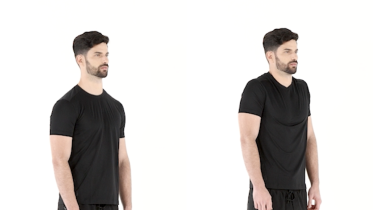 Shoulder circles
Stop signs and precautions for the shoulder circles
Before you start
- After shoulder surgery, including a rotator cuff repair, or after a shoulder fracture or dislocation, follow your surgeon's or physio's plan, and do only the movements and range they have cleared. Many plans allow only passive movement at first, where the arm is moved for you and its muscles stay relaxed. After neck surgery or a broken bone in the neck, check with your surgeon or physio before you start. A broken collarbone needs the same check first.
When to stop and get help
- Sharp pain or a painful clunk in the shoulder or around the collarbone.
- Pain, pins and needles or numbness spreading down your arm or into your hand.
- Pins and needles in your arm or hand that do not go away after you stop, or part of your arm or hand goes numb. Get medical advice the same day. If one side of your face or body suddenly goes numb or weak, or your speech becomes slurred or muddled, call emergency services, even if it goes away.
 Tendon glides
Stop signs and precautions for the tendon glides
Before you start
- After a broken hand or finger, a tendon repair or other hand surgery, how far you may move the fingers and thumb is often limited for several weeks, so do only the movements your surgeon or hand therapist has shown you. After a flexor tendon repair or a carpal tunnel release, use this home version only if your surgeon or hand therapist has told you to. With rheumatoid or another inflammatory arthritis, keep the fists gentle on days when the joints are hot and swollen, and ask your physio what suits you.
- After a wrist fracture, keep moving your fingers and thumb as far as the cast or splint allows, unless your fracture clinic has told you otherwise.
When to stop and get help
- Sharp pain in a finger joint or in the palm.
- Tingling or numbness in the fingers that builds as you work through the positions. If one side of your face or body suddenly goes numb or weak, or your speech becomes slurred or muddled, call emergency services, even if it goes away.
- Fingers that are more swollen or stiff after the session than before.
- Emergency: while you are in a cast or splint, your fingers turn blue, white or pale, or feel cold. Do not wait to see if raising your hand helps. Go to an emergency department straight away, and do not drive yourself. The cast or splint may be cutting off the blood supply, or pressure may be building up inside the forearm (compartment syndrome), and both need checking quickly.
- In a cast or splint, the pain gets worse, your fingers feel numb or tingle or look more swollen, or the cast feels too tight. Stop, rest your hand at about the level of your heart, keep moving your fingers and contact your fracture clinic or get medical advice straight away. Do not lift the hand higher than your heart and do not put ice on it, because if pressure is building up inside the forearm both of those cut down the blood reaching it. If you cannot move your fingers, the pain is severe even after painkillers, or the numbness, tingling or swelling has not settled within 30 minutes, go to your fracture clinic or an emergency department straight away, and do not drive yourself.
- Since the fracture or cast, the hand is getting more painful rather than less, the skin becomes very sensitive to light touch, or the hand changes color, temperature, swelling or sweating compared with the other one, or looks shiny. See your doctor or physio as soon as you can, within a few days at most, as this can be complex regional pain syndrome (CRPS) and early treatment may help.
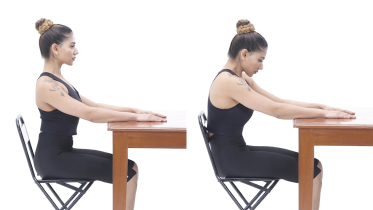 Seated pelvic tilt
Stop signs and precautions for the seated pelvic tilt
Before you start
- If you have had surgery on your spine in recent months, get the go-ahead from your surgical team or physio first.
- If you have osteoporosis or have had a fracture in your spine, keep the slouch small and ask your physio how far to go.
- If you are pregnant, check with your midwife or physio before you start.
When to stop and get help
- Pain travels into your buttock or leg, or numbness or tingling starts.
- You feel sharp or pinching pain in your lower back at either end of the movement.
- Numbness around your genitals or bottom, new trouble with your bladder or bowels, pain, tingling, numbness or weakness in both legs, or loss of feeling in one leg. Call emergency services or go to an emergency department straight away, and do not drive yourself.
- Your leg or foot gets weaker, for example your foot drags, catches on the ground or slaps down when you walk (foot drop). Get medical advice the same day. If the weakness is getting worse by the hour, go to an emergency department.
- You are pregnant and notice bleeding or fluid leaking from your vagina, regular painful tightenings, tummy pain that does not settle when you rest or comes with lower back pain, or a change in your baby's usual movements, such as moving less than usual. Stop and contact your midwife or maternity unit straight away. Do the same for a severe headache, problems with your vision such as blurring or flashing lights, pain just below your ribs, or sudden swelling of your face, hands or feet, which can be signs of pre-eclampsia. Call emergency services if the bleeding is heavy, the tummy pain is severe, bleeding or tummy pain comes with pain in your shoulder or feeling sick, faint or dizzy, or a headache comes on suddenly and is very severe.
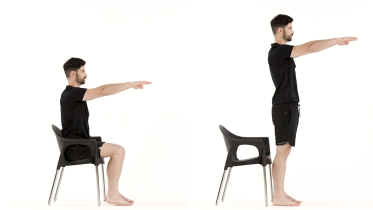 Sit to stand
Stop signs and precautions for the sit to stand
Before you start
- After a knee fracture or knee surgery, including a knee replacement, follow your surgeon's or physio's plan, and start this exercise only when they have cleared you.
- If you have had a hip replacement or other hip surgery, get the go-ahead from your surgeon or physio before you try sit to stand. Standing up from a low seat bends the hip past a right angle, and many surgeons ask you to avoid that for the first months after some operations. Ask them how high your seat should be. If you are pregnant, check with your midwife or physio before you start.
- Set up before the first stand: use a chair that will not slide, ideally with its back against a wall, and have someone nearby, or set the chair beside a kitchen counter you can reach, if you are not sure of your balance or you have fallen in the past year. Wear flat shoes that fit well and grip the floor, not socks, tights or bare feet.
When to stop and get help
- You feel dizzy, lightheaded or faint as you get up. Sit back down and wait for it to pass. If it does not pass within a minute or two, or it keeps happening, get medical advice the same day before you practice again. If you faint, or it does not settle within a few minutes of keeping still, call emergency services.
- Sharp pain in the knee, hip or lower back.
- Your knee gives way or you feel you might fall.
- Chest pain or pressure, dizziness or feeling faint, a racing or irregular heartbeat, or being far more out of breath than the effort should cause.
- You are pregnant and notice bleeding or fluid leaking from your vagina, regular painful tightenings, tummy pain that does not settle when you rest or comes with lower back pain, or a change in your baby's usual movements, such as moving less than usual. Stop and contact your midwife or maternity unit straight away. Do the same for a severe headache, problems with your vision such as blurring or flashing lights, pain just below your ribs, or sudden swelling of your face, hands or feet, which can be signs of pre-eclampsia. Call emergency services if the bleeding is heavy, the tummy pain is severe, bleeding or tummy pain comes with pain in your shoulder or feeling sick, faint or dizzy, or a headache comes on suddenly and is very severe.
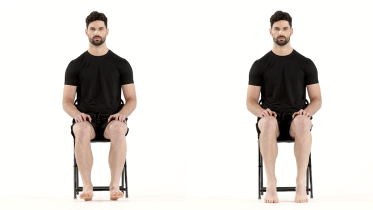 Ankle pumps
Stop signs and precautions for the ankle pumps
Before you start
- Had surgery on your foot or ankle, or wearing a cast or boot? Check which movements are allowed before you start.
When to stop and get help
- Your calf or thigh is getting more swollen, or becomes warm, tender, red or darker than usual, or has a new throbbing or cramping pain. This can be a blood clot, especially after an operation, an injury, time in a cast, boot or brace, or a spell of being much less mobile than usual, and after an operation it can also be an infection. Stop and contact your medical team or get medical advice the same day. If you are also short of breath or have chest pain, call emergency services.
- You suddenly become short of breath, get chest pain or pain in your upper back that may be worse when you breathe in, cough up blood, your heart beats very fast, or you faint. Call emergency services straight away, even if your leg looks normal, as this can be a blood clot in the lungs (pulmonary embolism).
- Any sharp pain in the foot or ankle.
- Emergency: while you are in a cast or boot, your toes turn blue, white or pale, or feel cold. Do not wait to see if raising your leg helps. Go to an emergency department straight away, and do not drive yourself. The cast or boot may be cutting off the blood supply, or pressure may be building up inside the leg (compartment syndrome), and both need checking quickly.
- In a cast or boot, the pain gets worse, your toes feel numb, tingle or burn or look more swollen, or the cast or boot feels too tight. Stop, raise your foot to about hip level and no higher, keep moving your toes and contact your fracture clinic or get medical advice straight away. If you wear a boot, loosen the straps but keep it on. Do not prop the foot higher than that and do not put ice on it, because if pressure is building up inside the lower leg both of those cut down the blood reaching your foot. If you cannot move your toes, the pain is severe even after painkillers, or the numbness, tingling, burning or swelling has not settled within 30 minutes of raising your foot, go to your fracture clinic or an emergency department straight away, and do not drive yourself.
- Since the fracture or cast, the foot or ankle is getting more painful rather than less, the skin becomes very sensitive to light touch, or the foot changes color, temperature, swelling or sweating compared with the other one, or looks shiny. See your doctor or physio as soon as you can, within a few days at most, as this can be complex regional pain syndrome (CRPS) and early treatment may help.
When to see a physio (physical therapist)
Book an assessment if the noise has arrived with pain, with swelling, with a joint that locks or gives way, or with a joint that does less than it used to, and book one if the noise has worried you enough that you have been avoiding things you would otherwise do. That last reason is a good one on its own, because the avoidance is the part that causes trouble.
The NHS thresholds for taking joint pain to a doctor are usable as they stand: pain that is stopping you doing normal activities or affecting your sleep, pain or swelling that is getting worse or keeps coming back, pain that has not improved after 2 weeks of looking after it at home, and joints that are stiff for more than 30 minutes after you wake up. It also asks parents to see a doctor if a child has joint problems.
What an examination adds is a comparison the sound cannot give you. A physio will look at how far the joint moves against the other side, test the strength around it, press the parts that hurt, watch you use it, and tell you whether the noise belongs to anything. On most noisy joints that conversation is short and the answer is that nothing needs doing.
Go the same day instead, rather than booking, if a joint is suddenly severely painful, hot, swollen or red, if you cannot move it or put weight on it, if you have joint pain with a fever or feel generally unwell, if a joint is stuck, if a replaced joint has become newly painful or stiff or feels as if it slips out of place, or if your hands have slowly become clumsy, you have numbness in both hands, or you have pain or tingling in both arms at once. Faster still, and all on the emergency lines below: a mouth stuck open, a joint that has moved out of place, a joint that came fully out and went back in again, a joint that locked at the moment of an injury, and new trouble walking, new bladder or bowel trouble or hands that have suddenly become clumsy. Every warning sign below carries its own timing, and they are not all at the same level of urgency. Matching none of them is not an all clear. That list exists to catch the things that need a faster route than an appointment, so if a joint has changed in a way you cannot place, book the appointment anyway.
Related exercise programs
Warning signs
Get emergency help now
- Emergency: very bad joint pain after a fall or an injury, you cannot walk or put weight on a joint, the joint has moved out of place, or you have tingling or no feeling in the area around the joint after an injury. Call emergency services or go to an emergency department straight away, and do not drive yourself. The NHS puts all four of those on its list for 999 or an emergency department.
- Emergency: a joint became stuck or fixed in one position at the moment of an injury, a fall, a fit or an electric shock, and you cannot move it out of that position, even if it does not look out of place and the pain is not severe. Go to an emergency department straight away, do not try to force it or push it back, and do not drive yourself. A joint can be held locked by a dislocation or a break that cannot be seen from the outside, and a shoulder held turned inwards after a fit or an electric shock is the version of this that is most often missed when it is first looked at (Vaishya and colleagues, 2026). It needs an x-ray rather than time.
- Emergency: a joint has come fully out of place and gone back in again, whether it went back by itself or somebody pushed it back. Go to an emergency department straight away, without driving yourself, even if it has settled and you can use the joint again. A joint that has been out of place is checked for a broken bone and for damage to the nerves and the blood supply, and x-rayed to confirm it is properly back in place, and that check does not wait for an appointment.
- Emergency: your mouth is stuck open and you cannot close it, for example after a big yawn, or after a blow to your face your jaw looks out of place, your teeth no longer meet as they did or you cannot bite together. Go to an emergency department straight away, supporting your jaw gently with your hand, and do not drive yourself. Call emergency services if you also find it hard to breathe or are bleeding heavily.
- Emergency: any sign of a stroke, even if it goes away. That means a face that droops on one side, an arm you cannot lift or keep up, slurred or muddled speech, weakness or numbness on one side of your body or face, sudden blurred vision, double vision or loss of sight, trouble swallowing, sudden dizziness with unsteadiness or falling over, a sudden severe headache, or a sudden fall where your legs give way but you do not black out (a drop attack). Call emergency services straight away. With neck pain, these can rarely come from a tear in an artery in the neck.
- Emergency: a new headache, or new pain on one side of your face, jaw or neck, with a drooping eyelid or a smaller pupil on the same side, or with a new pulsing or whooshing sound in one ear that keeps time with your heartbeat. Call emergency services or go to an emergency department straight away, and do not drive yourself. This can be a tear in an artery in the neck (cervical artery dissection), which can lead to a stroke.
- Emergency: a new headache or neck pain, or both, that does not feel like ordinary neck pain. If this is your first bout, judge it by how it behaves rather than by how it compares. Either of the next two is enough on its own. One, it came on suddenly, in a single moment, even if it is not severe and even if it has eased since. Sudden onset counts on its own. Two, nothing you do changes it much: no position or rest makes a real difference, and after the first day or two it has not started to settle. It counts even if you have none of the other emergency signs above, and it matters more if it started after a neck injury or strain, even a minor one, a bout of heavy coughing, or having your neck manipulated. Go to an emergency department straight away, or call emergency services if you cannot get there safely, and do not drive yourself. Do not start these exercises, and do not have any hands-on treatment to your neck, until your neck has been checked. A tear in an artery in the neck can start as pain alone, often on one side, with nothing else to find. If you can find a position that eases it, follow the same day warning sign for this below instead.
- Emergency: new problems walking, for example your legs feel stiff, heavy or weak or you have become unsteady on your feet, new trouble controlling your bladder or bowels, or hands that suddenly become clumsy, for example you can no longer do up buttons. Call emergency services straight away. These can be signs of pressure on the spinal cord in the neck.
Get help today
- Same day: a new headache or neck pain, or both, that does not feel like ordinary neck pain, that started after a neck injury or strain, even a minor one, a bout of heavy coughing, or having your neck manipulated, but that does ease when you change position or rest. Get checked the same day before you start these exercises or have any hands-on treatment to your neck. If nothing you do changes it much any more, or it has not started to settle after a day or two, follow the emergency warning sign for this above.
- Same day: hands that have slowly become clumsy, for example trouble doing up buttons or dropping things, or numbness in both hands. Get medical advice the same day. These can be signs of pressure on the spinal cord in the neck (cervical myelopathy). If the clumsiness or numbness gets worse quickly, call emergency services straight away.
- Same day: pain or tingling in both arms at the same time, rather than in one. Get medical advice the same day. This can also be a sign of pressure on the spinal cord in the neck.
- Same day: sudden severe pain in a joint, usually in just one joint, a joint that is hot, swollen or red or whose skin has changed color, a joint that has swollen up over hours or a day or two, a joint you cannot move or put weight on, or joint pain with a high temperature or feeling hot, cold, shivery or generally unwell. Any one of those is enough on its own. Get medical advice the same day, and go to an emergency department if you feel very unwell. This can be a sign of infection in the joint, which needs treatment quickly, and the NHS says that not everyone who has it runs a temperature, so a normal temperature is not an all clear. It counts for more if you have rheumatoid arthritis, diabetes or a weakened immune system, if the joint has been replaced or operated on, or if you inject drugs, because all of those make a joint infection more likely. If you have a very high or very low temperature, shivering you cannot control, you are breathing very fast or finding it hard to breathe, you are confused or your speech is slurred, your skin, lips or tongue look blue, gray, pale or blotchy (on brown or black skin this can be easier to see on the palms of the hands or soles of the feet), or you have a rash that does not fade when you press it, call emergency services, as this can be sepsis.
- Same day: at any time after a joint replacement, even years later, new pain or new stiffness in the replaced joint, with or without a high temperature or feeling hot, cold or shivery, or a replaced joint that becomes hot, red or swollen, which counts on its own, or a replaced joint that clunks and feels as if it has slipped out of place and gone back, or that gives way under you. Contact your surgical team or get medical advice the same day. A new joint can become infected long after the operation, and that needs treating quickly. A normal temperature is not an all clear: OrthoInfo says fever is no longer considered a sign of an infection after a joint replacement, that the symptoms can range from mild redness and swelling up to life-threatening septic shock and sometimes there are none at all, and it lists increased pain or stiffness in a previously well-functioning joint among them. So do not wait for a temperature, and do not treat a noisy or stiff replaced joint as the ordinary joint noise this page is about until your surgical team has heard about it. If the joint looks different, a leg looks shorter or turned, or you cannot move the joint or put weight on it, go to an emergency department straight away and do not drive yourself, or call emergency services if the pain is severe, because a replaced joint can come out of place and needs putting back by a medical team.
- Same day: a joint is stuck and will not move, or will not fully straighten, even after you relax it and gently try. Get assessed the same day by a doctor, at urgent care or at an emergency department. A joint that catches for a moment and then frees itself is not the same thing, and it is not an emergency, but tell your physio or doctor about it rather than waiting to see whether it happens again. A mouth that is stuck open and will not close, for example after a big yawn, is the one version of this that is an emergency rather than a same day matter, and it has its own line above. So is a joint that locked at the moment of an injury, a fall, a fit or an electric shock, which has its own line above as well.
- Same day: it is your knee, and it clicks painfully, locks, gives way or will not straighten. Get medical advice the same day. The NHS puts a knee that locks, gives way or painfully clicks on its urgent list, where it also says painless clicking in a knee is normal, so a knee has a faster route for a painful click than any other joint on this page.
- Same day: new joint pain and you have had cancer, now or in the past, or you have lost weight without trying. Get medical advice the same day and mention it. If you are being treated for cancer now, contact your cancer team the same day.
- Same day: pain that is worse at night, or does not ease at all when you rest. If you have had cancer, now or in the past, or you have lost weight without trying, get medical advice the same day.
- Same day: a child or teenager has a joint that is hot, red or swollen, joint pain with a high temperature or feeling hot, cold or shivery, sudden pain in the hip, thigh or knee, a limp, or cannot put weight on a leg. Get an urgent appointment with a doctor the same day, and keep them off sport and these exercises until they have been checked. If they cannot put weight on the leg, have a high temperature or seem very unwell, go to an emergency department. The NHS asks you to see a doctor if your child has joint problems, and nothing on this page was written for a child.
Book an appointment
- Within a few days: a joint cracks and then gives way under you, or feels as if it partly comes out and goes back in again. That is not joint noise, so book an assessment with a physio or doctor in the next few days, say whether the joint has ever come fully out, and ask which positions and exercises to leave out until it has been checked. If a joint is out of place now, or it came fully out and went back in again, that is on the emergency lines above. If the joint is your knee, giving way is a same day matter with its own line above, and so is a replaced joint that gives way or feels as if it slips out of place.
- Within a few days: the joint hurts in the movement that makes the noise, or the pain is stopping you doing normal things, affecting your sleep, getting worse, keeps coming back, or has not improved after 2 weeks of looking after it at home. See your doctor within a few days, which is what the NHS advises, and read the page for that joint rather than this one, because the pain is what gets treated and the noise is not. If it is your knee that clicks painfully, that has its own same day line above.
- Within a few days: your joints are noisy and also stiff for more than 30 minutes after you wake up, and nobody has told you why. See your doctor within a few days, which is what the NHS advises, and start with our page on morning stiffness rather than this one, because how long the stiffness lasts has its own list of causes and its own warning signs.
Common questions
Why do my joints crack so much?
Usually because of how much you move and how much you notice, not because something has changed inside the joint. Joints make noise when surfaces separate under traction and when tendons and other soft tissue travel across bony edges, and a body that gets up from a chair fifty times a day gives both of those plenty of chances. Noise is also not a measure of anything: it does not grade wear, it does not predict pain, and it cannot be used to track whether you are getting better, because joints routinely get stronger and more comfortable while making the same sound. What counts is whether the noise travels with pain, swelling, locking, a joint giving way, or a joint that does less than it did. If it travels alone, there is nothing here to treat.
Why do my joints crack and hurt?
Then the pain is the finding and the noise is the passenger. A joint that hurts in the same movement that makes the sound needs looking at, and so does pain that is stopping you doing normal things, affecting your sleep, getting worse, or still there after 2 weeks of looking after it at home, which is where the NHS draws its line for seeing a doctor. Do not try to work out which structure it is by listening to it, and do not keep reproducing the noise to test whether it still hurts. Start with the page for that joint rather than this one: the knee, shoulder, jaw, hip and hand all have their own, and they carry the exercises and the warning signs that go with each.
Why do my joints crack when I stretch?
A stretch pulls a joint toward the end of its range and puts the surfaces under traction, which is the situation in which a joint pops. That is what researchers filmed when they put ten finger joints under traction in an MRI scanner and caught the crack happening as a cavity formed inside the joint (Kawchuk and colleagues, 2015). A pop at the end of a stretch is not the sound of something tearing, and it does not mean the stretch was too far. Pain at the end of the stretch is a different matter, and so is a stretch that makes a joint feel as if it is about to give way or slide out, which is worth asking a physio about before you keep doing it.
How do I make my joints stop cracking?
Nothing this page could verify makes a joint quieter on purpose, and most of what gets suggested online is somebody guessing. The two things worth saying are that you do not need to make it stop, and that the common do-it-yourself answer, avoiding the movement that makes the sound, costs you range and strength over months and buys nothing. If the noise bothers you because it is new, or because it has arrived with pain or a feeling of looseness, that is a reason for an assessment, not for a technique. And whatever you do, do not try to make a stiff neck crack by twisting or wrenching it, which is the one thing on this page we ask you not to do.
Why do I feel like I need to crack my joints all the time?
It is a very common habit and it usually behaves like one: the urge builds, the crack relieves it for a while, and the cycle repeats. Nothing read for this page explains the mechanism behind that feeling, so we are not going to invent one. What can be said is that cracking your knuckles has not been shown to cause arthritis, so damage is not the reason to stop. The 1990 study of hand function in 300 patients did find habitual crackers more likely to have hand swelling and a weaker grip, and two later studies that looked again found neither, so the habit is not the thing to worry about either. A hand that aches, swells or has got weaker is, and that is a different question with its own answers above. If the joint you keep wanting to crack is your neck, the answer is different and stricter, and it is in the section on cracking your own neck.
Why do my joints crack so much as a teenager?
Noisy joints are common in teenagers and young adults, and in that age group the noise on its own is rarely the interesting part. What is worth acting on is the same list as for an adult, with two differences: nothing on this page was written for a child or teenager, and a growing joint has its own reasons for being sore. A limp, a joint that is hot, red or swollen, joint pain with a temperature, or being unable to put weight on a leg means a doctor the same day rather than a wait, and the warning signs on this page spell that out. The NHS also asks parents to see a doctor if a child has joint problems, which is a lower threshold than the one it sets for adults, and it is the right one to use.
References
- NHS. Joint pain. Page last reviewed 26 February 2026. https://www.nhs.uk/conditions/joint-pain/
- NHS. Knee pain. Page last reviewed 21 December 2023. https://www.nhs.uk/symptoms/knee-pain/
- Kawchuk GN, Fryer J, Jaremko JL, Zeng H, Rowe L, Thompson R. Real-time visualization of joint cavitation. PLoS One. 2015;10(4):e0119470. https://doi.org/10.1371/journal.pone.0119470
- deWeber K, Olszewski M, Ortolano R. Knuckle cracking and hand osteoarthritis. Journal of the American Board of Family Medicine. 2011;24(2):169-174. https://doi.org/10.3122/jabfm.2011.02.100156
- Castellanos J, Axelrod D. Effect of habitual knuckle cracking on hand function. Annals of the Rheumatic Diseases. 1990;49(5):308-309. https://doi.org/10.1136/ard.49.5.308
- Unger DL. Does knuckle cracking lead to arthritis of the fingers? Arthritis and Rheumatism. 1998;41(5):949-950. PMID 9588755. https://pubmed.ncbi.nlm.nih.gov/9588755/
- Persons JE, Stauffer S. Fatal vertebral artery dissection following self-manipulation of the cervical spine. American Journal of Forensic Medicine and Pathology. 2024;45(4):352-354. https://doi.org/10.1097/PAF.0000000000000932
- Boutin RD, Netto AP, Nakamura D, Bateni C, Szabo RM, Cronan M, Foster B, Barfield WR, Seibert JA, Chaudhari AJ. "Knuckle Cracking": Can Blinded Observers Detect Changes with Physical Examination and Sonography? Clinical Orthopaedics and Related Research. 2017;475(4):1265-1271. https://doi.org/10.1007/s11999-016-5215-3
- Yildizgoren MT, Ekiz T, Nizamogullari S, Turhanoglu AD, Guler H, Ustun N, Kara M, Ozcakar L. Effects of habitual knuckle cracking on metacarpal cartilage thickness and grip strength. Hand Surgery and Rehabilitation. 2017;36(1):41-43. https://doi.org/10.1016/j.hansur.2016.09.001
- Raj S, Kumar D, Vb S, Jose A, Goni VG. Brown-Sequard Syndrome after Self-administered Manual Manipulation of the Cervical Spine: A Case Report. Journal of Orthopaedic Case Reports. 2026;16(10):97-102. https://doi.org/10.13107/jocr.2026.v16.i10.8200
- American Academy of Orthopaedic Surgeons. Infection after joint replacement. OrthoInfo. https://www.orthoinfo.org/en/diseases--conditions/joint-replacement-infection/
- American Academy of Orthopaedic Surgeons. Total knee replacement. OrthoInfo. https://www.orthoinfo.org/en/treatment/total-knee-replacement/
- NHS. Septic arthritis. Page last reviewed 3 September 2026. https://www.nhs.uk/conditions/septic-arthritis/
- Vaishya R, Saiyed A, Vaish A, Botchu R, Gopinathan P, Kambhampati SS, Migliorini F. Chronic posterior shoulder dislocation: current evidence, treatment options, and a decision-making algorithm. Journal of Orthopaedics. 2026;77:142-149. https://doi.org/10.1016/j.jor.2026.05.015
- Arning C, Hanke-Arning K, Eckert B. The clinical features of dissection of the cervical brain-supplying arteries. Deutsches Arzteblatt International. 2022;119(35-36):581-587. https://doi.org/10.3238/arztebl.m2022.0238
Written and checked by the PocketPhysio editorial team. Last updated 2026-11-03.
This page is general education, not a diagnosis or a personal treatment plan. See a physiotherapist or doctor for advice about your own situation.