
Joint stiffness in the morning: how long it should last
Warning signs, and when to get help
How long should joint stiffness in the morning last?
Start here, because the answer decides everything else on this page. Time it. Not roughly, and not from memory at the appointment, but on three ordinary weekdays, from your feet hitting the floor to the moment you stop noticing.
The NHS draws the line in one sentence on its rheumatoid arthritis page, comparing the two directly: stiffness from osteoarthritis usually wears off within 30 minutes of getting up, and morning stiffness in rheumatoid arthritis often lasts longer than that. For polymyalgia rheumatica it names muscle stiffness in the morning lasting longer than 45 minutes as the main symptom, affecting the muscles around the shoulders, neck and hips.
The 30 minutes is not only a description. NICE builds it into the rule a doctor uses to diagnose osteoarthritis without a scan: someone 45 or over, with joint pain that comes on with activity, and either no morning joint stiffness or stiffness that lasts no longer than 30 minutes (NG226, recommendation 1.1.1). The same guideline lists prolonged morning stiffness among the atypical features that should prompt a clinician to think about a different or additional diagnosis. So the number you write down is the number the appointment turns on.
Those are rough markers rather than tests, and real mornings are untidy. A stiff knee on a cold day and a bad night's sleep can push half an hour into fifty minutes without anything new being wrong. What matters is the habit of the thing over a fortnight: 20 minutes that is gone by the time the kettle boils, every day, behaves differently from 90 minutes that drags into the afternoon.
Write down which joints, how long, and whether they swell. Clinicians ask those three because the answers separate the common from the uncommon faster than any examination does, and most people arrive having never counted.
Is it normal to have stiff joints in the morning?
For a lot of people, yes, in the sense that it is common and it is not a sign of anything that needs treating. A joint that has held one position for seven or eight hours takes a few minutes of being asked before it moves freely, and the NHS describes increased pain and stiffness after you have not moved your joints for a while as a main symptom of osteoarthritis rather than as a separate problem.
The reason the question keeps getting asked is that people notice the same thing happening after an hour at a desk. That is not a coincidence and it is not a second condition. Stiff joints in the morning and stiff joints after sitting are the same mechanism on two different timescales, which is why the advice at the bottom of this page is about how often you move rather than how hard. If a long drive or a long meeting stiffens you up the way a night does, that is consistent and it is worth mentioning, because it tells a clinician the stiffness is position-related.
What makes it not ordinary is duration, spread and swelling. Minutes rather than hours, one or two joints rather than many, and no visible swelling is the common picture. The other direction, hours of it, several joints, both sides, with swelling you can see, is the picture that earns an appointment rather than a routine.
What morning stiffness usually points to
None of this is a diagnosis. These are the possibilities a physio weighs, with the clue that usually sits beside each one.
Wear-related change in the joint
The common version, and the reason most people reading this page are stiff. The NHS gives pain and stiffness as the main symptoms of osteoarthritis, with more pain and more stiffness when you have not moved a joint for a while, joints that can look slightly larger or more knobbly than usual, and sometimes a grating or crackling sound as you move. The knees, hips and small joints of the hands are the places it turns up most.
The giveaway is the shape of the day. Stiff first thing, loose after a few minutes of moving, stiff again after an hour in a chair, sorer in the evening after a heavy day. If that is your pattern, the exercise side of it lives on our knee osteoarthritis, hip osteoarthritis and hand osteoarthritis programs.
Inflammatory arthritis
A smaller group has joints inflamed by the immune system rather than loaded past what they can take, and it looks different. The NHS describes rheumatoid arthritis as causing joints to swell and become hot and tender to touch, with the small joints of the hands and feet often affected first, usually symmetrically, and morning stiffness that often lasts longer than the osteoarthritis half hour. Firm swellings under the skin near affected joints, called rheumatoid nodules, develop in some people.
Two features in that description do most of the sorting work. Swelling you can see, in several small joints, on both sides. And stiffness measured in hours rather than minutes. If that is closer to your morning, the appointment is a priority rather than a convenience. NICE asks a doctor who suspects inflammation of the joint lining to refer for a specialist opinion, and to do it urgently when the small joints of the hands or feet are involved, when more than one joint is involved, or when three months or more have already passed since the symptoms started (NG100, recommendation 1.1.1). Our rheumatoid arthritis program sets out the exercise side once a rheumatology team is involved. If you already have rheumatoid arthritis and get new neck pain, or a new headache at the back of your head that keeps coming back, that has its own line in the warning signs below, because the top of the neck can be affected in rheumatoid arthritis.
Polymyalgia rheumatica
This one belongs on a page about morning stiffness more than it belongs anywhere else, because stiffness is the complaint rather than a side note. The NHS describes pain, stiffness and inflammation in the muscles around the shoulders, neck and hips, with morning stiffness lasting longer than 45 minutes as the main symptom, alongside extreme tiredness, loss of appetite, weight loss and low mood. It asks you to see a doctor if you have had pain and stiffness for more than a week.
The 45 minutes has a history behind it. It is one of the scored items in the classification criteria agreed in 2012 by the European and American rheumatology bodies, for people aged 50 and over with new pain in both shoulders (Dasgupta and colleagues, 2012). Those criteria were written to group patients for research and their authors say plainly that they are not meant for diagnosis, so the duration moves an appointment along rather than settling anything.
People describe it as not being able to get out of bed or lift their arms to wash their hair, and they often put it down to having overdone it. Two shoulders and two hips at once, arriving over days rather than years, is not an overdoing-it pattern. The reason this page asks for a doctor within a few days, and the same day if any of the arteritis signs are there, is in the giant cell arteritis section further down.
Inflammatory back pain
Stiffness that is worst in the lower back and buttocks, in a younger adult, follows its own rules. For ankylosing spondylitis the NHS lists pain that gets better with exercise but does not improve or gets worse with rest, pain and stiffness worse in the morning and at night, waking regularly in the night because of it, and pain around the buttocks, usually starting between 18 and 40. It also names enthesitis, painful inflammation where bone joins tendon, with the heels and the shin among the usual sites.
Backward is the word for it. Rest makes it worse and movement makes it better, which is the opposite of what most people expect from a sore back. Our page on lower back pain in the morning carries the referral detail and the night waking pattern, and the ankylosing spondylitis program covers the daily exercise side.
One thing to know about your eyes if this is your pattern. The NHS says it is common for people with ankylosing spondylitis to have other conditions as well, and it names iritis, also called acute anterior uveitis, where the front part of the eye becomes red and swollen. A painful, very red eye, new sensitivity to light or new blurring is on the same day line in the warning signs below, with the route to use, and that applies whether or not anybody has confirmed an arthritis yet.
Perimenopause and menopause
This is one of the most searched versions of the question, which is reason enough to name it rather than leave a reader to wonder whether she is imagining it. New aching and stiffness arriving alongside the other changes of a perimenopause is a recognized complaint and we treat it as its own topic: our perimenopause joint pain and muscle loss page is the one to start with, and the page on exercise for hot, stiff joints is the practical half. Everything on this page about duration still applies, because a perimenopause does not exempt anyone from the 45 minute question or from the warning signs below.
Widespread stiffness with widespread pain
Some people are stiff everywhere and sore everywhere, sleep badly, and have no swollen joints to show anybody. That picture is handled on our fibromyalgia program.
If it is a child or a teenager
Nothing on this page was written for a child, and the numbers least of all: the NICE rule that uses the 30 minutes applies to people 45 or over, and the 45 minutes belongs to criteria written for people 50 and over. A child or teenager who is stiff and sore first thing, limps for the first part of the morning, or has joints that swell needs seeing rather than a routine. OrthoInfo lists joint pain in the morning that gets better by the afternoon among the commonest symptoms of arthritis in children (juvenile arthritis) and says a morning limp from an affected knee may be the first sign. Early care is what protects the joint, and there is an eye reason to go as well: the eye inflammation that can come with it (uveitis) usually causes no symptoms, so it is found by an eye specialist's slit lamp examination rather than by anything you would notice at home. Growing bones have their own common complaints, and in a sporty child the heel and the front of the knee are the usual two, covered on our Sever's disease and Osgood-Schlatter disease pages.
One pattern does not wait a week or two. A limp that carries on through the day, is getting worse, or comes with pain in the hip, groin, thigh or knee is a same day problem and it has its own line in the warning signs below, because some hip problems in growing children, such as a slipped growth plate at the top of the thigh bone (slipped capital femoral epiphysis), cause a limp and a stiff hip and need checking quickly. A child who cannot put weight on the leg, or who has a temperature with a painful joint, goes straight to an emergency department.
If you are pregnant or have recently given birth
Aching and stiff joints are common in pregnancy and in the months after a birth, and the assessment belongs with your own maternity team rather than with this page. If back and pelvic pain is the main part of it, start at our pregnancy back and pelvic pain program, and after a birth the postnatal core and pelvic floor program is the better starting point. Check with your midwife, doctor or physio before you begin anything here, and read the precautions listed with the program further down this page, because several of the exercises are done lying flat on your back. If you are pregnant and past the first three months, check with your physio before exercising flat on your back.
One more thing if you are pregnant and the pain over your pubic bone came on in a single moment, with a crack, pop or tearing feeling, or you suddenly cannot stand, walk or put weight on one or both legs: do not use the way of getting out of bed described further down this page. Contact your maternity unit straight away and ask them to check the joint at the front of your pelvis, and while you wait, stay on your side with your knees together and a pillow between them, and get help to move rather than standing on one leg or letting your legs come apart.
Giant cell arteritis: the pattern that is not a stretching problem
This is the part of the page to read even if you skip the rest.
Giant cell arteritis is inflammation of arteries in the head, and the NHS lists frequent severe headaches, pain or tenderness at the side of the head or on the scalp, jaw pain while eating or talking, and vision problems such as double vision or loss of vision in one or both eyes. It says the condition can lead to serious problems like stroke and blindness if it is not treated quickly, and that treatment is started before the diagnosis is confirmed because of the risk of vision loss. It also says that some people with it develop polymyalgia rheumatica, which causes pain, stiffness and inflammation in the muscles around the shoulders, neck and hips.
The link runs the other way as well, and that is why it sits on a morning stiffness page. The NHS polymyalgia rheumatica page says up to 1 in 5 people with polymyalgia rheumatica develop it. So a reader who came here with two stiff shoulders is in the group this warning is written for, not reading about somebody else.
On urgency we go higher than the NHS does, deliberately. The NHS routes suspected temporal arteritis to an urgent doctor's appointment or NHS 111, and says vision problems need a same-day appointment with an eye specialist at a hospital eye department. The 2020 British Society for Rheumatology guideline calls giant cell arteritis a medical emergency. It asks for anyone with a history of new visual loss, transient or permanent, or double vision, to be evaluated as soon as possible on the same calendar day by an eye specialist, and for anyone with suspected giant cell arteritis and no eye symptoms to be seen by a specialist on the same working day where that is possible and within 3 working days in every case (Mackie and colleagues, 2020). The practice points written from that guideline for ophthalmologists note that the majority of visual loss in this condition occurs before glucocorticoid treatment is started (Mollan and colleagues, 2021). That last point is the whole argument: the damage is mostly done before anyone gets treated, so the delay is what costs the sight.
Which is why a sight change on this page is an emergency line and not an appointment, and the headache, scalp and jaw symptoms without a sight change are a same day line. Both are in the warning signs below, with what to do written out.
Morning stiffness in the hands, the knees, the hips and the feet
Where it bites first says something, mostly about what you ask of that joint in the first ten minutes.
Hands are the usual answer, because a kettle and a shirt button test them before you are properly awake. Several small joints swelling together, warm to touch, on both hands, is the pattern that moves an appointment up the list. The base of the thumb on one hand, knobbly and sore to pinch, is a different and far more common story, which our page on pain at the base of the thumb covers.
Knees and hips show up as the first few steps and the first stairs. Start-up pain that clears in a minute or two is ordinary, and a hip or knee still stiff half an hour after you got up has crossed the 30 minute mark the NHS uses to separate wear-related stiffness from the inflammatory kind. Our page on hip pain when sitting covers the same joint's other complaint, which is low chairs.
Feet have their own version. Pain and stiffness under the heel in the first steps out of bed is usually the plantar fascia rather than arthritis, and heel pain in the morning is the page for it. Both heels hurting, together with swelling or morning stiffness in other joints or the lower back, is the combination that goes on the warning list instead.
The lower back deserves naming separately, because it is the one region where morning stiffness is often put down to the mattress. Wear-related change in the discs and joints of the spine shows up as stiffness that is worst first thing and loosens with movement, which is covered on our degenerative disc disease program, and the whole pattern, including when it points at something inflammatory instead, is worked through on lower back pain in the morning.
Necks are worth a word. A neck that is stiff on one particular morning, after a night in an odd position, is on our stiff neck after sleeping page and is a different animal from a neck that is stiff every morning as part of a bigger pattern.
Two more that people search for and this page does not try to answer, the first of which has a timing to it.
A knee that is stiff in the mornings after a knee replacement is a rehabilitation question with its own answer, so read stiffness and bending after a knee replacement and follow your surgical team rather than anything here. Timing matters there in a way it does not on the rest of this page. A replaced knee that has stopped bending or straightening any further from week to week, or is going backward, is worth raising with your physio or surgical team now rather than at your next routine appointment, because where a stiff replacement has to be freed up under anesthetic, when that is done is associated with how much movement comes back. That page carries the detail and the numbers. One more thing applies to any replaced joint, hip or knee, however long ago: new stiffness in a joint that had been working well is one of the signs of an infection around a replacement, and OrthoInfo says a fever is no longer considered a sign of one, so there may be nothing else to see. That has its own line in the warning signs below, and it goes to your surgical team rather than being moved through.
And supplements: we have not verified the evidence for any of them against morning stiffness, so this page states nothing about them, which is more use to you than a confident paragraph would be. Ask a pharmacist or your doctor, particularly if you take prescribed medicines, because interactions are their territory and not a website's.
How do you get rid of morning stiffness?
You do not get rid of it so much as shorten it, and the way to shorten it is to move the stiff joints before you ask them to carry you. What follows is the routine we give in clinic, in two parts, because the part that gets skipped is always the first one.
Before you start these exercises
One thing before any of it, because not every stiff morning is a stiffness to move through. If a joint is hot, red and swollen, or your joint pain comes with a high temperature or you feel hot, cold or shivery, leave all of this out and get medical advice the same day. The same goes for anything in the giant cell arteritis section above, and for pain and stiffness in both shoulders, both hips or your neck that lasts longer than 45 minutes and has gone on more than a week: those need a doctor before they need a routine. One more belongs here because this page is about stiffness: if a joint replacement that had been working well is newly stiff or newly painful, that is not the ordinary morning stiffness this page is about, so contact your surgical team or get medical advice the same day before you start working on it, and read the replacement line in the warning signs below. Read the warning signs section before your first morning rather than after it, because the lines on it are not all at the same level of urgency.
Then the gates, which decide whether and how you start. After a knee fracture or knee surgery, including a knee replacement, follow your surgeon's or physio's plan, and start the heel slides only when they have cleared you. If you have had a hip replacement, get the go-ahead from your surgeon or physio before the knee to chest stretch, the heel slides, sit to stand, rolling out of bed and getting down onto hands and knees for the cat camel, because all five bend the hip, take the top knee across your body, or turn the hip inward as you get down to the floor and back up, and many surgeons ask you to avoid that for the first months after some operations. After a hip or knee replacement, kneeling may not be comfortable yet either. Use the chair version of the cat camel described below until they have cleared the floor version. With low bone density (osteoporosis), or if you have had a fracture in your spine, check with your physio before the knee to chest stretch and the cat camel, the chair version as well as the floor one. After spinal surgery, after recent heart or chest surgery, or if you have been told you have narrowing of the spinal canal (spinal stenosis) or a forward-slipped vertebra (spondylolisthesis), get your surgical team's or physio's go-ahead before the cat camel and before pushing up out of bed with your arms. Your surgical team also decides how you get out of bed after an operation on your spine: they may want a particular method, a brace or someone to help you at first, and their instructions come before the way of getting up described below.
Three more, by body part. After a broken hand or finger, a tendon repair, a carpal tunnel release or other hand surgery, do only the finger movements your surgeon or hand therapist has shown you, and with rheumatoid or another inflammatory arthritis keep the fists gentle on days when the joints are hot and swollen. After shoulder surgery, a shoulder fracture or a dislocation, or after neck surgery or a broken collarbone, check with your surgeon or physio before the shoulder circles. After a broken wrist, hand or forearm, or surgery on any of them such as a tendon repair, start only when your doctor, surgeon, physio or hand therapist says the bone or repair is ready for this, and follow their plan for how much to do, because the cat camel on hands and knees and pushing up out of bed through your arms put your body weight through the wrist and hand, which is a different question from how far the fingers may move. The same check applies before an operated or broken shoulder takes weight through that arm. After surgery on a foot or ankle, or while you are in a cast or boot, find out which ankle movements are allowed before the ankle pumps, and with a heart or lung condition, high blood pressure or any recent operation, ask your doctor or physio how much to walk and how fast. The rest of the precautions, including pregnancy, falls and blood pressure, are listed with the program below and apply here as well.
One stop sign is about your heart rather than your joints, and it covers the whole routine rather than one exercise. While you exercise, and that includes the walking, stop straight away if you have any of these: chest pain or pressure, dizziness or feeling faint, a racing or irregular heartbeat, or being far more out of breath than the effort should cause. If chest pain, pressure or tightness does not ease quickly when you rest, spreads to your arm, neck, jaw, stomach or back, or comes with sweating, feeling sick, feeling light-headed or being short of breath, call emergency services straight away, as this can be a heart attack. If it eases quickly and none of these happen, get medical advice the same day, and do not exercise again until you have been checked. If you faint while exercising, call emergency services, even if you feel fine again quickly.
The in-bed sequence, before your feet touch the floor
Five or six minutes, lying on your back, while you are still under the covers. Work from the feet up, so each joint is moving before the one above it has to do anything. Three of these are filmed sitting or standing, because that is how they are usually taught, so the in-bed version is written out here and the linked page carries the rest of the detail and the stop signs.
Start with ankle pumps, 10 of them on the first morning. Lying down, point both feet away from you as far as they go, then pull the toes back up toward your shins. Then heel slides, 10 slowly on each leg: slide one heel along the mattress toward your bottom with the knee pointing at the ceiling, keep the heel in contact the whole way, go until the knee feels firm rather than painful, then slide it back out straight.
Then the pelvic tilt, which needs a starting position rather than just a flat back. Bend both knees up with your feet flat on the mattress, about hip width apart. Breathe out, draw your belly button in toward your spine and squeeze your buttocks, so your lower back presses down into the bed and your tailbone curls up a little. Keep it small, so your hips never lift into a bridge, hold about 5 seconds while you keep breathing, then relax your stomach and buttocks fully before the next one. One set of 10 is enough to start with.
Then the knee to chest stretch, one leg at a time, with the other leg resting on the bed either bent or straight. Hold the front of the shin just below the kneecap with both hands and draw the knee gently in until you feel a mild stretch low in the back or in the buttock, keeping your head and shoulders down on the pillow. Hold it still for about 15 seconds without bouncing, then lower the foot and change legs, three holds each side. If you are straining, or the front of the hip or groin pinches as the knee comes in, you are pulling too hard, so hold the knee less close.
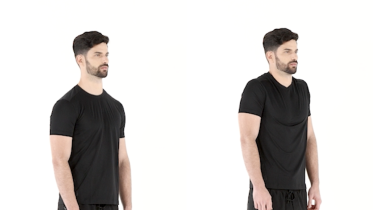
Finish lying down with the arms and hands. Shoulder circles work on your back or sitting on the edge of the bed, 10 slow ones: lift both shoulders toward your ears, roll them back so the shoulder blades draw together, let them sink away from your ears, then relax before the next. Tendon glides take the fingers through five shapes in order, and they are the ones most people need and nobody thinks to do before they pick up a kettle, so rest the elbow on the mattress with the forearm upright and go through the sequence 5 times, holding each shape about 3 seconds. Keep all of it small to begin with and let the range open up as you go, rather than starting at the end of the range and forcing it.
The standing sequence, in the first ten minutes up
Getting up is the part to slow down for, not the part to get over with. Put a light on before you stand, and sit on the edge of the bed for a moment first, because a body that has been still for eight hours is at its least reliable in the first few steps. Getting out is a movement in its own right, the log roll out of bed: bend both knees up, roll onto your side in one piece so your knees and shoulders turn at the same moment, slide your feet over the edge, and push up to sitting through your arms as the weight of your legs comes down, rather than sitting straight up like a sit-up. Sit with both feet flat on the floor until you feel steady, then stand.
If you feel dizzy, lightheaded or faint, or the room seems to spin, as you move in bed or sit on its edge, stop, lie back down on the bed if you can, and keep still until it passes. If it does not pass within a minute or two, or it keeps happening, get medical advice the same day before you practice again. If you faint, it does not settle within a few minutes of keeping still, or your vision suddenly blurs or goes double, call emergency services.
Wear flat shoes that fit well and grip the floor, not socks, tights or bare feet. That is the one line here that stops something rather than loosening something, and the first trip across a hard floor in socks is how a stiff morning becomes a fall. If you do fall and cannot get up, or you think you may have hurt your head, neck, back or hip, stay where you are, keep warm and call emergency services, or get someone to call for you. Do not let anyone haul you up first. That holds whatever your age, and it holds more firmly if you have a replaced hip or knee, low bone density or a spine that has fractured before, because the bone around a new joint and a thinned bone both break at loads that would not have broken them.
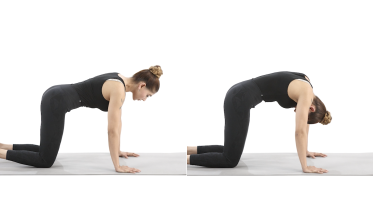
The cat camel comes next, on hands and knees, moving the whole spine slowly between rounding and arching, 5 cycles to begin with. Do it sitting in a chair instead, as the seated pelvic tilt, which goes both ways sitting down, if getting down to the floor and back up is hard, if you have fallen in the past year, if you are on your own in the house, or if your wrists or knees will not take kneeling. A mattress is too soft to kneel on steadily, so this one is the floor or the chair rather than the bed.
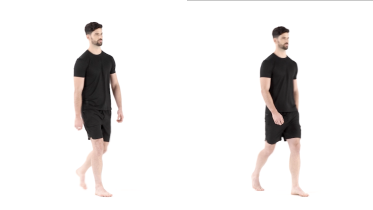
Then walk. A few minutes around the house before you do anything demanding, building toward 10 to 20 minutes of brisk walking on most days once the day is underway, adding time before speed. If you have fallen in the past year or feel unsteady on your feet, build up to the brisk part from strength and balance work rather than straight from here: the UK consensus statement on exercise for osteoporosis recommends gradual progression from strength and balance exercise to higher impact exercise such as brisk walking for the frailer older adult, to prevent an increase in falls risk, and it reports evidence that brisk walking raised the fracture risk of people who were already likely to fall and to break a bone (Brooke-Wavell and colleagues, 2022). Our balance and falls prevention program is where that order starts, and the few minutes round the house are not the part this applies to. Of everything on this page the walking is the one with the least excuse attached to it, and it is where the exercise treatment the next section describes actually starts.
Two additions that cost nothing. Heat early, if heat suits you, from a shower or warm water over stiff hands at the sink. Do not use heat on skin that has lost feeling or cannot feel heat properly, because it can scald or burn without you noticing. And put the hard jobs later: socks, shoes, bed making and anything heavy are much easier after ten minutes of moving than in the first two, and shifting them down the order is free.
Then spread the day out, because the same stiffness rebuilds in an hour of sitting. A short walk, or a few repetitions of sit to stand every hour, works better than one long effort at six o'clock. Three to five at a time is plenty, because this is a break from sitting rather than a strength set, and the strength dose on the exercise page is a different job done once a day.
Use a chair that will not slide, ideally with its back against a wall, and have someone nearby, or set the chair beside a kitchen counter you can reach, if you are not sure of your balance or you have fallen in the past year. If you have had a hip replacement, get the go-ahead from your surgeon or physio before you try sit to stand. Rising from a seat bends the hip past a right angle, and many surgeons ask you to avoid that for the first months after some operations. Our page on back pain when sitting makes the same point for a sore back.
What a doctor may offer, and what to take to the appointment
Exercise is not the junior partner here. For osteoarthritis the NHS puts it among the treatments that matter most, and says that holds however old you are and however fit you are. For an inflammatory arthritis it sits alongside the medicines rather than in place of them, which is worth saying plainly because some people stop exercising when they start treatment and others stop treatment when they start exercising.
Medicines are a conversation for a prescriber rather than a website, because what is available differs by country and what suits you depends on your other conditions. Two things are general. The NHS lists anti-inflammatory painkillers among the medicines for osteoarthritis and says steroid injections work quickly and can ease pain for several weeks or months. And for polymyalgia rheumatica it names prednisolone as the main treatment, usually a course lasting 12 months to 2 years, with the dose reduced gradually. Never stop or change a prescribed medicine on your own. If you have diabetes, tell your doctor first: a systematic review found that a steroid injection into a joint can push blood sugar up for several days, and advised checking your levels for up to a week afterward (Choudhry 2016).
Take four things to the appointment. The three morning timings you wrote down. Which joints, and whether they swell. Whether anything is worse at night or does not ease at rest. And whether rest helps or makes it worse, because that one answer separates an inflamed joint from a worn one more cleanly than most tests.
Two things change how fast that appointment should happen. If you have had cancer at any time, or you have lost weight without meaning to, say so at the start rather than at the end, and read the cancer lines in the warning signs section, because new joint, back or neck pain in that situation is checked sooner and by a different route, and because back or neck pain that feels like a tight band around the body, new weakness, numbness or loss of feeling in an arm or leg, new trouble walking, or trouble controlling your bladder or bowels is an emergency in that situation, with or without any pain.
Exercises that can help
These are a way to start the day moving rather than a program for any diagnosis, and they are ordered as the two sequences described above. The first five are done lying down, so they work on a mattress before your feet touch the floor: ankle pumps, heel slides, the pelvic tilt, the knee to chest stretch and shoulder circles. The tendon glides follow, lying down or sitting on the edge of the bed. The cat camel comes next, on hands and knees, and brisk walking is the one that finishes the job. Typical starting doses, each of which your physio will adjust: 10 to 20 ankle pumps at a time, several times a day; 10 to 15 slow heel slides, 2 or 3 times a day; 2 to 3 sets of 10 pelvic tilts holding about 5 seconds; 3 to 5 gentle holds of 15 to 30 seconds on each leg for the knee to chest stretch; 10 to 15 slow shoulder circles; 5 to 10 slow cat camel cycles, 1 to 3 times a day; the full tendon glide sequence 5 to 10 times, holding each position about 3 to 5 seconds, 2 to 4 times a day; and 10 to 20 minutes of brisk walking on most days, adding time before speed. Those are where this is going over a few weeks rather than where it starts, so take the bottom of every range on the first morning, one round of each, and add to one exercise at a time once the morning you have just had was no worse for the day before. Keep every movement small while you are still stiff and let the range grow over the first few minutes rather than forcing it. Keep the ache mild enough that you would not call it pain, and expect it back to its usual level by bedtime: NICE asks clinicians to tell people with osteoarthritis that joint pain may increase when they start exercising and that keeping it regular is still worth it (NG226, recommendation 1.3.3), but a joint that is worse the next morning means the amount comes down rather than up. On a worse morning, halve the repetitions and keep the range small rather than skip the routine, because a joint left still all morning is stiffer by lunchtime; if a joint is hot and swollen, leave that joint out and read the warning signs below. If you have rheumatoid arthritis, or you have been told the spaces around the nerves or spinal cord in your neck are narrowed, check with your physio or doctor before you start. The same applies if you have Down syndrome or have been told the top of your neck is unstable. With rheumatoid or another inflammatory arthritis, keep the fists of the tendon glides gentle on days when the joints are hot and swollen, and ask your physio what suits you. If a joint is hot, red and swollen, or your joint pain comes with a high temperature or you feel hot, cold or shivery, leave all of these out and get medical advice the same day before you start any of them. After a broken hand or finger, a tendon repair, a carpal tunnel release or other hand surgery, how far you may move the fingers and thumb is often limited for several weeks, so do only the movements your surgeon or hand therapist has shown you, and after a wrist fracture keep moving your fingers and thumb as far as the cast or splint allows unless your fracture clinic has told you otherwise. After a broken wrist, hand or forearm, or surgery on any of them such as a tendon repair, start only when your doctor, surgeon, physio or hand therapist says the bone or repair is ready for this, and follow their plan for how much to do. That is a separate question from how far the fingers may move, because the cat camel on hands and knees and pushing up out of bed through your arms both put your body weight through the wrist and hand, and the same check applies before an operated or broken shoulder takes weight through that arm. After shoulder surgery, including a rotator cuff repair, or after a shoulder fracture or dislocation, follow your surgeon's or physio's plan for the shoulder circles and do only the movements and range they have cleared, and many plans allow only passive movement at first, where the arm is moved for you and its muscles stay relaxed; after neck surgery, a broken bone in the neck or a broken collarbone, check with your surgeon or physio first. After surgery on a foot or ankle, or while you are wearing a cast or boot, find out which ankle movements are allowed before you start the ankle pumps. After a knee fracture or knee surgery, including a knee replacement, follow your surgeon's or physio's plan, and start the heel slides only when they have cleared you. With low bone density (osteoporosis), ask your physio before the knee to chest stretch and before the cat camel, and keep the rounding of the cat camel small, in the chair version as well as on the floor, because deep forward bending and end range twisting are usually limited. If you have had a fracture in your spine, check with your physio before you begin, and after spinal surgery follow the plan from your surgical team rather than this page, including how they want you to get out of bed. After recent heart or chest surgery, get your surgeon's or surgical team's okay before the cat camel and before pushing up out of bed with your arms, because both load the healing breastbone, and if it clicks, grinds, shifts or feels as if it is moving while you do either, stop and contact your surgical team the same day. If you have been told you have narrowing of the spinal canal (spinal stenosis) or a forward-slipped vertebra (spondylolisthesis), ask your physio before you add the arching half of the cat camel, because bending backward often aggravates both. If you have had a hip replacement, get the go-ahead from your surgeon or physio before you try the knee to chest stretch, the heel slides, sit to stand, rolling out of bed with your knees tipping across you, or getting down onto hands and knees for the cat camel. Pulling the knee in bends the hip well past a right angle, sliding the heel toward you bends the hip as well, rising from a seat bends it past a right angle, the roll can take the top leg across the middle of your body, and getting down to the floor and back up onto hands and knees bends the hip deeply and turns it inward at the same time, and many surgeons ask you to avoid all of that for the first months after some operations. After a hip or knee replacement, kneeling may not be comfortable yet either. Do the cat camel sitting in a chair until they have cleared the floor version. Many surgeons also set a limit on how far the hip may bend, so find out what yours is, and your surgical team may show you their own way of turning in bed. If you have fallen in the past year, feel unsteady on your feet, or take medicines that make you dizzy, keep a hand on something solid for the first few steps after you stand up, do the cat camel sitting in a chair rather than on the floor, practice only when someone else is at home, and ask your doctor or physio about a falls check. Wear flat shoes that fit well and grip the floor, not socks, tights or bare feet. With a heart or lung condition, high blood pressure, or after any recent operation, ask your doctor or physio how much to walk and how fast before you start the brisk walking, and if you have fallen in the past year or feel unsteady on your feet, build up to brisk walking from strength and balance work rather than from here, because the UK osteoporosis consensus recommends that order for the frailer older adult to prevent an increase in falls risk (Brooke-Wavell and colleagues, 2022). If you have high blood pressure, breathe steadily through every repetition and never hold your breath. If you are pregnant, check with your midwife or physio before you start, and if you are pregnant and past the first three months, check with your physio before exercising flat on your back. If you have recently given birth, including by cesarean section, or you have a gap down the middle of your stomach muscles (diastasis recti), ask your physio, midwife or doctor first.
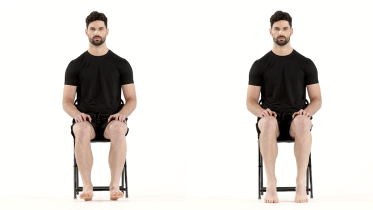 Ankle pumps
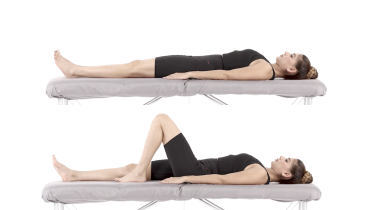 Heel slides
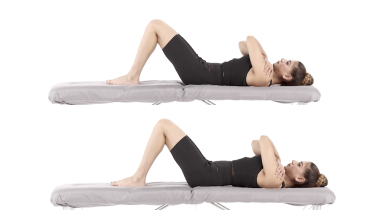 Pelvic tilt
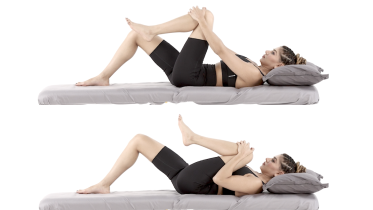 Knee to chest stretch
 Shoulder circles
 Tendon glides
 Cat-camel stretch
 Brisk walking
When to see a physio (physical therapist)
The NHS threshold for osteoarthritis is to see your doctor if you have persistent symptoms, so they can confirm the diagnosis and arrange treatment. We would add two of our own. Book if the stiffness is limiting the first part of your day week after week, and book if it is getting longer rather than shorter, because the trend is more informative than any single bad morning.
Some of this does not belong in a physio appointment at all. Stiffness in both shoulders and both hips lasting over 45 minutes, swelling in several small joints, or anything in the giant cell arteritis section needs a doctor first, and a physio who sees that pattern should be sending you there rather than starting a program.
A physio's job on an ordinary stiff morning is less about the stiff joint than people expect. It is working out what the joint is being asked to do across the whole day, testing what it will give, and then loading it back up in a way it can take, with a routine short enough that you will actually do it at seven in the morning.
Some signs should not wait: read the warning signs section on this page and act on the timing given for each line, because they are not all at the same level of urgency.
Related exercise programs
Warning signs
Get emergency help now
- Emergency: any change to your sight, in one eye or both, including blurring, double vision, a shadow or curtain across your vision, or loss of sight, if you are 50 or over and also have new or frequent headaches, pain or tenderness at your temples or on your scalp, aching in your jaw or tongue that comes on as you chew or talk, or new aching and stiffness in your shoulders, neck or hips. Call emergency services or go to an emergency department straight away, and do not drive yourself. These can be signs of inflamed arteries in the head (giant cell arteritis), which the NHS says can lead to serious problems like stroke and blindness if it is not treated quickly, and it adds that treatment is started before the diagnosis is confirmed because of the risk of vision loss. The British Society for Rheumatology guideline calls giant cell arteritis a medical emergency and asks for new loss of vision, whether it passed off or has stayed, or for double vision, to be seen by an eye specialist as soon as possible on the same calendar day, and it notes that most of the sight loss in this condition happens before steroid treatment begins (Mackie and colleagues, 2020; Mollan and colleagues, 2021). This page sends you higher than the NHS urgent appointment route for a sight change, because sight loss here can be permanent and because that guideline draws no line between sight that came back and sight that did not: both are seen on the same calendar day.
- Emergency: you have had cancer, now or in the past, and your back or neck pain feels like a tight band around your body, or you have new or worsening pain spreading down an arm or leg, weakness, numbness, pins and needles or a loss of feeling in your arms or legs, trouble walking, or trouble controlling your bladder or bowels. Those symptoms count on their own, with or without back or neck pain. Call your cancer team's emergency number straight away, or go to an emergency department if you do not have one or cannot get through. This can be cancer pressing on the spinal cord (metastatic spinal cord compression), which needs treatment straight away.
Get help now, day or night
- Same day: you have rheumatoid arthritis and get new neck pain, or a new headache at the back of your head that keeps coming back. If it comes with tingling or numbness in your hands or arms, get medical advice the same day. If you also feel unsteady on your feet or your legs feel stiff, heavy or weak, call emergency services straight away. Without any of those, tell your doctor or rheumatology team within a few days, and leave out any neck exercises until you have been checked.
Get help today
- Same day: new or frequent headaches, pain or tenderness at your temples or on your scalp, or aching in your jaw or tongue that comes on as you chew or talk and eases when you stop, if you are 50 or over, with or without the morning stiffness this page is about. Get medical advice the same day, as these can be signs of inflamed arteries in the head (giant cell arteritis), and the NHS says up to 1 in 5 people with polymyalgia rheumatica develop it. The British Society for Rheumatology guideline asks for anyone with suspected giant cell arteritis and no eye symptoms to be seen by a specialist on the same working day where that is possible, and within 3 working days in every case (Mackie and colleagues, 2020). If your sight changes at all, in one eye or both, call emergency services or go to an emergency department straight away.
- Same day: new pain and stiffness in both shoulders, both hips or your neck, worst first thing, lasting longer than 45 minutes, and still there after a week. This can be an inflammatory condition (polymyalgia rheumatica) rather than a local joint problem. If you also get a new headache, pain or tenderness at your temples or on your scalp, or jaw pain when you eat or talk, get medical advice the same day, and if your vision changes, call emergency services. Even without those extra signs, see your doctor within a few days about the aching and stiffness. The NHS gives muscle stiffness in the morning that lasts longer than 45 minutes as the main symptom, says to see a doctor if you have had pain and stiffness for more than a week, and says up to 1 in 5 people with polymyalgia rheumatica develop giant cell arteritis.
- Same day: a joint is hot, red and swollen, or you have joint pain with a high temperature or feel hot, cold or shivery. Get medical advice the same day, and go to an emergency department if you feel very unwell. This can be a sign of infection in the joint, which needs treatment quickly. If you have a very high or very low temperature, shivering you cannot control, you are breathing very fast or finding it hard to breathe, you are confused or your speech is slurred, your skin, lips or tongue look blue, gray, pale or blotchy (on brown or black skin this can be easier to see on the palms of the hands or soles of the feet), or you have a rash that does not fade when you press it, call emergency services, as this can be sepsis.
- Same day: at any time after a joint replacement, even years later, new pain or new stiffness in the replaced joint, with or without a high temperature or feeling hot, cold or shivery, or a replaced joint that becomes hot, red or swollen, which counts on its own. Contact your surgical team or get medical advice the same day. A new joint can become infected long after the operation, and that needs treating quickly. A normal temperature is not an all clear: OrthoInfo says fever is no longer considered a sign of an infection after a joint replacement, that the symptoms can range from mild redness and swelling up to life-threatening septic shock and sometimes there are none at all, and it lists increased pain or stiffness in a previously well-functioning joint among them. So do not wait for a temperature, and do not treat a stiff replaced joint as the ordinary morning stiffness this page is about until your surgical team has heard about it.
- Same day: a painful, very red eye, in one eye or both, new sensitivity to light, or new blurring, flashes or floaters. Get it checked by an eye specialist the same day, for example at an eye emergency department or urgent eye service, and mention your joint pain and stiffness. If you cannot be seen by an eye service that day, go to an emergency department. If your vision changes, light hurts your eye, the eye turns very dark red, or you also have a severe headache and feel sick, go to an emergency department or emergency eye service straight away, and do not drive yourself. If you cannot see out of the eye, call emergency services or go to an emergency department straight away. This can be inflammation at the front of the eye (uveitis, also called iritis), which the NHS says needs treating early to avoid long-term complications such as vision loss, and the NHS lists ankylosing spondylitis among its causes. NICE asks for a same day eye assessment for anyone with symptoms of inflammation at the front of the eye, for example eye pain, redness, sensitivity to light or blurred vision (NG65, recommendation 1.1.12).
- Same day: new joint pain and you have had cancer, now or in the past, or you have lost weight without trying. Get medical advice the same day and mention it. If you are being treated for cancer now, contact your cancer team the same day.
- Same day: pain that is worse at night, or does not ease at all when you rest. If you have had cancer, now or in the past, or you have lost weight without trying, get medical advice the same day.
- Same day: your child or teenager is limping later in the day as well as first thing, the limp is getting worse, they have pain in the hip, groin, thigh or knee, or a joint is hot, red and swollen, or their joint pain comes with a high temperature or they feel hot, cold or shivery. Get an urgent appointment with a doctor the same day, and keep them off sport and these exercises until they have been checked. If they cannot put weight on the leg, have a high temperature or seem very unwell, go to an emergency department. A hot, red or swollen joint, or joint pain with a temperature, can be an infection in the joint, which needs treatment quickly. Stiffness that eases by the afternoon can be arthritis in children, but some hip problems in growing children, such as a slipped growth plate at the top of the thigh bone (slipped capital femoral epiphysis), also cause a limp and a stiff hip, and OrthoInfo says an unstable slip, where the child cannot put weight on the hip even with crutches, needs urgent treatment, and that being diagnosed as quickly as possible is what gives the best outcome.
Book an appointment
- Within a few days: pain that is worse at night, or does not ease at all when you rest. See your doctor within a few days.
- Within a few days: you have not been diagnosed, and several joints in your hands, wrists or feet are painful, swollen and stiff, especially in the morning. This is not an emergency, but see your doctor within a few days, because early treatment can stop the condition getting worse and lower the risk of joint damage. The NHS says the small joints of the hands and feet are often the first to be affected in rheumatoid arthritis and that it typically affects the joints symmetrically, and NICE asks for an urgent referral to a specialist when the small joints of the hands or feet are involved or more than one joint is involved (NG100, recommendation 1.1.1).
- Within a few days: a joint is stiff for more than 30 minutes most mornings, and nobody has told you what is causing your joint pain. This is not an emergency, but see your doctor within a few days. NICE treats prolonged morning stiffness as a feature that does not fit straightforward osteoarthritis (NG226), so the cause is worth checking rather than being treated as wear and tear.
- Within a week or two: back or buttock pain that started before the age of 45, has lasted more than three months, is worse after rest and in the morning, and eases when you move. This is not an emergency, but see your doctor in the next week or two and ask whether it could be inflammatory back pain (axial spondyloarthritis).
- Within a week or two: both heels hurt and you also have swelling or morning stiffness in other joints or your lower back. This is not an emergency, but see your doctor in the next week or two, as it can be a sign of an inflammatory arthritis.
- Within a week or two: your child or teenager has joint stiffness or joint pain that is worst in the morning and eases by the afternoon, a limp first thing, swollen, warm or painful joints, or back pain. This is not an emergency, but see a doctor in the next week or two, as it can be a sign of arthritis in children (juvenile arthritis), which is best treated early. Nothing in the exercise routine on this page is written for a child. If the limp carries on through the day as well as first thing, is getting worse, or comes with pain in the hip, groin, thigh or knee, that is a same day matter and it has its own line above. So is a joint that is hot, red and swollen, or joint pain with a high temperature or feeling hot, cold or shivery, and a child who cannot put weight on the leg or seems very unwell goes to an emergency department. If your child also has a red, painful eye, get it checked the same day. If light hurts the eye, the eye turns very dark red, their sight changes, or they also have a severe headache and feel sick, go to an emergency department or emergency eye service straight away. Arthritis in children can also inflame the inside of the eye (uveitis), which can harm sight if it is not treated, and OrthoInfo says most children with it have no eye symptoms at all, so the eye check is done by an eye specialist rather than at home.
Common questions
How long should joint stiffness in the morning last?
Short enough that you stop noticing it. The NHS gives the clearest contrast of any source on this: stiffness from osteoarthritis usually wears off within 30 minutes of getting up, while morning stiffness in rheumatoid arthritis often lasts longer than that. For polymyalgia rheumatica the NHS names muscle stiffness in the morning lasting longer than 45 minutes as the main symptom, in the muscles around the shoulders, neck and hips. None of those numbers is a diagnosis on its own, and plenty of people with sore, stiff joints sit awkwardly between them. Time it on three ordinary weekdays, from the moment your feet hit the floor to the moment you forget about it, and take the three numbers to the appointment rather than a guess.
Why are my joints stiff in the morning?
Because a joint that has not moved for seven or eight hours has to be asked a few times before it cooperates. The NHS describes increased pain and stiffness after you have not moved your joints for a while, which is the same thing happening on a smaller scale after an hour at a desk or a long drive. Walking, standing up and sitting down, and moving a joint through its comfortable range all help, which is why the trip to the bathroom usually feels worse than the walk back. The pattern of loosening up is reassuring in itself: stiffness that improves with movement and comes back after rest is behaving like a joint rather than like something that needs urgent attention. Stiffness that is no better by mid-morning, day after day, is the version worth an appointment.
Is morning stiffness osteoarthritis or rheumatoid arthritis?
The honest answer is that stiffness alone does not settle it, but the duration and the spread get you close. Osteoarthritis is wear-related change in the joint, and the NHS says its main symptoms are pain and stiffness, with stiffness that usually wears off within 30 minutes of getting up and joints that can look larger or more knobbly than usual. Rheumatoid arthritis is the immune system inflaming the joint lining, and the NHS describes morning stiffness that often lasts longer, swelling, joints that become hot and tender to touch, the small joints of the hands and feet affected first, and a tendency to hit the same joints on both sides. The second one changes what happens next, because treatment aims to settle the inflammation rather than to manage the joint, so it is worth being specific at the appointment about how long the stiffness lasts, which joints, and whether they swell. Our rheumatoid arthritis program and hand osteoarthritis program cover the exercise side of each.
Why are my hands stiff and swollen in the morning?
Hands are where this is noticed first, usually because a kettle, a jar lid and a shirt button all test them within ten minutes of waking. Two patterns sit behind most of it. Osteoarthritis in the hand tends to settle at the base of the thumb, the middle joints of the fingers and the joints closest to the fingertips, which are the three the NHS names, and the joints often look knobbly; our page on pain at the base of the thumb goes into the thumb version. Inflammatory arthritis is more likely when several small joints swell, feel warm, and do it on both hands at once, with the stiffness lasting well past half an hour. Taking the fingers slowly through their full range before you ask them to grip anything is the cheapest thing that helps, which is what the tendon glides in the program on this page are, and a few minutes of warm water over them at the sink is the same idea as the hot packs the NHS says can relieve the pain and symptoms of osteoarthritis in some people. Do not use heat on skin that has lost feeling or cannot feel heat properly, because it can scald or burn without you noticing.
Can joint stiffness be reversed?
Separate two things that get bundled together under that question. The stiffness itself, the part that makes the first ten minutes hard, is reversed every single morning by moving, and shortening it is a realistic aim rather than a hopeful one. The change inside a worn joint is not reversed by anything a physio does, and any page promising otherwise is selling something, but the NHS still ranks exercise among the treatments that matter most in osteoarthritis, at any age and whatever shape you are in, because what improves is what the joint will do rather than what it looks like. Stiffness driven by inflammation is the one case where the duration can genuinely come down a long way, and that happens by treating the inflammation, which is why getting an inflammatory pattern assessed early matters more than any stretch. Never stop or change a prescribed medicine on your own: if the morning is the worst part of your day and you are on treatment for arthritis, that is information for the person who prescribes it, because the timing and the dose are theirs to adjust.
When should I worry about morning stiffness?
There are several answers, and only one of them is an emergency. Stiffness in both shoulders, both hips or the neck that lasts longer than 45 minutes and has gone on more than a week needs a doctor within a few days, because it is the polymyalgia rheumatica picture and the NHS says up to 1 in 5 people with that go on to develop giant cell arteritis. Giant cell arteritis is the urgent one: new headaches, tenderness at the temples or on the scalp, or jaw aching that comes on as you chew, in anyone 50 or over, and any change to your sight with it means calling emergency services rather than waiting for an appointment. A single joint that is hot, red and swollen, or joint pain with a fever, is a same day problem whatever your diagnosis, because an infected joint will not wait. Several small joints swelling and stiffening together, with nothing diagnosed yet, is a within a few days problem rather than a few weeks one, because NICE asks for an urgent referral to a specialist when the small joints of the hands or feet are involved or more than one joint is involved. Some signs should not wait: read the warning signs section on this page and act on the timing given for each line, because they are not all at the same level of urgency.
References
- NHS. Symptoms: Osteoarthritis. Page last reviewed 20 March 2023. https://www.nhs.uk/conditions/osteoarthritis/symptoms/
- NHS. Treatment: Osteoarthritis. Page last reviewed 20 March 2023. https://www.nhs.uk/conditions/osteoarthritis/treatment/
- NHS. Symptoms: Rheumatoid arthritis. Page last reviewed 8 March 2023. https://www.nhs.uk/conditions/rheumatoid-arthritis/symptoms/
- NHS. Polymyalgia rheumatica. Page last reviewed 23 April 2023. https://www.nhs.uk/conditions/polymyalgia-rheumatica/
- NHS. Temporal arteritis. Page last reviewed 14 August 2023. https://www.nhs.uk/conditions/temporal-arteritis/
- Mollan SP, Grech O, O'Sullivan E, Mackie SL. Practice points for ophthalmologists from the 2020 British Society for Rheumatology Giant Cell Arteritis guidelines. Eye. 2021;35(3):699-701. https://doi.org/10.1038/s41433-020-1090-y
- Mackie SL, Dejaco C, Appenzeller S, et al. British Society for Rheumatology guideline on diagnosis and treatment of giant cell arteritis. Rheumatology (Oxford). 2020;59(3):e1-e23. https://doi.org/10.1093/rheumatology/kez672
- Dasgupta B, Cimmino MA, Maradit Kremers H, et al. Provisional classification criteria for polymyalgia rheumatica: a European League Against Rheumatism/American College of Rheumatology collaborative initiative. Arthritis Rheum. 2012;64(4):943-954. https://doi.org/10.1002/art.34356
- National Institute for Health and Care Excellence. Osteoarthritis in over 16s: diagnosis and management (NG226). Published 19 October 2022. https://www.nice.org.uk/guidance/ng226
- National Institute for Health and Care Excellence. Rheumatoid arthritis in adults: management (NG100). Published 11 July 2018, last updated 12 October 2020. https://www.nice.org.uk/guidance/ng100
- National Institute for Health and Care Excellence. Spondyloarthritis in over 16s: diagnosis and management (NG65). Published 28 February 2017, last updated 2 June 2017. https://www.nice.org.uk/guidance/ng65
- NHS. Symptoms: Ankylosing spondylitis. Page last reviewed 5 January 2023. https://www.nhs.uk/conditions/ankylosing-spondylitis/symptoms/
- NHS. Uveitis. Page last reviewed 20 March 2024. https://www.nhs.uk/conditions/uveitis/
- NHS. Sepsis. Page last reviewed 14 May 2026. https://www.nhs.uk/conditions/sepsis/
- American Academy of Orthopaedic Surgeons. Juvenile Arthritis. OrthoInfo. https://www.orthoinfo.org/diseases--conditions/juvenile-arthritis/
- American Academy of Orthopaedic Surgeons. Slipped Capital Femoral Epiphysis (SCFE). OrthoInfo. https://www.orthoinfo.org/en/diseases--conditions/slipped-capital-femoral-epiphysis-scfe/
- American Academy of Orthopaedic Surgeons. Joint Replacement Infection. OrthoInfo. https://www.orthoinfo.org/en/diseases--conditions/joint-replacement-infection/
- Brooke-Wavell K, Skelton DA, Barker KL, Clark EM, De Biase S, Arnold S, Paskins Z, Robinson KR, Lewis RM, Tobias JH, Ward KA, Whitney J, Leyland S. Strong, steady and straight: UK consensus statement on physical activity and exercise for osteoporosis. British Journal of Sports Medicine. 2022;56(15):837-846. doi:10.1136/bjsports-2021-104634
- Choudhry MN, Malik RA, Charalambous CP. Blood Glucose Levels Following Intra-Articular Steroid Injections in Patients with Diabetes: A Systematic Review. JBJS Reviews. 2016;4(3). https://doi.org/10.2106/JBJS.RVW.O.00029
Written and checked by the PocketPhysio editorial team. Last updated 2026-10-29.
This page is general education, not a diagnosis or a personal treatment plan. See a physiotherapist or doctor for advice about your own situation.