
Perimenopause joint pain: exercises and physiotherapy
Warning signs, and when to get help
Which joints, and what it feels like
Why joints hurt at this stage, and what is and is not known about it, is set out in joint pain in the menopause. This page is the staged exercise program, with the warning signs that belong next to it.
The pattern we see most in clinic is several places aching rather than one joint failing. Hands and wrists are stiff for the first stretch of the morning. Knees announce themselves on stairs, going down more than up, and the side of one hip becomes the reason you cannot lie on that side. Shoulders get sore reaching behind you, and the neck and upper back join in on a bad week. The NHS lists muscle aches and joint pains among the symptoms of menopause and perimenopause, alongside loss of bone density.
That spread is exactly why the aching gets filed under hormones and left there. It is also why the program below trains whole movements rather than single joints, because a program built around one sore knee would miss four other things that are getting harder at the same time.
Is it the perimenopause, or is it something else?
This is the question worth settling before you spend three months on an exercise program. The morning stiffness and the look of the joints both move the answer, and you can check them at home. NICE treats activity-related joint pain from age 45, with either no morning stiffness or stiffness clearing within 30 minutes, as enough to diagnose osteoarthritis clinically, without a scan. Puffy joints on both sides, especially the small joints of the hands and feet, are how inflammatory arthritis tends to start.
Time yourself from getting out of bed to feeling reasonably loose. If it is regularly past the half hour, or your knuckles are swollen rather than knobbly, that goes to a doctor before it goes to a program. The warning signs at the foot of this page set out the rest, including the ones that need an appointment within a few days rather than a few months. Joint pain in the menopause works through the other conditions that cluster in the forties and fifties.
An honest word about the label you will have met online. A 2024 review proposed the name musculoskeletal syndrome of menopause for this collection of complaints (Wright 2024). It is a name somebody suggested, with no agreed criteria and no test behind it, so it is not a diagnosis you have been handed and it should not stop a painful knee being examined properly.
What exercise can and cannot do for perimenopause joint pain
What it can do is well supported, though not by trials of this label, because no trial has tested a program for perimenopause joint pain as such. There is no diagnosis with criteria to recruit for. What exists instead is strong evidence for exercise in the specific conditions behind most of these aches: guideline groups for osteoarthritis and for inflammatory arthritis both put exercise at the front of management, and the trials behind them measured pain and function rather than hormone levels (Kolasinski 2020; Rausch Osthoff 2018).
What it cannot do is reverse the hormonal change or guarantee the aching goes. Exercise raises what the tissue can tolerate, which usually shows up as the same day costing you less rather than as a joint that stops talking altogether.
The dose rule is where most people come unstuck. Start below what you think you can manage, keep it identical for two weeks, then change one thing. Aching during a session that fades within a day is the working zone; pain that is clearly worse the next morning means the session was too big, not that exercise was the wrong idea. Our guide to the pain monitoring model sets out how physios make that call.
Muscle and bone: what is measured rather than assumed
What has actually been measured in these years runs on two different clocks. Bone loss concentrates into a short window around the final period and then slows without stopping. Muscle mass changes far less than most people expect, while measured force falls faster than mass does, which is why a jar lid or a low sofa can feel different from one year to the next while the scale says nothing happened.
Both sets of figures, with their populations and their limits, are on our muscle and bone loss page, not repeated here. What that means for the program is simple: it has to load muscle enough to matter, and it has to include something for bone. If strength has dropped far enough that someone has used the word sarcopenia, the sarcopenia program is the matching page.
How long does perimenopause joint pain last?
Nobody can tell you, because no study has followed menopausal joint pain to a finish line. The pooled observational work points the wrong way for anyone hoping to sit it out: reported muscle or joint pain was no less common after the transition than during it (Kruse 2026).
That is an argument for treating what is treatable now. Most of the specific conditions behind aching joints at this age respond to loading over months, and strength itself answers in weeks. In clinic, people tend to notice the everyday jobs first, somewhere between the fourth and the eighth week, and the morning stiffness later.
Hormone treatment is your doctor's decision
Whether to start, stay on, change or stop hormone treatment turns on your own history and on what matters to you, and it needs a prescriber who can see both. No page here will nudge you either way, and never stop or change a prescribed medicine on your own.
What you can do is arrive prepared. Write down which joints, how long the morning stiffness lasts, what makes it worse, what you have already tried, and how long you have had it. That is worth more in a ten minute appointment than any amount of reading.
How to use this program
Pick the stage that matches you today, not the one that matches how you trained at 30. If several joints are sore at once, start at stage 1.
Each exercise page gives a typical starting dose. As a rough guide, many programs use 2 to 3 sets of 8 to 12 repetitions, on 2 or 3 days of the week, with a rest day between sessions. Finish each set with about 2 repetitions in reserve. Your physio will adjust this.
Breathe steadily through every repetition and never hold your breath, particularly if you have high blood pressure. With a heart condition or blood pressure that is not under control, check with your doctor before you start. If you have fallen in the past year, feel unsteady on your feet, or take medicines that make you dizzy, keep a hand on a kitchen counter for the whole of the standing work and ask your doctor or physio about a falls check.
If you have had a hip replacement, get the go-ahead from your surgeon or physio before you try sit to stand, the chair squat and the goblet squat. Standing up from a low seat and squatting down bend the hip past a right angle, and many surgeons ask you to avoid that for the first months after some operations.
Look the band over for small splits and tug the anchor before each row. With low bone density the seated row is a comfortable choice, because your spine stays upright throughout, and ask your physio first if you have had a fracture in your spine. After shoulder surgery, a dislocation or a fracture, work only in the range your surgeon or physio has cleared, which matters most for the overhead press. Calf raises come in at the stage your surgeon's protocol sets after an Achilles repair or ankle surgery. After a wrist fracture or hand surgery such as a tendon repair, open and close the hands only as far as your surgeon or hand therapist has shown you.
Wear flat shoes that fit well and grip the floor for the walking and the stairs, not socks, tights or bare feet. Stop the session for chest pain or pressure, dizziness or feeling faint, a racing or irregular heartbeat, or being far more out of breath than the effort should cause.
The exercise program
Stage 1: The movements that matter most
Start here if you have not trained for a while, or if several joints are sore at once. Standing up, bending the knees, pulling with the upper back, pressing against a wall, lifting the heels and opening and closing the hands cover most of what gets harder in these years. Many people begin at 2 to 3 sets of 8 to 12, on 2 or 3 days of the week, with the hand exercise done more often and more gently. Take the numbers from each exercise page rather than from this paragraph. Your physio will adjust this.
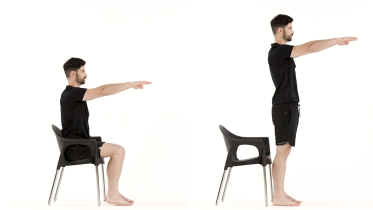 Sit to stand
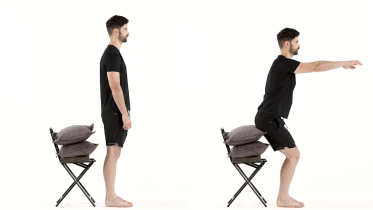 Chair squat
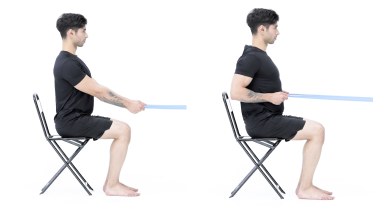 Seated row with band
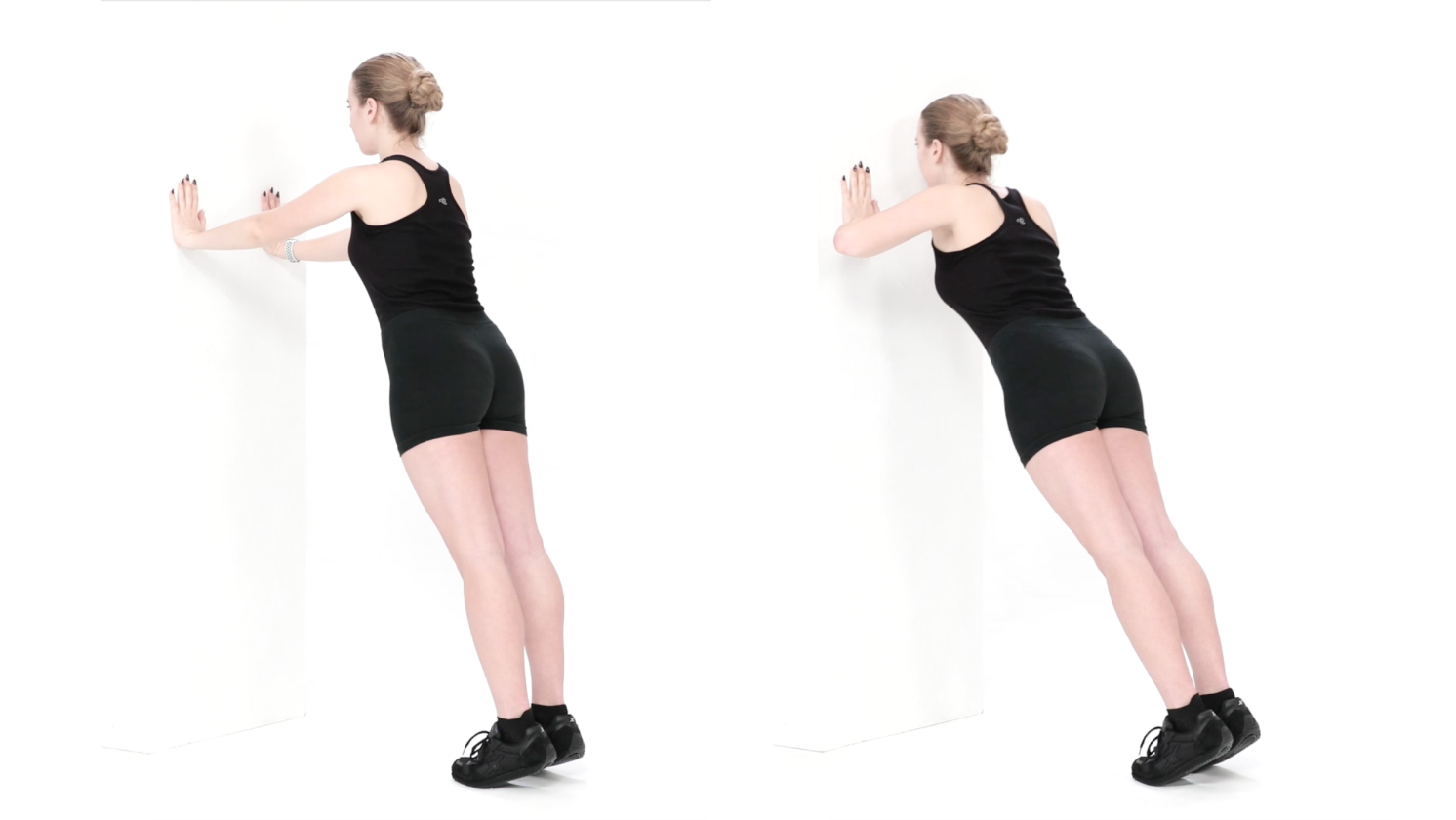 Wall push-ups
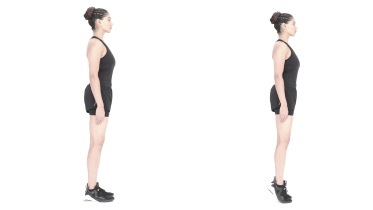 Calf raises
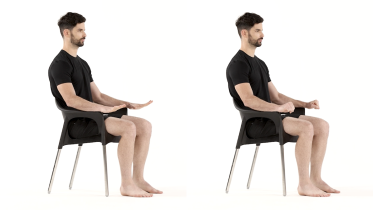 Open and close the hands
Stage 2: Add load and work the hips
When stage 1 feels steady and the joints settle by the next morning, usually after two to four weeks. The goblet squat can start with nothing in your hands, and the shoulder press with a 500 ml bottle of water in each hand, about 0.5 kg (1.1 lb). The two hip exercises are here because the side of the hip is one of the places that complains most at this stage, and it responds to being loaded rather than rested.
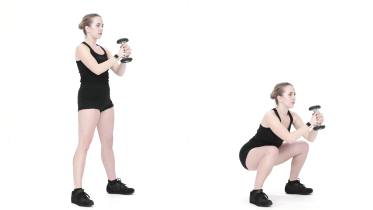 Goblet squat
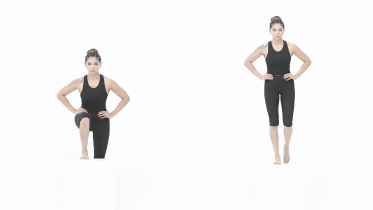 Step up
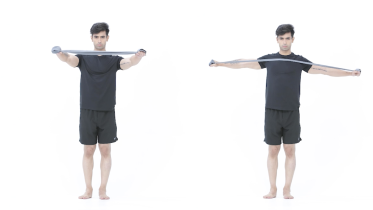 Band pull-apart
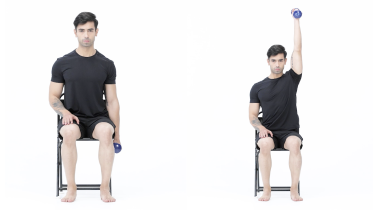 Seated dumbbell shoulder press
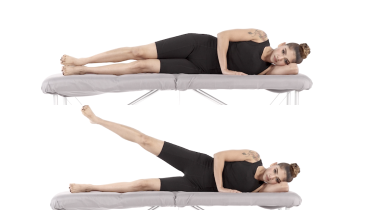 Side lying hip abduction
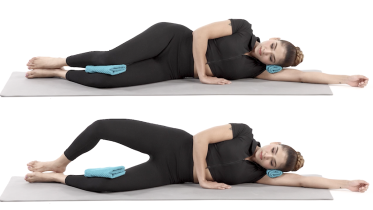 Clamshell
Stage 3: Heavier, with stairs and walking for bone
For when stage 2 is comfortable on both sides. Single leg work and a heavier squat pattern are the part that holds on to strength, and stairs and brisk walking are in here as the bone loading, which is why there is no jumping or hopping anywhere in this program. Keep a rail or a counter within reach for the single leg exercises. If you have been told you have osteoporosis or have had a fracture in your spine, work from the osteoporosis program instead and ask your own physio before you add any of this.
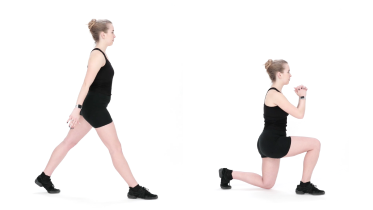 Split squat
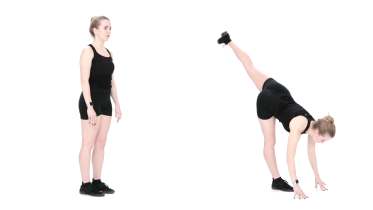 Single leg deadlift
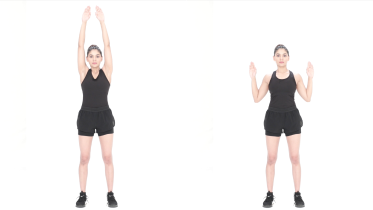 Lat pulldown
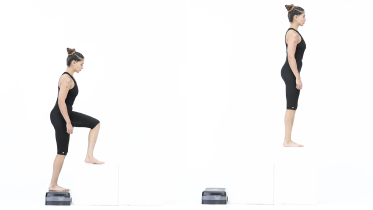 Stair climbing
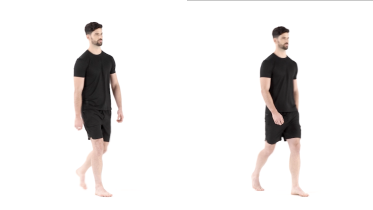 Brisk walking
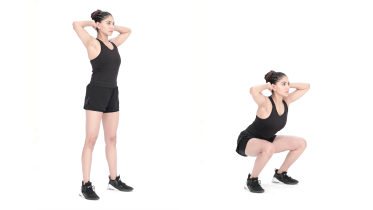 Prisoner squat
Loading bone without jumping
There is no jumping or hopping anywhere in this program, and that is deliberate. The UK consensus statement recommends resistance and impact exercise to maximise bone strength in people with osteoporosis, which sounds like an argument for adding jumps (Brooke-Wavell 2022). Read the rest of it first. The same statement advises avoiding postures involving a high degree of spinal flexion, and says people with vertebral fracture or multiple low trauma fractures should usually exercise only up to an impact equivalent to brisk walking.
Nobody reading a web page knows which of those groups you are in, and a scan is what settles it. So stairs and brisk walking carry the bone loading here, and anything springier is a conversation with your own physio or doctor. Some readers should sort the order out before they add even that much. If a scan has already shown thin bones, work from the osteoporosis program instead of this one. And if you are unsteady or have fallen, strength and balance come before impact of any kind: the same consensus statement reports some evidence that brisk walking raised fracture risk in people already at risk of falls and fracture, who may need strength and balance work to get steady first, which is what the balance and falls prevention program is for.
For how the sessions fit into a week, and how to build them up, the strength plan in our menopause topic goes further than this page does.
Training on a day when everything aches
There will be weeks when the sleep is broken, the hot flushes are relentless and three joints hurt at once. The mistake is to treat that as a reason to skip, because a fortnight off costs more than any single bad session.
Cut the volume and keep the movements. One set of each, done slowly, holds the pattern and most of the stimulus. Train at the time of day you feel best rather than the time the plan says, keep the room cool, and put the session before the housework, not after it. For joints that feel hot and stiff rather than simply sore, our page on exercise for hot joints and stiffness covers how to work around a flare.
Other things in this cluster are common enough to name, and each has its own program: a shoulder that is stiffening rather than aching, covered in frozen shoulder and menopause, and leaking or heaviness low down when you cough or lift, covered in the pelvic floor in menopause.
When to see a physio or doctor
Six weeks is a fair trigger. If an ache has not shifted in that time, if one joint is clearly worse than the rest, if you have started avoiding a movement, or if you have given up something you used to enjoy, an assessment gets you further than another month of guessing. A physio can tell a tendon from a joint surface, set a dose that does not flare you, and measure grip strength and a timed chair stand now so that in two years you are comparing numbers rather than memories.
Go to a doctor first if the picture matches the warning signs below, particularly puffy joints on both sides, morning stiffness well past half an hour, a hot swollen joint, or pain at rest that keeps building. Those need a diagnosis before they need a program. Single joints with their own programs on this site include the knee, the hand and thumb and the side of the hip.
For physiotherapists
Treat the presentation, not the label. The useful work at the first appointment is sorting the multi-joint ache into what it actually contains: hand and knee osteoarthritis, gluteal and rotator cuff tendinopathy, a stiffening shoulder, deconditioning, and the inflammatory and polymyalgic presentations that need a rheumatology opinion rather than a program.
Baseline something measurable at visit one, because the natural history here is slow and patients lose confidence without numbers. Grip dynamometry, a 30-second chair stand and the loads logged each week are enough. The evidence base is honest about its limits: the epidemiology is observational and cannot separate the hormone change from ageing (Kruse 2026), the syndrome label has no criteria (Wright 2024), and the exercise recommendations we rely on come from the individual conditions rather than from trials of this population.
Warning signs
Get emergency help now
- Emergency: if chest pain, pressure or tightness does not ease quickly when you rest, spreads to your arm, neck, jaw, stomach or back, or comes with sweating, feeling sick, feeling light-headed or being short of breath, call emergency services straight away, as this can be a heart attack. If it eases quickly and none of these happen, get medical advice the same day, and do not exercise again until you have been checked.
- Emergency: you have had a fall or an injury and now have severe hip pain, or you cannot walk or put weight on the leg. Call emergency services or go to an emergency department. This can be a sign of a broken hip (hip fracture).
- Emergency: sudden, severe pain in your lower back or tummy that is not like your usual back pain, if you have been told you have a swelling of the main blood vessel in your tummy (abdominal aortic aneurysm), you are over 60, you smoke or used to smoke, or you have high blood pressure. The same applies if sudden, severe back or tummy pain comes with feeling faint or passing out, pale, sweaty or clammy skin, a racing heartbeat or being short of breath. Call emergency services straight away. This can be a sign of an aneurysm bursting, which needs treatment in hospital at once.
Get help today
- Same day: you feel dizzy, lightheaded or faint as you get up. Sit back down and wait for it to pass. If it does not pass within a minute or two, or it keeps happening, get medical advice the same day before you practice again. If you faint, or it does not settle within a few minutes of keeping still, call emergency services.
- Same day: a joint is hot, red and swollen, or you have joint pain with a high temperature or feel hot, cold or shivery. Get medical advice the same day, and go to an emergency department if you feel very unwell. This can be a sign of infection in the joint, which needs treatment quickly.
- Same day: a calf or thigh that is newly swollen or getting more swollen, warm, tender, red or darker than usual, has swollen veins that are sore to touch, or has a throbbing or cramping pain that does not fit your injury or condition, or that feels different from normal muscle soreness after exercise. This can be a sign of a blood clot (deep vein thrombosis), especially after surgery, an injury, time in a cast or boot, a long trip or a spell of being much less mobile than usual. Get medical advice the same day. If you are also short of breath or have chest pain, call emergency services.
- Same day: back pain after a minor fall or strain if you are older, have low bone density (osteoporosis) or have taken steroid tablets for a long time. Get medical advice the same day.
- Same day: back pain that comes on suddenly after lifting, bending, a cough or a sneeze, even without a fall, if you have low bone density (osteoporosis). Get medical advice the same day. This can be a sign of a broken bone in the spine (vertebral fracture). Stop the exercises until you have been checked.
- Same day: you are over 50 and have aching and stiffness in both shoulders, often in the neck or hips too, that is worst in the morning and lasts more than 45 minutes after you get up. This can be an inflammatory condition (polymyalgia rheumatica) rather than a local joint problem. If you also get a new headache, pain or tenderness at your temples or on your scalp, or jaw pain when you eat or talk, get medical advice the same day, and if your vision changes, call emergency services. Even without those extra signs, see your doctor within a few days about the aching and stiffness.
- Same day: the pain is there at night or at rest and keeps getting worse. If you are being treated for cancer now, contact your cancer team the same day.
Book an appointment
- Within a few days: you have not been diagnosed, and several joints in your hands, wrists or feet are painful, swollen and stiff, especially in the morning. This is not an emergency, but see your doctor within a few days, because early treatment can stop the condition getting worse and lower the risk of joint damage.
- Within a day or two: the pain is there at night or at rest and keeps getting worse. If you have had cancer, now or in the past, or are losing weight without trying, see your doctor sooner, within a day or two, and mention it. This applies even if the pain is not getting worse.
- Within a few days: the pain is there at night or at rest and keeps getting worse. See your doctor within a few days.
- Routine: you have lost height, or your upper back has become more rounded and you are starting to stoop, or you have back pain, or pain that wraps around to your ribs, with no clear cause. Book an appointment with your doctor. A broken bone in the spine can cause this, and it does not always cause the pain you would expect. If the pain came on suddenly, get medical advice the same day.
Common questions
What exercise is best for perimenopause joint pain?
Strength work, in the amounts your joints settle from, plus walking. Guideline groups for both osteoarthritis and inflammatory arthritis put exercise at the front of treatment, and the trials behind those recommendations measured pain and function rather than hormones (Kolasinski 2020; Rausch Osthoff 2018). Which movements matter less than whether you can repeat them next week, so the program here starts with six that need a chair and a band. If one joint is much worse than the rest, that joint usually needs its own program alongside this one.
How often should I train in the perimenopause?
The WHO guidelines ask adults for muscle-strengthening activity at moderate or greater intensity, working all the major muscle groups, on 2 or more days a week (Bull 2020). Two sessions is the number worth defending in a busy decade, and three is better if the week allows it. Put a rest day between sessions. Doing the same short session twice a week for a year beats a long program you abandon in March.
Why does this program have no jumping or hopping?
Because impact has to be matched to your own bone and fracture history, and a web page cannot do that. The UK consensus statement recommends resistance and impact exercise to maximise bone strength in people with osteoporosis, and the same statement says that people with vertebral fracture or multiple low trauma fractures should usually exercise only up to an impact equivalent to brisk walking, and that those at risk of falls should start with targeted strength and balance training (Brooke-Wavell 2022). Stairs and brisk walking sit in stage 3 as the loading this program is willing to prescribe. If you want to add jumps or hops, that is a conversation with your own physio or doctor first.
Will exercise help the muscle loss as well as the joint pain?
It is the only thing in your control that reliably does. Muscle keeps what it is regularly asked to do, which is why the program loads the same movements every session rather than hunting for variety. Expect the strength to change before the aching does, and expect it in months rather than weeks. What has actually been measured about muscle and bone in these years is set out on our muscle and bone loss page.
Should I be taking something for my joints?
Nothing on this page recommends a supplement, and no dose for anything appears here. Hormone treatment, calcium, vitamin D and any bone medicine are prescribing decisions that turn on your own history, so they belong with your doctor or menopause clinic. Never stop or change a prescribed medicine on your own. Our blog looks at the evidence on joint supplements if you want to read about them before that appointment.
References
- Kruse C, McKechnie T, Dworsky-Fried J, et al. Musculoskeletal manifestations of perimenopause: a systematic review and meta-analysis of 93,021 women. JBJS Open Access. 2026;11(1):e25.00254. https://doi.org/10.2106/JBJS.OA.25.00254
- Wright VJ, Schwartzman JD, Itinoche R, Wittstein J. The musculoskeletal syndrome of menopause. Climacteric. 2024;27(5):466-472. https://doi.org/10.1080/13697137.2024.2380363
- Brooke-Wavell K, Skelton DA, Barker KL, et al. Strong, steady and straight: UK consensus statement on physical activity and exercise for osteoporosis. British Journal of Sports Medicine. 2022;56(15):837-846. doi:10.1136/bjsports-2021-104634
- Bull FC, Al-Ansari SS, Biddle S, et al. World Health Organization 2020 guidelines on physical activity and sedentary behaviour. British Journal of Sports Medicine. 2020;54(24):1451-1462. doi:10.1136/bjsports-2020-102955
- Kolasinski SL, Neogi T, Hochberg MC, et al. 2019 American College of Rheumatology/Arthritis Foundation guideline for the management of osteoarthritis of the hand, hip, and knee. Arthritis Care and Research. 2020;72(2):149-162. https://doi.org/10.1002/acr.24131
- Rausch Osthoff AK, Niedermann K, Braun J, et al. 2018 EULAR recommendations for physical activity in people with inflammatory arthritis and osteoarthritis. Annals of the Rheumatic Diseases. 2018;77(9):1251-1260. https://doi.org/10.1136/annrheumdis-2018-213585
- National Institute for Health and Care Excellence. Osteoarthritis in over 16s: diagnosis and management (NG226). 2022. https://www.nice.org.uk/guidance/ng226
- NHS. Symptoms of menopause and perimenopause. Page last reviewed 19 May 2026. https://www.nhs.uk/conditions/menopause-and-perimenopause/symptoms/
- NHS. Symptoms: Rheumatoid arthritis. Page last reviewed 8 March 2023. https://www.nhs.uk/conditions/rheumatoid-arthritis/symptoms/
- NHS. Septic arthritis. Page last reviewed 3 September 2026. https://www.nhs.uk/conditions/septic-arthritis/
- NHS. Osteoporosis. https://www.nhs.uk/conditions/osteoporosis/
- NHS. Deep vein thrombosis (DVT). Page last reviewed 30 April 2026. https://www.nhs.uk/conditions/deep-vein-thrombosis-dvt/
- NHS. Abdominal aortic aneurysm. https://www.nhs.uk/conditions/abdominal-aortic-aneurysm/
- National Institute for Health and Care Excellence. Abdominal aortic aneurysm: diagnosis and management (NG156). 2020. https://www.nice.org.uk/guidance/ng156
Written and checked by the PocketPhysio editorial team. Last updated 2026-10-24.
This page is general education, not a diagnosis or a personal treatment plan. See a physiotherapist or doctor for advice about your own situation.