
Knee pain after running: causes, what helps and when to stop
Where does your knee hurt after running?
Start with two questions: where exactly is the pain, and what brings it on? Those clues narrow things down more than anything else, although only an examination can tell you what it is. Some runners have more than one source of pain at the same time. The groups below are the common causes, not a diagnosis.
Front of the knee: around the kneecap or just below it
A dull ache around or behind the kneecap is the classic picture of patellofemoral pain, the problem most people mean by runner's knee. The US physical therapy guideline describes it as poorly defined pain at the front of the knee that gets worse with squatting, sitting, stairs, jumping or running (Willy and colleagues, 2019). It does not take fast or hard running to stir it up. Malliaras and colleagues (2015) note that people with kneecap pain often feel it with activities that put little load on the tendon, such as walking, running or cycling.
Pain you can cover with one fingertip, at the bottom tip of the kneecap, fits patellar tendinopathy better. Tendon pain climbs with the demand on the thigh muscles, most of all in springy work such as jumping and sprinting (Malliaras and colleagues, 2015). In distance runners the sore spot sometimes sits lower, near the bony bump at the top of the shin where the tendon attaches. In a teenager who is still growing, swelling and pain over that bump can come from Osgood-Schlatter disease (NHS).
Outside of the knee: IT band syndrome
Sharp pain at one spot on the outside of the knee, starting once you have been running for a while, is the typical story of IT band syndrome. A 2021 clinical review cites an earlier study in which it was the most common main complaint. The usual background, according to the same review, is a sudden rise in training, hill running (especially downhill) or roads that slope to one side (Geisler, 2021). Squatting and going down stairs can hurt as well. If the outer knee pain began with a twist, think of an injury inside the joint instead, such as a torn meniscus, which the NHS lists among the causes of a knee that feels unstable after an injury.
Inside of the knee
Pain on the inner side, a few centimeters below the joint, with a spot that is tender to press, fits pes anserine bursitis. A review of the condition notes that it has been seen in long-distance runners (Helfenstein and Kuromoto, 2010). The same review lists problems that can look similar, such as a tear of the inner meniscus, osteoarthritis in the inner part of the joint and an injury to the inner knee ligament, and it mentions a case that was mistaken for a stress fracture of the shinbone. So if the pain sits right on the inner joint line, or began with a twist or a knock, have it examined properly.
The knee osteoarthritis and MCL sprain pages cover two of these. If the ache sits lower, along the inner edge of the shinbone, read the page on shin splints.
Swelling or bone pain: not ordinary running soreness
Fluid in the knee joint (an effusion) usually means a problem inside the joint, and it does not come with patellar tendon pain (Malliaras and colleagues, 2015). So a knee that puffs up after a run, even with no fall or twist, points to something other than an overworked tendon.
Bone stress is the other thing not to run through. OrthoInfo describes it as discomfort at one spot on a bone, at first only after activity, then during it and with ordinary walking, sometimes with swelling and an ache in bed at night. The shinbone is the most common site of stress fractures, and the kneecap is one of the sites doctors class as high risk (Patel and colleagues, 2011). An early X-ray picks up only about 1 in 10 of them, so a normal first X-ray does not settle the question.
The neck of the thighbone is another high-risk site, and a stress fracture there usually shows as groin pain (Patel and colleagues, 2011), although pain from the hip can also be felt in the thigh or knee. That is why groin pain that builds with running has its own warning sign below.
OrthoInfo links bone stress injuries to sleeping less than 7 hours, poor nutrition, low vitamin D and a sudden rise in activity. Women with the combination of disordered eating, periods that have stopped and thin bones (the female athlete triad) are at higher risk (Patel and colleagues, 2011). If you suspect a stress fracture, the OrthoInfo advice is to see a doctor as soon as possible and not to exercise through the pain.
Why running brings it on: training load
Most running knee pain builds up over days or weeks rather than starting with one bad step. OrthoInfo links runner's knee to sudden changes in how often, how long or how hard you train, and to changes in shoes or running surface.
In a study that followed 874 new runners for a year with GPS watches, those who increased their weekly distance by more than 30% seemed more likely to get distance-related injuries than those who increased it by less than 10% (Nielsen and colleagues, 2014). Those injuries included kneecap pain, IT band syndrome and patellar tendinopathy. The difference could have been down to chance, so treat it as a lead rather than a rule.
A later study of 5,205 runners used data from their sports watches over 18 months and looked at single runs rather than weekly totals. Overuse injuries became more common when one run was more than 10% longer than the longest run of the previous 30 days, while changes from one week to the next showed no link (Frandsen and colleagues, 2025). Like the first study, it shows a link rather than proof. Before a long run, it is still worth checking how far your longest run of the past month was.
Should you keep running with knee pain?
Often you can keep some running, as long as the knee is settling rather than building. One way physios judge this is the pain monitoring model. You rate the familiar pain from 0 to 10. In the original model, up to 5 during and just after activity counts as acceptable, provided the pain is back to its usual level by the next morning and is not creeping up from week to week. For a knee joint, many physios set a lower ceiling of about 3 and add a swelling check, which is common practice rather than a tested rule.
Most of the evidence for the model comes from tendon problems. In a trial of 38 people with Achilles tendinopathy, those who kept running and jumping within its limits improved as much as those who stopped those activities for 6 weeks (Silbernagel and colleagues, 2007). For kneecap pain that followed a spell of overtraining, the summary of the US guideline suggests relative rest to begin with (Marra, 2020). Relative rest means less of the running that hurts, not giving up exercise.
The model only covers the familiar ache of the problem you already know about. Stop the run and get it checked if you notice any of these:
- Pain that makes you limp.
- Swelling of the knee after a run.
- Pain at one spot on a bone, or bone pain in bed at night.
- A knee that locks or gives way.
- A new pain, or pain in a new place.
What helps at home
For the first few days, the NHS suggests an ice pack or a bag of frozen peas wrapped in a tea towel, on the knee for up to 20 minutes every 2 to 3 hours, and paracetamol or ibuprofen as a gel or tablets. A pharmacist can tell you whether a painkiller suits your other medicines and health conditions. You can also swap some runs for low-impact exercise that does not bring on the pain, which OrthoInfo suggests for runner's knee. Which activity suits you depends on where it hurts, and the condition programs below give more specific advice.
Keep your runs shorter and your routes flat for now. The US guideline summary names avoiding hills and cutting distance as ways runners with kneecap pain can manage load (Marra, 2020).
Shorter, quicker steps are another option to talk over with a physio. In 45 recreational runners, taking 5 to 10% more steps per minute reduced the load the knee had to absorb (Heiderscheit and colleagues, 2011). In 30 healthy adults, 10% more steps per minute cut the peak force behind the kneecap by 14% (Lenhart and colleagues, 2014). Neither study treated people with knee pain, so this is a sensible idea to try rather than a proven fix.
Exercises that can help
These work the hip, thigh and calf muscles that control each landing when you run. Many programs start with 2 to 3 sets of 8 to 15 for the strength exercises and wall sit holds of 10 to 30 seconds repeated 3 to 5 times, once a day or a few days a week, keeping knee pain mild and back to normal by the next morning. Your physio will adjust this.
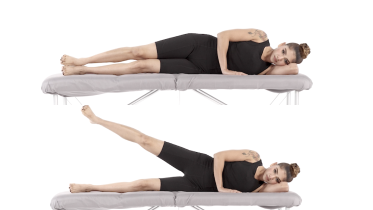 Side lying hip abduction
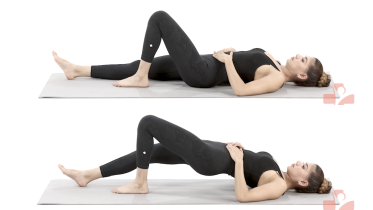 Single leg bridge
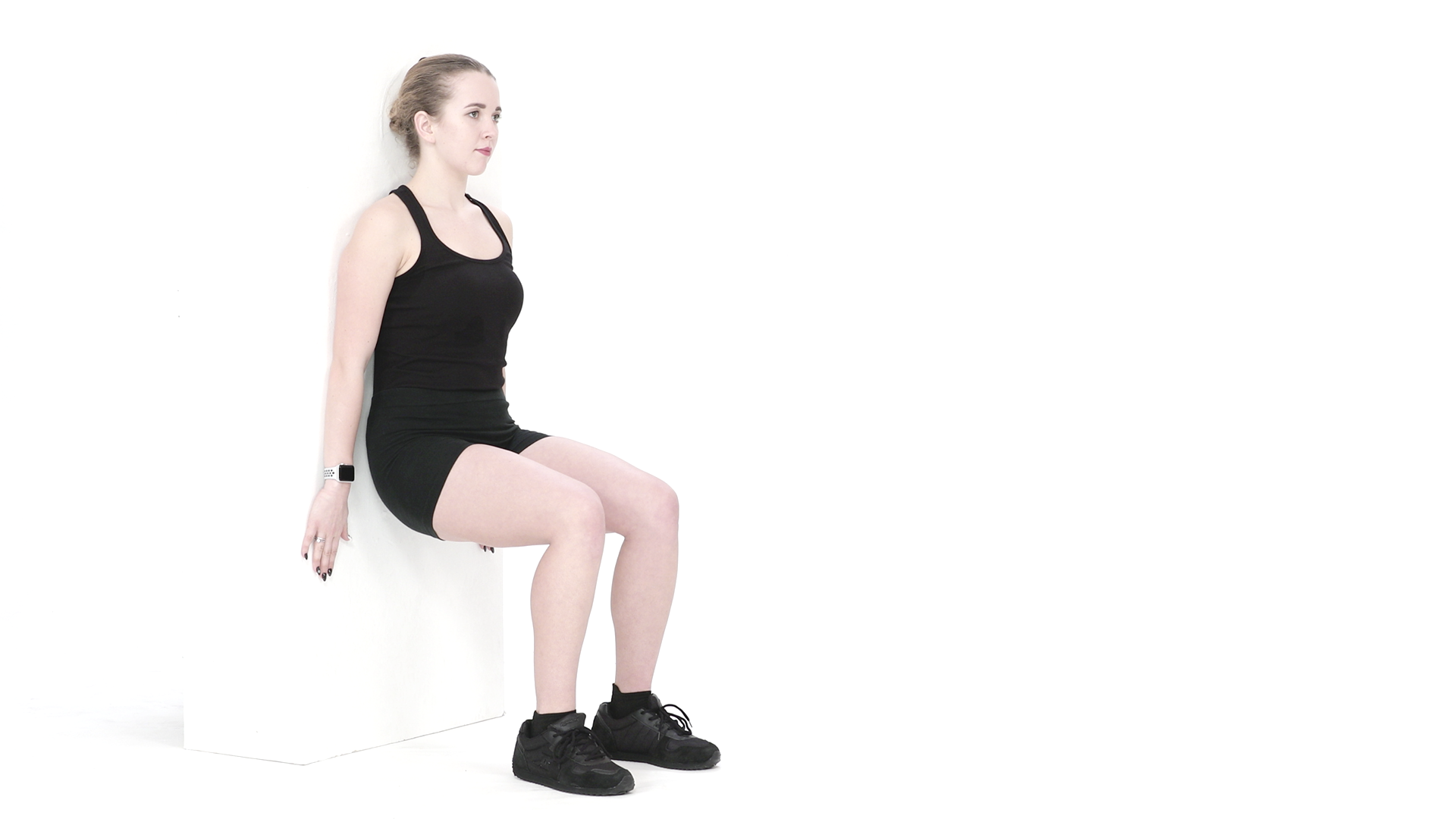 Wall sit
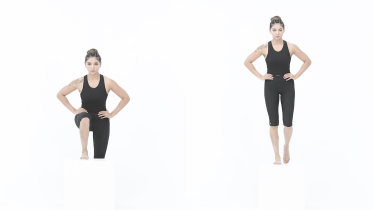 Step up
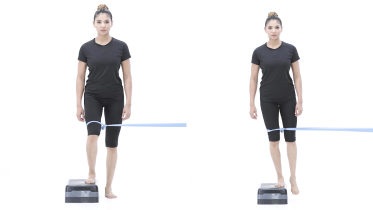 Lateral step-down with band
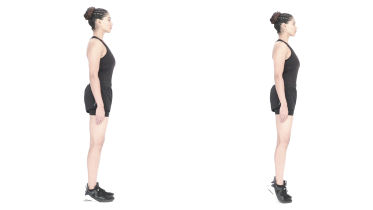 Calf raises
Getting back to running
A reasonable time to start is when walking and stairs are comfortable and the strength exercises leave your knee no worse the next morning. These signs come from common practice, not from trials. Begin with short sessions that mix running and walking on flat ground. For IT band syndrome, one clinical review describes 1 minute of running and 1 minute of walking on flat ground for a total of 30 minutes, with hills brought in only gradually after that (Geisler, 2021).
Many physios build running time first, then pace, and bring hills and speed sessions back last. Use the next-morning check after every run, and keep any single run within about 10% of your longest run of the past month (Frandsen and colleagues, 2025). Keep the strength work going once you are back. For patellar tendinopathy, Malliaras and colleagues (2015) suggest strength exercises at least twice a week after the return to sport.
When to see a physio (physical therapist) for running knee pain
The NHS says to see a doctor if knee pain is no better after a few weeks. It is worth seeing a physio sooner if the pain comes back every time you build your running up, if you cannot run without limping, or if you are not sure which part of the knee it is coming from. A physio can press over the sore spots, test your hip and thigh strength, watch you run and plan your return. The warning signs below need faster help, within the times given.
Related exercise programs
See a doctor promptly if
- Emergency: you felt a sudden pop or tearing feeling below your kneecap, the kneecap seems to have moved up toward the thigh, or you suddenly cannot straighten your knee or lift your leg out straight. Stop exercising and go to an emergency department straight away, even if you can still walk, as this can be a torn patellar tendon. Do not drive yourself. A repair usually does better if it is done soon after the injury.
- Emergency: pain, tingling, numbness or weakness in both legs, numbness or altered feeling around your genitals or bottom, or new trouble peeing or controlling your bladder or bowels. The same applies if you lose feeling in one leg. Call emergency services or go to an emergency department straight away. These can be signs of pressure on the nerves at the base of the spine (cauda equina syndrome).
- Same day: the pain started with a fall, a twist or a blow to the knee, or you cannot put weight on the leg. Get medical advice the same day. If the knee has changed shape, swelled up very quickly or you felt a pop or snap, or your foot turns cold, pale or blue or you have tingling or no feeling in the leg or foot, go to an emergency department straight away, and do not drive yourself.
- Same day: the kneecap has slipped out of place, even if it went back by itself. If it is still out of place, go to an emergency department straight away, and do not drive yourself. If it went back by itself, get medical advice the same day.
- Same day: the knee locks and you cannot straighten it, keeps giving way under you, or clicks painfully. Get medical advice the same day, and stop running until it has been checked. Painless clicking on its own is common.
- Same day: the knee swells up with no clear reason, including swelling that appears after a run when you have not injured it. Get medical advice the same day, and stop running until it has been checked.
- Same day: the knee is hot, red and swollen, or you have knee pain with a high temperature or feel hot, cold or shivery. Get medical advice the same day, and go to an emergency department if you feel very unwell. This can be a sign of infection in the joint, which needs treatment quickly.
- Same day: groin pain that built up with running, marching or jumping, often after you increased your training, and now hurts when you walk, makes you limp, or aches at rest or at night. Stop running and jumping and keep walking to a minimum until it has been checked. Get medical advice the same day and mention your training. If you cannot put weight on the leg, go to an emergency department. This can be a stress fracture in the neck of the thighbone (femoral neck stress fracture), which is easy to miss at first and can become a full break if you keep loading it.
- Same day: a calf or thigh that is newly swollen, warm, tender, red or darker than usual, has swollen veins that are sore to touch, or has a throbbing or cramping pain that does not fit your injury or condition, or that feels different from normal muscle soreness after exercise. This can be a sign of a blood clot (deep vein thrombosis), especially after surgery, an injury, time in a cast or boot, a long trip or a spell of being much less mobile than usual. Get medical advice the same day. If you are also short of breath or have chest pain, call emergency services.
- Same day: you are a teenager who is still growing and you have a limp, or pain in the hip, groin or thigh as well as the knee. Get an urgent appointment with a doctor the same day, and stay off sport and these exercises until you have been checked. If you cannot put weight on the leg, have a high temperature or feel very unwell, go to an emergency department. Some hip problems in growing teenagers, such as a slipped growth plate at the top of the thigh bone (slipped capital femoral epiphysis), are felt in the knee and need checking quickly.
- Within a day or two: you are still growing and have pain that wakes you at night, pain at rest that keeps getting worse, or a lump or swelling around the knee or thigh that keeps growing. See a doctor within a day or two. Do the same if the pain comes with looking pale, unusual tiredness, fevers with no clear cause, bruising or bleeding easily, or weight loss. If you also have a rash that does not fade when you press it, call emergency services or go to an emergency department. Bone pain that is worse at night, or a new lump, needs checking to rule out rarer causes such as a bone tumor or a blood cancer (leukemia).
- Within a few days: the pain sits at one small spot on a bone that you can point to with a finger, such as the kneecap or the top of the shinbone, the bone aches at rest or at night, or hopping on that leg hurts at that one spot. Stop running, jumping and any exercise that hurts at that spot, and see a doctor within a few days, as this can be a stress fracture. This matters even more if the spot is on the kneecap, because doctors treat stress fractures there as high risk. If walking hurts or makes you limp, get it checked the same day. An X-ray can look normal for the first 2 to 3 weeks, so a normal early X-ray does not rule it out.
- Within a few days: pain at night or at rest that keeps getting worse. See your doctor within a few days. If you have had cancer, now or in the past, see your doctor sooner, within a day or two, and mention it, even if the pain is not getting worse. Do the same if you have knee pain and are losing weight without trying, even if it does not hurt at night. If you are being treated for cancer now, contact your cancer team the same day.
- Within 2 weeks: pain that spreads from your lower back or buttock down the outside of the thigh or below the knee, especially with numbness, tingling or pins and needles in the leg or foot. The pain may be coming from your back rather than the knee. Book an appointment with a doctor or physio. If your leg or foot is getting weaker, for example your foot drags, catches on the ground or slaps down when you walk (foot drop), get medical advice the same day, and if the weakness is getting worse by the hour, go to an emergency department.
Common questions
Is knee pain after running normal?
A mild ache after a run that was longer or harder than usual is common, and pain does not always mean harm (Malliaras and colleagues, 2015). What matters is how it behaves. An ache that is back to your usual level by the next morning, and is not building from one week to the next, sits within the limits of the pain monitoring model. Pain that makes you limp, a knee that swells, pain at one spot on a bone, or a knee that locks or gives way is not ordinary soreness and needs checking.
Why does my knee hurt after running but not during?
Tendon pain can behave this way. Malliaras and colleagues (2015) describe tendon pain that can ease as you keep going, the warm-up effect, and then be worse the next day after springy, high-load activity. Kneecap pain can also show up later, when you sit for a long time with your knee bent after the run, because long sitting is one of the things that aggravate it (Willy and colleagues, 2019). A knee that swells in the hours after a run points to a problem inside the joint instead, and that needs checking.
Why does my knee hurt running downhill?
In a lab study of 20 recreational runners, running down a gentle slope on a treadmill put more stress on the joint behind the kneecap than running on the flat or uphill (Ho and colleagues, 2018). Hill running, especially downhill, is one of the usual triggers in the story of IT band syndrome (Geisler, 2021), and the US physical therapy guideline summary lists avoiding hills as one way runners with kneecap pain can manage load (Marra, 2020). While the knee settles, choose flat routes or walk the steep downhill stretches, and add hills back last.
How do I prevent knee pain when running?
The best lead is how fast you build up. In a study of 5,205 runners, overuse injuries became more common when a single run was more than 10% longer than the longest run of the previous 30 days (Frandsen and colleagues, 2025). That shows a link rather than proof, but it is an easy check to use. Hip and thigh strength work is the main treatment for kneecap pain (Marra, 2020), although whether it prevents knee pain in runners who have none is less clear.
What exercises help runner's knee?
For kneecap pain, the US physical therapy guideline puts exercise for the back of the hip and the front of the thigh first, and its summary reports less pain and better function for at least five years (Marra, 2020). Side lying hip abduction, single leg bridges, wall sits and step ups are common starting points. The patellofemoral pain program on this site sets them out in stages, from lying down to deeper single leg work.
References
- NHS. Knee pain. Page last reviewed 21 December 2023. https://www.nhs.uk/symptoms/knee-pain/
- American Academy of Orthopaedic Surgeons. Patellofemoral Pain Syndrome. OrthoInfo. https://www.orthoinfo.org/en/diseases--conditions/patellofemoral-pain-syndrome/
- American Academy of Orthopaedic Surgeons. Stress Fractures. OrthoInfo. https://www.orthoinfo.org/en/diseases--conditions/stress-fractures/
- Willy RW, Hoglund LT, Barton CJ, Bolgla LA, Scalzitti DA, Logerstedt DS, Lynch AD, Snyder-Mackler L, McDonough CM. Patellofemoral Pain: Clinical Practice Guidelines Linked to the International Classification of Functioning, Disability and Health From the Academy of Orthopaedic Physical Therapy of the American Physical Therapy Association. Journal of Orthopaedic and Sports Physical Therapy. 2019;49(9):CPG1-CPG95. https://doi.org/10.2519/jospt.2019.0302
- Marra J. Patellofemoral Pain: Guidelines from the American Physical Therapy Association. American Family Physician. 2020;102(7):442-443. https://www.aafp.org/pubs/afp/issues/2020/1001/p442.html
- Malliaras P, Cook J, Purdam C, Rio E. Patellar Tendinopathy: Clinical Diagnosis, Load Management, and Advice for Challenging Case Presentations. Journal of Orthopaedic and Sports Physical Therapy. 2015;45(11):887-898. https://doi.org/10.2519/jospt.2015.5987
- Geisler PR. Current Clinical Concepts: Synthesizing the Available Evidence for Improved Clinical Outcomes in Iliotibial Band Impingement Syndrome. Journal of Athletic Training. 2021;56(8):805-815. https://doi.org/10.4085/1062-6050-548-19
- Helfenstein M Jr, Kuromoto J. Anserine syndrome. Revista Brasileira de Reumatologia. 2010;50(3):313-327. https://doi.org/10.1590/S0482-50042010000300011
- Patel DS, Roth M, Kapil N. Stress fractures: diagnosis, treatment, and prevention. American Family Physician. 2011;83(1):39-46. https://www.aafp.org/pubs/afp/issues/2011/0101/p39.html
- Nielsen RØ, Parner ET, Nohr EA, Sørensen H, Lind M, Rasmussen S. Excessive progression in weekly running distance and risk of running-related injuries: an association which varies according to type of injury. Journal of Orthopaedic and Sports Physical Therapy. 2014;44(10):739-747. https://doi.org/10.2519/jospt.2014.5164
- Frandsen JSB, Hulme A, Parner ET, Møller M, Lindman I, Abrahamson J, Simonsen NS, Jacobsen JS, Ramskov D, Skejø S, Malisoux L, Bertelsen ML, Nielsen RO. How much running is too much? Identifying high-risk running sessions in a 5200-person cohort study. British Journal of Sports Medicine. 2025;59(17):1203-1210. https://doi.org/10.1136/bjsports-2024-109380
- Silbernagel KG, Thomeé R, Eriksson BI, Karlsson J. Continued sports activity, using a pain-monitoring model, during rehabilitation in patients with Achilles tendinopathy: a randomized controlled study. American Journal of Sports Medicine. 2007;35(6):897-906. https://doi.org/10.1177/0363546506298279
- Ho KY, French T, Klein B, Lee Y. Patellofemoral joint stress during incline and decline running. Physical Therapy in Sport. 2018;34:136-140. https://doi.org/10.1016/j.ptsp.2018.09.010
- Heiderscheit BC, Chumanov ES, Michalski MP, Wille CM, Ryan MB. Effects of step rate manipulation on joint mechanics during running. Medicine and Science in Sports and Exercise. 2011;43(2):296-302. https://doi.org/10.1249/MSS.0b013e3181ebedf4
- Lenhart RL, Thelen DG, Wille CM, Chumanov ES, Heiderscheit BC. Increasing running step rate reduces patellofemoral joint forces. Medicine and Science in Sports and Exercise. 2014;46(3):557-564. https://doi.org/10.1249/MSS.0b013e3182a78c3a
Written and checked by the PocketPhysio editorial team. Last updated 2026-09-29.
This page is general education, not a diagnosis or a personal treatment plan. See a physiotherapist or doctor for advice about your own situation.