
Leg numbness and tingling: what it means and when it is urgent
Warning signs, and when to get help
Sort leg numbness and tingling before you treat it
Read this section before the rest of the page. A few of these patterns are counted in hours, and nobody can tell which from how bad the numbness feels, which is why they come first rather than in a paragraph at the bottom. The sections after this one are about causes and what helps, and the full warning list sits at the foot of the page with a timing attached to every line.
Both legs, or feeling that has changed around your genitals, between your inner thighs or around your bottom, or new trouble with peeing or pooing, or a new change in how your genitals feel during sex. Call emergency services or go to an emergency department straight away, and do not drive yourself. Losing feeling in one leg goes in the same box: the NHS slipped disc page lists losing feeling in one or both legs in its call 999 advice, and its back pain page lists pain, tingling, weakness or numbness in both legs alongside a loss of feeling around the genitals or anus.
A leg or foot that has suddenly turned cold, pale or blue, or has suddenly become very painful, numb or weak while you are sitting still. Call emergency services. Part of a foot or a toe turning cold, pale, blue or black is the same call, and do not drive yourself to hospital for either of them. The blood supply to the leg may be blocked, and the muscle and the nerves are what run out of time first. The European Society for Vascular Surgery asks doctors to recognize this one by six signs, a leg that is painful, pale, pulseless, numb, paralyzed and perishingly cold, and says that once it has caused numbness or paralysis the limb may be impossible to save if it is not treated within around six hours.
The slower version of the same problem has its own line too, one step down in urgency. A severe burning pain in the feet or legs that carries on at rest, wakes you or eases when you hang the foot out of bed, skin on the feet or lower legs that has gone pale, shiny, smooth and dry, a sore that will not heal, or toes that have gone cold and numb and are turning red and then black: contact your doctor straight away, the same day. That is a leg whose circulation has become critical, and it is assessed by a vascular team rather than treated with exercise.
Sudden numbness down one side of the body, with a face that droops, an arm you cannot lift or keep up, or speech that has slurred or gone muddled. Call emergency services, even if it has already passed off. The NHS says stroke symptoms can stop after a short time so you may think you are fine, and asks you to get help straight away anyway.
Numbness or tingling in the feet or legs, spreading up the legs or into your hands or not, with legs that feel stiff, heavy or weak, walking that has suddenly become hard, or any trouble breathing or swallowing. Call emergency services. The NHS describes tingling, numbness or pins and needles starting in the feet and hands and then weakness following, in Guillain-Barre syndrome, and swallowing trouble is in its own call 999 box.
Severe pain in the lower leg that is far worse than you would expect, especially after an injury, after an operation on the leg, or with a cast or a tight bandage on, with a tight swollen leg, numbness or pins and needles. Call emergency services, and do not drive yourself. The NHS lists numbness, weakness or pins and needles with severe muscle pain, swelling and tightness as the signs of acute compartment syndrome. The British Orthopaedic Association's standard on it names pain out of proportion to the injury and pain when somebody else moves the muscles as the key findings, treats a rising need for painkillers as part of the picture, and asks for this to be looked for after an operation on a limb and after any long operation, not just after an injury.
Numbness, tingling or weakness in a leg that is new, has come back after settling, or is getting worse, in the days or weeks after an operation on your spine or your leg, or after a spinal injection. Contact the team that treated you straight away, day or night, and go to an emergency department instead if it is getting worse by the hour or severe new back pain comes with it. The NHS asks for the same contact after lumbar decompression surgery, and what a new symptom means depends on what was done and on what your scan showed, which is why it is their question rather than a physio's.
A calf or thigh that is newly swollen, warm, tender, red or darker than usual, or has swollen veins sore to touch. Get medical advice the same day, and call emergency services if you are short of breath or have chest pain. Any one of the NHS list of deep vein thrombosis signs is enough on its own, and it notes that the skin change may be harder to see on brown or black skin.
A fever with new weakness, numbness or tingling in one or both legs, or new bladder or bowel trouble. Call emergency services. Tetsuka and colleagues (2020), reviewing spinal epidural abscess, report that the full set of fever, back pain and nerve symptoms is present in only a minority of cases, that the diagnosis is often not made at the first visit, and that early diagnosis and treatment is what most decides the outcome. Their next point is the one that sets the urgency here. Once muscle weakness has appeared, they describe the deterioration as rapid and sometimes sudden, and their conclusion is that an abscess with nerve symptoms should have the pressure taken off the nerves by surgery immediately. That is why this one is not worth sitting on overnight to see what the morning brings.
A foot that has started to drag, catch on the ground or slap down as you walk. Get medical advice the same day, and go to an emergency department if the weakness is getting worse by the hour.
A cancer diagnosis, now or in the past, changes the reading of everything on this page, and it is the pattern readers are least likely to put together for themselves. New numbness, tingling, loss of feeling or weakness in a leg or foot, or walking that has become difficult, goes to your cancer team's emergency number straight away, or to an emergency department if you do not have one or cannot get through, and it goes there whether or not your back hurts at all. NICE counts numbness, pins and needles, sensory loss, limb weakness, difficulty walking and bladder or bowel trouble among the signs of cord compression in a person with a past or current cancer diagnosis, asks for immediate contact when they appear, and calls it an oncological emergency. Back pain alone in the same reader is also urgent and has its own line below.
Three more patterns carry emergency lines on this page, and what defines each of them is what happened rather than how the leg feels. Numbness after a serious accident, such as a car crash or a fall from a height. New back or neck pain after any knock, even a trip or a sudden stop in a car, if you have a condition that stiffens the spine such as ankylosing spondylitis, because a stiff spine can break after a small injury and the break is easy to miss at first. And in pregnancy, or the first weeks after the birth, a severe headache, changes in your vision, pain just below the ribs or sudden swelling of the face, hands or feet, which is not a leg problem at all and goes to your maternity unit.
Every pattern above has its own line, in its own words, in the warning signs at the foot of this page, and there are more lines there than there are paragraphs here. Some signs should not wait: read the warning signs section on this page and act on the timing given for each line, because they are not all at the same level of urgency.
What is leg numbness and tingling?
Something has disturbed the signal a nerve is sending, somewhere between your lower back and your toes. Clinicians call the sensation paresthesia, and it belongs to a nerve that is being irritated rather than one that has been destroyed. That is why a position can switch it on and a different position can switch it off, and why most of it clears.
Where the two words part company is worth a minute, because people use each for the other. Pins and needles and tingling are additions: a prickle, a buzz or a fizz arriving in a leg that felt normal before. Numbness is a subtraction: feeling gone flat, or gone altogether. The second sits further along the same road, and that is why it is treated faster.
Report them separately when you are seen, and resist the urge to average them into one score. Where it prickles, where feeling has actually gone, whether anything is weak, and what position starts it off are the four answers an examination gets built on.
Numbness and tingling in both legs: why this one is different
A squeezed nerve root gives symptoms in the territory of that one root, which is one strip, usually on one side. Symptoms in both legs at once mean something is affecting the spinal nerves above the level where they divide, or affecting nerves all over the body, and the first of those is an emergency.
The NHS back pain page puts pain, tingling, weakness or numbness in both legs in its emergency box, next to a loss of feeling around the genitals or anus and changes in the bladder or bowels. Its sciatica page does the same for sciatica on both sides. That is pressure on the bundle of nerves at the base of the spine, cauda equina syndrome, and the reason it is treated in hours rather than days is that the bladder, bowel and sexual function it threatens often do not come back once they have gone.
Two things people get wrong here. The first is waiting to see whether it settles, which is reasonable thinking applied to the one symptom where it does not work. The second is assuming it has to hurt: feeling that has changed around the saddle area, or a bladder that no longer tells you when it is full, counts on its own without severe pain.
One group has a slower version of both-leg symptoms, and it belongs to people whose narrowing has already been diagnosed and examined. Aching, heaviness or tingling in both legs that built up over months, comes on with standing or walking and settles within minutes of sitting or leaning forward is the ordinary pattern of lumbar spinal stenosis, and our spinal stenosis program carries that qualification in its own words. Nobody arriving on this page knows yet which group they are in, so the rule here stays the strict one: numbness or tingling in both legs goes to the emergency route. Even for someone already diagnosed, new symptoms, a quick change, or both legs getting weaker even slowly take them out of that pattern and back into the emergency box.
Leg numbness and tingling in one leg, in a strip
This is the common one, and it is usually a nerve root in the lower back. The NHS describes sciatica as affecting your bottom and the back of one leg, often including the foot and toes, with numbness, weakness, tingling like pins and needles, and a sharp burning pain down the back of the leg.
Where the strip runs is useful information rather than trivia. Down the back of the thigh and calf into the sole is one root's territory; down the outside of the calf into the top of the foot and the big toe is another. You do not need to work out which, and the maps overlap more in real legs than in textbooks, but describing the shape of it is worth more at an appointment than rating the pain out of ten.
A disc pressing on the root is the commonest reason, covered on our lumbar disc herniation program, and the muscle deep in the buttock gets blamed often enough that it has its own page on piriformis syndrome. Lower down, a nerve can be squeezed behind the inner ankle instead, which is tarsal tunnel syndrome, and that one gives symptoms in the sole with nothing in the back at all. Telling those apart is an examination job, so being unable to draw your own symptoms neatly onto a map is ordinary rather than a failure.
One strip, one leg, with back pain and no warning signs, is not urgent. It is on this page's two week line, and most of it improves.
Leg numbness and tingling when walking: two patterns that look alike
Both of these come on with walking and stop when you stop, and they are treated by different people, so the difference matters more than almost anything else on this page.
The back version eases when you bend forward. OrthoInfo describes people with lumbar spinal stenosis often feeling better when they lean forward or sit down, with standing up straight or walking making it worse, and notes that numbness and tingling often accompany the burning pain and that weakness can occur in one or both legs. In practice people notice they can push a shopping cart further than they can walk unaided, and that leaning on a railing buys them a minute.
The circulation version eases when you simply stand still. The NHS describes peripheral arterial disease as a painful ache in the legs when you walk that usually disappears after a few minutes' rest, calls it intermittent claudication, and lists numbness or weakness in the legs and skin turning paler than usual or blue among its other symptoms. What gives it away is how predictable it is: the same distance, the same couple of minutes of standing, time after time. Our page on calf pain when walking is where that pattern is worked through properly, including what to do about it, so it is not repeated here.
healthdirect lists leg numbness that gets worse when walking as a reason to see a doctor, which is a fair summary of both patterns. If the distance you can manage has shortened over weeks, see your doctor within a few days, and if it has shortened over days, or the leg has started aching while you sit or lie, it is a same day call. The NHS says symptoms that develop quickly or get suddenly worse can be a sign of a serious problem needing immediate treatment.
Pins and needles in legs and feet, in both feet together
If both feet are involved, in a stocking shape, starting at the toes and creeping up, this is probably not a back problem at all. A nerve root cannot produce symptoms in the opposite leg, and a single trapped nerve at one ankle does not explain both sides.
Two answers take a reader straight out of this section, though, and they are the reason it is not the first section on the page. Numbness or tingling in both feet, whether or not it is climbing up the legs or has reached the hands, with legs that feel weak, walking that has suddenly become hard, or any trouble breathing or swallowing, is an emergency and is on the list below as one. Spreading quickly without those is a same day call, and numbness in both legs is in the emergency box whatever else is going on.
The NHS gives numbness and tingling in the feet or hands as a main symptom of peripheral neuropathy, along with burning, stabbing or shooting pain, loss of balance and co-ordination, and muscle weakness especially in the feet. Its symptoms page adds reduced ability to feel pain or changes in temperature, particularly in the feet, pain from something that should not hurt at all such as a light touch, and loss of balance from no longer being able to tell where your feet are. It names diabetes as the most common cause in the UK, and describes the polyneuropathy pattern as typically beginning in the feet and then spreading up toward the hands.
Our peripheral neuropathy page covers what that means and what exercise can and cannot do about it. This one belongs with a doctor before it belongs with a physio, because the first useful steps are blood tests and a look down your medicine list, and a nerve glide does not touch any of that.
One practical point gets skipped almost everywhere. A foot that has lost its sensation has lost its alarm with it, so a stone in the shoe, a rough seam, a hot floor or a stiff new boot can do real damage with nothing to tell you until you look. That is why the skin check in the paragraphs before the exercise list below is an instruction rather than a nicety, and why finding a new blister, cut or sore on a numb foot, especially one you never felt, has its own same day line on this page.
Checking the feet is most of the work here, and the rest of it is footwear rather than exercise. Diabetes UK asks you to look at your feet every day, before your socks go on in the morning and again before bed, using a mirror on the floor while you sit down or asking someone else if you cannot see the soles. It also asks you to check your footwear inside and out before you put it on, in case something has fallen in or come through the sole, and to wear new shoes indoors for 20 to 30 minutes first to find out whether they rub. A trained professional should check your bare feet at least once a year as part of your diabetes review, and if you have lost feeling in your feet, ask your healthcare team about a podiatrist or a foot protection service, because reduced sensation is what moves you into a higher risk group. The peripheral neuropathy page linked above sets the full routine out, including nail care, washing and what not to put between your toes.
Pins and needles in different parts of the body is also on the NHS list as a pattern that can come from multiple sclerosis, and our multiple sclerosis page covers that one. Among the causes of longer lasting pins and needles the same page names chemotherapy and some other medicines, toxic substances such as lead, poor diet, a trapped nerve in the back or neck, nerve damage after an injury or illness, and drinking too much alcohol.
Leg numbness and tingling when sitting
Usually the chair rather than the nerve. healthdirect names sitting on one of your legs as the most common cause of limb numbness there is, and a hard seat edge under the back of the thigh, an hour with the legs crossed, or a thick wallet under one buttock all do a gentler version of the same thing. That numbness arrives in one patch, goes within minutes of standing and moving, and leaves nothing behind.
The version worth an appointment behaves differently. It comes with back or buttock pain, follows a strip rather than a patch, builds the longer you sit and takes a while to clear after you stand. Our pages on sciatica pain when sitting and back pain when sitting deal with that version, including the seat and desk changes that actually help.
The question that sorts it is what happens after you get up. Numbness still there after you have been standing and walking for a few minutes is not a positional problem, and it is on this page's same day line rather than in this paragraph.
Leg numbness and tingling at night, while sleeping and when lying down
Night symptoms are worth describing carefully, because what the legs want you to do narrows the cause down further than the time of night does.
One night pattern comes ahead of the other three, because this section could otherwise talk a reader out of it. A severe burning pain in the feet or legs that carries on at rest, wakes you, or eases when you hang the foot out of bed is not restless legs and not an awkward sleeping position. It is the circulation pattern described in the sorting section at the top of this page, it has its own line at the foot of it, and it goes to your doctor straight away, the same day.
Position accounts for a lot of it. Side lying puts hours of pressure on one outer hip and thigh, and a numb outer thigh in the small hours is one of the versions we hear about most in clinic. If it changes when you change position and is gone by the time you are up, that is the likely story.
Restless legs syndrome is the one with an urge attached. The NHS describes a strong need to move your legs with uncomfortable feelings in them such as tingling, throbbing or itching, usually worse at night when resting, and asks you to see a GP if it is stopping you sleeping, if it is affecting your mental health, or if the things you have tried yourself have not helped.
Nerve damage affecting both feet is the third. The NHS lists a burning or sharp pain usually in the feet among the symptoms of peripheral neuropathy, and says the symptoms are usually constant but may come and go. Its page does not say they are worse at night, and we are not going to put a figure or a rule on that; what we hear in clinic is that bedtime is simply when people first notice a symptom that was there all day.
What does not belong in any of those three is pain at night that no rest or change of position eases at all, or that keeps getting worse. That has its own lines in the warning signs, and the timing changes if you have had cancer or have lost weight without trying.
Leg numbness and tingling in pregnancy
Common, and your own team leads rather than this page. Fluid retention, the weight of the uterus and a changed way of standing all crowd nerves that had enough room three months ago, and numbness over the outer thigh is one we see often in clinic. Tell your midwife, maternity team or doctor about any new numbness or tingling in a leg, and about any swelling of a calf, rather than deciding here whether it matters.
Two things move faster in pregnancy and in the first weeks after the birth. The NHS names pregnancy, and the six weeks after having a baby, among the times when the chance of a deep vein thrombosis is higher, so a calf that is newly painful, swollen, warm or a different color is checked the same day rather than explained away as cramp. And sudden swelling of the face, hands or feet, a severe headache, vision problems or pain just below the ribs are not a leg problem at all: that combination has its own line on this page and goes to your maternity unit straight away.
Back and pelvic pain in pregnancy is handled on our pregnancy back and pelvic pain program, with your own midwife or maternity physio leading. Everything else in the warning signs section applies in pregnancy as it does outside it.
Leg numbness and tingling after surgery
Several different things cause this and they need separating, which is why the honest answer is to ask the team that operated rather than to read about it.
The ordinary one is position. A limb held in one place for a long operation, or a tourniquet, or a nerve block that is wearing off unevenly, can leave a patch of numbness that recovers over days to weeks. A nerve that took more than a brief squeeze can take months instead, and a small amount of numbness sometimes stays, so nobody should promise you a date. Your surgical team knows what was done and what was already recorded in your notes, so a new numb patch is a question for them rather than one to answer here. Ask them straight away rather than holding it until the next working day, which is the timing on this page's warning line for it.
The ones that are not ordinary are the ones to recognize. Pressure building up inside the leg is the first, and it does not need a cast to happen: pain far worse than you expected after an operation on the leg, or inside a cast or bandage that is too tight, with a tight swollen leg, numbness and painkillers that have stopped touching it, is on this page's emergency list as compartment syndrome, and the orthopedic standard for it asks the same question after surgery on a limb as after an injury to one. And the NHS names having surgery, a hospital stay and being confined to bed for three days or more among the situations where a clot is more likely, so a newly swollen, warm or discolored calf after an operation is a same day call, not something to put down to the surgery.
After spinal surgery, or a spinal injection, follow the plan from your surgical team rather than this page, and contact them straight away, day or night, if numbness, tingling or weakness in a leg is new, has come back after settling, or is getting worse. The NHS sets the same route after lumbar decompression surgery, listing new pain, weakness or numbness in the legs as a reason to contact the hospital or 111 rather than to wait for the clinic. New trouble controlling when you pee or poo is on its list too, and this page puts that one a step higher again, on the emergency route, because after an operation on the spine it can mean the nerves at the base of the spine are under pressure. Go to an emergency department instead if the weakness or the numbness is getting worse by the hour, or if severe new back pain comes with it. Bleeding into the space around the nerves is an uncommon complication of spinal surgery, but in a hospital series of the cases that needed a second operation about half of them announced themselves as new weakness, and the weakness did not come back fully in everyone (Pivazyan and colleagues, 2025). The treatment for it is a second operation to let the blood out and take the pressure off the nerves, and that is the argument for making a nuisance of yourself the same night rather than the next morning. If it comes with changed feeling around the genitals or bottom, new bladder or bowel trouble, or symptoms in both legs, that is the emergency route instead.
What helps, and when exercise is the wrong first step
The uncomfortable answer is that there is no exercise program for leg numbness and tingling, because the symptom is not the problem. There is a program for a nerve root in the lower back, a different one for narrowing that only shows up when you walk, and a mostly medical plan for nerve damage affecting both feet. They are not interchangeable, and the stenosis plan is close to the opposite of what an irritable disc wants.
That is why the exercises sit at the bottom of this page instead of the top. A program aimed at the wrong cause is unlikely to help, and because those two pull in opposite directions, each can stir up the problem the other one is for. What is below is the first and mildest movement from our lower back and nerve work, put there so you can see the shape of it, not as a treatment for a cause that has not been identified.
Have the leg looked at before you start if the numbness has lasted more than a few weeks. Not everything waits for an appointment: feeling gone rather than prickled, or anything weaker than it was, is a same day call, and feeling gone from a whole leg, or both legs involved, is in the sorting section at the top of this page and on the emergency list at the foot of it.
One rule applies to the nerve glides whichever program you end up in, and it is the opposite of how people treat a stretch. A nerve glide is meant to feel like a mild pull coming and going, and it is not meant to produce tingling.
That instruction needs a second half, because plenty of people reading this page have a leg that tingles all day. If yours does, you cannot judge a glide by whether tingling is there. Judge it by the change from how the leg was before you started. A faint tingle as you reach the end of the movement means make the movement smaller, and leave the knee exactly where you put it rather than letting it creep straighter as you go; it should fade within a few seconds. Symptoms that travel further down the leg, or grow stronger with each glide, are a different matter: stop the glides for that day rather than trimming the dose, because both glide pages count spreading or building symptoms as a reason to stop.
A tingle that is still there a few seconds after you ease off, or a leg that feels worse that evening or the next morning, is a different answer and not a dose to shave down. Stop the glides at that point and check with your physio before you try them again, which is what both glide pages ask for. A physical therapist (physiotherapist) sets the dose by how the leg answers, which is why the numbers below are ranges.
Some of what follows rules one of these exercises out rather than adjusts it, which is why it sits in front of the list rather than after it. Work through the paragraph that describes you before you start.
If the numbness or the tingling grows while you are doing one of these, or hangs around longer afterward than it did before, stop that exercise and say so at your next appointment, because it usually means the dose is above what the leg will take for now. With the two nerve glides the instruction goes further, as above: a tingle still there a few seconds after you ease off, or a leg that feels worse that evening or the next morning, means stopping the glides and checking with your physio before you try them again. Stop any of them, the walking included, for chest pain or pressure, dizziness or feeling faint, a racing or irregular heartbeat, or being far more out of breath than the effort should cause, and get medical advice the same day before you exercise again. Call emergency services straight away if chest pain or pressure does not ease quickly when you rest, spreads to your arm, neck, jaw, stomach or back, or comes with sweating, feeling sick or being short of breath. If you faint while exercising, call emergency services, even if you feel fine again quickly.
If you have high blood pressure, breathe steadily through every hold and never hold your breath. With a heart or lung condition, high blood pressure, or after a recent operation, ask your doctor or physio how much to walk and how fast before you start the brisk walking. After recent heart or chest surgery, get your surgeon's or surgical team's okay before the cat camel as well, because taking your weight through both arms on your hands and knees and then arching your chest open loads and stretches the healing breastbone. If the breastbone clicks, grinds, shifts or feels as if it is moving while you do it, stop, and contact your surgical team the same day.
After a broken wrist, hand or forearm, or surgery on any of them, start the cat camel only when your doctor, surgeon, physio or hand therapist says the bone or the repair is ready to take weight through the arms.
With low bone density (osteoporosis), ask your physio before the knee to chest stretch and the cat camel, because deep forward bending of the spine is usually limited. If you have had a fracture in your spine, check with your physio before you begin. If you have been told you have narrowing of the spinal canal (spinal stenosis) or a forward-slipped vertebra (spondylolisthesis), ask your physio before you add the arching half of the cat camel, because bending backward often aggravates both.
If you have had a hip replacement, get the go-ahead from your surgeon or physio before you try the knee to chest stretch. Pulling the knee in bends the hip well past a right angle, and many surgeons ask you to avoid that for the first months after some operations.
If you have had spinal surgery, follow the plan from your surgical team rather than this page.
If you are in a cast or a boot, or you have had surgery on your foot or ankle, check which movements are allowed before you do the ankle pumps.
If you have diabetes or reduced feeling in your feet, look at the skin of both feet after each walk, including between the toes and under the heels, using a mirror or asking someone else if you cannot see the soles, because a rub or a blister you never felt is the thing that check is for. Always walk in shoes and socks, even indoors, and run your hand round the inside of the shoes before you put them on.
If your feet are numb, you have fallen in the past year or you feel unsteady, walk a route with somewhere to hold on and ask your physio before you add distance. Use your walking aid if you have one, and pick a time when the path is dry and well lit.
If you are pregnant or have recently given birth, start with your midwife, doctor or physio rather than with this list, and take back and pelvic symptoms to our pregnancy back and pelvic pain program, which is written for that situation.
Exercises that can help
The precautions for these seven exercises are in the paragraphs immediately above this list, and several of them rule an exercise out rather than adjust it, so read those before you start anything here. Nothing here treats a cause that has not been identified, and none of it replaces the examination this page keeps asking for. The nerve glides usually start at 5 to 10 slow, easy glides, 1 to 3 times a day, and they should feel like a mild pull coming and going rather than a stretch you hold. The lying one and the seated one move the same nerve from two different starting positions, so they are alternatives rather than a pair: do one of them, not both, and that one dose is the dose for the day. The pelvic tilt often begins at 2 to 3 sets of 10, holding each tilt about 5 seconds, once or twice a day; the cat camel at 5 to 10 slow cycles, 1 to 3 times a day and especially when your back feels stiff; the knee to chest at 3 to 5 holds of 15 to 30 seconds on each leg, once or twice a day. Ankle pumps are usually built up to 10 to 20 at a time, several times a day, which matters most during a spell of sitting or resting a lot. Brisk walking commonly starts at 10 to 20 minutes on most days, adding time before speed. Every one of those is a daily amount rather than a target to beat, and none of it works any faster for being repeated more often. Your physio will adjust this.
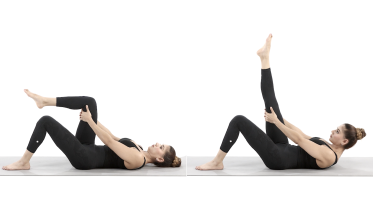 Lying sciatic nerve glide
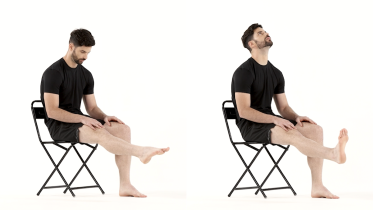 Seated sciatic nerve glide
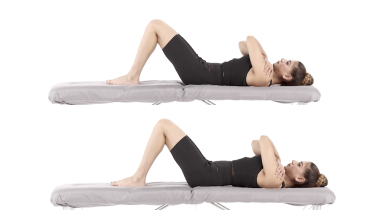 Pelvic tilt
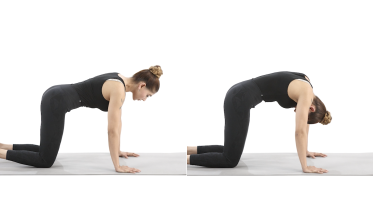 Cat-camel stretch
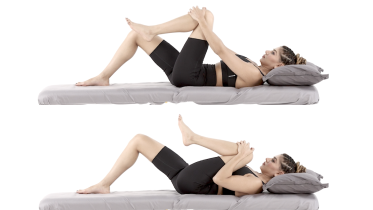 Knee to chest stretch
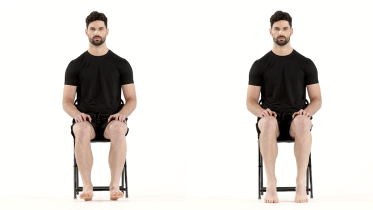 Ankle pumps
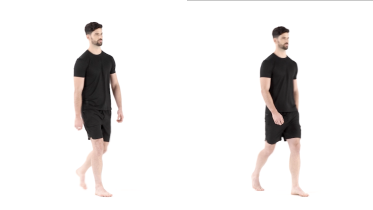 Brisk walking
When should leg numbness and tingling be checked?
Sooner than most people do, and today or faster for a handful of patterns. If the NHS pins and needles page is where you started reading, it is pitched at a non urgent level: its only instruction is to see a GP if you constantly have pins and needles or they keep coming back, and it has no urgent box and no 999 box on it anywhere. The urgency on this page is drawn from other places, mainly the NHS pages on back pain, slipped disc, sciatica, stroke, deep vein thrombosis, peripheral arterial disease, peripheral neuropathy and compartment syndrome, healthdirect, OrthoInfo, NICE guidance on spinal cord compression and on peripheral arterial disease, the vascular and orthopedic surgical standards for a leg that has lost its blood supply and for pressure building up inside a limb, and the sources our condition pages already cite.
Book an appointment if pins and needles in a leg keep coming back or have been there a long time and nobody has examined it, if new numbness, tingling or burning in the foot or toes has come on gradually, or if pain spreads below the knee with numbness or tingling in the leg or foot. Go the same day if the numbness does not go away, if there is a patch you cannot feel at all, if anything is getting weaker, which is the point at which a nerve has gone past tingling, or if new numbness or tingling in the foot came on over hours or days, started after an injury or is spreading.
A few things are worth writing down before you go, because these are the ones that get forgotten in the room. Where the numbness sits, shown on your own leg rather than described; one leg or two; what position or what walking distance brings it on and what settles it; whether anything is weaker; and whether the leg has changed color, temperature or size. Expect a physio to check the pulses in your feet as well as your back and your nerves, since this symptom arrives from more than one direction.
Those three paragraphs are a summary and not your instruction. Work down the lines below and follow the timing attached to each one, since they do not all sit at the same level.
Related exercise programs
Warning signs
Get emergency help now
- Emergency: numbness, tingling or altered feeling around or under your genitals, between your inner thighs, or around your bottom (anus), for example it feels different when you wipe after using the toilet. Call emergency services or go to an emergency department straight away, and do not drive yourself. This can be a sign of pressure on the bundle of nerves at the base of the spine (cauda equina syndrome), which needs emergency treatment.
- Emergency: you find it hard to start peeing, cannot pee, cannot feel yourself peeing or cannot control when you pee, or you do not notice when you need to poo or cannot control when you poo, and this is not normal for you. The same applies to a new change in how your genitals feel during sex, new trouble getting or keeping an erection, new trouble ejaculating, or new trouble reaching orgasm. Call emergency services or go to an emergency department straight away, and do not drive yourself. These can also be signs of cauda equina syndrome.
- Emergency: sciatica in both legs, or pain, tingling, numbness or weakness in both legs. The same applies if you lose feeling in one leg. Call emergency services or go to an emergency department straight away, and do not drive yourself.
- Emergency: your foot or leg suddenly turns cold, pale or blue, or suddenly becomes very painful, numb or weak, even while you are resting. Call emergency services or go to an emergency department straight away, and do not drive yourself. This can be a sign that the blood supply to the leg is blocked, which needs treatment at once: a leg that has gone numb or weak with it can be impossible to save if it is not treated within about six hours.
- Emergency: part of your foot or a toe turns cold, pale, blue or black. Call emergency services or go to an emergency department straight away, and do not drive yourself, as the blood supply to the foot may be blocked.
- Emergency: any sign of a stroke, even if it goes away. That means a face that droops on one side, an arm you cannot lift or keep up, slurred or muddled speech, weakness or numbness on one side of your body or face, sudden blurred vision, double vision or loss of sight, trouble swallowing, sudden dizziness with unsteadiness or falling over, a sudden severe headache, or a sudden fall where your legs give way but you do not black out (a drop attack). Call emergency services straight away.
- Emergency: new numbness or tingling in your feet or legs, spreading up the legs or into your hands or not, and your legs also feel stiff, heavy or weak, walking suddenly becomes hard, you have trouble breathing or swallowing, or you have trouble controlling your bladder or bowels. With any one of those four, call emergency services straight away.
- Emergency: sudden, severe pain in your lower leg that is much worse than you would expect, especially after an injury, after an operation on the leg, or with a plaster cast or tight bandage on the leg. It may come with a tight, swollen leg, pain that gets worse when the muscle is stretched, numbness, pins and needles or weakness, or pain that keeps building and is not settled by painkillers that were working before. Call emergency services or go to an emergency department straight away, and do not drive yourself. This can be acute compartment syndrome, which needs urgent surgery.
- Emergency: back pain with a fever, or you feel hot, shivery or very unwell, and you also have new weakness, numbness or tingling in one or both legs, or new trouble with your bladder or bowels. Call emergency services or go to an emergency department straight away. This can be an infection pressing on the nerves in the spine (spinal epidural abscess), which needs emergency treatment.
- Emergency: you have had cancer, now or in the past, and your back or neck pain feels like a tight band around your body, or you have new or worsening pain spreading down an arm or leg, weakness, numbness, pins and needles or a loss of feeling in your arms or legs, trouble walking, or trouble controlling your bladder or bowels. Those symptoms count on their own, with or without back or neck pain. Call your cancer team's emergency number straight away, or go to an emergency department if you do not have one or cannot get through. This can be cancer pressing on the spinal cord (metastatic spinal cord compression), which needs treatment straight away.
- Emergency: back or leg pain that started after a serious accident, such as a car crash or a fall from a height, or back pain with chest pain. Call emergency services. If the pain started straight after the accident, keep still while you wait.
- Emergency: new neck or back pain after a fall, a knock or a jolt, even a minor one such as a trip or a sudden stop in a car, if you have a condition that stiffens the spine, such as ankylosing spondylitis. Call emergency services or go to an emergency department straight away, do not drive yourself, and tell the staff about your spine condition, so they keep your neck and back in their usual position. A stiff spine can break after a small injury, and the break is easy to miss at first. If the pain started straight after the injury, or you also have numbness, tingling or weakness in your arms or legs, keep still and call emergency services.
- Emergency: you are pregnant or had a baby in the last few weeks and have a severe headache that does not go away with simple painkillers, problems with your vision such as blurring or flashing lights, pain just below your ribs, vomiting, heartburn that does not go away with heartburn medicines, sudden swelling of your face, hands or feet, or you feel very unwell. Contact your maternity unit straight away, or get urgent medical help if you cannot reach them. These can be signs of pre-eclampsia, which can develop in the days or weeks after the birth and needs checking immediately. The same applies to a headache after an epidural or spinal anesthetic that gets worse when you sit or stand up and eases when you lie down. Call emergency services if you have a fit (seizure) or a headache that came on suddenly and is very severe. Call emergency services too if you have a headache with a stiff neck and either a high temperature or bright light hurting your eyes, as this can be meningitis.
Get help now, day or night
- Same day: a severe burning pain in your feet or legs that carries on even when you rest, including pain that wakes you at night or eases when you hang the foot out of bed, skin on your feet or lower legs that has become pale, shiny, smooth and dry, sores on your feet or legs that do not heal, or toes that have become cold and numb and are turning red and then black. A change in skin color can be harder to see on brown and black skin. Contact your doctor straight away, the same day. If you cannot reach a doctor that day, call NHS 111 in the UK, and anywhere, go to an urgent care center or an emergency department rather than waiting. These can be signs that poor circulation in the legs has become serious (critical limb ischemia), and it is assessed by a vascular team rather than treated with exercise. If a sore or toe is also getting red, hot and swollen, is leaking fluid or smelly pus, or you feel feverish or very unwell, go to an emergency department.
- Same day: you have had an operation on your spine or leg, or a spinal injection, and numbness, tingling or weakness in a leg is new, has come back after settling, or is getting worse. Contact the team that treated you straight away, day or night, rather than waiting for the next working day, and use an out of hours or urgent care service if you cannot get through to them. Do the same if the skin around the wound becomes hot, red, swollen or itchy or starts leaking fluid, or you have a temperature with it. What a new or returning symptom means after that procedure depends on what was done and on what your scan showed, so it is their question rather than a physio's. Go to an emergency department rather than waiting for a call back if the weakness or the numbness is getting worse by the hour, or severe new back pain comes with it, because bleeding or swelling that presses on the nerves after a spinal operation or injection is relieved by surgery within hours rather than the next day. If you also have numbness around your genitals or bottom, new trouble with your bladder or bowels, or symptoms in both legs, use the emergency lines above instead and call emergency services straight away.
Get help today
- Same day: a leg or foot that is getting weaker, for example your foot drags, catches on the ground or slaps down when you walk (foot drop). Get medical advice the same day. If the weakness is getting worse by the hour, go to an emergency department.
- Same day: pins and needles or numbness in a leg or foot that does not go away, a patch of the leg or foot where you cannot feel touch at all, or weakness that is getting worse. Get medical advice the same day. If feeling has gone from a whole leg, or both legs are involved, use the emergency lines above instead. If one side of your face or body suddenly goes numb or weak, or your speech becomes slurred or muddled, call emergency services, even if it goes away.
- Same day: numbness or tingling that spreads quickly up your legs or into your hands. Get medical advice the same day.
- Same day: an electric shock feeling runs down your back or into your arms or legs as your head bends forward. Stop and get medical advice the same day.
- Same day: a calf or thigh that is newly swollen or getting more swollen, warm, tender, red or darker than usual, has swollen veins that are sore to touch, or has a throbbing or cramping pain that does not fit your injury or condition, or that feels different from normal muscle soreness after exercise. This can be a sign of a blood clot (deep vein thrombosis), especially after surgery, an injury, time in a cast or boot, a long trip or a spell of being much less mobile than usual. Get medical advice the same day. If you are also short of breath or have chest pain, call emergency services.
- Same day: back or leg pain with a fever, or you feel hot, cold, shivery or generally unwell. Get medical advice the same day, and go to an emergency department if you feel very unwell. If you have a very high or very low temperature, shivering you cannot control, you are breathing very fast or finding it hard to breathe, you are confused or your speech is slurred, your skin, lips or tongue look blue, gray, pale or blotchy (on brown or black skin this can be easier to see on the palms of the hands or soles of the feet), or you have a rash that does not fade when you press it, call emergency services, as this can be sepsis.
- Same day: you have diabetes or numb feet and find a new blister, cut or sore on your foot, especially one you did not feel, a wound that smells or is leaking, or new pain in your foot that you cannot explain. Get it seen by your doctor or foot team the same day. If you also have a fever or feel very unwell, redness is spreading up your foot or leg, or part of your foot or a toe turns black, go to an emergency department.
- Same day: new back or leg pain and you have had cancer, now or in the past, or you have lost weight without trying. Get medical advice the same day and mention it. If you are being treated for cancer now, contact your cancer team the same day.
- Same day: severe pain that comes on suddenly or is getting worse quickly. Get medical advice the same day.
- Same day: back pain after a minor fall or strain if you are older, have low bone density (osteoporosis) or have taken steroid tablets for a long time. Get medical advice the same day. Until it has been checked, stop the exercises and keep away from lifting, bending forward and twisting, because those load a bone in the spine that may be broken.
- Same day: pain that is worse at night, or does not ease at all when you rest. If you have had cancer, now or in the past, or you have lost weight without trying, get medical advice the same day.
Book an appointment
- Within a few days: pain that is worse at night, or does not ease at all when you rest. See your doctor within a few days.
- Within a week or two: you have new numbness, tingling or burning in the foot or toes. Book an assessment with a doctor or physio in the next week or two. If it came on over hours or days, started after an injury, is spreading, or comes with weakness in the foot or toes, get medical advice the same day. If the numbness does not go away, or feeling has gone from a patch of the foot, use the same day line above instead.
- Within 2 weeks: pain that spreads down the leg below the knee, especially with numbness or tingling in the leg or foot. Book an appointment with a doctor or physio.
- Routine: pain or aching in a leg that comes on when you walk and goes after a few minutes' rest, and a doctor has not checked it yet. Book an appointment with your doctor. Narrowed arteries in the legs (peripheral arterial disease) can cause this too, and they need different treatment. If the distance you can walk before the pain starts has become much shorter over a few weeks, see your doctor within a few days. If it has shortened over days rather than weeks, or the pain has started coming on while you are sitting still or lying in bed, contact your doctor the same day: the NHS says symptoms that develop quickly or get suddenly worse can be a sign of a serious problem needing immediate treatment. Pain, tingling, numbness or weakness in both legs is on the emergency list above. If you have had cancer, now or in the past, use the same day cancer line above for this instead of booking: NICE lists muscle pain or cramping in the legs when walking or exercising among the pain patterns that can point to cancer in the spine, so it is not treated as an ordinary circulation question in someone with a cancer history.
- Routine: pins and needles in a leg that you keep getting, or that has been there a long time, and nobody has examined it. Book an appointment with your doctor. That is the NHS threshold for pins and needles, which is to see a GP if you constantly have it or it keeps coming back. Use the same day lines above instead if feeling has gone from a patch of the leg, if anything is weak, or if both legs are involved.
- Routine: an uncomfortable urge to move your legs that is worst at night when you are resting, with tingling, throbbing or itching that eases when you move them. Book an appointment with your doctor if it is stopping you sleeping, if it is affecting your mental health, or if the things you have tried yourself have not helped, which are the three the NHS gives for restless legs syndrome.
Common questions
What does tingling in legs mean?
Usually that a nerve between your lower back and your toes is being squeezed, stretched or irritated rather than damaged. Clinicians call the sensation paresthesia, and it reflects a disturbed signal, which is why a change of position can turn it on and off. The shape of it does the narrowing down: one strip down the back or the side of one leg points at a nerve root in the lower back, both feet in a stocking shape points at nerve damage affecting many nerves at once, and a whole leg that goes dead after half an hour on a hard chair points at the chair. One version of the stocking shape is urgent: numb or tingling feet with legs that feel weak, walking that has suddenly become hard, or any trouble breathing or swallowing means calling emergency services, whether or not the numbness is climbing, and it has its own line in the warning signs on this page. The NHS pins and needles page also names causes that have nothing to do with the back, including diabetes, multiple sclerosis, chemotherapy and some other medicines, poor diet and drinking too much alcohol. None of that amounts to a diagnosis, and being examined is what settles it.
When should I worry about numbness in my leg?
Three answers, at three different speeds. Call emergency services if both legs are involved, if feeling has changed around your genitals or bottom, if your bladder or bowels have changed, if you have lost feeling in one leg, if a leg has suddenly turned cold, pale or blue or become very painful or weak at rest, if numbness came on suddenly down one side with a drooping face, a weak arm or muddled speech, or if a fever, or feeling hot, shivery or very unwell, comes with new weakness, numbness or tingling in a leg. Get medical advice the same day if the numbness does not go away, if there is a patch you cannot feel at all, if a foot is dragging or catching, or if a calf is newly swollen, warm or a different color. Book an appointment if you keep getting pins and needles in a leg, or have had them a long time, and nobody has examined it. Use the warning signs section on this page rather than this answer, since every line there has a timing of its own.
How do I get rid of tingling in my legs?
By finding the cause first, because the treatments do not overlap much. If a nerve root in the lower back is the problem, the work is at the back, and our sciatica program and lumbar disc herniation program set out the staged version. If the narrowing shows up only when you walk, the plan looks different again and lives on our spinal stenosis program, built around positions that open the space up and a walk and rest pattern. If the cause is diabetes, a medicine, a vitamin problem or something else systemic, the medical treatment leads and exercise supports it, which is the territory of our peripheral neuropathy page. If it is simply a position, changing the position is the whole treatment. Weeks disappear into treating the wrong cause, which is the practical argument for an examination before a program.
Can sciatica cause numbness in the leg?
Yes, and it is one of the four symptoms the NHS names. Its sciatica page describes symptoms that usually affect your bottom and the back of one leg, often including the foot and toes, and lists four symptoms: numbness, weakness, tingling like pins and needles, and a sharp burning pain down the back of the leg. So a strip of numbness down one leg with back or buttock pain is an ordinary way for sciatica to present, and it does not on its own mean nerve damage. What changes the urgency is both legs rather than one, feeling lost around the genitals or bottom, a change in your bladder or bowels, or a foot that has started to drag. The NHS puts the first three of those in its go to A&E or call 999 box, and our page on when sciatica needs urgent care goes through them one by one. Feeling lost from a whole leg, rather than prickling along a strip of it, belongs in that box too: the NHS slipped disc page lists losing feeling in one or both legs in its own call 999 advice.
Why do my legs go numb when I sit?
Most often because of what sitting does to a nerve rather than because of anything wrong with the nerve. healthdirect, the Australian government service, names sitting on one of your legs as the most common cause of limb numbness there is, and a hard edge under the thigh, legs crossed for an hour or a wallet under one buttock all do a milder version of the same thing. That kind of numbness arrives in one spot, clears within minutes of moving, and leaves nothing behind. The version worth an appointment behaves differently: it comes with back or buttock pain, follows a strip down the leg, builds the longer you sit and takes a while to settle afterward, which is the pattern on our page about sciatica pain when sitting. Numbness that is still there after you have stood up and walked around is the one to get checked rather than to adjust your chair for.
Why are my legs numb and tingling at night, or when I lie down?
Three different things produce that, and they are told apart by what the legs want you to do. One pattern comes ahead of all three, though: a severe burning pain in the feet or legs that carries on at rest, wakes you, or eases when you hang the foot out of bed is not restless legs and not an awkward sleeping position, and it goes to your doctor straight away, the same day, because it can mean the circulation in the leg has become critical. Position is the simplest: a side lying position loads the outer hip and thigh for hours, and most people cannot tell a numb outer thigh at 3am from something more serious, which is fair enough. Restless legs syndrome is the one with an urge attached, and the NHS describes a strong need to move your legs with uncomfortable feelings such as tingling, throbbing or itching, usually worse at night when resting. Nerve damage affecting both feet is the third, and the NHS lists a burning or sharp pain usually in the feet among its symptoms, although its page does not say the symptoms are worse at night; what we hear in clinic is that the quiet of bedtime is often when people first notice them. Night symptoms on their own are not an emergency, but night pain that no rest or change of position eases at all has its own line in the warning signs on this page.
Can a numb leg be something serious?
Sometimes, and that minority is the reason the sorting comes before the exercises on this page. The ones counted in hours are pressure on the bundle of nerves at the base of the spine, a blood supply to the leg that has been cut off, a stroke, an infection or a cancer deposit pressing on the spinal cord, and a numbness climbing fast enough to reach the muscles you breathe and swallow with. Every one of them has a line of its own in the warning signs on this page, with its own timing attached. The reassuring half is real as well: the ordinary causes are not dangerous, most of them respond to treatment, and a leg that falls asleep on a hard chair is not on the list at all. Work down the warning lines one at a time rather than taking an impression from this answer, because they do not all sit at the same level.
References
- NHS. Pins and needles. Read 29 October 2026. https://www.nhs.uk/conditions/pins-and-needles/
- NHS. Sciatica. Read 29 October 2026. https://www.nhs.uk/conditions/sciatica/
- NHS. Back pain. Read 29 October 2026. https://www.nhs.uk/conditions/back-pain/
- NHS. Slipped disc. Read 29 October 2026. https://www.nhs.uk/conditions/slipped-disc/
- NHS. Symptoms of a stroke. Read 29 October 2026. https://www.nhs.uk/conditions/stroke/symptoms/
- NHS. Peripheral neuropathy. Read 29 October 2026. https://www.nhs.uk/conditions/peripheral-neuropathy/
- NHS. Peripheral neuropathy. Symptoms. Read 29 October 2026. https://www.nhs.uk/conditions/peripheral-neuropathy/symptoms/
- NHS. Peripheral arterial disease (PAD). Read 29 October 2026. https://www.nhs.uk/conditions/peripheral-arterial-disease-pad/
- NHS. DVT (deep vein thrombosis). Read 29 October 2026. https://www.nhs.uk/conditions/deep-vein-thrombosis-dvt/
- NHS. Restless legs syndrome. Read 29 October 2026. https://www.nhs.uk/conditions/restless-legs-syndrome/
- NHS. Guillain-Barre syndrome. Read 29 October 2026. https://www.nhs.uk/conditions/guillain-barre-syndrome/
- NHS. Compartment syndrome. Read 29 October 2026. https://www.nhs.uk/conditions/compartment-syndrome/
- NHS. Lumbar decompression surgery. Read 29 October 2026. https://www.nhs.uk/conditions/lumbar-decompression-surgery/
- NHS. Sepsis. Read 29 October 2026. https://www.nhs.uk/conditions/sepsis/
- healthdirect. Limb numbness. Australian Government. Read 29 October 2026. https://www.healthdirect.gov.au/symptoms/limb-numbness
- Diabetes UK. How to look after your feet. Last reviewed 22 November 2024. Read 29 October 2026. https://www.diabetes.org.uk/about-diabetes/looking-after-diabetes/complications/feet/taking-care-of-your-feet
- American Academy of Orthopaedic Surgeons. Lumbar spinal stenosis. OrthoInfo. Read 29 October 2026. https://www.orthoinfo.org/en/diseases--conditions/lumbar-spinal-stenosis/
- National Institute for Health and Care Excellence. Peripheral arterial disease: diagnosis and management. NICE guideline CG147. Published 8 August 2012, last updated 11 December 2020. Read 29 October 2026. https://www.nice.org.uk/guidance/cg147
- British Orthopaedic Association. BOA Standard: Diagnosis and management of compartment syndrome of the extremities. Revised July 2025. Read 29 October 2026. https://www.boa.ac.uk/asset/D0432D40%2D5D99%2D4B64%2D9952F6EB1B60C166/
- Bjorck M, Earnshaw JJ, Acosta S, et al. Editor's Choice: European Society for Vascular Surgery (ESVS) 2020 Clinical Practice Guidelines on the Management of Acute Limb Ischaemia. European Journal of Vascular and Endovascular Surgery. 2020;59(2):173-218. https://doi.org/10.1016/j.ejvs.2019.09.006
- Pivazyan G, Kim AJ, Aguilera CJ, et al. Incidence, risk factors, and functional outcomes of symptomatic postoperative spinal epidural hematoma: a case-control study. World Neurosurgery. 2025;193:851-860. https://doi.org/10.1016/j.wneu.2024.10.070
- National Institute for Health and Care Excellence. Spinal metastases and metastatic spinal cord compression. NICE guideline NG234. Published 6 September 2023. Read 29 October 2026. https://www.nice.org.uk/guidance/ng234
- Cancer Research UK. Spinal cord compression. Read 29 October 2026. https://www.cancerresearchuk.org/about-cancer/coping/physically/spinal-cord-compression
- Tetsuka S, Suzuki T, Ogawa T, Hashimoto R, Kato H. Spinal epidural abscess: a review highlighting early diagnosis and management. JMA Journal. 2020;3(1):29-40. https://doi.org/10.31662/jmaj.2019-0038
Written and checked by the PocketPhysio editorial team. Last updated 2026-10-29.
This page is general education, not a diagnosis or a personal treatment plan. See a physiotherapist or doctor for advice about your own situation.