
Knee pain at night: what to do tonight and what it means
Warning signs, and when to get help
If you are reading this in the middle of the night, go straight to what to do tonight, and read the warning signs if something about this knee is new or frightening you. The rest of the page is for the morning.
Why does your knee hurt more at night?
The honest answer is that nobody has settled it, and the pages that give you a confident mechanism are giving you a plausible story rather than a finding. What can be said is which things change between 4pm and 2am.
Load is one, and it works in the wrong direction. A knee that is sore has spent the day absorbing your body weight through every step, and the soreness from that arrives late rather than at the time. Then there is stillness. Joints get stiff when they stop moving, and the fluid inside a knee is shifted around by movement rather than by anything the knee does on its own.
Last comes attention, which sounds like a polite way of calling the pain imaginary and is not. Pain you can talk over at dinner has nothing to talk over at 2am, and the same signal gets a far bigger share of you.
Then there is what is actually measured. An online survey distributed through social media and patient groups in April and May 2020 collected 101 people with self-reported hip or knee osteoarthritis; 76 of them, 75%, reported night pain, and the people with night pain rated it higher than the pain they had at the moment they answered, with median scores of 49.5 against 40.0 on a 0 to 100 scale (van Berkel and colleagues, 2023). That is where the 75% figure you may have read elsewhere comes from, and it is worth knowing its size and shape: 101 people who volunteered to answer a survey about their own osteoarthritis is not the same as a count of everyone with a sore knee.
A community study comes at it from the other end. Among 942 volunteers in the Iwaki cohort in Japan, osteoarthritis of the knee was found in 37.9% but night knee pain in only 7.6%, and the people with knee osteoarthritis who also screened positive for widespread pain sensitivity (central sensitization) reported night pain more often than those who did not (Sasaki and colleagues, 2021). Put the two together and the useful conclusion is that night pain is common among people who have gone looking for help with a knee, and much less common across everybody walking around with knee arthritis.
What night pain does not do is tell you how worn the joint is, and the same Japanese cohort is worth reading carefully on that. Night knee pain did rise with the X-ray grade there, from 3.1% of people graded 0 or 1, to 12.2% at grade 2, to 31.5% at grades 3 and 4. So it is reported more often as the changes advance. But even at those top grades most people reported no night pain at all, and a focus group study of 123 people with hip or knee osteoarthritis found night pain at every stage of the disease and concluded it may not be a distinct marker of severity (Woolhead and colleagues, 2010). Read it as a measure of how irritable the knee is at the moment rather than as a grade.
What causes knee pain at night?
The timing narrows the field less than people expect, so this list is ordered by how often it comes up rather than by how convincing a night-time story each one has.
Osteoarthritis is the common answer in adults from middle age on. The NHS describes it as pain and stiffness in both knees with mild swelling, more common in older people, and it is the pattern of a knee that aches after a day on its feet and then takes a while to settle in bed. NICE sets out what a clinician is actually looking for: from the age of 45, joint pain that comes on with use, plus either no morning stiffness or morning stiffness that clears within 30 minutes, is enough to diagnose osteoarthritis from the symptoms alone, without an X-ray (NG226, recommendation 1.1.1). Night pain is not part of that test, which is the thing worth taking from it. It neither makes the diagnosis nor rules it out.
Our knee osteoarthritis program is the one to follow if that is your diagnosis, and the page on what to do in a flare covers the worse weeks. And the same guideline is worth reading further than its diagnosis test. NICE puts therapeutic exercise, tailored to you and including muscle strengthening and general aerobic fitness, as a core treatment offered to everyone with osteoarthritis, alongside weight management where that is appropriate (NG226, recommendations 1.2.2 and 1.3.1), which is what the exercises further down this page are. And it lists walking aids such as a stick among the things to consider for osteoarthritis in a leg (1.3.10), which is worth asking about if the trip to the bathroom at night is the part that worries you. A run of bad nights is often a flare rather than a new problem: NICE defines a flare as a temporary worsening of pain, swelling and stiffness that is worse than normal and may affect sleep, activity, function and wellbeing.
In younger adults the usual suspect is the kneecap. It usually shows up on stairs, after long sitting and after a training week that was heavier than usual, and the night version is the ache that follows. The patellofemoral pain page has the detail, and our pages on knee pain on stairs and knee pain when bending cover the daytime half of it.
Gout has the clearest night-time evidence of anything on this list. A case-crossover study followed 724 people with gout for a year and recorded 1,433 attacks; the risk of an attack in the 8 hours from midnight to 7:59am was 2.36 times that of the daytime block, with a confidence interval of 2.05 to 2.73 (Choi and colleagues, 2015). A gout attack is not subtle. The NHS describes sudden severe pain in a joint, usually the big toe but also the knee, with skin that becomes hot, swollen and red, and it puts a sudden painful swollen joint that is getting worse on the urgent route. Its own advice during an attack includes keeping the joint cool and keeping the bedclothes off it at night, which tells you how little that joint will tolerate in bed.
An inflamed joint is a different animal from a worn one, and the pattern that separates the two shows up in the morning rather than at night. In rheumatoid arthritis the NHS describes a throbbing, aching joint pain that is often worse in the mornings and after a period of inactivity, which is what a night in bed is, with stiffness that behaves the same way. The dividing line it gives is the clock in the morning: osteoarthritis stiffness usually wears off within 30 minutes of getting up and rheumatoid stiffness often lasts longer. Swollen, hot, tender joints, several of them, often the small ones in the hands and feet first and often on both sides, point the same way. Two lines on the warning list below are for this, one for a knee stiff more than 30 minutes most mornings when nobody has told you why, and one for several painful, swollen, stiff joints in the hands, wrists or feet, and our rheumatoid arthritis program covers the condition itself.
Two more deserve naming. A swelling behind the knee rather than all around it is often a Baker's cyst, which the NHS describes as a fluid filled lump at the back of the knee whose symptoms can be worse after walking; our page on pain behind the knee and the Baker's cyst page take that further. If you have one, know the other half of the NHS advice too: leg pain that gets worse, or a calf that becomes swollen, warm, bruised, red or darker than usual, needs urgent advice, because a cyst that has burst and a blood clot can look the same from the outside. That line is on the warning list below, with its timing.
An old cartilage tear can ache at night for months after the event that caused it, which is covered on sleeping with a meniscus tear. If you have had an operation on the meniscus, how far the knee is allowed to bend comes from your surgeon rather than from this page, and the warning list below has a line of its own for an operated meniscus that locks, catches, gives way, pops or swells up again.
Infection in the joint is the one that changes your evening rather than your week. A knee that is hot, red and swollen, or painful alongside a high temperature or shivering, goes on the same day route in the warning signs below, and the NHS treats suspected infection in a joint as needing urgent medical help.
Knee pain at night with no swelling
This is the version nobody answers, so here is the straight answer: a knee can hurt a great deal at night and look completely normal, and that is neither unusual nor reassuring on its own.
Fluid inside a joint sits inside a capsule that is already a certain shape, and a knee can hold a fair amount before its outline changes enough for you to notice in bad bathroom light. So stop judging the knee against how it looked last month and compare it with the other one, in the same position, with both legs straight. Then check the thing that is easier to see than swelling: how far it bends, and whether that is different from the other side.
The reassurance that is genuinely available is narrow, and it is narrower than it is usually made to sound. Two of the same day problems on this page, infection in the joint and bleeding into it, are described by the NHS with swelling and heat or warmth as part of the picture, so a cool knee of normal size is less likely to be either of those two. It says nothing about the rest of the warning list. A knee that has locked, a calf that is swelling, a leg or foot that is getting weaker, night pain that keeps getting worse week by week, and a new knee with pain building at rest are all on that list without a swollen knee anywhere in them. Osteoarthritis, a kneecap problem, an irritated tendon and a tear from years ago can all run a bad night with nothing to show, which is why a normal looking knee is a reason to make an appointment rather than to cancel one.
Knee pain when lying down, and knee pain at night in bed
One exception before any of this: if your knee has been replaced, the pillow advice in this section is not written for you, because the NHS asks you not to sleep with a pillow under your new knee. Read the knee replacement section further down instead.
People describe this two ways and they are not the same complaint.
The first is a knee that is quiet standing up and sore lying down. Most often that is the straightening: lying flat lets the knee settle into a position it has not held all day, and a joint that is short of its last few degrees of extension will object to being asked for them. A pillow under the lower leg rather than behind the knee usually helps here, because it supports the leg without parking the knee in a bend.
The second is a knee that hurts whatever you do with it once you are in bed, and the useful move there is to find the least bad position rather than the right one. Lying on your back with the lower leg and heel supported suits most people. On your side, a pillow between the knees matters more than it sounds like it should, because without it the top leg drags the sore knee inward all night. Some people are better with the knee gently bent over a rolled towel, and if that is you, use it rather than arguing with a web page.
One caution with that one: if you are already short of the last few degrees of straightening, do not let the propped bend become the habit every night, because a knee that is held bent for hours tends to get harder to straighten. Tell your physio if your knee will not go fully straight, because getting that back is usually treated as a priority.
Two small things make a real difference and get skipped. Take the painkiller you already know you can take before you are properly awake and in pain, not after an hour of it. And if even the weight of the bedding bothers the knee, untuck the bottom of the bed.
Knee pain at night only, at a young age, with no injury
A specific reader arrives on this page: no injury, nothing to see, fine all day, and awake at 2am, often in their twenties or thirties. The pattern is common and it is usually not sinister, but it is worth saying what it does and does not mean.
What it usually means is an irritable joint that is coping during the day and complaining afterward. A kneecap that is being loaded in a way it does not like, a tendon at the front of the knee that has had a heavy few weeks, or a knee that is simply doing more than it did last year will all produce exactly this. The patellar tendinopathy page covers the tendon version, which classically hurts after the session rather than during it.
What it does not mean is that nothing needs looking at. Pain that is there at night or at rest, does not ease when you rest at all, and keeps getting worse is on the warning list on this page with its own timing, and so is unexplained weight loss alongside knee pain. If the person with night pain is still growing, the threshold drops further: bone pain that wakes a child or teenager, pain at rest that keeps getting worse, or a lump around the knee or thigh that keeps growing all appear in the warning signs below and need seeing rather than watching.
What to do tonight
The order is deliberate. Position first, then movement, then temperature, then medicine. The bedding, and getting the painkiller in before you are wide awake, are up in the section on knee pain when lying down. All of it is easier to sort out before you go to sleep than at 2am, so work out where the ice pack and the painkillers are while the light is still on, and clear the route to the bathroom of rugs, cables and anything you have put down.
Get the knee into the position it objects to least and give it 10 minutes before you decide the position is wrong. If those 10 minutes change nothing, move rather than lie there waiting it out. Bend and straighten the knee slowly a few times, turn over, and if it is still the loudest thing in the room, get up and walk gently round the house for a couple of minutes before you go back to bed. That is practice rather than trial evidence, but it follows from what this page says is different about the night: the knee has been still, and a still knee stiffens.
Standing up at 2am is the part worth preparing for. Put a light on before you stand, and sit on the edge of the bed for a moment first, because a knee that has been still for hours is at its least reliable in the first few steps. If your knee has been giving way, or you are unsteady on your feet at night, do the bending and straightening sitting on the edge of the bed rather than walking about in the dark.
If you use a stick, crutches or a frame, keep it where you can reach it from sitting on the edge of the bed rather than across the room, and if you were told after an operation to keep weight off the leg or to use crutches, that holds at 2am as well. The NHS advice for anyone at risk of falling covers the rest of it: shoes or slippers that grip, fit properly and will not come off your foot, a mobile phone with you or a personal alarm worn, and a word with your doctor or pharmacist if you think a medicine you take could be affecting your balance. Socks on a hard floor and bare feet are the two to avoid on the way to the bathroom. If you have already had a fall, the NHS asks you to see a doctor about it, whether or not you were hurt.
Temperature comes next, and it is one reason people end up in the kitchen at 2am. For a sore knee the NHS names an ice pack or a bag of frozen peas wrapped in a tea towel, for up to 20 minutes at a time, every 2 to 3 hours, and painkillers such as paracetamol or ibuprofen gel or tablets. If the cause is osteoarthritis, NICE is more particular about which of those to reach for: it offers an anti-inflammatory gel for the knee first, and says not to use paracetamol routinely, because the evidence that paracetamol helps osteoarthritis is weak (NG226, recommendations 1.4.2 and 1.4.5). Anti-inflammatories do not suit everybody, tablets less than gels, so take that choice to your pharmacist or doctor rather than to this page. Some people get more from warmth than from cold, particularly when the main complaint is stiffness rather than heat, and the evidence underneath either one for a knee is thin enough that the one that works for you is the right one.
Whichever way you use it, the ice has rules of its own. Keep something between the pack and your skin. Never put it on skin that cannot feel properly, and take it off before you fall asleep. If you have had an operation on the knee, ask your surgical team before you put ice over the wound or the dressing, because teams differ on that.
Back to the painkiller, because the dose taken half asleep has two traps in it. Check how long it has been since the last one and keep to the amount on the packet, since an evening dose you have half forgotten plus a 2am dose is how people go over the limit on a night like this. And the NHS asks several groups to check before taking ibuprofen at all: if you are pregnant or trying to get pregnant, if you have or have had a stomach ulcer, or if you have asthma or an allergy such as hay fever, chickenpox, a heart, liver or kidney condition, a blood clotting problem or a previous stroke. The same page asks you to check the leaflet and ask a pharmacist if you take an anticoagulant such as warfarin, a steroid, an antidepressant or medicine to lower blood pressure, because those may not mix well with it.
Pregnancy changes the answer rather than adding a caution to it. The NHS says to avoid ibuprofen in pregnancy unless a doctor or pharmacist has advised it, and that paracetamol is usually the best painkiller to take while you are pregnant. That is the opposite way round from the osteoarthritis advice above, which is written for a different reader, so if you are pregnant, follow this one.
Then look at the day you just had. The NHS advice for a sore knee includes putting as little weight through it as possible, for example by not standing for long stretches, and the most common thing we see behind a run of bad nights is a run of long days on hard floors that nobody connected to the 2am wakeups.
Knee pain at night after a knee replacement
If your knee has been replaced, start at our page on night pain after knee replacement surgery, which is written for you, and read sleeping positions after a knee replacement alongside it. This section exists because one piece of generic night-time advice is wrong for you, and it is the first thing most pages tell you to do.
Do not put a pillow under the knee. The NHS recovery advice for a knee replacement says not to sleep with a pillow under your knee, and adds that you do not need to sleep in a special position after the operation. OrthoInfo is explicit that you can safely sleep on your back, on either side or on your stomach. The same NHS page asks you not to sit with your legs crossed for the first 6 weeks, and to keep the leg raised as much as you can to bring the swelling down.
That instruction is about how you sleep, not about the exercises, and two of the exercises on this page look like a contradiction until you see the difference. The rolled towel under the knee in a quad set, and the roller in a short arc quad, are both there for a few seconds at a time while you push the knee toward straight, which is the opposite of parking it in a bend all night. Both are ordinary parts of knee replacement rehab. You start them when your surgeon or physio says so, not before.
What the NHS instruction is protecting is your straightening. A knee left resting in a bend for hours tends to lose the last few degrees of straight, and after a replacement that is easier to keep than to win back, which is why the exercises push the knee toward straight rather than letting it sit bent. So the practical rule is about what happens when the set finishes: take the towel or the roller out from under the knee, rather than leaving it there while you rest or watch television, and never use it as a sleeping prop. Use a small rolled towel for a quad set rather than a pillow or a bolster, because a big roll holds the knee in too much bend to press into.
Expect some of this. OrthoInfo says plainly that some pain with activity and at night is common for several weeks after surgery, and it describes moderate to severe swelling in the first few days or weeks and mild to moderate swelling for about 3 to 6 months. That expectation is also the problem, because expected swelling is exactly what hides a blood clot, which is why the warning signs on this page carry a separate line for swelling that is increasing instead of settling.
So here is how to tell one from the other, because "new or severe swelling" is not much use to someone who has been swollen for weeks. It is the direction and the time of day, not the size. Swelling that belongs to the operation is worst by the evening, is less after a night with the leg up, and goes down slowly over months rather than in a straight line, so a week that is no better than the last one is not in itself a warning. The swelling to report is the one that is as bad or worse first thing in the morning before you have done anything, or that is bigger today than yesterday and bigger again tomorrow, or that spreads down into the calf, ankle or foot, especially with calf pain or tenderness or redness above or below the knee. Those last ones are OrthoInfo's own clot signs and they have their own line below.
The same morning test works for pain: a knee that was simply overdone is usually quieter by morning, and one that is worse again in the morning is the one to call about.
Which leaves the question people actually want answered: how many weeks of bad nights are normal. Nobody can give you a date, and no source we would stand behind gives one. Several weeks is as far as OrthoInfo goes, and it is describing the usual course rather than promising anything about your knee. What is worth watching is the direction.
Night pain that is less than it was a month ago is doing what it should, however unpleasant it still is. Night pain that is climbing week by week, that keeps building while you rest as well as when you move, or that does not change whatever you do, is on the same day list below rather than in this paragraph. A knee that has stopped gaining bend or straightening from week to week, or that is getting stiffer, has its own line too, and that one is worth raising early rather than at the next routine appointment.
What does not belong in the expected category: a wound that is leaking or opening, a knee that is getting redder, hotter or more painful rather than less, a high temperature or shivering, a calf that is newly swollen or tender, or pain that keeps building both at rest and on the move. Those go to your surgical team the same day, and the warning signs to call your surgeon about page sets out each one. The warning list below carries them with their timings, including the infection that can appear years later and the fall that leaves a replaced knee painful even when you can still walk on it.
One more thing to take to your own team rather than to this page: new night pain in a knee that had settled, months or years after the operation. It is not a signal to do fewer exercises. Where it comes on gradually and tracks what you do, it is a review to ask for, because the parts of a new joint can loosen or wear over the years and that pain is usually worst when you put weight through the leg. Where it is there at rest, does not change with what you do, or is building from week to week, it goes to your surgical team the same day instead and you ask them to check the knee for infection, because an infection around a new joint can show itself as pain alone, with no temperature and nothing to see, years after the operation.
You are not expected to tell those two apart. You are expected to report it rather than wait, and the line between them is on the warning list below.
Knee pain at night after running, and in pregnancy
After a running build-up, the night ache that matters most is the one coming from bone rather than from tissue. OrthoInfo describes a bone stress injury as discomfort at one spot on a bone that you can point to, at first only after activity, then during activity and ordinary walking, sometimes with swelling and an ache while lying in bed at night. That last detail is why it belongs on a night pain page, and the warning list below gives it its own line and timing. What that line asks you to do first is stop: no running, no jumping and nothing else that hurts at that one spot, from tonight, while you wait to be seen, and that includes the walking in the exercise list below. Our page on knee pain after running handles the rest of the running picture.
In pregnancy, knee, back and pelvic pain is managed differently and with your own midwife or maternity physio leading rather than from a page like this one. Use the pregnancy back and pelvic pain program and take new or one sided leg swelling to your midwife or maternity unit rather than treating it as part of a sore knee.
Before you start these exercises
These are ordinary early knee rehab, and most of them are small and dull. Some are not for everybody, though, and the checks are quicker to read now than to regret later.
While you exercise, and that includes the walking, stop straight away if you have any of these: chest pain or pressure, dizziness or feeling faint, a racing or irregular heartbeat, or being far more out of breath than the effort should cause. If chest pain, pressure or tightness does not ease quickly when you rest, spreads to your arm, neck, jaw, stomach or back, or comes with sweating, feeling sick, feeling light-headed or being short of breath, call emergency services straight away, as this can be a heart attack. If it eases quickly and none of these happen, get medical advice the same day, and do not exercise again until you have been checked. If you faint while exercising, call emergency services, even if you feel fine again quickly.
Dizziness has a next step of its own, because the paragraph above is written for chest pain. You feel dizzy, lightheaded, faint or sick, or the room seems to spin. Stop, sit down and get medical advice the same day before you exercise again. If you faint, it does not settle within a few minutes of sitting still, your vision suddenly blurs or goes double, or you cannot stand or walk steadily, call emergency services.
One stop sign on the walking is about the blood supply to your legs rather than about your knee, and it is the reason to read this before you build up any distance. Aching, cramping or tightness in a calf, thigh or buttock that comes on at about the same walking distance every time and clears within a few minutes of standing still, and a doctor has not checked it yet. Keep the walk gentle and book an appointment with your doctor before you build up any further, as narrowed arteries in the legs (peripheral arterial disease) can cause this and are managed differently. If leg pain carries on while you are resting or in bed, or wakes you at night, get medical advice the same day. If a foot or leg suddenly turns cold, pale or blue, or suddenly becomes very painful, numb or weak, call emergency services and do not drive yourself, because the blood supply to the leg may be blocked and a leg that has gone numb or weak with it can be impossible to save if it is not treated within about six hours.
The NHS asks anyone whose leg pain keeps coming back when they exercise to see a doctor about it rather than putting it down to age. All of that is about a leg that aches when you walk, not about the knee pain the rest of this page answers, which has its own lines and its own timings on the warning list.
After a knee fracture or knee surgery, including a knee replacement, follow your surgeon's or physio's plan, and start these exercises only when they have cleared you. If you have had a meniscus repair rather than a trim, ask how far the knee is allowed to bend and keep every bend inside that limit, which means the heel slides and the amount the knee bends in the glute bridge, and get your surgeon's go-ahead before any deep or loaded bending such as kneeling or a full squat, because those limits often run for months after a repair and are lifted later than the ones on walking.
After a knee replacement, take the towel out from under the knee when a set of quad sets is finished rather than resting with it there. The towel in a quad set, and the roller in a short arc quad, hold the knee for a few seconds at a time while you push it toward straight. That is not the same thing as sleeping with a pillow under the knee, and the knee replacement section above explains why one is asked of you and the other is not.
If you have had a hip replacement, get the go-ahead from your surgeon or physio before you try the glute bridge. Some operations limit this kind of work for the first months, so the timing depends on your surgery.
If you have high blood pressure, breathe steadily through every hold and never hold your breath, which matters most on the quad sets and the short arc quads. With a heart or lung condition, high blood pressure, or after a recent operation, ask your doctor or physio how much to walk and how fast before you start the brisk walking.
If you have fallen in the past year or you feel unsteady on your feet, walk a flat, even route with somewhere to hold on, wear shoes that fit and grip the floor rather than socks or loose slippers, and ask your doctor or physio about a falls check before you add any distance. If you have diabetes or numb feet, always walk in shoes and socks, even indoors, and check your feet for blisters or cuts afterward, because a sore you cannot feel is the one that gets missed.
If you are pregnant and past the first three months, check with your physio before exercising flat on your back, which is the position for five of these six, and if you are pregnant or recently gave birth use the pregnancy back and pelvic pain program and ask your midwife, doctor or physio first.
Leave all six out, including the walking, and get the knee looked at first if the pain sits at one small spot on a bone that you can press on with a finger. That is on the warning list below as a possible stress fracture. Several other lines on that list ask you to stop the exercises as well, and each one says so in its own words.
Where to start, when the nights are already broken and you are tired before you begin: take two of them, the quad sets and the heel slides, at the lowest number in each range, once a day, and add the others one at a time over the first week or two. Six exercises on the first day is how a tired person gives up by the third.
There is a ceiling as well as a floor, and it needs saying, because each of the numbers given with the list below was written for that exercise on its own, and they add up if you read the lot literally. Keep the loaded work to one session a day each while you are settling the nights: that means the short arc quads, the straight leg raise, the glute bridge and the walk. The quad sets and the heel slides are the two that can go two or three times a day, because one barely moves the knee and the other barely loads it, and the quad sets are the one an operated knee is sometimes asked to repeat more often than that. If your own team has set you short rounds spread from morning to bedtime, do what they asked, because their plan beats any ceiling on this page. What this is here to stop is the arithmetic: six exercises, several times a day each, is most of an evening and more knee than a sore one wants.
If a night is worse after a session, drop back to one session a day at the lowest numbers rather than stopping altogether, hold there until the nights settle, and build up again from that point. The amount comes down and then up, and the night after is the test.
Exercises that can help
None of these is for the hour you are awake and sore. They are for the daytime, because a knee with more thigh strength behind it tends to protest less by the end of the day, and the end of the day is what you are feeling at 2am. Quad sets are often 10 repetitions with a 5 to 10 second hold, several times a day, and short arc quads often 2 to 3 sets of 10 to 15 with a 3 to 5 second hold at the top, once or twice a day. Heel slides are often 10 to 15 slow repetitions, 2 or 3 times a day, the straight leg raise 2 to 3 sets of 10 on each leg once a day, and the glute bridge often 2 to 3 sets of 10 to 12 with a short hold at the top. Brisk walking commonly starts at 10 to 20 minutes on most days of the week, including a few minutes of slow walking at each end, adding time before adding speed. After a knee replacement, follow the graduated walking program your own team gave you rather than the numbers here, and keep using your stick, crutches or frame until they tell you it can go, because a fall in the early weeks can damage the new knee and cost you another operation (OrthoInfo). Keep knee pain mild while you work and back to where it started by the next morning. NICE says joint pain can increase when you first start exercising for osteoarthritis, so a bit more ache early on is expected rather than a reason to stop (NG226, recommendation 1.3.3), but a knee that is worse the following night means the amount was too much, and the amount comes down rather than up. Your physio will adjust this. Those numbers are where you are heading rather than where you start, and the section just above this list says where to start and which of these are not for everybody. Read it before your first session.
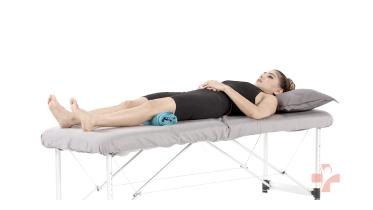 Quad sets (towel under knee)
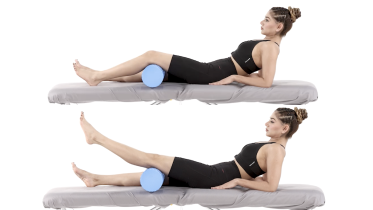 Short arc quads
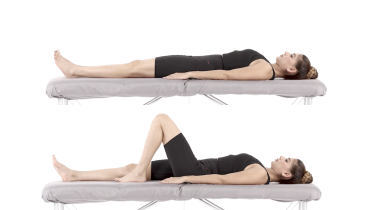 Heel slides
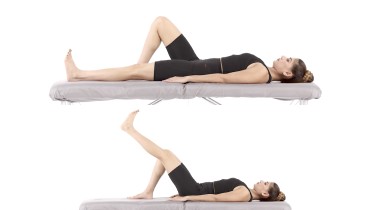 Straight leg raise
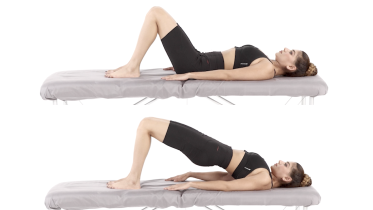 Glute bridge
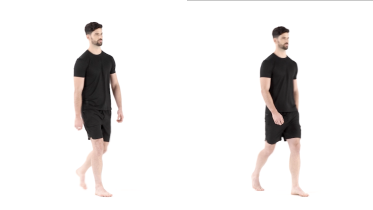 Brisk walking
When should knee pain at night be checked?
The NHS threshold for a sore knee is to see a doctor if it has not improved within a few weeks, or sooner if you are worried about what is causing it. It puts a knee that is very painful, that you cannot move or put weight on, that is badly swollen or has changed shape, that locks or gives way, or that is red and hot alongside a high temperature, on the urgent route instead. Those thresholds were written for a knee that has not been operated on; a replaced knee with new pain goes to the surgical team.
There is also a short list of things that take a knee out of the straightforward arthritis route. NICE calls them atypical features, and they are recent injury, morning stiffness that goes on and on, symptoms or shape changing quickly, a hot swollen joint, and anything that raises a question of infection or cancer (NG226). You do not have to work out which applies to you. It is enough to say those details out loud at the appointment, because they change what gets examined and what gets scanned.
Write down the things that will have slipped your mind by the time you get an appointment. How many nights in the last week it woke you, and whether that number is going up or down. What position helps. Whether it is sore before you get into bed or only once you are still. What the knee did that day, and what the morning after is like.
A physio will test the joint, the kneecap, the ligaments and how much straightening you have, and will want to know about the day rather than the night, because the day is usually where the fix is. Strength in the thigh is the part most under your control, which is why the exercises above are daytime work.
Some signs should not wait: read the warning signs section on this page and act on the timing given for each line, because they are not all at the same level of urgency.
Related exercise programs
Warning signs
Get emergency help now
- Emergency: the knee became very swollen very quickly, within a few hours of a twist, fall or blow, or you felt a pop or snap. Go to an emergency department straight away. Do not drive yourself: ask someone to drive you or call an ambulance.
- Emergency: the knee has moved out of place, looks misshapen or is pointing at an odd angle, or you have tingling or no feeling in the knee, leg or toes, or your foot turns cold, pale or blue. Go to an emergency department straight away. Do not drive yourself: ask someone to drive you or call an ambulance.
- Emergency: you felt a sudden pop or tearing feeling just above or below your kneecap, you can see or feel a dip there, the kneecap seems to have moved up toward the thigh or to sag lower than usual, or you suddenly cannot straighten your knee or lift your leg out straight. Stop exercising and go to an emergency department straight away, even if you can still walk, as this can be a torn tendon at the front of the knee, either below the kneecap (patellar tendon) or above it (quadriceps tendon). Do not drive yourself. A repair usually does better if it is done soon after the injury.
- Emergency: you have had a knee replacement and, after a fall or a knock, you cannot put weight on the leg, your knee or thigh is very painful, or the leg looks out of shape or shorter than the other. Go to an emergency department straight away, and do not drive yourself. If you cannot get up, call emergency services. A broken bone around a knee replacement is rare, but it needs treatment in hospital. If a smaller fall or knock leaves the knee newly painful, swollen or bruised, even if you can still walk on it and the leg looks normal, stop the exercises, go back to your crutches or sticks and keep your full weight off that leg, and get it checked by your surgical team the same day. Ask whether you need an X-ray: a break in the bone around a new knee is not always obvious at first, an X-ray is what shows it, and walking normally on one can move the broken ends apart.
- Emergency: you are still growing and have pain that wakes you at night, pain at rest that keeps getting worse, or a lump or swelling around the knee or thigh that keeps growing. If you also have a rash that does not fade when you press it, call emergency services or go to an emergency department.
Get help today
- Same day: the knee is hot, red and swollen, or you have knee pain with a high temperature or feel hot, cold or shivery. Get medical advice the same day, and go to an emergency department if you feel very unwell. This can be a sign of infection in the joint, which needs treatment quickly.
- Same day: the knee swells up with no clear reason, especially if you take medicine to thin your blood. Get medical advice the same day.
- Same day: you cannot walk or put weight on the leg, whether or not there was a fall or injury, or you have very bad knee pain after a fall or injury, or very bad knee pain that came on suddenly with no injury at all. Get medical advice the same day.
- Same day: the pain started with a fall, a twist or a blow to the knee, or you cannot put weight on the leg. Get medical advice the same day.
- Same day: the knee is locked, which means it is stuck bent and you cannot fully straighten it, even after gently trying to move it, or you cannot bend or straighten the leg at all. Get assessed the same day by a doctor, at urgent care or at an emergency department. A torn piece of meniscus can get caught in the joint and block it, and when a tear like this can be repaired, it should be done as early as possible. A knee that catches for a moment and then frees itself can happen with a meniscus tear. That is not the same as a locked knee, but tell your physio or doctor about it.
- Same day: the knee keeps giving way under you, or it gave way after a recent injury, or it gives way and is also very painful or swollen. Get medical advice the same day. If it only happens now and then, with no recent injury and no swelling, it is not an emergency, but book an assessment with a physio or doctor in the next few days. Until it has been checked, leave out the exercises you do standing on one leg, hold the rail on stairs and take care on uneven ground, because a knee that gives way without warning is how people fall.
- Same day: since your operation, your wound is oozing, leaking or has pus coming out of it, or its edges start to come apart, or your knee is tender, swollen, painful or red and it is not getting better or is getting worse, or you have a high temperature or feel hot and cold or shivery. Redness can be harder to see on brown or black skin. Contact your surgical team the same day, or get urgent medical advice if you cannot reach them. These can be signs of an infection in the wound or the knee joint. If you feel very unwell, go to an emergency department. If you have a very high or very low temperature, shivering you cannot control, you are breathing very fast or finding it hard to breathe, you are confused or your speech is slurred, your skin, lips or tongue look blue, gray, pale or blotchy (on brown or black skin this can be easier to see on the palms of the hands or soles of the feet), or you have a rash that does not fade when you press it, call emergency services, as this can be sepsis.
- Same day: since your operation, the redness, warmth, swelling or pain in your knee is not getting better or is getting worse, for example the knee pain keeps building both when you move and when you rest. Contact your surgical team or get medical advice the same day, as this can be a sign of infection around the new joint. If you feel very unwell, go to an emergency department.
- Same day: swelling in the operated leg that is increasing from day to day, or from week to week, instead of settling, including swelling spreading into your calf, ankle or foot, pain in your leg or calf away from the wound, increasing pain in your calf, or tenderness or redness above or below your knee. Get medical advice the same day. Swelling is expected after this operation: OrthoInfo describes moderate to severe swelling in the first few days or weeks and mild to moderate swelling for about 3 to 6 months, but it asks you to tell your doctor about new or severe swelling because it can be the warning sign of a blood clot, and increasing swelling of the calf, ankle and foot, increasing calf pain, and tenderness or redness above or below the knee are all on its list of clot signs. Your clot risk does not end on the day your tablets or injections do. If you are also short of breath or have chest pain, call emergency services.
- Same day: at any time after your operation, even years later, new pain in your new knee along with a high temperature or feeling hot, cold or shivery, or a knee that becomes hot, red or swollen, which counts on its own, with or without pain and with or without a temperature. Contact your surgical team or get medical advice the same day. A new joint can become infected long after the operation, and that needs treating quickly. A normal temperature is not an all clear: OrthoInfo says fever is no longer considered a sign of an infection after a joint replacement, that the signs can be as little as mild redness and swelling and sometimes there are none at all, and that increased pain or stiffness in a joint that had been working well is one of them. So do not wait for a temperature before you report new or increasing pain in your new knee to your surgical team.
- Same day: in a knee that has been replaced, at any time after the operation, pain that keeps building while you rest as well as when you move, or night pain that is climbing week by week instead of easing, or pain that does not change with what you do, even with no fever, no redness and nothing to see. Contact your surgical team or get medical advice the same day, and say you want the knee checked for infection. OrthoInfo lists increasing pain both at rest and with activity among the signs of a knee replacement infection to report, and pain that does not change with activity among the symptoms of an infection around a new joint. A knee that has simply been overdone usually quiets down by the next morning and an infected one does not, so a knee that is worse again in the morning is the one to call about.
- Same day: since an operation on your meniscus, the knee locks, catches or gives way again, or you feel a pop or a shift inside it, or it swells up or becomes much more painful after a twist, a kneel or a deep bend. Keep your weight off it and contact your surgical team, or get assessed the same day at urgent care or an emergency department. A repair can come apart before the tear has healed, and a trimmed meniscus can tear again. If the knee is only a little achy after a busy day, with no swelling and no catching, it is not an emergency, but tell your physio or surgeon in the next few days.
- Same day: a calf or thigh that is newly swollen or getting more swollen, warm, tender, red or darker than usual, has swollen veins that are sore to touch, or has a throbbing or cramping pain that does not fit your injury or condition, or that feels different from normal muscle soreness after exercise. This can be a sign of a blood clot (deep vein thrombosis), especially after surgery, an injury, time in a cast or boot, a long trip or a spell of being much less mobile than usual. Get medical advice the same day. If you are also short of breath or have chest pain, call emergency services.
- Same day: a leg or foot that is getting weaker, for example your foot drags, catches on the ground or slaps down when you walk (foot drop). Get medical advice the same day. If the weakness is getting worse by the hour, go to an emergency department.
- Same day: you are a teenager who is still growing and you have a limp, or pain in the hip, groin or thigh as well as the knee. Get an urgent appointment with a doctor the same day, and stay off sport and these exercises until you have been checked. If you cannot put weight on the leg, have a high temperature or feel very unwell, go to an emergency department. Some hip problems in growing teenagers, such as a slipped growth plate at the top of the thigh bone (slipped capital femoral epiphysis), are felt in the knee and need checking quickly.
- Same day: pain at night or at rest that keeps getting worse. If you are being treated for cancer now, contact your cancer team the same day.
Book an appointment
- Within a day or two: you are still growing and have pain that wakes you at night, pain at rest that keeps getting worse, or a lump or swelling around the knee or thigh that keeps growing. See a doctor within a day or two. Ask for an urgent appointment rather than the next routine one, and say what the pain does at night and whether a lump is getting bigger. Do the same if the pain comes with looking pale, unusual tiredness, fevers with no clear cause, bruising or bleeding easily, or weight loss. Bone pain that is worse at night, or a new lump, needs checking to rule out rarer causes such as a bone tumor or a blood cancer (leukemia).
- Within a day or two: pain at night or at rest that keeps getting worse. If you have had cancer, now or in the past, see your doctor sooner, within a day or two, and mention it, even if the pain is not getting worse. Do the same if you have knee pain and are losing weight without trying, even if it does not hurt at night.
- Within a few days: pain at night or at rest that keeps getting worse. See your doctor within a few days.
- Within a few days: after a knee replacement, your knee is not bending or straightening any further from week to week, or it is getting stiffer. This is not an emergency, but contact your physio or surgical team within the next few days rather than waiting for your next routine appointment. A stiff knee is easier to free up early than late: where it has to be freed up under anesthetic, doing that earlier, generally within about 6 to 12 weeks of the operation, is associated with regaining more movement than doing it later, although how much any one knee gains also depends on how stiff it was to begin with, on who is suitable and on the rehabilitation afterward. So the date you raise it matters (Hosanee and colleagues, 2026).
- Within a few days: the pain sits at one small spot on a bone that you can point to with a finger, such as the kneecap or the top of the shinbone, the bone aches at rest or at night, or hopping on that leg hurts at that one spot. Stop running, jumping and any exercise that hurts at that spot, and see a doctor within a few days, as this can be a stress fracture. This matters even more if the spot is on the kneecap, because doctors treat stress fractures there as high risk. If walking hurts or makes you limp, get it checked the same day. An X-ray can look normal for the first 2 to 3 weeks, so a normal early X-ray does not rule it out.
- Within a few days: your knee is stiff for more than 30 minutes most mornings, and nobody has told you what is causing your knee pain. This is not an emergency, but see your doctor within a few days. NICE treats prolonged morning stiffness as a feature that does not fit straightforward osteoarthritis (NG226), so the cause is worth checking rather than being treated as wear and tear.
- Within a few days: you have not been diagnosed, and several joints in your hands, wrists or feet are painful, swollen and stiff, especially in the morning. This is not an emergency, but see your doctor within a few days, because early treatment can stop the condition getting worse and lower the risk of joint damage.
- Routine: pain in your new knee that had settled and has come back, or pain that is getting worse month by month. This is not an emergency, but ask your surgical team for a review, as the parts of a new joint can loosen or wear over the years. Get medical advice the same day instead, not a routine appointment, if the knee also becomes hot, red or swollen, or you have a high temperature or feel hot, cold or shivery, or the pain is building week by week rather than month by month. A new joint can become infected years after the operation, and the two can feel similar at first.
Common questions
Why does my knee hurt more at night?
Several things stack up, and no source we can cite settles which of them matters most. The day's walking, standing and stairs are behind you, so a joint that was already irritable has had its load put through it. You are lying still, so the knee stiffens and the fluid in it stops being pushed around. And there is nothing left to compete for your attention, which is not a small factor: pain you could ignore in a busy kitchen at 6pm has the whole room to itself at 2am. What is measured rather than guessed is how common this is. In an online survey of 101 people with self-reported hip or knee osteoarthritis, 76 of them, 75%, reported night pain, and they scored their night pain higher than the pain they had at the moment they filled the survey in (van Berkel and colleagues, 2023).
Why does my knee hurt at night but not during the day?
Usually because the day is doing two things for you that the night is not. Movement keeps the joint lubricated and the muscles around it working, and activity gives you something else to think about. Take both away and the same low level irritation becomes the main event. There is one pattern to separate out, though, and it is the reason this question is worth asking: pain that is there at night or at rest, is not eased by resting at all, and keeps getting worse week by week is on the warning list on this page rather than in this answer. The same goes for bone pain that wakes someone who is still growing. Night pain that varies, is better some nights than others, and follows what you did that day behaves very differently from night pain that is on a one way trip.
How should I sleep with knee pain?
Start with the position that lets the knee rest straight rather than propped in a bend. On your back, that usually means a pillow under the lower leg and heel rather than directly behind the knee. On your side, a pillow between the knees stops the top leg dragging the sore knee across the middle of your body. Beyond that, the useful changes are the dull ones: get the painkiller you know you can take in before you are wide awake rather than at 3am, cool the knee down before bed if it feels hot and puffy, keeping the pack off skin that cannot feel properly and taking it off before you fall asleep, and keep the sheets loose if even their weight bothers it. If your knee has been replaced the advice is different and comes from your own team: the NHS tells people recovering from a knee replacement not to sleep with a pillow under the knee and says they do not need to sleep in a special position, and OrthoInfo says you can safely sleep on your back, on either side or on your stomach.
Why does my knee hurt at night with no swelling?
Because a knee does not have to look swollen to be irritated, and quite a lot of fluid can sit inside a joint without changing its outline enough for you to see. Compare it with the other knee rather than judging it on its own, look at how far it bends and whether that has changed, and pay attention to what it does the morning after a busy day. The reassuring part is real but narrow: two of the same day problems on this page, infection in the joint and a bleed into it, are both described by the NHS with swelling, heat or warmth as part of the picture, so a knee with none of those is less likely to be either of those two. Other lines on the warning list, a locked knee, a swelling calf, a leg that is getting weaker, night pain that keeps getting worse, do not need a swollen knee at all. The unreassuring part is that osteoarthritis, a kneecap problem and an old cartilage tear can all hurt badly at night and show almost nothing. Absence of swelling is a reason to stop poking at the knee, not a reason to wait.
Is knee pain at night a sign of arthritis?
It can be, and in adults from middle age on it often is, but on its own the timing does not tell you much. The NHS describes osteoarthritis of the knee as pain and stiffness in both knees with mild swelling, more common in older people, and night pain is not one of the features it uses to point at any particular cause. NICE is the same: from the age of 45 it diagnoses osteoarthritis on joint pain that comes with use plus morning stiffness that is either absent or gone within 30 minutes, and what the knee does at 2am is not in that test (NG226, recommendation 1.1.1). Morning stiffness that drags on well past half an hour is the pattern that points somewhere else, and that one is on the warning list. Night pain is common in osteoarthritis rather than specific to it. A focus group study of 123 people with hip or knee osteoarthritis across four countries found 81% had night pain, described it as variable and intermittent, and concluded it may not be a distinct marker of how advanced the arthritis is (Woolhead and colleagues, 2010). So the answer to what is causing it comes from the whole picture rather than the clock, which is what an appointment is for.
References
- NHS. Knee pain. Read 29 October 2026. https://www.nhs.uk/symptoms/knee-pain/
- NHS. Septic arthritis. Read 29 October 2026. https://www.nhs.uk/conditions/septic-arthritis/
- NHS. Gout. Read 29 October 2026. https://www.nhs.uk/conditions/gout/
- NHS. Baker's cyst. Read 29 October 2026. https://www.nhs.uk/conditions/bakers-cyst/
- NHS. Knee replacement, recovery. Read 29 October 2026. https://www.nhs.uk/tests-and-treatments/knee-replacement/recovery/
- NHS. Knee replacement, complications. Read 29 October 2026. https://www.nhs.uk/tests-and-treatments/knee-replacement/complications/
- NHS. DVT (deep vein thrombosis). Read 29 October 2026. https://www.nhs.uk/conditions/deep-vein-thrombosis-dvt/
- NHS. Rheumatoid arthritis, symptoms. Read 29 October 2026. https://www.nhs.uk/conditions/rheumatoid-arthritis/symptoms/
- NHS. Ibuprofen for adults. Read 29 October 2026. https://www.nhs.uk/medicines/ibuprofen-for-adults/
- NHS. Falls. Read 29 October 2026. https://www.nhs.uk/conditions/falls/
- NHS. Peripheral arterial disease (PAD). Read 29 October 2026. https://www.nhs.uk/conditions/peripheral-arterial-disease-pad/
- healthdirect. Knee pain. Australian Government. Read 29 October 2026. https://www.healthdirect.gov.au/symptoms/aches-and-pains/knee-pain
- American Academy of Orthopaedic Surgeons. Total Knee Replacement. OrthoInfo. Read 29 October 2026. https://www.orthoinfo.org/en/treatment/total-knee-replacement/
- American Academy of Orthopaedic Surgeons. Activities After Total Knee Replacement. OrthoInfo. Read 29 October 2026. https://www.orthoinfo.org/en/recovery/activities-after-knee-replacement/
- American Academy of Orthopaedic Surgeons. Joint Replacement Infection. OrthoInfo. Read 29 October 2026. https://www.orthoinfo.org/en/diseases--conditions/joint-replacement-infection/
- American Academy of Orthopaedic Surgeons. Stress Fractures. OrthoInfo. Read 29 October 2026. https://www.orthoinfo.org/en/diseases--conditions/stress-fractures/
- National Institute for Health and Care Excellence. Osteoarthritis in over 16s: diagnosis and management (NG226). 2022. https://www.nice.org.uk/guidance/ng226
- Patel DS, Roth M, Kapil N. Stress fractures: diagnosis, treatment, and prevention. American Family Physician. 2011;83(1):39-46. https://www.aafp.org/pubs/afp/issues/2011/0101/p39.html
- van Berkel AC, Ringelenberg R, Bindels PJE, Bierma-Zeinstra SMA, Schiphof D. Nocturnal pain, is the pain different compared with pain during the day? An exploratory cross-sectional study in patients with hip and knee osteoarthritis. Family Practice. 2023;40(1):75-82. https://doi.org/10.1093/fampra/cmac074
- Woolhead G, Gooberman-Hill R, Dieppe P, Hawker G. Night pain in hip and knee osteoarthritis: a focus group study. Arthritis Care and Research. 2010;62(7):944-949. https://doi.org/10.1002/acr.20164
- Sasaki E, Ota S, Chiba D, Kimura Y, Sasaki S, Ando M, Yamamoto Y, Tsuda E, Ishibashi Y. Association between central sensitization and increasing prevalence of nocturnal knee pain in the general population with osteoarthritis from the Iwaki cohort study. Journal of Pain Research. 2021;14:2449-2458. https://doi.org/10.2147/JPR.S318038
- Choi HK, Niu J, Neogi T, Chen CA, Chaisson C, Hunter D, Zhang Y. Nocturnal risk of gout attacks. Arthritis and Rheumatology. 2015;67(2):555-562. https://doi.org/10.1002/art.38917
- Hosanee S, Elebo N, Sikhauli N, Pietrzak JRT. Reluctant knee: understanding and managing stiffness after total knee arthroplasty. International Orthopaedics. 2026;50(9):2337-2346. https://doi.org/10.1007/s00264-026-06905-0
Written and checked by the PocketPhysio editorial team. Last updated 2026-10-29.
This page is general education, not a diagnosis or a personal treatment plan. See a physiotherapist or doctor for advice about your own situation.